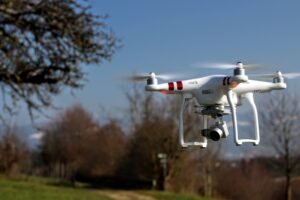
Photo: Sparktour · Licence: CC BY-SA 4.0 · View the original source and licence terms.
DJI / DRONE PROFILE
DJI Phantom 3 4K
Explore the available technical information for this aircraft, including camera capabilities, flight performance and manufacturer-specific specifications.
1
DJI Phantom 3 4K is documented in this profile using the structured specification record below. The imported record includes Weight: 1,280 g including battery and propellers; Flight time: Approx. 25 min (manufacturer battery specification); Camera: 1/2.3-inch Sony EXMOR CMOS, 12.4 MP effective; 20 mm-equivalent f/2.8 lens; Max speed: 16 m/s ATTI mode, no wind; Gps: GPS. Because this is a legacy or specialist model, buyers should verify the exact aircraft variant, firmware, battery condition and local support before relying on any specification for an operational decision.
Who should consider DJI Phantom 3 4K?
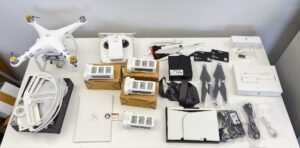
Before paying, calculate whether the complete kit is worth buying. Include the controller, batteries, charger, spare propellers, carrying case, memory card and any required phone or app compatibility. A low used price can be offset by expensive or unavailable batteries and accessories. For DJI Phantom 3 4K, battery age, app compatibility and replacement-part availability can matter more than the original launch specification.
Limitations and trade-offs to understand
Modern safety features may be absent or limited. Check the exact sensing directions, obstacle detection conditions, GNSS support and failsafe behaviour in the manual. Maintain conservative distances and do not rely on an older aircraft for missions that require current safety, data-security or regulatory features. For DJI Phantom 3 4K, test the aircraft with the exact controller and mobile device you intend to use before paying.
Alternatives worth comparing
Compare the used aircraft with a current-generation compact camera drone and calculate the total cost of a reliable kit. If image quality, obstacle sensing, battery availability or app support is important, a newer model may be better value even when its initial price is higher. For DJI Phantom 3 4K, compare the complete used kit price with a current alternative and include the risk of unavailable parts.
Pre-purchase and ownership checklist
Ask the seller to demonstrate the aircraft with all batteries and the included controller. Check firmware and app compatibility on your own device, inspect the gimbal and motors, verify the return-to-home function in a safe test area and confirm whether parts can still be sourced. For DJI Phantom 3 4K, verify the exact sub-variant because similar model names can use different cameras, batteries or radio systems.
How to use this specification profile
This page is a research-based reference, not a claim that IGIDRONE has independently flight-tested the aircraft. Treat manufacturer maximums as test-condition figures and distinguish standard equipment from optional accessories or regional bundles. Before buying, compare the exact model code, firmware, battery, controller and payload configuration against the current official manual. If a field is marked unknown or is not documented by the manufacturer, do not infer a value from a similarly named variant. For DJI Phantom 3 4K, battery age, app compatibility and replacement-part availability can matter more than the original launch specification.
Editorial update: 8 November 2026. Model availability, prices, software support and regional operating rules can change. Confirm them with the manufacturer, authorised distributor and relevant aviation authority before purchase or flight. For DJI Phantom 3 4K, test the aircraft with the exact controller and mobile device you intend to use before paying.
Used-market inspection and serviceability
If the aircraft is intended for regular work, compare its reliability and serviceability with a current alternative. An older model can remain useful for practice or occasional low-risk flights, but it may be a poor choice where downtime, data quality or manufacturer support are important. For DJI Phantom 3 4K, battery age, app compatibility and replacement-part availability can matter more than the original launch specification.
Evidence to request from a seller
Request a dated demonstration video, battery cycle and health information, repair records, serial number, original accessories and proof of purchase where available. Check current app compatibility on the device you will actually use. Do not buy a battery that is swollen, damaged, leaking or showing abnormal cell behaviour, and do not rely on an unverified claim that a legacy model is fully supported. For DJI Phantom 3 4K, test the aircraft with the exact controller and mobile device you intend to use before paying.
DJI Phantom 3 4K: legacy ownership note
The Phantom 3 4K should be treated as a legacy camera aircraft. Its structured specification record lists a 1,280 g take-off weight including battery and propellers, a 1/2.3-inch Sony EXMOR CMOS camera with 12.4 MP effective pixels and a maximum 4K video mode. Those manufacturer-recorded details help identify the model, but they do not prove that a used example is in safe or serviceable condition today. For DJI Phantom 3 4K, compare the complete used kit price with a current alternative and include the risk of unavailable parts.
Before buying, confirm the exact controller and battery type, test the camera and gimbal, inspect the landing gear and arms, check battery health and verify that the required mobile app and device still connect reliably. Older lithium batteries can be unsafe even when they accept a charge. Check local aviation weight and registration rules and confirm the availability of parts before treating this aircraft as an operational tool. It is better suited to a carefully checked legacy/used-market purchase than to a buyer who needs current manufacturer support or modern sensing features. For DJI Phantom 3 4K, verify the exact sub-variant because similar model names can use different cameras, batteries or radio systems.
Editorial standard: buyer guidance is based on published manufacturer information and practical ownership considerations. IGIDRONE does not claim independent flight testing unless a page explicitly documents a real test. For DJI Phantom 3 4K, battery age, app compatibility and replacement-part availability can matter more than the original launch specification.
Phantom 3 4K: camera and used-aircraft checks
The Phantom 3 4K belongs to an earlier generation of camera drones. Its 4K recording capability and three-axis gimbal remain useful context when comparing older footage systems, but buyers should not equate the original feature list with current reliability or modern image processing. Check the actual sample files for focus, gimbal horizon, lens condition, exposure consistency and any vibration or jello effect. For DJI Phantom 3 4K, battery age, app compatibility and replacement-part availability can matter more than the original launch specification.
Before buying a used aircraft, test every battery separately and inspect the pack for swelling, cracks, corrosion or abnormal cell balance. Confirm that the controller pairs reliably, the mobile app can still connect on your device, the camera feed remains stable and the aircraft completes a safe return-to-home test in an appropriate open area. Check propeller and motor condition, landing gear, gimbal dampers and the airframe for previous repairs. For DJI Phantom 3 4K, test the aircraft with the exact controller and mobile device you intend to use before paying.
Because this is a legacy model, confirm whether genuine batteries, propellers, gimbal parts and service are still available where you live. If the aircraft is intended for paid work or frequent travel, compare the cost of a reliable used kit with a current compact camera drone and include the risk of unavailable parts in the decision. For DJI Phantom 3 4K, compare the complete used kit price with a current alternative and include the risk of unavailable parts.
Drone Specifications
| Brand | DJI |
|---|---|
| Camera | 1/2.3-inch Sony EXMOR CMOS, 12.4 MP effective; 20 mm-equivalent f/2.8 lens |
| Maximum Video Resolution | UHD 4K: 4096×2160/24–25fps; 3840×2160/24–30fps; 60 Mbps |
| Maximum Flight Time (minutes) | Approx. 25 min (manufacturer battery specification) minutes |
| Maximum Transmission Range (km) | 1.2 km FCC; 500 m CE (Wi-Fi, unobstructed) km |
| Weight (g) | 1,280 g including battery and propellers g |
| Battery Capacity (mAh) | 4,480 mAh, 15.2 V, 68 Wh mAh |
| Obstacle Sensing | Downward vision positioning only |
| Positioning / GPS | GPS |
| Maximum Speed (m/s) | 16 m/s ATTI mode, no wind m/s |
Additional Notes
The Phantom 3 4K uses Wi-Fi video downlink and should not be confused with the Professional model’s Lightbridge transmission.
Specification source: Official source
Last verified: 2026-11-08
Official Price (USD)
No public USD price was verified on the manufacturer’s official store during this check.
For enterprise or discontinued models, contact the manufacturer for a current quotation. We do not substitute third-party seller prices.
Price checked: 2026-11-07
MODEL TECHNICAL RECORD
Detailed Technical Specifications
Manufacturer-specific technical information recorded for this model. Values not present in the source record are not estimated.
Aircraft
| Weight (Including Battery and Propellers) | 1280 g |
|---|---|
| Diagonal Size (Including Propellers) | 590 mm |
| Max Ascent Speed | 5 m/s |
| Max Descent Speed | 3 m/s |
| Hovering Accuracy | Vertical: ±0.1 m (Vision Positioning active); ±0.5 m (GPS). Horizontal: ±1.5 m |
| Max Speed | 16 m/s (ATTI mode, no wind) |
| Max Service Ceiling Above Sea Level | 6000 m (software altitude limit: 120 m above takeoff point) |
| Operating Temperature | 0°C to 40°C |
| GPS Mode | GPS |
Camera
| Sensor | Sony EXMOR 1/2.3-inch CMOS |
|---|---|
| Effective Pixels | 12.4 MP (total pixels: 12.76 MP) |
| Lens | FOV 94°; 20 mm equivalent; f/2.8; focus at infinity |
| ISO Range | Video: 100–3200; Photo: 100–1600 |
| Shutter Speed | 8 s–1/8000 s |
| Max Image Size | 4000 × 3000 |
| Still Photography Modes | Single shot; burst 3/5/7 shots; AEB 3/5 shots at 0.7 EV bias; time-lapse |
| Video Recording Modes | UHD: 4096×2160 24/25p; 3840×2160 24/25/30p. FHD: 1920×1080 24/25/30/48/50/60p. HD: 1280×720 24/25/30/48/50/60p |
| Supported SD Cards | MicroSD up to 64 GB; Class 10 or UHS-I required |
| Max Video Bitrate | 60 Mbps |
| Supported File Formats | FAT32/exFAT; Photo: JPEG/DNG; Video: MP4/MOV (MPEG-4 AVC/H.264) |
| Operating Temperature | 0°C to 40°C |
Gimbal
| Controllable Range | Pitch: -90° to +30° |
|---|---|
| Stabilization | 3-axis (pitch, roll, yaw) |
Vision Positioning
| Max Velocity | Less than 8 m/s (when 2 m above ground) |
|---|---|
| Altitude Range | 50–300 cm |
| Operating Range | 50–300 cm |
| Operating Environment | Surface with clear pattern and adequate lighting (Lux > 15) |
Wi-Fi
| Operating Frequency | 2.400–2.483 GHz |
|---|---|
| Max Distance | FCC: 1200 m; CE: 500 m (unobstructed, free of interference, 120 m above takeoff point) |
| Transmitter Power (EIRP) | FCC: 27 dBm; CE: 20 dBm |
Remote Controller
| Operating Frequency | 5.725–5.825 GHz; Japan: 922.7–927.7 MHz |
|---|---|
| Max Distance | FCC: 1200 m; CE: 500 m (unobstructed, free of interference, 120 m above takeoff point) |
| Operating Temperature | 0°C to 40°C |
| Battery | 2600 mAh LiPo 18650 2S |
| Mobile Device Holder | For tablet or phone (phone recommended) |
| Transmitter Power (EIRP) | FCC: 19 dBm; CE: 14 dBm |
| Working Voltage | 300 mA at 7.4 V |
Battery Charger
| Voltage | 17.5 V |
|---|---|
| Rated Power | 57 W |
Intelligent Flight Battery
| Capacity | 4480 mAh |
|---|---|
| Voltage | 15.2 V |
| Battery Type | LiPo 4S |
| Energy | 68 Wh |
| Net Weight | 365 g |
| Max Flight Time | Approximately 25 minutes |
| Operating Temperature | -10°C to 40°C |
| Max Charging Power | 100 W |
App and Live View
| Mobile App | DJI GO |
|---|---|
| Live View Quality | 480p at 30 fps |
| Required Operating Systems | iOS 8.0 or later; Android 4.1.2 or later |


MANUFACTURER DATA
Detailed official specifications
Technical figures below are transcribed from the manufacturer documentation linked with this profile. Test figures are maximum or controlled-condition ratings where stated; actual performance varies by configuration and operating conditions. A field is omitted when the cited source does not publish a reliable value.
Manufacturer source last checked: 2026-11-08
Evidence type: Official DJI manufacturer specifications / support documentation
Aircraft
| Weight including battery and propellers | 1280 g |
|---|---|
| Diagonal size including propellers | 590 mm |
| Maximum ascent speed | 5 m/s |
| Maximum descent speed | 3 m/s |
| Maximum speed | 16 m/s (ATTI mode, no wind) |
| Maximum service ceiling | 6000 m above sea level; software altitude limit 120 m above takeoff point |
| Maximum flight time | Approx. 25 min |
| Operating temperature | 0°C to 40°C |
| Hovering accuracy | Vertical ±0.1 m with Vision Positioning; ±0.5 m with GPS; horizontal ±1.5 m |
Camera
| Sensor | Sony EXMOR 1/2.3-inch CMOS; 12.4 MP effective pixels (12.76 MP total) |
|---|---|
| Lens | 94° FOV; 20 mm equivalent; f/2.8; focus at infinity |
| ISO range | Video 100–3200; photo 100–1600 |
| Shutter speed | 8 s to 1/8000 s |
| Maximum image size | 4000 × 3000 |
| Still photo modes | Single; burst 3/5/7; AEB 3/5 frames; time-lapse |
| Video modes | UHD 4096 × 2160 24/25p; 3840 × 2160 24/25/30p; FHD 1920 × 1080 24/25/30/48/50/60p; HD 1280 × 720 24/25/30/48/50/60p |
| Maximum video bitrate | 60 Mbps |
| Supported SD card | microSD up to 64 GB; Class 10 or UHS-I required |
| Supported file systems | FAT32 and exFAT |
| Photo formats | JPEG and DNG |
| Video formats | MP4/MOV (MPEG-4 AVC/H.264) |
Gimbal
| Controllable range | Pitch -90° to +30° |
|---|---|
| Stabilization | 3-axis (pitch, roll, yaw) |
Vision positioning
| Maximum velocity | Less than 8 m/s at 2 m above ground |
|---|---|
| Altitude range | 50–300 cm |
| Operating range | 50–300 cm |
| Operating environment | Brightly lit patterned surfaces above 15 lux |
Wi-Fi
| Operating frequency | 2.400–2.483 GHz |
|---|---|
| Maximum distance | 1200 m FCC; 500 m CE (unobstructed, aircraft 120 m above takeoff point) |
| EIRP | 27 dBm FCC; 20 dBm CE |
Remote controller
| Operating frequencies | 5.725–5.825 GHz; 922.7–927.7 MHz (Japan) |
|---|---|
| Maximum distance | 1200 m FCC; 500 m CE (unobstructed, aircraft 120 m above takeoff point) |
| Operating temperature | 0°C to 40°C |
| Battery | 2600 mAh LiPo 18650 2S |
| Mobile device holder | Tablet or phone (phone recommended) |
| EIRP | 19 dBm FCC; 14 dBm CE |
| Working voltage | 300 mA at 7.4 V |
Charger
| Voltage | 17.5 V |
|---|---|
| Rated power | 57 W |
Intelligent flight battery
| Capacity | 4480 mAh |
|---|---|
| Voltage | 15.2 V |
| Type | LiPo 4S |
| Energy | 68 Wh |
| Net weight | 365 g |
| Maximum charging power | 100 W |
| Operating temperature | -10°C to 40°C |
Official manufacturer page
| Aircraft | Weight (Including Battery And Propellers)1280 gDiagonal Size (Including Propellers)590 mmMax Asecnt Speed5 m/sMax Descent Speed3 m/sHover Accuracy Vertical: +/- 0.1 m (when Vision Positioning is active); +/- 0.5 m Horizontal:+/- 1.5 m Max Speed16 m/s (ATTI mode, no wind)Max Service Ceiling Above Sea Level 6000 m (Software altitude limit: 120 m above takeoff point)Operating Temperature0°C to 40°CGPS ModeGPS |
|---|---|
| Camera | SensorSony EXMOR 1/2.3" CMOSEffective pixels 12.4M (total pixels: 12.76M)Lens FOV 94° 20 mm (35 mm format equivalent) f/2.8 Focus at ∞ ISO Range 100-3200 (video) 100-1600 (photo) Shutter Speed8s - 1/8000sMax Image Size4000 x 3000Still Photography Modes Single Shot Burst Shots: 3/5/7 shots Auto Exposure Bracketing(AEB): 3/5 shots Bracket Frames at 0.7EV Bias Time-lapse Video Recording Modes UHD: 4096x2160p 24/25, 3840x2160p 24/25/30 FHD: 1920x1080p 24/25/30/48/50/60 HD: 1280x720p 24/25/30/48/50/60 Supported SD Card Types Micro-SD Max capacity: 64 GB. Class 10 or UHS-1 rating required Max Bitrate of Video Storage 60 MbpsSupported File Formats FAT32/exFAT Photo: JPEG, DNG Video: MP4,MOV (MPEG-4 AVC/H.264) Operating Temperature 0°C to 40°C |
| Gimbal | Controllable RangePitch -90° to +30°Stabilization 3-axis (pitch, roll, yaw) |
| Vision Positioning | Max VelocityLess than 8 m/s (when 2 m above ground)Altitude Range50 cm - 300 cmOperating Range50 cm - 300 cmOperating Environment Surface with clear pattern and adequate lighting (Lux>15) |
| Wi-Fi | Operating Frequency 2.400 GHz-2.483 GHzMax Distance FCC: 1200m CE: 500m(unobstructed, free of interference,120m above takeoff point) Transmitter Power (EIRP) FCC: 27 dBm CE: 20 dBm |
| Remote Controller | Operating Frequency 5.725 GHz – 5.825 GHz 922.7 MHz – 927.7 MHz (Japan) Max Distance FCC: 1200m CE: 500m(unobstructed, free of interference,120m above takeoff point) Operating Temperature0°C- 40°CBattery2600 mAh LiPo18650 2SMobile Device HolderFor tablet or phone (phone recommended)Transmitter Power (EIRP) FCC: 19 dBm CE: 14 dBm Working Voltage300 mA @7.4 V |
| Battery Charger | Voltage17.5 VRated Power57 W |
| Intelligent Flight Battery | Capacity4480 mAhVoltage15.2 VBattery TypeLiPo 4SEnergy68 WhNet Weight365 gMax Flight TimeApproximately 25 minutesOperating Temperature-10°C to 40°CMax Charging Power100 W |
| App / Live View | Mobile AppDJI GOLive View Quality480P @ 30fps Required Operating Systems iOS 8.0 or later Android 4.1.2 or later Recommended Devices ios: iPhone 5s、iPhone 6、 iPhone 6 Plus、 iPad Air、 iPad Air Wi-Fi + Cellular、 iPad mini 2、 iPad mini 2 Wi-Fi + Cellular、 iPad Air 2、iPad Air 2 Wi-Fi + Cellular、 iPad mini 3 及 iPad mini 3 Wi-Fi + Cellular. This app is optimized for iPhone 5s, iPhone 6, and iPhone 6 Plus Android: Samsung tabs 705c、Samsung S6、Samsung S5、Samsung NOTE4、Samsung NOTE3、Google Nexus 9、Google Nexus 7 II、Ascend Mate7、Nubia Z7 mini、SONY Z3 EXPE、MI 3、MI PAD *Support for additional Android devices available as testing and development continues. |
Source: manufacturer technical specifications and official support documentation. Regional versions, payloads, batteries, firmware and test conditions can change the stated figures. Check the linked source for the applicable configuration.
Related Dji drones
Explore other published models from the same manufacturer.