Photo: Food and Farming Technology · Licence: CC BY-SA 4.0 · View the original source and licence terms.
DJI / DRONE PROFILE
DJI Agras T20
Explore the available technical information for this aircraft, including camera capabilities, flight performance and manufacturer-specific specifications.
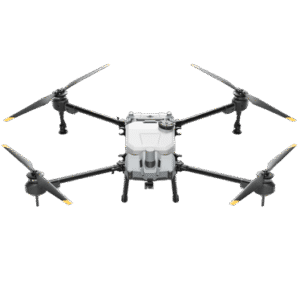
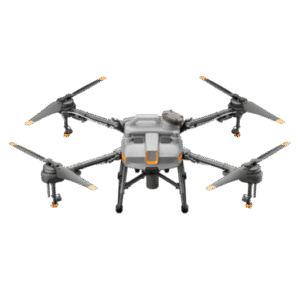
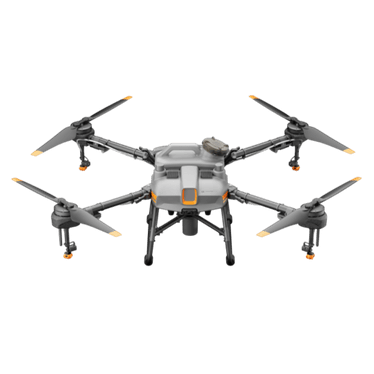
The DJI Agras T20 is an agricultural spraying drone developed for precision crop treatment and farm operations. Its four-rotor platform combines a liquid-spraying system with radar-assisted flight functions and a foldable structure intended to make transport and field setup easier. It is an agricultural work platform, not a camera drone for recreational aerial photography.
Spraying system and payload
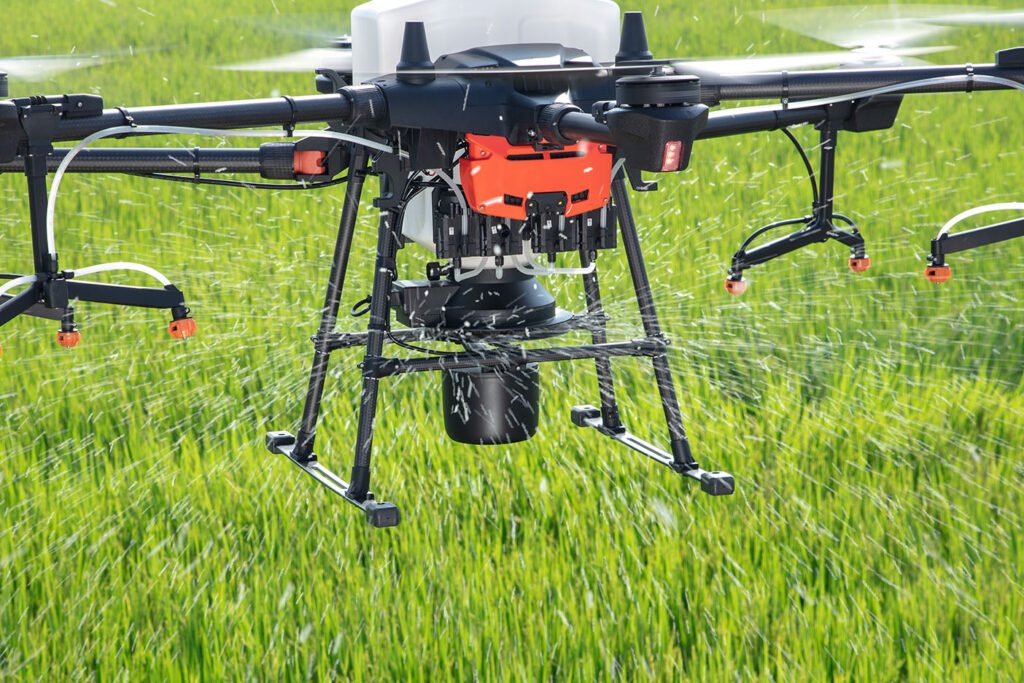
DJI states that the Agras T20 can carry a maximum spraying payload of 20 kg. Its spraying system uses eight nozzles and high-volume pumps, with a maximum spray flow rate of up to 6 L/min. DJI also describes a nozzle layout designed to improve droplet uniformity and provide an effective spray width of up to 7 m under the stated operating setup. Actual coverage depends on crop height, flight speed, spray settings, wind, liquid characteristics and field conditions; the maximum width should not be treated as a guaranteed result for every crop.
Radar and field operation
The Agras T20 is equipped with an omnidirectional digital radar system. DJI describes the radar as detecting obstacles from horizontal directions and helping the aircraft navigate around obstacles and follow terrain. Radar assistance is not a substitute for a trained pilot, pre-flight inspection, field assessment or safe operating distances. Vegetation, wires, poles, terrain and other obstacles can present different detection challenges.
Weather protection and durability
DJI’s product announcement identifies an IP67 dust- and water-resistance rating for the aircraft. An ingress-protection rating applies under the manufacturer’s specified test conditions and does not mean the drone should be operated in any rainfall, submerged, or used with damaged seals. Follow the applicable manual, maintenance schedule and weather limits before each operation.
DJI Agras T20 specifications
| Specification | DJI Agras T20 |
|---|---|
| Aircraft type | Four-rotor agricultural spraying drone |
| Maximum spraying payload | 20 kg |
| Nozzle quantity | 8 |
| Maximum spray flow rate | Up to 6 L/min |
| Maximum effective spray width | Up to 7 m (scenario-dependent) |
| Obstacle sensing | Omnidirectional digital radar |
| Ingress protection | IP67 (manufacturer-stated rating) |
Agras T20 compared with newer models
The Agras T20 should not be confused with the later Agras T20P. DJI’s T20P documentation describes a different aircraft and spraying/spreading configuration, including a 20 L spray tank, a 20 kg spraying payload and a separate spreading system. The T20P’s radar, vision system, battery, dimensions and operating figures should not be copied into a review of the original T20. Buyers should confirm the exact model name and regional configuration on the aircraft label and with an authorised dealer.
The later Agras T30 and T25 families also have their own tank, payload and radar configurations. A larger payload rating does not automatically mean better suitability: field size, crop type, terrain, refill logistics, spray chemistry, service availability and local aviation and pesticide rules all matter.
Who should consider the Agras T20?
The Agras T20 may be relevant to agricultural contractors and farm operators who need an aerial spraying system and can support its batteries, charging equipment, maintenance and trained operation. Before purchasing, assess the total system cost, local spare-parts support, operator training, permitted chemicals, calibration requirements and the regulations that apply to agricultural drone spraying in the operating country.
Advantages and limitations
- Advantages: up to 20 kg spraying payload, eight-nozzle system, manufacturer-stated flow rate up to 6 L/min, up to 7 m effective spray width under specified conditions, radar-assisted obstacle awareness and IP67 rating.
- Limitations: coverage and spray quality vary with operating conditions; the payload figure is not a promise of a fixed hectares-per-hour result; specialist batteries, charging, maintenance and trained operators are required.
Official source and verification notes
This specification-based overview uses DJI’s official Agras T20 product announcement. DJI’s published claims are subject to the conditions described by the manufacturer. The T20 and T20P are treated as separate models in this article. This is an editorial review based on manufacturer documentation, not a claim of independent hands-on testing.
Related IGIDRONE reading
Explore other agricultural drone models: DJI Agras T30 review | DJI Agras T25 review.
Who should consider DJI Agras T20?
This platform belongs in a farm-operations decision, not a conventional camera-drone shortlist. The buyer should first define the crop, treatment or spreading material, field size, terrain, daily hectares, water and chemical logistics, and the required application record. Tank volume and maximum flow are only part of the decision: nozzle selection, droplet spectrum, swath, travel speed, canopy, wind and calibration determine whether the system can deliver a consistent result. For DJI Agras T20, validate application settings using the intended crop, material, nozzle or spreader and field layout rather than a generic demonstration.
Limitations and trade-offs to understand
Application figures are not universal field guarantees. Flow rate, effective swath and coverage change with nozzle type, droplet size, liquid properties, crop height, flight speed, altitude and weather. Wind and temperature can affect drift and evaporation. The operator must follow product labels, local pesticide rules, buffer zones and aviation requirements. Do not treat obstacle sensing or terrain following as a substitute for a surveyed field and an emergency plan. For DJI Agras T20, keep an operating log of weather, payload, settings, field area and refill time so that productivity claims can be checked.
Alternatives worth comparing
Compare other agricultural aircraft in the same operating class, such as the DJI Agras T20P, T25P, T40 or T50 where relevant, and consider whether a multispectral mapping platform such as the DJI Mavic 3 Multispectral is a better fit for crop monitoring rather than application. These are different mission types; they are not interchangeable. For DJI Agras T20, confirm the exact agricultural kit and regional support route before buying; aircraft-only specifications do not describe a complete spraying operation.
Pre-purchase and ownership checklist
Ask the supplier for the exact nozzle/spreader configuration, supported materials, calibration procedure, battery cycle expectations, charging plan, service response time and operator training. Request written confirmation of local registration, pilot qualification, agricultural chemical approvals and insurance obligations. Record the test conditions behind any productivity claim. For DJI Agras T20, plan cleaning, battery storage and chemical-handling procedures as part of the ownership cost.
How to use this specification profile
This page is a research-based reference, not a claim that IGIDRONE has independently flight-tested the aircraft. Treat manufacturer maximums as test-condition figures and distinguish standard equipment from optional accessories or regional bundles. Before buying, compare the exact model code, firmware, battery, controller and payload configuration against the current official manual. If a field is marked unknown or is not documented by the manufacturer, do not infer a value from a similarly named variant. For DJI Agras T20, validate application settings using the intended crop, material, nozzle or spreader and field layout rather than a generic demonstration.
Primary manufacturer reference: Open the manufacturer specification or support page. Confirm the current regional documentation before purchase. For DJI Agras T20, keep an operating log of weather, payload, settings, field area and refill time so that productivity claims can be checked.
Editorial update: 8 November 2026. Model availability, prices, software support and regional operating rules can change. Confirm them with the manufacturer, authorised distributor and relevant aviation authority before purchase or flight. For DJI Agras T20, confirm the exact agricultural kit and regional support route before buying; aircraft-only specifications do not describe a complete spraying operation.
Drone Specifications
| Brand | DJI |
|---|---|
| Camera | FPV camera: 1280 × 960 at 30 fps; not a dedicated imaging payload |
| Maximum Flight Time (minutes) | Hovering: 15 min at 27.5 kg takeoff weight; 10 min at 42.6 kg with 18,000 mAh battery |
| Weight (g) | 21.1 kg without battery; standard takeoff weight 42.6 kg; maximum takeoff weight 47.5 kg |
| Battery Capacity (mAh) | 18,000 mAh, 51.8 V |
| Wind Resistance (m/s) | 8 m/s |
| Obstacle Sensing | Omnidirectional digital radar obstacle detection |
| Positioning / GPS | GPS, GLONASS and Galileo; RTK supports GPS, GLONASS, BeiDou and Galileo |
| Maximum Speed (m/s) | 10 m/s maximum flying speed; 7 m/s maximum operating speed |
Additional Notes
Hover times depend on takeoff weight and test conditions; do not present them as typical mission flight time. Spray tank full capacity 20 L; rated 15.1 L.
Specification source: Official source
Last verified: 2026-11-08
Official Price (USD)
No public USD price was verified on the manufacturer’s official store during this check.
For enterprise or discontinued models, contact the manufacturer for a current quotation. We do not substitute third-party seller prices.
Price checked: 2026-11-07
MODEL TECHNICAL RECORD
Detailed Technical Specifications
Manufacturer-specific technical information recorded for this model. Values not present in the source record are not estimated.
Aircraft
| Total weight without battery | 21.1 kg |
|---|---|
| Standard takeoff weight | 42.6 kg |
| Maximum takeoff weight | 47.5 kg at sea level |
| Maximum hovering time | 15 min at 27.5 kg; 10 min at 42.6 kg with 18,000 mAh battery |
| Maximum flying speed | 10 m/s with strong GNSS signal |
| Maximum operating speed | 7 m/s |
| Maximum wind resistance | 8 m/s |
| Maximum service ceiling | 2,000 m above sea level |
| Operating temperature | 0°C to 40°C |
| Dimensions | 2,509 × 2,213 × 732 mm unfolded; 1,795 × 1,510 × 732 mm arms unfolded/propellers folded; 1,100 × 570 × 732 mm folded |
| Hovering accuracy | D-RTK enabled: ±10 cm horizontal/vertical; disabled: ±0.6 m horizontal, ±0.3 m vertical (radar enabled: ±0.1 m) |
Spraying system
| Tank volume | 15.1 L rated; 20 L full capacity |
|---|---|
| Operating payload | 15.1 kg rated; 20 kg full |
| Maximum spray rate | 3.6 L/min SX11001VS; 4.8 L/min SX110015VS; 6.0 L/min XR11002VS |
| Nozzle quantity | 8 |
Camera and sensing
| FPV camera | 1280 × 960 at 30 fps; flight-monitoring camera, not a mapping payload |
|---|---|
| Radar | Omnidirectional digital radar obstacle sensing |
Battery
| Capacity | 18,000 mAh |
|---|---|
| Voltage | 51.8 V |

Aircraft & Flight
| Maximum takeoff altitude | 2,000 m service ceiling above sea level |
|---|
MANUFACTURER DATA
Detailed official specifications
Technical figures below are transcribed from the manufacturer documentation linked with this profile. Test figures are maximum or controlled-condition ratings where stated; actual performance varies by configuration and operating conditions. A field is omitted when the cited source does not publish a reliable value.
Manufacturer source last checked: 2026-11-08
Evidence type: Official DJI manufacturer specifications / support documentation
Source: manufacturer technical specifications and official support documentation. Regional versions, payloads, batteries, firmware and test conditions can change the stated figures. Check the linked source for the applicable configuration.
Related Dji drones
Explore other published models from the same manufacturer.