Photo: Clemenspool · Licence: CC0 1.0 · View the original source and licence terms.
DJI / DRONE PROFILE
DJI Phantom 3 Standard
Explore the available technical information for this aircraft, including camera capabilities, flight performance and manufacturer-specific specifications.
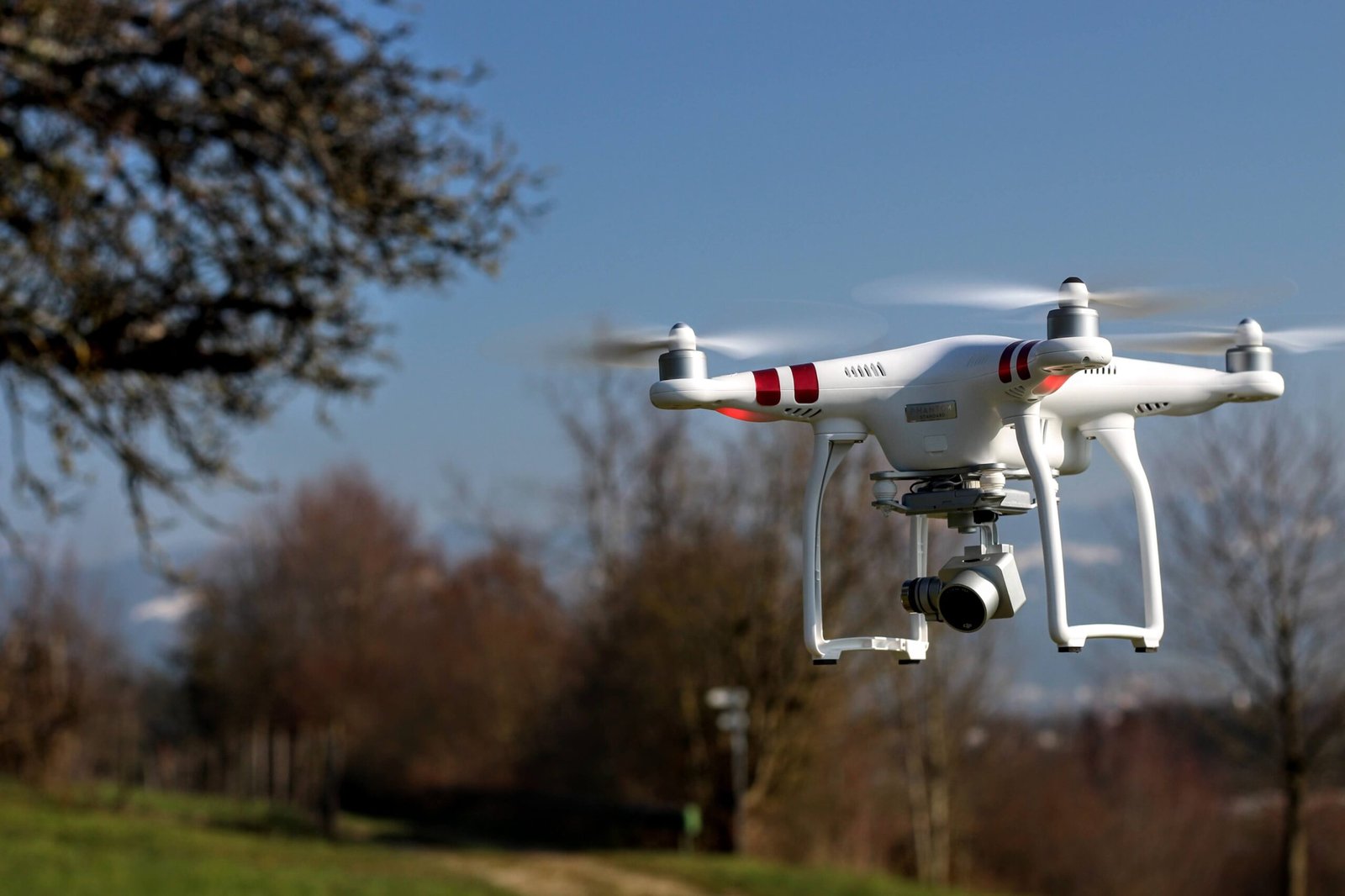
The DJI Phantom 3 Standard is an older GPS camera drone from DJI’s Phantom 3 generation. It was designed as an accessible aerial photography platform with an integrated camera and three-axis gimbal. Although it may still appear on the used market, it belongs to an earlier generation of flight-control, camera and transmission technology. Buyers should assess battery condition and parts support carefully.
Camera and stabilization
DJI specifies a 1/2.3-inch CMOS camera with 12 MP effective pixels and a 94-degree field of view, equivalent to 20 mm. The camera records up to 2.7K video and captures still images at 4000 × 3000 pixels. A three-axis gimbal stabilizes the camera on pitch, roll and yaw. The Standard model is not the same as the Phantom 3 Professional or 4K versions, which have different video capabilities.
Flight characteristics
DJI lists the aircraft weight at 1,216 g including battery and propellers, maximum flight time at approximately 25 minutes, maximum ascent speed at 5 m/s and descent speed at 3 m/s. The stated maximum speed is 16 m/s in ATTI mode. The aircraft uses GPS positioning. These are original manufacturer test specifications; an older battery may deliver substantially less endurance today.
Used-buying advice
Before purchasing a Phantom 3 Standard, inspect battery cycle count and swelling, check that the gimbal initializes correctly, test GPS lock, verify the compass and IMU status, inspect the camera lens and confirm the remote controller and mobile device compatibility. Confirm that the DJI GO app and any required firmware are still practical to use on your device. A flight test should be performed in a legal, open area by a competent pilot.
Specifications at a glance
- Weight: 1,216 g with battery and propellers
- Maximum flight time: approximately 25 minutes (manufacturer figure)
- Camera: 1/2.3-inch CMOS, 12 MP
- Maximum video: up to 2.7K
- Gimbal: 3-axis mechanical
- Positioning: GPS
Source: DJI Phantom 3 Standard official specifications.
Phantom 3 Standard: what to check
The Phantom 3 Standard is an entry-level member of the Phantom 3 family and should not be assumed to share the Advanced or Professional transmission and camera configuration. It is a legacy product, so check the exact remote controller, supported phone/tablet, battery condition, charging equipment and firmware status before purchase. Inspect the camera gimbal for smooth movement and confirm that the aircraft can acquire positioning and record video. Maximum range and flight time are manufacturer test figures; local radio rules, interference, wind and battery age can reduce real-world performance.
Who should consider DJI Phantom 3 Standard?
For a used purchase, ask for the aircraft's serial number, battery cycle history, original invoice, repair history and a demonstration of GPS lock, camera feed, gimbal movement, compass calibration and return-to-home behaviour. Inspect the airframe for cracks, repaired arms, corrosion, motor noise and signs of a hard landing. Check every battery for swelling, damage and abnormal voltage behaviour. For DJI Phantom 3 Standard, battery age, app compatibility and replacement-part availability can matter more than the original launch specification.
Limitations and trade-offs to understand
Older batteries are a major risk and cost. A battery that powers on is not necessarily safe or reliable under load. Check storage history, cycle count, cell balance, swelling and replacement availability; avoid flights that depend on an unverified battery. For DJI Phantom 3 Standard, test the aircraft with the exact controller and mobile device you intend to use before paying.
Alternatives worth comparing
Compare the used aircraft with a current-generation compact camera drone and calculate the total cost of a reliable kit. If image quality, obstacle sensing, battery availability or app support is important, a newer model may be better value even when its initial price is higher. For DJI Phantom 3 Standard, compare the complete used kit price with a current alternative and include the risk of unavailable parts.
Pre-purchase and ownership checklist
Ask the seller to demonstrate the aircraft with all batteries and the included controller. Check firmware and app compatibility on your own device, inspect the gimbal and motors, verify the return-to-home function in a safe test area and confirm whether parts can still be sourced. For DJI Phantom 3 Standard, verify the exact sub-variant because similar model names can use different cameras, batteries or radio systems.
How to use this specification profile
This page is a research-based reference, not a claim that IGIDRONE has independently flight-tested the aircraft. Treat manufacturer maximums as test-condition figures and distinguish standard equipment from optional accessories or regional bundles. Before buying, compare the exact model code, firmware, battery, controller and payload configuration against the current official manual. If a field is marked unknown or is not documented by the manufacturer, do not infer a value from a similarly named variant. For DJI Phantom 3 Standard, battery age, app compatibility and replacement-part availability can matter more than the original launch specification.
Primary manufacturer reference: Open the manufacturer specification or support page. Confirm the current regional documentation before purchase. For DJI Phantom 3 Standard, test the aircraft with the exact controller and mobile device you intend to use before paying.
Editorial update: 8 November 2026. Model availability, prices, software support and regional operating rules can change. Confirm them with the manufacturer, authorised distributor and relevant aviation authority before purchase or flight. For DJI Phantom 3 Standard, compare the complete used kit price with a current alternative and include the risk of unavailable parts.
Used-market inspection and serviceability
Look for evidence of parts availability. A cracked propeller mount, worn gimbal ribbon, damaged battery latch or failed controller can make an inexpensive used aircraft uneconomic to repair. Confirm the model exact variant because similarly named versions may use different cameras, batteries or radio systems. For DJI Phantom 3 Standard, battery age, app compatibility and replacement-part availability can matter more than the original launch specification.
Evidence to request from a seller
Request a dated demonstration video, battery cycle and health information, repair records, serial number, original accessories and proof of purchase where available. Check current app compatibility on the device you will actually use. Do not buy a battery that is swollen, damaged, leaking or showing abnormal cell behaviour, and do not rely on an unverified claim that a legacy model is fully supported. For DJI Phantom 3 Standard, test the aircraft with the exact controller and mobile device you intend to use before paying.
Editorial standard: buyer guidance is based on published manufacturer information and practical ownership considerations. IGIDRONE does not claim independent flight testing unless a page explicitly documents a real test. For DJI Phantom 3 Standard, compare the complete used kit price with a current alternative and include the risk of unavailable parts.
Drone Specifications
| Brand | DJI |
|---|---|
| Camera | 1/2.3-inch CMOS, 12 MP effective; 20 mm-equivalent f/2.8 lens |
| Maximum Video Resolution | 2.7K/30fps; 1080p/60fps |
| Maximum Flight Time (minutes) | Approx. 25 min minutes |
| Maximum Transmission Range (km) | Up to 1 km (Wi-Fi, region and interference dependent) km |
| Weight (g) | 1,216 g including battery and propellers g |
| Battery Capacity (mAh) | 4,480 mAh, 15.2 V mAh |
| Obstacle Sensing | Downward vision positioning |
| Positioning / GPS | GPS |
| Maximum Speed (m/s) | 16 m/s ATTI mode m/s |
Additional Notes
Standard version uses Wi-Fi video downlink, not Lightbridge.
Specification source: Official source
Last verified: 2026-11-08
Official Price (USD)
No public USD price was verified on the manufacturer’s official store during this check.
For enterprise or discontinued models, contact the manufacturer for a current quotation. We do not substitute third-party seller prices.
Price checked: 2026-11-07
MODEL TECHNICAL RECORD
Detailed Technical Specifications
Manufacturer-specific technical information recorded for this model. Values not present in the source record are not estimated.
Aircraft
| Weight (Battery & Propellers Included) | 1216 g |
|---|---|
| Diagonal Size (Propellers Excluded) | 350 mm |
| Max Ascent Speed | 5 m/s |
| Max Descent Speed | 3 m/s |
| Max Speed | 16 m/s (ATTI mode) |
| Max Pitch Angle | 35° |
| Max Angular Speed | 150°/s |
| Max Service Ceiling Above Sea Level | 19685 feet (6000 m) |
| Max Flight Time | Approx. 25 minutes |
| Operating Temperature Range | 32° to 104°F (0° to 40°C) |
| Satellite Positioning Systems | GPS |
| Hover Accuracy Range | Vertical: ±0.5 m Horizontal: ±1.5 m |
Gimbal
| Stabilization | 3-axis (pitch, roll, yaw) |
|---|---|
| Controllable Range | Pitch: -90° to +30° |
| Max Controllable Angular Speed | Pitch: 90°/s |
| Angular Vibration Range | ±0.02° |
Camera
| Sensor | 1/2.3” CMOS Effective pixels:12 M |
|---|---|
| Lens | FOV 94° 20 mm (35 mm format equivalent) f/2.8 |
| ISO Range | 100-3200 (video) 100-1600 (photo) |
| Electronic Shutter Speed | 8 - 1/8000 s |
| Image Size | 4000×3000 |
| Still Photography Modes | Single Shot Burst Shooting: 3/5/7 frames Auto Exposure Bracketing (AEB): 3/5 bracketed frames at 0.7 EV Bias Timelapse |
| Video Recording Modes | 2.7K: 2704 x1520p 24/25/30 (29.97)FHD: 1920x1080p 24/25/30 HD: 1280x720p 24/25/30/48/50/60 |
| Max Video Bitrate | 40 Mbps |
| Supported File Systems | FAT32 (≤32 GB); exFAT (>32 GB) |
| Photo | JPEG, DNG (RAW) |
| Video | MP4, MOV (MPEG-4 AVC/H.264) |
| Supported SD Cards | Micro SD Card 8 GB included |
| Operating Temperature Range | 32° to 104°F (0° to 40°C) |
Remote Controller
| Operating Frequency | 5.725 - 5.825 GHz, 922.7 - 927.7 MHz (Japan) |
|---|---|
| Max Transmission Distance | FCC: 1000 m CE: 500 m (outdoors and unobstructed, aircraft's altitude at 400 feet (120 m)) |
| Operating Temperature Range | 32° to 104°F (0° to 40°C) |
| Battery | 2600 mAh LiPo 18650 |
| Transmitter Power (EIRP) | FCC: 19 dBm CE: 14 dBmMIC: 10 dBm |
| Operating Current/Voltage | 600 mA@3.7V |
| Mobile Device Holder | Tablets and smart phones |
| Charging Port | Micro USB |
Charger
| Voltage | 17.4 V |
|---|---|
| Rated Power | 57 W |
Intelligent Flight Battery
| Capacity | 4480 mAh |
|---|---|
| Voltage | 15.2 V |
| Battery Type | LiPo 4S |
| Energy | 68 Wh |
| Net Weight | 365 g |
| Charging Temperature Range | 41° to 104°F (5° to 40°C) |
| Max Charging Power | 100 W |
App / Live View
| Mobile App | DJI GO |
|---|---|
| Live View Working Frequency | 2.4 GHz ISM |
| Live View Quality | 720P @ 30fps |
| Latency | Low Latency Video (depending on conditions and mobile device) |
| Required Operating Systems | iOS 8.0 or later Android 4.1.2 or later |
| Recommended Devices | ios: iPhone 5s, iPhone 6, iPhone 6 Plus, iPhone 6s, iPhone 6s Plus, iPod touch 6, iPad Pro, iPad Air, iPad Air Wi-Fi + Cellular, iPad mini 2, iPad mini 2 Wi-Fi + Cellular, iPad Air 2, iPad Air 2 Wi-Fi + Cellular, iPad mini 3, iPad mini 3 Wi-Fi + Cellular, iPad mini 4, and iPad mini 4 Wi-Fi + Cellular. This app is optimized for iPhone 5s, iPhone 6, iPhone 6 Plus, iPhone 6s and iPhone 6s Plus. Android: Samsung tabs 705c, Samsung S6, Samsung S5, Samsung NOTE4, Samsung NOTE3, Google Nexus 9, Google Nexus 7 II, Ascend Mate7, Huawei Mate 8, Nubia Z7 mini, SONY Xperia Z3, MI 3, MI PAD*Support for additional Android devices available as testing and development continues. |
Additional Official DJI Information
| Official Model Distinction | DJI states the Phantom 3 Standard differs most from Phantom 3 Advanced and Professional in its remote controller. The Standard uses a different controller/downlink arrangement. |
|---|---|
| Maximum Flight Time (DJI FAQ) | Up to approximately 25 minutes; actual flight time varies with conditions and usage. |


Aircraft & Flight
| Maximum ascent speed | 5 m/s |
|---|---|
| Maximum descent speed | 3 m/s |
MANUFACTURER DATA
Detailed official specifications
Technical figures below are transcribed from the manufacturer documentation linked with this profile. Test figures are maximum or controlled-condition ratings where stated; actual performance varies by configuration and operating conditions. A field is omitted when the cited source does not publish a reliable value.
Manufacturer source last checked: 2026-11-08
Evidence type: Official DJI manufacturer specifications / support documentation
Aircraft
| Weight (Battery & Propellers Included) | 1216 g |
|---|---|
| Diagonal Size (Propellers Excluded) | 350 mm |
| Max Ascent Speed | 5 m/s |
| Max Descent Speed | 3 m/s |
| Max Speed | 16 m/s (ATTI mode) |
| Max Pitch Angle | 35° |
| Max Angular Speed | 150°/s |
| Max Service Ceiling Above Sea Level | 19685 feet (6000 m) |
| Max Flight Time | Approx. 25 minutes |
| Operating Temperature Range | 32° to 104°F (0° to 40°C) |
| Satellite Positioning Systems | GPS |
| Hover Accuracy Range | Vertical:; ±0.5 m; Horizontal:; ±1.5 m |
Gimbal
| Stabilization | 3-axis (pitch, roll, yaw) |
|---|---|
| Controllable Range | Pitch: -90° to +30° |
| Max Controllable Angular Speed | Pitch: 90°/s |
| Angular Vibration Range | ±0.02° |
Camera
| Sensor | 1/2.3” CMOS; Effective pixels:12 M |
|---|---|
| Lens | FOV 94° 20 mm (35 mm format equivalent) f/2.8 |
| ISO Range | 100-3200 (video) 100-1600 (photo) |
| Electronic Shutter Speed | 8 - 1/8000 s |
| Image Size | 4000×3000 |
| Still Photography Modes | Single Shot Burst Shooting: 3/5/7 frames Auto Exposure Bracketing (AEB): 3/5 bracketed frames at 0.7 EV Bias Timelapse |
| Video Recording Modes | 2.7K: 2704 x1520p 24/25/30 (29.97)FHD: 1920x1080p 24/25/30 HD: 1280x720p 24/25/30/48/50/60 |
| Max Video Bitrate | 40 Mbps |
| Supported File Systems | FAT32 (≤32 GB); exFAT (>32 GB) |
| Photo | JPEG, DNG (RAW) |
| Video | MP4, MOV (MPEG-4 AVC/H.264) |
| Supported SD Cards | Micro SD Card 8 GB included |
| Operating Temperature Range | 32° to 104°F (0° to 40°C) |
Remote Controller
| Operating Frequency | 5.725 - 5.825 GHz, 922.7 - 927.7 MHz (Japan) |
|---|---|
| Max Transmission Distance | FCC: 1000 m; CE: 500 m; (outdoors and unobstructed, aircraft's altitude at 400 feet (120 m)) |
| Operating Temperature Range | 32° to 104°F (0° to 40°C) |
| Battery | 2600 mAh LiPo 18650 |
| Transmitter Power (EIRP) | FCC: 19 dBm CE: 14 dBmMIC: 10 dBm |
| Operating Current/Voltage | 600 mA@3.7V |
| Mobile Device Holder | Tablets and smart phones |
| Charging Port | Micro USB |
Charger
| Voltage | 17.4 V |
|---|---|
| Rated Power | 57 W |
Intelligent Flight Battery
| Capacity | 4480 mAh |
|---|---|
| Voltage | 15.2 V |
| Battery Type | LiPo 4S |
| Energy | 68 Wh |
| Net Weight | 365 g |
| Charging Temperature Range | 41° to 104°F (5° to 40°C) |
| Max Charging Power | 100 W |
App / Live View
| Mobile App | DJI GO |
|---|---|
| Live View Working Frequency | 2.4 GHz ISM |
| Live View Quality | 720P @ 30fps |
| Latency | Low Latency Video (depending on conditions and mobile device) |
| Required Operating Systems | iOS 8.0 or later Android 4.1.2 or later |
| Recommended Devices | ios: iPhone 5s, iPhone 6, iPhone 6 Plus, iPhone 6s, iPhone 6s Plus, iPod touch 6, iPad Pro, iPad Air, iPad Air Wi-Fi + Cellular, iPad mini 2, iPad mini 2 Wi-Fi + Cellular, iPad Air 2, iPad Air 2 Wi-Fi + Cellular, iPad mini 3, iPad mini 3 Wi-Fi + Cellular, iPad mini 4, and iPad mini 4 Wi-Fi + Cellular. This app is optimized for iPhone 5s, iPhone 6, iPhone 6 Plus, iPhone 6s and iPhone 6s Plus. Android: Samsung tabs 705c, Samsung S6, Samsung S5, Samsung NOTE4, Samsung NOTE3, Google Nexus 9, Google Nexus 7 II, Ascend Mate7, Huawei Mate 8, Nubia Z7 mini, SONY Xperia Z3, MI 3, MI PAD*Support for additional Android devices available as testing and development continues. |
Source: manufacturer technical specifications and official support documentation. Regional versions, payloads, batteries, firmware and test conditions can change the stated figures. Check the linked source for the applicable configuration.
Related Dji drones
Explore other published models from the same manufacturer.