
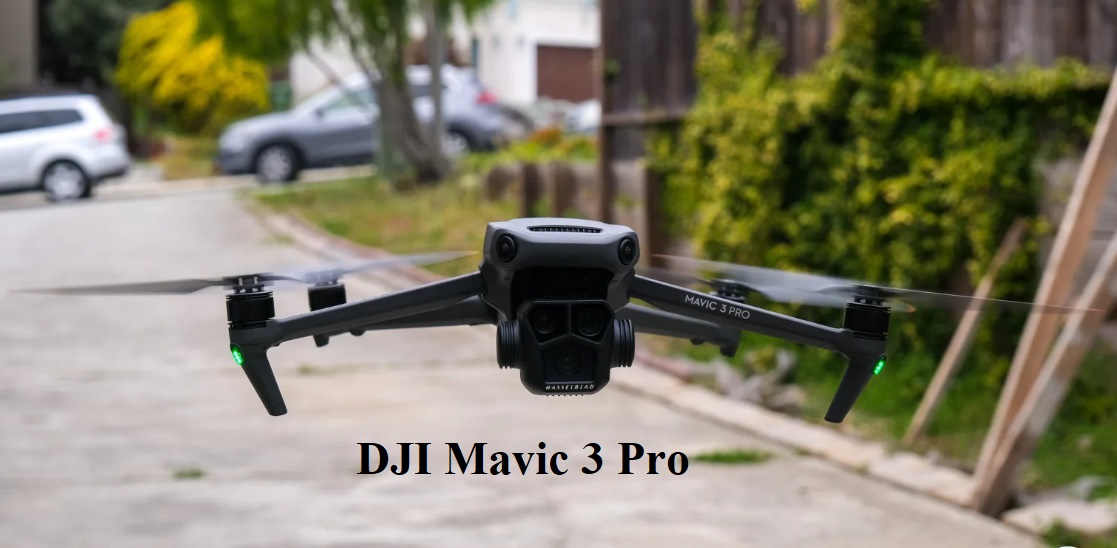
For the complete technical data, see the DJI Mavic 3 Pro specifications page. This article focuses on how the Mavic 3 Pro differs from the standard Mavic 3 and which type of aerial creator may benefit from the triple-camera system. You can also compare it with other DJI models.
DJI Mavic 3 Pro vs Mavic 3: what is the main difference?
The main difference is the camera system. The Mavic 3 Pro adds a third camera. It offers a 4/3 CMOS Hasselblad wide camera, a 70 mm-equivalent medium-tele camera and a 166 mm-equivalent tele camera. The standard Mavic 3 has two cameras. The extra camera gives the Pro version more framing options.
Triple-camera system and creative flexibility
The main Hasselblad camera uses a 20 MP 4/3 CMOS sensor with an adjustable aperture. It is the strongest option for wide landscapes, detailed establishing shots and footage where image quality and control over exposure matter. The 70 mm-equivalent medium-tele camera gives a tighter perspective for portraits, architecture and layered landscape compositions. The 166 mm-equivalent tele camera is useful for distant subjects and compressed perspectives when approaching the subject is not practical.
Each camera has its own sensor and lens. Image detail and low-light results can differ between them. Choose the camera for the shot. The longest lens is not always the best option.
Design, weight and portability
The Mavic 3 Pro retains the folding design of the Mavic family, but the aircraft is heavier than the standard Mavic 3. DJI lists the Mavic 3 Pro at 958 g and the Cine version at 963 g. That extra mass is relevant when packing a travel kit and when checking local drone category and registration requirements. Rules vary by country and may depend on aircraft class, weight, location and intended operation.
Flight time and practical planning
DJI lists up to 43 minutes of maximum flight time for the Mavic 3 Pro under controlled test conditions. Actual flight time is usually lower. Wind, temperature, battery condition and flying speed affect it. Camera use and safety reserves also matter. For professional work, plan battery changes and landing points around the mission.
Who should choose the Mavic 3 Pro?
- Professional aerial creators: the three focal lengths can reduce the need to reposition the aircraft to change composition.
- Real-estate and architecture teams: the wide and medium-tele views offer different ways to present buildings and surroundings.
- Travel and landscape filmmakers: the folding form makes the system more portable than many larger cinema platforms, although it is not a lightweight sub-250 g drone.
- Casual pilots: the extra camera system may be unnecessary if a simpler, less expensive drone already meets the intended needs.
Mavic 3 Pro or standard Mavic 3?
Choose the Mavic 3 Pro if the additional 70 mm and 166 mm views will be used regularly and the added cost and weight are justified by your work. The standard Mavic 3 may be a more sensible choice if the main camera already covers your needs. Compare current bundle contents, controller options, battery availability and regional pricing before buying; old launch prices are not reliable current quotations.
Specifications and model comparisons
For the full aircraft, camera, battery, sensing and transmission figures, visit the DJI Mavic 3 Pro specifications page. Use the DJI comparison tool to compare it with other DJI models. Manufacturer reference: DJI Mavic 3 Pro official specifications.