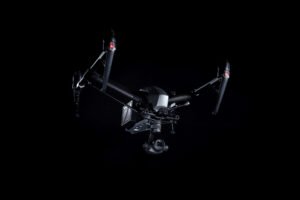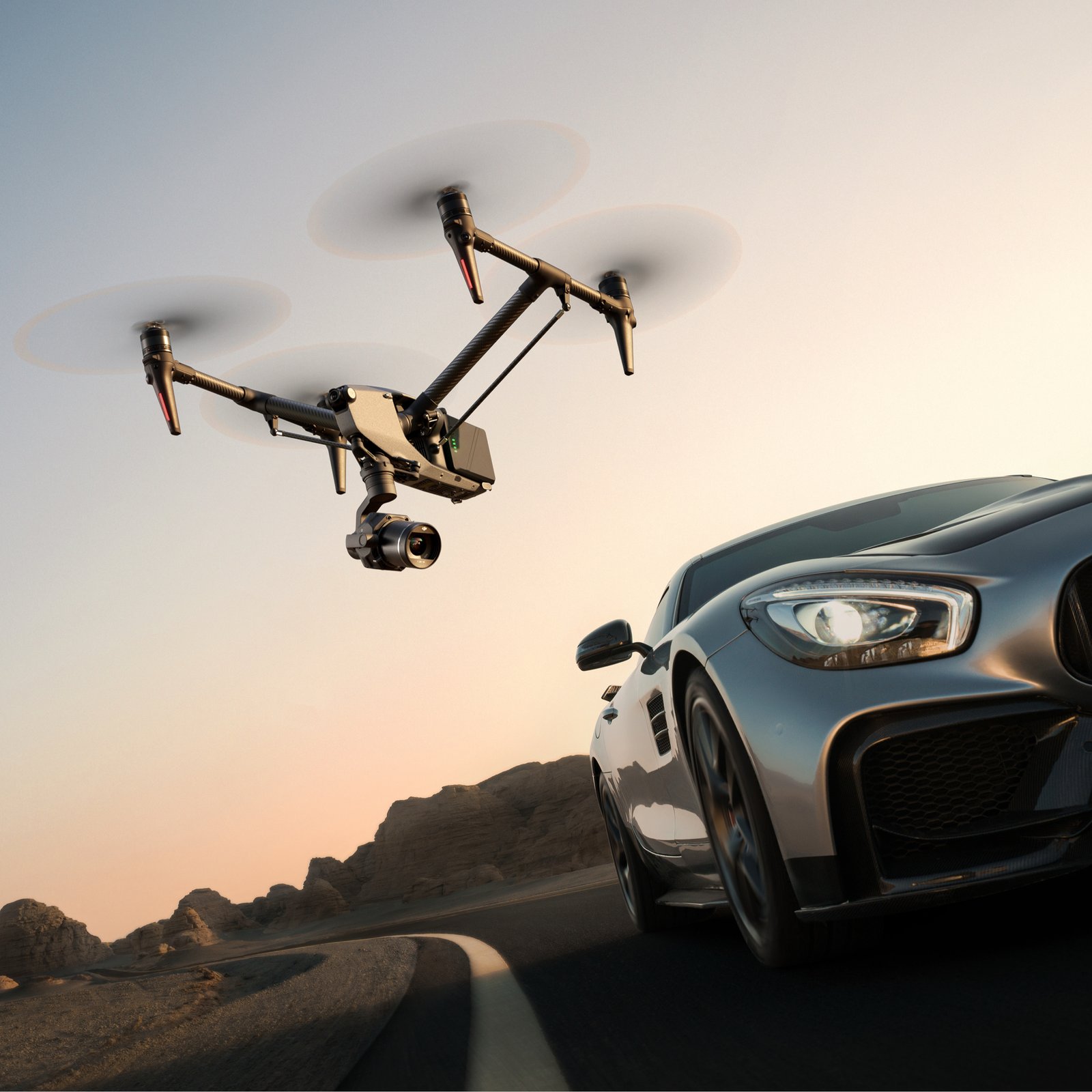

Photo: DJI Europe · View DJI Europe media-use source listing.
DJI / DRONE PROFILE
DJI Inspire 3
Explore the available technical information for this aircraft, including camera capabilities, flight performance and manufacturer-specific specifications.
DJI Inspire 3 Review and Professional Cinema Buying Guide
The DJI Inspire 3 is a high-end aerial cinematography platform designed for professional film and production teams. Its key proposition is a full-frame camera system, interchangeable DL lenses, high-resolution cinema recording, RTK positioning and an integrated production workflow. It is not a casual camera drone; the aircraft, camera, lenses, storage, batteries and crew workflow form a substantial investment.
Price & Where to Buy
$16,499 USD
Package: DJI Inspire 3 standard package
Official listing currently marked out of stock Out of stock
Affiliate disclosure: IGIDRONE may earn a commission from qualifying purchases at no extra cost to you. Price checked 2026-11-06. Prices and package availability can change; confirm the selected configuration before ordering.
Full-frame cinema imaging
The Zenmuse X9-8K Air gimbal camera uses a 35 mm full-frame CMOS sensor. DJI lists recording up to 8K/75fps in CinemaDNG and 8K/25fps in Apple ProRes RAW, subject to the recording mode, licence and storage configuration. Supported DL lenses include 18 mm, 24 mm, 35 mm, 50 mm and 75 mm options. Confirm the exact codec, frame-rate and media requirements for the production before selecting a configuration.
Flight platform and positioning
Inspire 3 supports RTK positioning, waypoint and repeatable flight operations, and a high-performance transmission and monitoring workflow. DJI lists a maximum ascent speed of 8 m/s and a maximum descent speed of 8 m/s under specified conditions. RTK can improve positioning accuracy when a valid correction source and suitable operating environment are available; it does not remove the need for mission planning or regulatory approval.
Professional production workflow
The aircraft’s transforming landing gear and 360-degree pan-capable gimbal design support complex camera movement. Dual-operator workflows allow a pilot and camera operator to divide responsibilities. Teams should plan for media management, lens selection, focus, exposure, battery rotation, crew coordination and post-production storage as part of the total system.
Who should buy Inspire 3?
It is aimed at production companies and cinematographers who need full-frame aerial imagery, repeatable routes and professional monitoring. For occasional travel video, a smaller consumer drone is likely more practical and economical.
Advantages and considerations
- Advantages: full-frame 8K cinema imaging, interchangeable lenses, RTK positioning, advanced gimbal movement and professional dual-operator features.
- Considerations: high system cost, specialised batteries and media, larger crew and logistics needs, and the need to verify current firmware and workflow compatibility.
- Before buying: check camera/codec licences, lens kit, PROSSD media, controller and monitor configuration, batteries, service coverage and local flight permissions.
IGIDRONE verdict
Inspire 3 is a specialist cinema platform for productions that can use its image quality and workflow features. The right purchase decision depends on the camera package, crew requirements and the kind of shots the production needs. Review DJI’s complete specifications and recording-mode notes before building a kit.
Manufacturer reference: DJI Inspire 3 specifications.
Check DJI availability
View the DJI Inspire 3 through DJI.
Disclosure: IGIDRONE may earn a commission from qualifying purchases made through this affiliate link, at no extra cost to you.
Image credit: DJI Europe media library. This image is listed as “Media Use” by DJI Europe on Mynewsdesk. View source and media listing. Image used without edits.
Who should consider DJI Inspire 3?
This aircraft belongs in a professional imaging workflow where camera payload, lens choice, stabilisation, exposure control and post-production are central. Define the required deliverables before selecting the aircraft: cinema-resolution footage, high-frame-rate action, repeatable commercial shots, RAW or log workflow, or a particular lens and sensor combination. The camera package and ground workflow can matter more than the airframe's headline speed. For DJI Inspire 3, test the complete camera-to-edit pipeline using the lens, codec, frame rate and colour profile intended for production.
Limitations and trade-offs to understand
Advertised maximum flight time is not a camera-crew flight plan. Camera payload, lens, wind, manoeuvres, temperature and safe battery reserve all affect usable time. A large camera payload can change aircraft balance and endurance. Confirm the exact payload configuration and operating limits in the current manual. For DJI Inspire 3, confirm payload balance, media capacity and battery reserve with the exact camera configuration.
Alternatives worth comparing
Compare the aircraft with other professional camera platforms and with a smaller camera drone for jobs where a large cinema payload is unnecessary. The best choice depends on the camera package, crew workflow and deliverable—not on a single maximum-speed or flight-time number. For DJI Inspire 3, include crew workflow, permissions, insurance and repair support in the cost of ownership.
Pre-purchase and ownership checklist
Confirm payload and lens compatibility, media requirements, camera-control workflow, battery logistics, firmware support, repair turnaround, insurance and the exact permissions required at each filming location. Ask for sample footage and a demonstration using the production's intended recording settings. For DJI Inspire 3, compare rental and ownership using expected shoot days and specialist crew costs.
How to use this specification profile
This page is a research-based reference, not a claim that IGIDRONE has independently flight-tested the aircraft. Treat manufacturer maximums as test-condition figures and distinguish standard equipment from optional accessories or regional bundles. Before buying, compare the exact model code, firmware, battery, controller and payload configuration against the current official manual. If a field is marked unknown or is not documented by the manufacturer, do not infer a value from a similarly named variant. For DJI Inspire 3, test the complete camera-to-edit pipeline using the lens, codec, frame rate and colour profile intended for production.
Primary manufacturer reference: Open the manufacturer specification or support page. Confirm the current regional documentation before purchase. For DJI Inspire 3, confirm payload balance, media capacity and battery reserve with the exact camera configuration.
Editorial update: 8 November 2026. Model availability, prices, software support and regional operating rules can change. Confirm them with the manufacturer, authorised distributor and relevant aviation authority before purchase or flight. For DJI Inspire 3, include crew workflow, permissions, insurance and repair support in the cost of ownership.
Drone Specifications
| Brand | DJI |
|---|---|
| Camera | 35 mm full-frame CMOS gimbal camera; lens-dependent, supports DJI DL lenses |
| Maximum Video Resolution | Up to 8K (8192×4320) recording resolution; supported codecs/formats include CinemaDNG and MOV (configuration-dependent) |
| Maximum Flight Time (minutes) | Approx. 28 min maximum flight time (landing gear lowered); approx. 26 min (landing gear raised); approx. 25 min hovering |
| Maximum Transmission Range (km) | Single Control Mode: ; FPV Camera: approx. 15 km (FCC), 8 km (CE/SRRC/MIC); Gimbal Camera (1080p/60fps live feeds): approx. 13 km (FCC), 7 km (CE/SRRC/MIC); Gimbal Camera (4K/30fps live feeds): approx. 5 km (FCC), 3 km (CE/SRRC/MIC); ; Dual-Control Mode: ; FPV Camera: approx. 12 km (FCC), 6.4 km (CE/SRRC/MIC); Gimbal Camera (1080p/60fps live feeds): approx. 11.2 km (FCC), 5.6 km (CE/SRRC/MIC); Gimbal Camera (4K/30fps live feeds): approx. 4 km (FCC), 2.4 km (CE/SRRC/MIC); Measured in an unobstructed outdoor environment free of interference, with gimbal camera and lens attached to the aircraft and without other accessories. The above data shows the farthest communication range for one-way, non-return flights under each standard. During your flight, please pay attention to reminders in the app. |
| Weight (g) | Approx. 3,995 g (configured with gimbal camera, two batteries, lens, PROSSD and propellers) |
| Battery Capacity (mAh) | 4280 mAh |
| Wind Resistance (m/s) | 14 m/s in flight; 12 m/s for takeoff and landing |
| Obstacle Sensing | Omnidirectional vision sensing: forward, backward, lateral, upward and downward; downward ToF infrared sensor |
| Positioning / GPS | GPS + Galileo + BeiDou; RTK positioning supported |
| Maximum Speed (m/s) | 94 km/h (approx. 26.1 m/s) maximum horizontal speed in Sport mode |
Additional Notes
Aircraft weight and flight performance are measured with the specified gimbal camera/lens configuration; maximum flight times are controlled-test values. Maximum flight distance is not stated in the reviewed aircraft specifications. Transmission distance is a separate metric.
Specification source: Official source
Last verified: 2026-11-07
Official Price (USD)
$8,499.00 USD
Listed configuration: DJI Inspire 3 Basic Package, base configuration
Official US Store status: Not available in the United States. This last-listed price is not a purchasable offer.
Last listed official US price: USD 8,499 for DJI Inspire 3 Basic Package. The official US Store page states that it is not available in the selected country/region; this dated amount is not a purchasable offer. Checked 2026-11-16.
View official price / availability status
Price checked: 2026-11-16
MODEL TECHNICAL RECORD
Detailed Technical Specifications
Manufacturer-specific technical information recorded for this model. Values not present in the source record are not estimated.
Aircraft
| Model | T740 |
|---|---|
| Aircraft Weight | Approx. 3,995 g (includes gimbal camera, two batteries, lens, PROSSD, and propellers) |
| Max Takeoff Weight | Approx. 4,310 g |
| Hovering Accuracy Range | Vertical: ±0.1 m (with vision positioning) ±0.5 m (with GNSS positioning) ±0.1 m (with RTK positioning) Horizontal: ±0.3 m (with vision positioning) ±0.5 m (with GNSS positioning) ±0.1 m (with RTK positioning) |
| RTK Positioning Accuracy (RTK fix) | 1 cm + 1 PPM (horizontal) 1.5 cm + 1 PPM (vertical) |
| Max Angular Velocity | Pitch: 200°/s Roll: 200°/s Yaw: 150°/s |
| Max Pitch Angle | N Mode: 35° S Mode: 40° A Mode: 35° T Mode: 20° Emergency Brake: 55° |
| Max Ascent Speed | 8 m/s Measured when flying in a windless environment at sea level, with gimbal camera and lens attached to the aircraft and without other accessories. This data is for reference only. |
| Max Descent Speed | Vertical: 8 m/s Tilt: 10 m/s Measured when flying in a windless environment at sea level, with gimbal camera and lens attached to the aircraft and without other accessories. This data is for reference only. |
| Max Horizontal Speed | 94 km/h Measured in a controlled wind tunnel environment under conditions equivalent to windless operation and sea-level altitude, with the aircraft (with gimbal camera and lens attached to the aircraft and without other accessories) ascending vertically to a height of 1.5 meters above the ground in Sport mode. Actual experience may vary depending on the environment, usage, and firmware version. |
| Max Service Ceiling Above Sea Level | Standard Propellers: 3800 m High-Altitude Propellers: 7000 m Measured in an environment with light wind with the gimbal camera and lens attached to the aircraft and without other accessories. This data is for reference only. |
| Max Wind Resistance | Takeoff/land: 12 m/s In-flight: 14 m/s Measured when flying at sea level, with gimbal camera and lens attached to the aircraft and without other accessories. This data is for reference only. |
| Max Hovering Time | Approx. 25 minutes Measured when hovering in a windless environment at sea level with gimbal camera and lens attached to the aircraft and without other accessories, with landing gear raised, and recording 4K/24fps H.264 (S35) video until the battery reached 0%. This data is for reference only. Please refer to the actual values in the app. |
| Max Flight Time | Approx. 28 minutes (landing gears lowered) Approx. 26 minutes (landing gears raised) Measured in a controlled wind tunnel environment under conditions equivalent to windless operation and sea-level altitude, with the aircraft (with gimbal camera and lens attached to the aircraft and without other accessories) flying forward at a constant speed of 36 kph, Obstacle Avoidance Action set to Brake, and the camera set to record 4K/24fps H.264 (S35) video, until a forced landing due to battery depletion. Actual experience may vary depending on the environment, usage, and firmware version. |
| Motor Model | DJI 3511s |
| Global Navigation Satellite System | GPS + Galileo + BeiDou |
| Propeller Model | Standard Propellers: DJI 1671 High-Altitude Propellers: DJI 1676 |
| Operating Temperature | -20° to 40° C (-4° to 104° F) |
| Diagonal Distance | Landing Gear Raised: 695 mm Landing Gear Lowered: 685 mm |
| Travel Mode Dimensions | Height: 176 mm Width: 709.8 mm Length: 500.5 mm |
| Class | C3 (EU) |
Gimbal Camera
| Sensor | 35mm full-frame CMOS |
|---|---|
| Max Resolution | Photo: 8192×5456 Video: 8192×4320 |
| Video Resolution | View detailed list |
| Supported Lenses | DL 18 mm F2.8 ASPH Lens DL 24 mm F2.8 LS ASPH Lens DL 35 mm F2.8 LS ASPH Lens DL 50 mm F2.8 LS ASPH Lens DL 75 mm F1.8 Lens |
| Photo Format | JPG, DNG |
| Video Format | MOV, CinemaDNG |
| Operation Mode | Capture, Record, Playback |
| Exposure Mode | P, A, S, M |
| Shutter Type | Electronic shutter |
| Shutter Speed | 8-1/8000 s |
| White Balance | AWB MWB (2000K-10000K) |
| ISO Range | Photo ISO: 100-25600 Video EI: 200-6400 |
| Anti-flicker | Capture Mode: Auto, 50 Hz, 60 Hz, OFF |
| Angular Vibration Range | Hovering: ±0.002° Flying: ±0.004° |
| Installation Method | Quick release |
| Mechanical Range | Tilt: -128° to +110° (landing gear lowered) -148° to +90° (landing gear raised) Roll: -90° to +230° Pan: ±330° |
| Controllable Range | Tilt (landing gear lowered): Before gimbal tilt limit extension: -90° to +30° After gimbal tilt limit extension: -115° to +100° Tilt (landing gear raised): Before gimbal tilt limit extension: -90° to +30° After gimbal tilt limit extension: -140° to +75° Roll: ±20° Pan: ±300° |
| Max Control Speed | With DJI RC Plus: Tilt: 120°/s Roll: 180°/s Pan: 270°/s With DJI Master Wheels: Tilt: 432°/s Roll: 432°/s Pan: 432°/s |
| Weight | Approx. 516 g (without lens) |
Video Transmission
| Video Transmission System | O3 Pro |
|---|---|
| Live View Quality | FPV Camera: Up to 1080p/60fps Gimbal Camera: Up to 1080p/60fps, 4K/30fps |
| Max Live Video Bitrate | 50 Mbps |
| Max Transmission Distance | Single Control Mode: FPV Camera: approx. 15 km (FCC), 8 km (CE/SRRC/MIC) Gimbal Camera (1080p/60fps live feeds): approx. 13 km (FCC), 7 km (CE/SRRC/MIC) Gimbal Camera (4K/30fps live feeds): approx. 5 km (FCC), 3 km (CE/SRRC/MIC) Dual-Control Mode: FPV Camera: approx. 12 km (FCC), 6.4 km (CE/SRRC/MIC) Gimbal Camera (1080p/60fps live feeds): approx. 11.2 km (FCC), 5.6 km (CE/SRRC/MIC) Gimbal Camera (4K/30fps live feeds): approx. 4 km (FCC), 2.4 km (CE/SRRC/MIC) Measured in an unobstructed outdoor environment free of interference, with gimbal camera and lens attached to the aircraft and without other accessories. The above data shows the farthest communication range for one-way, non-return flights under each standard. During your flight, please pay attention to reminders in the app. |
| Lowest Latency | FPV Camera: 90 ms Gimbal Camera: 90 ms The lowest latency of the gimbal camera was measured when recording 4K/60fps ProRes RAW video. The lowest latency of the FPV camera was measured with strong video transmission signals. |
| Operating Frequency | 2.4000-2.4835 GHz 5.150-5.250 GHz (CE: 5.170-5.250 GHz) 5.725-5.850 GHz In some countries and regions, the 5.1 and 5.8GHz frequencies are prohibited, or the 5.1GHz frequency is only allowed for indoor use. Please refer to local laws and regulations. |
| Transmitter Power (EIRP) | 2.4 GHz: <33 dBm (FCC), <20 dBm (CE/SRRC/MIC) 5.1 GHz: <23 dBm (CE) 5.8 GHz: <33 dBm (FCC), <30 dBm (SRRC), <14 dBm (CE) |
Battery
| Model | TB51 Intelligent Battery |
|---|---|
| Capacity | 4280 mAh |
| Nominal Voltage | 23.1 V |
| Type | Li-ion |
| Chemical System | LiCoO2 |
| Energy | 98.8 Wh |
| Weight | Approx. 470 g |
| Operating Temperature | -20° to 40° C (-4° to 104° F) |
| Charging Temperature | -20° to 40° C (-4° to 104° F) If the temperature of the battery is lower than 10° C (50° F), the battery will trigger an auto-heating function. Charging in a low-temperature environment below 0° C (32° F) may shorten battery life. |
| Max Charging Power | 205.5 W |
| Charge via Aircraft | Not supported |
Battery Charging Hub
| Input | 100-240 V AC, max 8 A |
|---|---|
| Output | 26.4 V, 7.8 A |
| Total Rated Output | 476 W, including 65W PD fast charging of USB-C port |
| Charging Time | Fast Mode: Approx. 35 minutes to 90% Standard Mode: Approx. 55 minutes to 100% Silent Mode: Approx. 80 minutes to 100% Tested at a room temperature of 25° C (77° F) and in a well-ventilated environment. In Fast mode, each battery pair is charged to 90% in sequence, and then eight batteries are charged together to 100%. |
| Charging Temperature | -20° to 40° C (-4° to 104° F) |
| Weight | Approx. 1,680 g |
Memory Card
| Memory Card Type | DJI PROSSD 1TB |
|---|
Sensing
| Forward | Measurement Range: 1.5-48 m Effective Sensing Speed: ≤15 m/s FOV: Horizontal 90°, Vertical 103° (landing gear raised) Horizontal 72°, Vertical 103° (landing gear lowered) |
|---|---|
| Backward | Measurement Range: 1.5-48 m Effective Sensing Speed: ≤15 m/s FOV: Horizontal 90°, Vertical 103° |
| Lateral | Measurement Range: 1.5-42 m Effective Sensing Speed: ≤15 m/s FOV: Horizontal 90°, Vertical 85° |
| Upward | Measurement Range: 0.2-13 m Effective Sensing Speed: ≤6 m/s FOV: Front and Back 100°, Left and Right 90° |
| Downward | Measurement Range: 0.3-18 m Effective Sensing Speed: ≤6 m/s FOV: Front and Back 130°, Left and Right 160° |
| Operating Environment | Forward, Backward, Left, Right, and Upward: surfaces with discernible patterns and adequate lighting (lux >15) Downward: surfaces with discernible patterns and diffuse reflectivity >20% (e.g., walls, trees, people); adequate lighting (lux >15) Obstacle sensing is disabled while the landing gear is in the process of being raised or lowered. |
| ToF Infrared Sensor Measurement Range | 0-10 m |
Remote Controller
| Model | RM700B |
|---|---|
| Operating Time | Built-in Batteries: approx. 3.3 hours Built-in Batteries Plus External Battery: approx. 6 hours |
| Operating Frequency | 2.4000-2.4835 GHz 5.725 GHz-5.850 GHz In some countries and regions, 5.1GHz and 5.8GHz frequencies are prohibited, or the 5.1GHz frequency is only allowed for indoor use. Please refer to local laws and regulations. |
| Video Output Port | HDMI |
| Power Supply | Built-in batteries or external battery |
| Coordinated Operation | Supports dual controls and coordination between multiple operators |
| Power Consumption | 12.5 W |
| Operating Temperature | -20° to 50 °C (-4° to 122° F) |
| Storage Temperature | -30° to 45° C (-22° to 113° F) (within one month) -30° to 35° C (-22° to 95° F) (one to three months) -30° to 30° C (-22° to 86° F) (three months to one year) |
| Battery | Built-in Battery: 3250mAh-7.2V (a set) External Battery: WB37 Intelligent Battery |
| Wi-Fi Protocol | Wi-Fi 6 |
| Wi-Fi Operating Frequency | 2.4000-2.4835 GHz 5.150-5.250 GHz 5.725-5.850 GHz |
| Wi-Fi Transmitter Power (EIRP) | 2.4 GHz: <26 dBm (FCC), <20 dBm (CE/SRRC/MIC) 5.1 GHz: <26 dBm (FCC), <23 dBm (CE/SRRC/MIC) 5.8 GHz: <26 dBm (FCC/SRRC), <14 dBm (CE) |
| Bluetooth Protocol | Bluetooth 5.1 |
| Bluetooth Operating Frequency | 2.4000-2.4835 GHz |
| Bluetooth Transmitter Power (EIRP) | < 10 dBm |
App
| App | DJI Pilot 2 |
|---|
FPV Camera
| FOV | 161° |
|---|---|
| Resolution | 1920×1080@60fps |
Others
| Guaranteed software updates until | 2026/12/31 |
|---|


MANUFACTURER DATA
Detailed official specifications
Technical figures below are transcribed from the manufacturer documentation linked with this profile. Test figures are maximum or controlled-condition ratings where stated; actual performance varies by configuration and operating conditions. A field is omitted when the cited source does not publish a reliable value.
Manufacturer source last checked: 2026-11-07
Evidence type: Official DJI manufacturer specifications / support documentation
Aircraft
| Model | T740 |
|---|---|
| Aircraft Weight | Approx. 3,995 g (includes gimbal camera, two batteries, lens, PROSSD, and propellers) |
| Max Takeoff Weight | Approx. 4,310 g |
| Hovering Accuracy Range | Vertical: ; ±0.1 m (with vision positioning); ±0.5 m (with GNSS positioning); ±0.1 m (with RTK positioning); ; Horizontal: ; ±0.3 m (with vision positioning); ±0.5 m (with GNSS positioning); ±0.1 m (with RTK positioning) |
| RTK Positioning Accuracy (RTK fix) | 1 cm + 1 PPM (horizontal); 1.5 cm + 1 PPM (vertical) |
| Max Angular Velocity | Pitch: 200°/s; Roll: 200°/s; Yaw: 150°/s |
| Max Pitch Angle | N Mode: 35°; S Mode: 40°; A Mode: 35°; T Mode: 20°; Emergency Brake: 55° |
| Max Ascent Speed | 8 m/s; Measured when flying in a windless environment at sea level, with gimbal camera and lens attached to the aircraft and without other accessories. This data is for reference only. |
| Max Descent Speed | Vertical: 8 m/s; Tilt: 10 m/s; Measured when flying in a windless environment at sea level, with gimbal camera and lens attached to the aircraft and without other accessories. This data is for reference only. |
| Max Horizontal Speed | 94 km/h; Measured in a controlled wind tunnel environment under conditions equivalent to windless operation and sea-level altitude, with the aircraft (with gimbal camera and lens attached to the aircraft and without other accessories) ascending vertically to a height of 1.5 meters above the ground in Sport mode. Actual experience may vary depending on the environment, usage, and firmware version. |
| Max Service Ceiling Above Sea Level | Standard Propellers: 3800 m; High-Altitude Propellers: 7000 m; Measured in an environment with light wind with the gimbal camera and lens attached to the aircraft and without other accessories. This data is for reference only. |
| Max Wind Resistance | Takeoff/land: 12 m/s ; In-flight: 14 m/s; Measured when flying at sea level, with gimbal camera and lens attached to the aircraft and without other accessories. This data is for reference only. |
| Max Hovering Time | Approx. 25 minutes; Measured when hovering in a windless environment at sea level with gimbal camera and lens attached to the aircraft and without other accessories, with landing gear raised, and recording 4K/24fps H.264 (S35) video until the battery reached 0%. This data is for reference only. Please refer to the actual values in the app. |
| Max Flight Time | Approx. 28 minutes (landing gears lowered); Approx. 26 minutes (landing gears raised); Measured in a controlled wind tunnel environment under conditions equivalent to windless operation and sea-level altitude, with the aircraft (with gimbal camera and lens attached to the aircraft and without other accessories) flying forward at a constant speed of 36 kph, Obstacle Avoidance Action set to Brake, and the camera set to record 4K/24fps H.264 (S35) video, until a forced landing due to battery depletion. Actual experience may vary depending on the environment, usage, and firmware version. |
| Motor Model | DJI 3511s |
| Global Navigation Satellite System | GPS + Galileo + BeiDou |
| Propeller Model | Standard Propellers: DJI 1671; High-Altitude Propellers: DJI 1676 |
| Operating Temperature | -20° to 40° C (-4° to 104° F) |
| Diagonal Distance | Landing Gear Raised: 695 mm; Landing Gear Lowered: 685 mm |
| Travel Mode Dimensions | Height: 176 mm; Width: 709.8 mm; Length: 500.5 mm |
| Class | C3 (EU) |
Gimbal Camera
| Sensor | 35mm full-frame CMOS |
|---|---|
| Max Resolution | Photo: 8192×5456; Video: 8192×4320 |
| Video Resolution | View detailed list |
| Supported Lenses | DL 18 mm F2.8 ASPH Lens; DL 24 mm F2.8 LS ASPH Lens; DL 35 mm F2.8 LS ASPH Lens; DL 50 mm F2.8 LS ASPH Lens; DL 75 mm F1.8 Lens |
| Photo Format | JPG, DNG |
| Video Format | MOV, CinemaDNG |
| Operation Mode | Capture, Record, Playback |
| Exposure Mode | P, A, S, M |
| Shutter Type | Electronic shutter |
| Shutter Speed | 8-1/8000 s |
| White Balance | AWB; MWB (2000K-10000K) |
| ISO Range | Photo; ISO: 100-25600; ; Video; EI: 200-6400 |
| Anti-flicker | Capture Mode: Auto, 50 Hz, 60 Hz, OFF |
| Angular Vibration Range | Hovering: ±0.002°; Flying: ±0.004° |
| Installation Method | Quick release |
| Mechanical Range | Tilt: ; -128° to +110° (landing gear lowered); -148° to +90° (landing gear raised); Roll: -90° to +230°; Pan: ±330° |
| Controllable Range | Tilt (landing gear lowered): ; Before gimbal tilt limit extension: -90° to +30°; After gimbal tilt limit extension: -115° to +100°; Tilt (landing gear raised): ; Before gimbal tilt limit extension: -90° to +30°; After gimbal tilt limit extension: -140° to +75°; Roll: ±20°; Pan: ±300° |
| Max Control Speed | With DJI RC Plus: ; Tilt: 120°/s; Roll: 180°/s; Pan: 270°/s; ; With DJI Master Wheels:; Tilt: 432°/s; Roll: 432°/s; Pan: 432°/s |
| Weight | Approx. 516 g (without lens) |
Video Transmission
| Video Transmission System | O3 Pro |
|---|---|
| Live View Quality | FPV Camera: Up to 1080p/60fps; Gimbal Camera: Up to 1080p/60fps, 4K/30fps |
| Max Live Video Bitrate | 50 Mbps |
| Max Transmission Distance | Single Control Mode: ; FPV Camera: approx. 15 km (FCC), 8 km (CE/SRRC/MIC); Gimbal Camera (1080p/60fps live feeds): approx. 13 km (FCC), 7 km (CE/SRRC/MIC); Gimbal Camera (4K/30fps live feeds): approx. 5 km (FCC), 3 km (CE/SRRC/MIC); ; Dual-Control Mode: ; FPV Camera: approx. 12 km (FCC), 6.4 km (CE/SRRC/MIC); Gimbal Camera (1080p/60fps live feeds): approx. 11.2 km (FCC), 5.6 km (CE/SRRC/MIC); Gimbal Camera (4K/30fps live feeds): approx. 4 km (FCC), 2.4 km (CE/SRRC/MIC); Measured in an unobstructed outdoor environment free of interference, with gimbal camera and lens attached to the aircraft and without other accessories. The above data shows the farthest communication range for one-way, non-return flights under each standard. During your flight, please pay attention to reminders in the app. |
| Lowest Latency | FPV Camera: 90 ms; Gimbal Camera: 90 ms; The lowest latency of the gimbal camera was measured when recording 4K/60fps ProRes RAW video. The lowest latency of the FPV camera was measured with strong video transmission signals. |
| Operating Frequency | 2.4000-2.4835 GHz; 5.150-5.250 GHz (CE: 5.170-5.250 GHz); 5.725-5.850 GHz; In some countries and regions, the 5.1 and 5.8GHz frequencies are prohibited, or the 5.1GHz frequency is only allowed for indoor use. Please refer to local laws and regulations. |
| Transmitter Power (EIRP) | 2.4 GHz: <33 dBm (FCC), <20 dBm (CE/SRRC/MIC); 5.1 GHz: <23 dBm (CE); 5.8 GHz: <33 dBm (FCC), <30 dBm (SRRC), <14 dBm (CE) |
Battery
| Model | TB51 Intelligent Battery |
|---|---|
| Capacity | 4280 mAh |
| Nominal Voltage | 23.1 V |
| Type | Li-ion |
| Chemical System | LiCoO2 |
| Energy | 98.8 Wh |
| Weight | Approx. 470 g |
| Operating Temperature | -20° to 40° C (-4° to 104° F) |
| Charging Temperature | -20° to 40° C (-4° to 104° F); If the temperature of the battery is lower than 10° C (50° F), the battery will trigger an auto-heating function. Charging in a low-temperature environment below 0° C (32° F) may shorten battery life. |
| Max Charging Power | 205.5 W |
| Charge via Aircraft | Not supported |
Battery Charging Hub
| Input | 100-240 V AC, max 8 A |
|---|---|
| Output | 26.4 V, 7.8 A |
| Total Rated Output | 476 W, including 65W PD fast charging of USB-C port |
| Charging Time | Fast Mode: Approx. 35 minutes to 90%; Standard Mode: Approx. 55 minutes to 100%; Silent Mode: Approx. 80 minutes to 100%; Tested at a room temperature of 25° C (77° F) and in a well-ventilated environment. In Fast mode, each battery pair is charged to 90% in sequence, and then eight batteries are charged together to 100%. |
| Charging Temperature | -20° to 40° C (-4° to 104° F) |
| Weight | Approx. 1,680 g |
Memory Card
| Memory Card Type | DJI PROSSD 1TB |
|---|
Sensing
| Forward | Measurement Range: 1.5-48 m; Effective Sensing Speed: ≤15 m/s; FOV: ; Horizontal 90°, Vertical 103° (landing gear raised); Horizontal 72°, Vertical 103° (landing gear lowered); |
|---|---|
| Backward | Measurement Range: 1.5-48 m; Effective Sensing Speed: ≤15 m/s; FOV: Horizontal 90°, Vertical 103° |
| Lateral | Measurement Range: 1.5-42 m; Effective Sensing Speed: ≤15 m/s; FOV: Horizontal 90°, Vertical 85° |
| Upward | Measurement Range: 0.2-13 m; Effective Sensing Speed: ≤6 m/s; FOV: Front and Back 100°, Left and Right 90° |
| Downward | Measurement Range: 0.3-18 m; Effective Sensing Speed: ≤6 m/s; FOV: Front and Back 130°, Left and Right 160° |
| Operating Environment | Forward, Backward, Left, Right, and Upward: surfaces with discernible patterns and adequate lighting (lux >15); Downward: surfaces with discernible patterns and diffuse reflectivity >20% (e.g., walls, trees, people); adequate lighting (lux >15); Obstacle sensing is disabled while the landing gear is in the process of being raised or lowered. |
| ToF Infrared Sensor Measurement Range | 0-10 m |
Remote Controller
| Model | RM700B |
|---|---|
| Operating Time | Built-in Batteries: approx. 3.3 hours; Built-in Batteries Plus External Battery: approx. 6 hours |
| Operating Frequency | 2.4000-2.4835 GHz; 5.725 GHz-5.850 GHz; In some countries and regions, 5.1GHz and 5.8GHz frequencies are prohibited, or the 5.1GHz frequency is only allowed for indoor use. Please refer to local laws and regulations. |
| Video Output Port | HDMI |
| Power Supply | Built-in batteries or external battery |
| Coordinated Operation | Supports dual controls and coordination between multiple operators |
| Power Consumption | 12.5 W |
| Operating Temperature | -20° to 50 °C (-4° to 122° F) |
| Storage Temperature | -30° to 45° C (-22° to 113° F) (within one month); -30° to 35° C (-22° to 95° F) (one to three months); -30° to 30° C (-22° to 86° F) (three months to one year) |
| Battery | Built-in Battery: 3250mAh-7.2V (a set); External Battery: WB37 Intelligent Battery |
| Wi-Fi Protocol | Wi-Fi 6 |
| Wi-Fi Operating Frequency | 2.4000-2.4835 GHz; 5.150-5.250 GHz; 5.725-5.850 GHz |
| Wi-Fi Transmitter Power (EIRP) | 2.4 GHz: <26 dBm (FCC), <20 dBm (CE/SRRC/MIC); 5.1 GHz: <26 dBm (FCC), <23 dBm (CE/SRRC/MIC); 5.8 GHz: <26 dBm (FCC/SRRC), <14 dBm (CE) |
| Bluetooth Protocol | Bluetooth 5.1 |
| Bluetooth Operating Frequency | 2.4000-2.4835 GHz |
| Bluetooth Transmitter Power (EIRP) | < 10 dBm |
App
| App | DJI Pilot 2 |
|---|
FPV Camera
| FOV | 161° |
|---|---|
| Resolution | 1920×1080@60fps |
Others
| Guaranteed software updates until | 2026/12/31 |
|---|
Source: manufacturer technical specifications and official support documentation. Regional versions, payloads, batteries, firmware and test conditions can change the stated figures. Check the linked source for the applicable configuration.
Related Dji drones
Explore other published models from the same manufacturer.