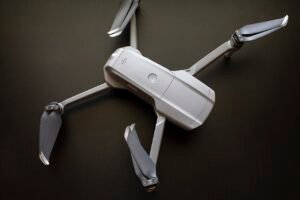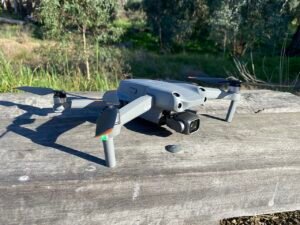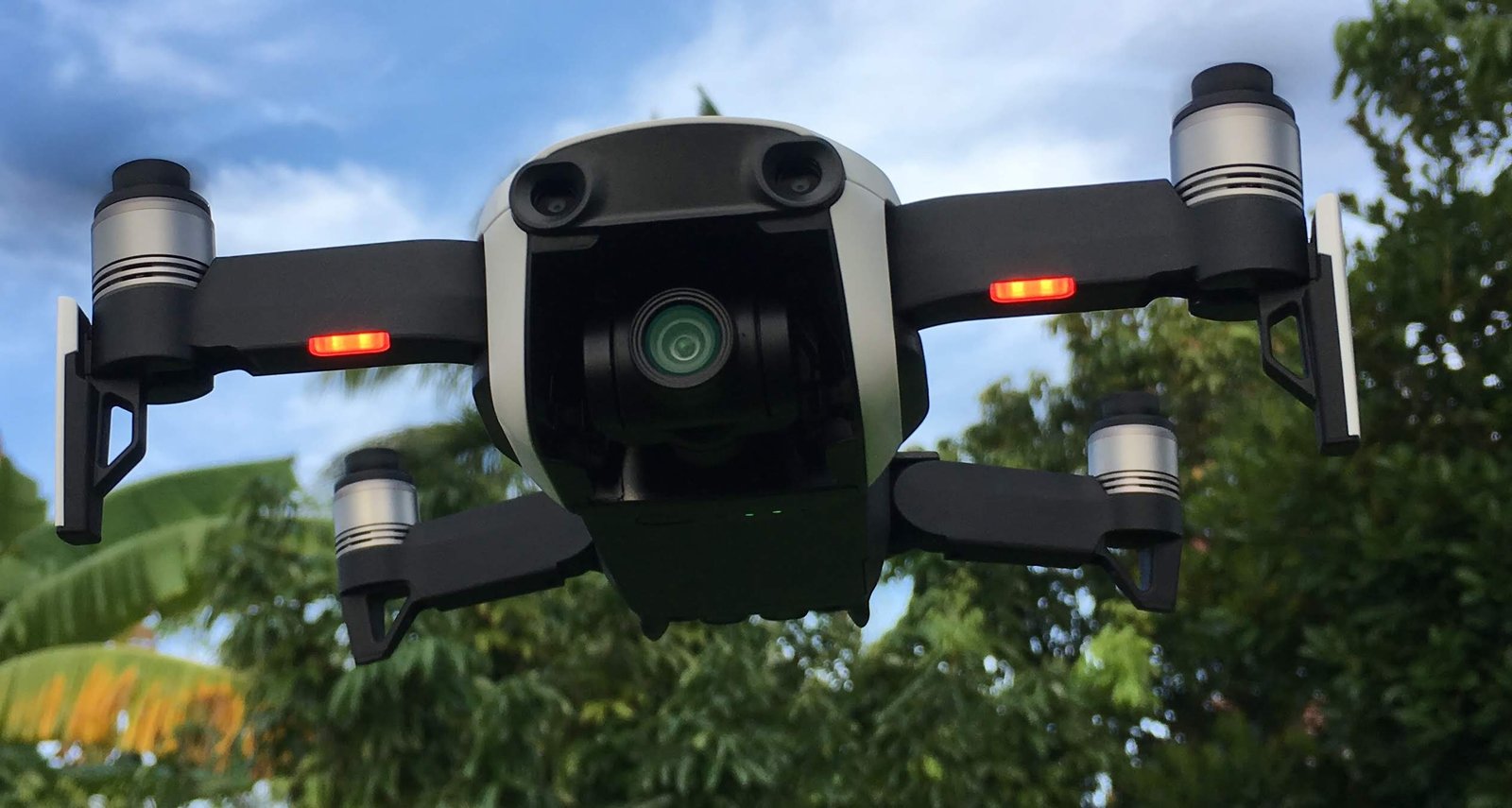

Photo: Yanjipy · Licence: CC BY-SA 4.0 · View the original source and licence terms.
DJI / DRONE PROFILE
DJI Mavic Air Review: 4K Camera, Compact Design and Flight Specs
Explore the available technical information for this aircraft, including camera capabilities, flight performance and manufacturer-specific specifications.
The original DJI Mavic Air brought a compact folding design and a 4K camera to DJI’s consumer drone range. Although newer models offer longer endurance and more advanced sensing, the Mavic Air remains a recognisable option on the second-hand market. Its small folded size, three-axis gimbal and RAW photo support make it useful to understand when comparing older travel drones.
DJI Mavic Air specifications
| Specification | Manufacturer-published value |
|---|---|
| Takeoff weight | 430g |
| Camera sensor | 1/2.3-inch CMOS, 12MP |
| Lens | 24mm equivalent, f/2.8, 85° FOV |
| Video | 4K up to 30fps; 2.7K and Full HD options |
| Maximum video bitrate | 100Mbps |
| Gimbal | 3-axis mechanical stabilisation |
| Maximum flight time | 21 minutes (DJI test at a steady 25km/h, no wind) |
| Maximum flight distance | 10km under DJI’s specified no-wind test conditions |
| Maximum speed | 68.4km/h in S-mode under specified no-wind conditions |
| Satellite positioning | GPS + GLONASS |
| Obstacle sensing | Forward, backward and downward vision sensing |
Camera and image quality
The Mavic Air uses a 12MP 1/2.3-inch CMOS sensor with a fixed 24mm-equivalent f/2.8 lens. It captures 4K video at up to 30 frames per second and supports JPEG and DNG RAW photographs. The camera also offers HDR, burst, exposure bracketing and panorama modes. The three-axis gimbal is important: it mechanically stabilises the camera to produce smoother footage than electronic stabilisation alone.
Its fixed lens means there is no optical zoom. To change composition, the pilot must reposition the aircraft while maintaining a safe distance from people, buildings and obstacles.
Flight performance
DJI lists a maximum flight time of 21 minutes in a no-wind test at a consistent 25km/h. This is a controlled maximum, not a realistic guarantee for every flight. Wind, cold, battery ageing, repeated acceleration and a prudent return reserve all reduce usable airtime. DJI’s stated 10km maximum flight distance is also a test figure and should not be interpreted as permission or a practical plan to fly beyond visual line of sight.
Positioning and obstacle sensing
The aircraft uses GPS and GLONASS for satellite positioning. Its vision system can assist with positioning and obstacle awareness when lighting and surface conditions are suitable. The sensors do not provide complete protection in every direction or environment. Low light, featureless surfaces, reflective materials and fast movement can reduce sensing reliability.
Who is the Mavic Air for?
The Mavic Air is best considered by buyers who want an inexpensive, compact 4K drone for learning, casual aerial photography or occasional travel use. It is less suitable for demanding professional work where longer flight time, advanced obstacle sensing, stronger low-light imaging or modern transmission features are important.
What to check before buying used
- Inspect the folding arms, hinges, motor mounts and propellers for cracks or repairs.
- Check the gimbal camera for vibration, horizon drift, lens damage and error messages.
- Inspect each battery for swelling, damaged contacts and inconsistent charge levels.
- Confirm the controller, charging equipment, cables and spare propellers are included.
- Test GPS acquisition, compass status, vision sensors and return-to-home in a safe open area.
- Check app and firmware compatibility with the phone or tablet you plan to use.
DJI Mavic Air vs Mavic Air 2
The Mavic Air 2 is a substantial step forward: it has a larger 1/2-inch sensor with 12MP and 48MP photo modes, 4K video up to 60fps, OcuSync 2.0 and a DJI-rated 34-minute maximum flight time. The original Mavic Air is lighter at 430g, but its 21-minute rated flight time and older camera system make it a more basic option. Compare condition and total kit price carefully if shopping used.
Final verdict
The original Mavic Air can still serve as an entry-level used 4K camera drone, provided it is inexpensive, well maintained and compatible with your setup. Its age is the main consideration: battery health, firmware/app support and replacement parts matter more than the headline specification sheet.
Official specifications and notes
Check DJI’s official Mavic Air support and specification page before buying or operating the aircraft. Performance values are manufacturer test figures and vary in real use. This is a specification-based guide, not a hands-on flight test.
Who should consider DJI Mavic Air Review: 4K Camera, Compact Design and Flight Specs?
Before paying, calculate whether the complete kit is worth buying. Include the controller, batteries, charger, spare propellers, carrying case, memory card and any required phone or app compatibility. A low used price can be offset by expensive or unavailable batteries and accessories. For DJI Mavic Air Review: 4K Camera, Compact Design and Flight Specs, battery age, app compatibility and replacement-part availability can matter more than the original launch specification.
Limitations and trade-offs to understand
Modern safety features may be absent or limited. Check the exact sensing directions, obstacle detection conditions, GNSS support and failsafe behaviour in the manual. Maintain conservative distances and do not rely on an older aircraft for missions that require current safety, data-security or regulatory features. For DJI Mavic Air Review: 4K Camera, Compact Design and Flight Specs, test the aircraft with the exact controller and mobile device you intend to use before paying.
Alternatives worth comparing
Compare the used aircraft with a current-generation compact camera drone and calculate the total cost of a reliable kit. If image quality, obstacle sensing, battery availability or app support is important, a newer model may be better value even when its initial price is higher. For DJI Mavic Air Review: 4K Camera, Compact Design and Flight Specs, compare the complete used kit price with a current alternative and include the risk of unavailable parts.
Pre-purchase and ownership checklist
Ask the seller to demonstrate the aircraft with all batteries and the included controller. Check firmware and app compatibility on your own device, inspect the gimbal and motors, verify the return-to-home function in a safe test area and confirm whether parts can still be sourced. For DJI Mavic Air Review: 4K Camera, Compact Design and Flight Specs, verify the exact sub-variant because similar model names can use different cameras, batteries or radio systems.
How to use this specification profile
This page is a research-based reference, not a claim that IGIDRONE has independently flight-tested the aircraft. Treat manufacturer maximums as test-condition figures and distinguish standard equipment from optional accessories or regional bundles. Before buying, compare the exact model code, firmware, battery, controller and payload configuration against the current official manual. If a field is marked unknown or is not documented by the manufacturer, do not infer a value from a similarly named variant. For DJI Mavic Air Review: 4K Camera, Compact Design and Flight Specs, battery age, app compatibility and replacement-part availability can matter more than the original launch specification.
Primary manufacturer reference: Open the manufacturer specification or support page. Confirm the current regional documentation before purchase. For DJI Mavic Air Review: 4K Camera, Compact Design and Flight Specs, test the aircraft with the exact controller and mobile device you intend to use before paying.
Editorial update: 8 November 2026. Model availability, prices, software support and regional operating rules can change. Confirm them with the manufacturer, authorised distributor and relevant aviation authority before purchase or flight. For DJI Mavic Air Review: 4K Camera, Compact Design and Flight Specs, compare the complete used kit price with a current alternative and include the risk of unavailable parts.
Drone Specifications
| Brand | DJI |
|---|---|
| Camera | 1/2.3-inch CMOS, 12 MP; fixed-focus 24 mm-equivalent f/2.8 lens |
| Maximum Video Resolution | 4K/30fps; 2.7K/60fps; 1080p/120fps; 60 Mbps |
| Maximum Flight Time (minutes) | 21 min maximum flight time; 20 min maximum hovering time (DJI no-wind tests) minutes |
| Maximum Transmission Range (km) | Remote-controller transmission: 4 km FCC; 2 km CE/SRRC/MIC (2.4 GHz); 4 km FCC, 0.5 km CE and 2.5 km SRRC (5.8 GHz) km |
| Weight (g) | 430 g g |
| Battery Capacity (mAh) | 2,375 mAh, 11.55 V, 27.43 Wh mAh |
| Wind Resistance (m/s) | 29–38 km/h m/s |
| Obstacle Sensing | Forward and backward vision sensors; downward vision/positioning |
| Positioning / GPS | GPS + GLONASS |
| Maximum Speed (m/s) | 68.4 km/h (S mode) m/s |
Additional Notes
DJI lists the Mavic Air as discontinued. 21-minute flight time is a no-wind test at 25 km/h; not a typical mission guarantee.
Specification source: Official source
Last verified: 2026-11-08
Official Price (USD)
No public USD price was verified on the manufacturer’s official store during this check.
For enterprise or discontinued models, contact the manufacturer for a current quotation. We do not substitute third-party seller prices.
Price checked: 2026-11-07
MODEL TECHNICAL RECORD
Detailed Technical Specifications
Manufacturer-specific technical information recorded for this model. Values not present in the source record are not estimated.
Aircraft
| Takeoff Weight | 430 g |
|---|---|
| Dimensions | Folded: 168×83×49 mm (L×W×H) Unfolded: 168×184×64 mm (L×W×H) |
| Diagonal Distance | 213 mm |
| Max Ascent Speed | 4 m/s (S - mode[1]) 2 m/s (P - mode) 2 m/s (Wi-Fi mode) |
| Max Descent Speed | 3 m/s (S - mode[1]) 1.5 m/s (P - mode) 1 m/s (Wi-Fi mode) |
| Max Speed (near sea level, no wind) | 68.4 kph (S - mode[1]) 28.8 kph (P - mode) 28.8 kph (Wi-Fi mode) |
| Maximum Takeoff Altitude | 5000 m |
| Max Flight Time (no wind) | 21 minutes (at a consistent 25 kph) |
| Max Hovering Time (no wind) | 20 minutes |
| Max Flight Distance (no wind) | 10 km |
| Max Wind Speed Resistance | 29 - 38 kph |
| Max Pitch Angle | 35° (S - mode[1]) 15° (P - mode) |
| Max Angular Velocity | 250°/s (S - mode[1]) 250°/s (P - mode) |
| Operating Temperature Range | 0°C - 40°C |
| Operating Frequency | 2.400 - 2.4835 GHz 5.725 - 5.850 GHz |
| Transmission Power (EIRP) | 2.400 - 2.4835 GHz FCC: ≤28 dBm CE: ≤19 dBm SRRC: ≤19 dBm MIC: ≤19 dBm 5.725 - 5.850 GHz FCC: ≤31 dBm CE: ≤14 dBm SRRC: ≤27 dBm |
| GNSS | GPS + GLONASS |
| Hovering Accuracy Range | Vertical: ±0.1 m (with Vision Positioning) ±0.5 m (with GPS Positioning) Horizontal: ±0.1 m (with Vision Positioning) ±1.5 m (with GPS Positioning) |
| Internal Storage | 8 GB |
Gimbal
| Mechanical Range | Tilt: -100° to 22° Roll: -30° to 30° Pan: -12° to 12° |
|---|---|
| Controllable Range | Tilt: -90° to 0° (default setting) -90° to +17° (extended) |
| Stabilization | 3-axis (tilt, roll, pan) |
| Max Control Speed (tilt) | 120°/s |
| Angular Vibration Range | ±0.005° |
Sensing System
| Forward | Precision Measurement Range: 0.5 - 12 m Detectable Range: 0.5 - 24 m Effective Sensing Speed: ≤ 8 m/s Field of View (FOV): Horizontal 50°, Vertical ±19° |
|---|---|
| Backward | Precision Measurement Range: 0.5 - 10 m Detectable Range: 0.5 - 20 m Effective Sensing Speed: ≤ 8 m/s Field of View (FOV): Horizontal 50°, Vertical ±19° |
| Downward | Altitude Range: 0.1 - 8 m Operating Range: 0.5 - 30 m |
| Operating Environment | Forward: Surface with clear pattern and adequate lighting (lux > 15) Backward: Surface with clear pattern and adequate lighting (lux > 15) Downward: Detects clearly patterned surfaces with adequate lighting (lux>15) and diffuse reflectivity (>20%) |
Camera
| Sensor | 1/2.3” CMOS Effective Pixels: 12 MP |
|---|---|
| Lens | FOV: 85° 35 mm Format Equivalent: 24 mm Aperture: f/2.8 Shooting Range: 0.5 m to ∞ |
| ISO Range | Video: 100 - 3200 (auto) 100 - 3200 (manual) Photo: 100 - 1600 (auto) 100 - 3200 (manual) |
| Shutter Speed | Electronic Shutter: 8 - 1/8000s |
| Still Image Size | 4:3: 4056×3040 16:9: 4056×2280 |
| Still Photography Modes | Single shot HDR Burst shooting: 3/5/7 frames Auto Exposure Bracketing (AEB): 3/5 bracketed frames at 0.7EV Bias Interval: 2/3/5/7/10/15/20/30/60 s Pano: 3×1: 42°×78°, 2048×3712 (W×H) 3×3: 119°×78°, 4096×2688 (W×H) 180°: 251°×88°, 6144×2048 (W×H) Sphere (3×8+1): 8192×4096 (W×H) |
| Video Resolution | 4K Ultra HD: 3840×2160 24/25/30p 2.7K: 2720×1530 24/25/30/48/50/60p FHD: 1920×1080 24/25/30/48/50/60/120p HD: 1280×720 24/25/30/48/50/60/120p |
| Max Video Bitrate | 100Mbps |
| Supported File System | FAT32 |
| Photo Format | JPEG/DNG (RAW) |
| Video Format | MP4/MOV (H.264/MPEG-4 AVC) |
Remote Controller
| Operating Frequency | 2.400 - 2.4835 GHz 5.725 - 5.850 GHz |
|---|---|
| Max Transmission Distance (unobstructed, free of interference) | 2.400 - 2.4835 GHz: FCC: 4000 m CE: 2000 m SRRC: 2000 m MIC: 2000 m 5.725 - 5.850 GHz: FCC: 4000 m CE: 500 m SRRC: 2500 m |
| Operating Temperature Range | 0℃ - 40℃ |
| Transmission Power (EIRP) | 2.400 - 2.4835 GHz: FCC:≤26 dBm CE: ≤18 dBm SRRC: ≤18 dBm MIC:≤18 dBm 5.725 - 5.850 GHz: FCC: ≤30 dBm CE: ≤14 dBm SRRC: ≤26 dBm |
| Battery | 2970 mAh |
| Operating Current/Voltage | 1400 mA ⎓ 3.7 V (Android) 750 mA ⎓ 3.7 V (iOS) |
| Supported Mobile Device Size | Max length: 160 mm Supported Thickness: 6.5-8.5 mm |
| Supported USB Port Types | Lightning, Micro USB (Type-B), USB-C |
Mobile Device Control
| Operating Frequency | 2.400 - 2.4835 GHz 5.725 - 5.850 GHz |
|---|---|
| Max Transmission Distance (unobstructed, free of interference) | Distance: 80 m Height: 50 m |
Charger
| Input | 100 - 240 V, 50/60 Hz, 1.4 A |
|---|---|
| Output | Main: 13.2 V ⎓ 3.79 A USB: 5 V ⎓ 2 A |
| Voltage | 13.2 V |
| Rated Power | 50 W |
Intelligent Flight Battery
| Capacity | 2375 mAh |
|---|---|
| Voltage | 11.55 V |
| Max Charging Voltage | 13.2 V |
| Battery Type | LiPo 3S |
| Energy | 27.43 Wh |
| Net Weight | 140 g |
| Charging Temperature Range | 5℃ - 40℃ |
| Max Charging Power | 60 W |
APP
| Video Transmission System | Enhanced Wi-Fi |
|---|---|
| Name | DJI GO 4 |
| Live View Quality | Remote Controller: 720p@30fps Smart Device: 720p@30fps DJI Goggles: 720p@30fps |
| Latency (depending on environmental conditions and mobile device) | 170 - 240 ms |
Supported SD Cards
| Supported SD Cards | microSD Class 10 or UHS-1 rating required |
|---|---|
| Recommended microSD Cards | 16G Sandisk Extreme Kingston 16GB SDHC-I SDCAC/16GB 32G Sandisk Extreme V30 Sandisk Extreme V30 A1 Sandisk Extreme V30 Pro A1 64G Sandisk Extreme V30 A1 Sandisk Extreme Pro V30 A1 128G Sandisk Extreme V30 A1 Sandisk Extreme Plus V30 A1 |
Footnotes
| Footnotes | [1] Remote controller reqired. |
|---|


MANUFACTURER DATA
Detailed official specifications
Technical figures below are transcribed from the manufacturer documentation linked with this profile. Test figures are maximum or controlled-condition ratings where stated; actual performance varies by configuration and operating conditions. A field is omitted when the cited source does not publish a reliable value.
Manufacturer source last checked: 2026-11-08
Evidence type: Official DJI manufacturer specifications / support documentation
Aircraft
| Takeoff Weight | 430 g |
|---|---|
| Dimensions | Folded: ; 168×83×49 mm (L×W×H); Unfolded: ; 168×184×64 mm (L×W×H) |
| Diagonal Distance | 213 mm |
| Max Ascent Speed | 4 m/s (S - mode[1]); 2 m/s (P - mode); 2 m/s (Wi-Fi mode) |
| Max Descent Speed | 3 m/s (S - mode[1]); 1.5 m/s (P - mode); 1 m/s (Wi-Fi mode) |
| Max Speed (near sea level, no wind) | 68.4 kph (S - mode[1]); 28.8 kph (P - mode); 28.8 kph (Wi-Fi mode) |
| Maximum Takeoff Altitude | 5000 m |
| Max Flight Time (no wind) | 21 minutes (at a consistent 25 kph) |
| Max Hovering Time (no wind) | 20 minutes |
| Max Flight Distance (no wind) | 10 km |
| Max Wind Speed Resistance | 29 - 38 kph |
| Max Pitch Angle | 35° (S - mode[1]); 15° (P - mode) |
| Max Angular Velocity | 250°/s (S - mode[1]); 250°/s (P - mode) |
| Operating Temperature Range | 0°C - 40°C |
| Operating Frequency | 2.400 - 2.4835 GHz; 5.725 - 5.850 GHz |
| Transmission Power (EIRP) | 2.400 - 2.4835 GHz; FCC: ≤28 dBm; CE: ≤19 dBm; SRRC: ≤19 dBm; MIC: ≤19 dBm; ; 5.725 - 5.850 GHz; FCC: ≤31 dBm; CE: ≤14 dBm; SRRC: ≤27 dBm |
| GNSS | GPS + GLONASS |
| Hovering Accuracy Range | Vertical: ; ±0.1 m (with Vision Positioning); ±0.5 m (with GPS Positioning); ; Horizontal:; ±0.1 m (with Vision Positioning); ±1.5 m (with GPS Positioning) |
| Internal Storage | 8 GB |
Gimbal
| Mechanical Range | Tilt: -100° to 22°; Roll: -30° to 30°; Pan: -12° to 12° |
|---|---|
| Controllable Range | Tilt: -90° to 0° (default setting); -90° to +17° (extended) |
| Stabilization | 3-axis (tilt, roll, pan) |
| Max Control Speed (tilt) | 120°/s |
| Angular Vibration Range | ±0.005° |
Sensing System
| Forward | Precision Measurement Range: 0.5 - 12 m; Detectable Range: 0.5 - 24 m; Effective Sensing Speed: ≤ 8 m/s; Field of View (FOV): Horizontal 50°, Vertical ±19° |
|---|---|
| Backward | Precision Measurement Range: 0.5 - 10 m; Detectable Range: 0.5 - 20 m; Effective Sensing Speed: ≤ 8 m/s; Field of View (FOV): Horizontal 50°, Vertical ±19° |
| Downward | Altitude Range: 0.1 - 8 m; Operating Range: 0.5 - 30 m |
| Operating Environment | Forward:; Surface with clear pattern and adequate lighting (lux > 15); ; Backward:; Surface with clear pattern and adequate lighting (lux > 15); ; Downward: ; Detects clearly patterned surfaces with adequate lighting (lux>15) and diffuse reflectivity (>20%) |
Camera
| Sensor | 1/2.3” CMOS; Effective Pixels: 12 MP |
|---|---|
| Lens | FOV: 85°; 35 mm Format Equivalent: 24 mm; Aperture: f/2.8; Shooting Range: 0.5 m to ∞ |
| ISO Range | Video:; 100 - 3200 (auto); 100 - 3200 (manual); ; Photo:; 100 - 1600 (auto); 100 - 3200 (manual) |
| Shutter Speed | Electronic Shutter: 8 - 1/8000s |
| Still Image Size | 4:3: 4056×3040; 16:9: 4056×2280 |
| Still Photography Modes | Single shot; HDR; Burst shooting: 3/5/7 frames; Auto Exposure Bracketing (AEB): 3/5 bracketed frames at 0.7EV Bias; Interval: 2/3/5/7/10/15/20/30/60 s; Pano: 3×1: 42°×78°, 2048×3712 (W×H) ; 3×3: 119°×78°, 4096×2688 (W×H); 180°: 251°×88°, 6144×2048 (W×H) ; Sphere (3×8+1): 8192×4096 (W×H) |
| Video Resolution | 4K Ultra HD: 3840×2160 24/25/30p; 2.7K: 2720×1530 24/25/30/48/50/60p; FHD: 1920×1080 24/25/30/48/50/60/120p; HD: 1280×720 24/25/30/48/50/60/120p |
| Max Video Bitrate | 100Mbps |
| Supported File System | FAT32 |
| Photo Format | JPEG/DNG (RAW) |
| Video Format | MP4/MOV (H.264/MPEG-4 AVC) |
Remote Controller
| Operating Frequency | 2.400 - 2.4835 GHz; 5.725 - 5.850 GHz |
|---|---|
| Max Transmission Distance (unobstructed, free of interference) | 2.400 - 2.4835 GHz:; FCC: 4000 m; CE: 2000 m; SRRC: 2000 m; MIC: 2000 m; ; 5.725 - 5.850 GHz:; FCC: 4000 m; CE: 500 m; SRRC: 2500 m |
| Operating Temperature Range | 0℃ - 40℃ |
| Transmission Power (EIRP) | 2.400 - 2.4835 GHz:; FCC:≤26 dBm; CE: ≤18 dBm; SRRC: ≤18 dBm; MIC:≤18 dBm; ; 5.725 - 5.850 GHz:; FCC: ≤30 dBm; CE: ≤14 dBm; SRRC: ≤26 dBm |
| Battery | 2970 mAh |
| Operating Current/Voltage | 1400 mA ⎓ 3.7 V (Android); 750 mA ⎓ 3.7 V (iOS) |
| Supported Mobile Device Size | Max length: 160 mm; Supported Thickness: 6.5-8.5 mm |
| Supported USB Port Types | Lightning, Micro USB (Type-B), USB-C |
Mobile Device Control
| Operating Frequency | 2.400 - 2.4835 GHz; 5.725 - 5.850 GHz |
|---|---|
| Max Transmission Distance (unobstructed, free of interference) | Distance: 80 m; Height: 50 m |
Charger
| Input | 100 - 240 V, 50/60 Hz, 1.4 A |
|---|---|
| Output | Main: 13.2 V ⎓ 3.79 A; USB: 5 V ⎓ 2 A |
| Voltage | 13.2 V |
| Rated Power | 50 W |
Intelligent Flight Battery
| Capacity | 2375 mAh |
|---|---|
| Voltage | 11.55 V |
| Max Charging Voltage | 13.2 V |
| Battery Type | LiPo 3S |
| Energy | 27.43 Wh |
| Net Weight | 140 g |
| Charging Temperature Range | 5℃ - 40℃ |
| Max Charging Power | 60 W |
APP
| Video Transmission System | Enhanced Wi-Fi |
|---|---|
| Name | DJI GO 4 |
| Live View Quality | Remote Controller:; 720p@30fps; Smart Device:; 720p@30fps; DJI Goggles:; 720p@30fps |
| Latency (depending on environmental conditions and mobile device) | 170 - 240 ms |
Supported SD Cards
| Supported SD Cards | microSD; Class 10 or UHS-1 rating required |
|---|---|
| Recommended microSD Cards | 16G ; Sandisk Extreme; Kingston 16GB SDHC-I SDCAC/16GB; 32G ; Sandisk Extreme V30; Sandisk Extreme V30 A1; Sandisk Extreme V30 Pro A1; 64G ; Sandisk Extreme V30 A1; Sandisk Extreme Pro V30 A1; 128G ; Sandisk Extreme V30 A1; Sandisk Extreme Plus V30 A1; |
Footnotes
| Footnotes | [1] Remote controller reqired. |
|---|
Source: manufacturer technical specifications and official support documentation. Regional versions, payloads, batteries, firmware and test conditions can change the stated figures. Check the linked source for the applicable configuration.
Related Dji drones
Explore other published models from the same manufacturer.