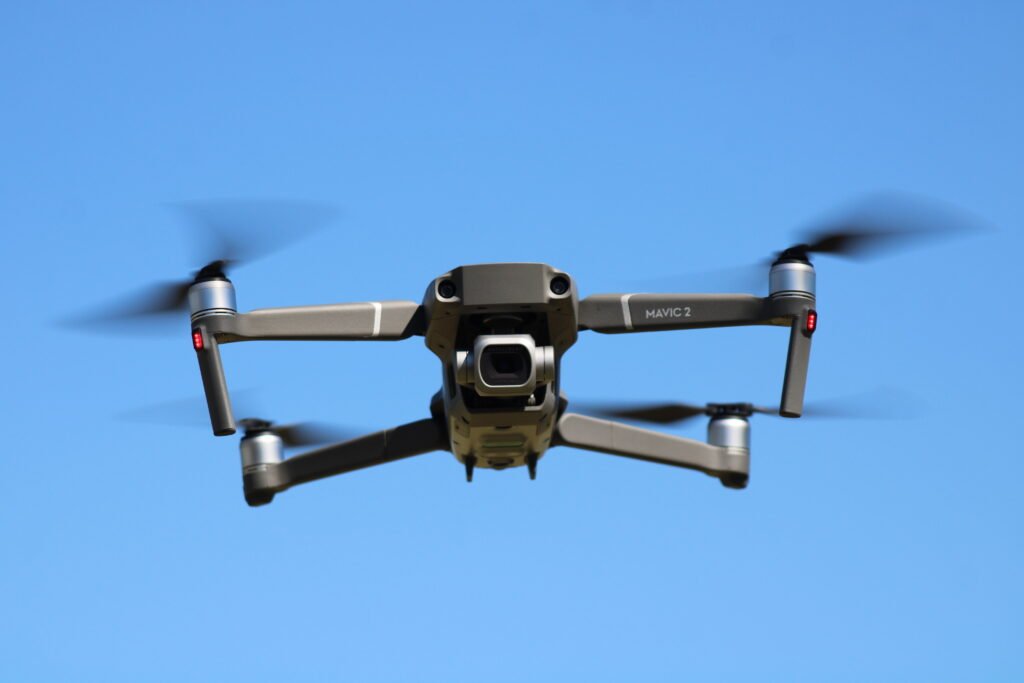
Photo: ZLEA · Licence: CC BY-SA 4.0 · View the original source and licence terms.
DJI / DRONE PROFILE
DJI Mavic 2 Series Guide: Mavic 2 Pro vs Mavic 2 Zoom
Explore the available technical information for this aircraft, including camera capabilities, flight performance and manufacturer-specific specifications.
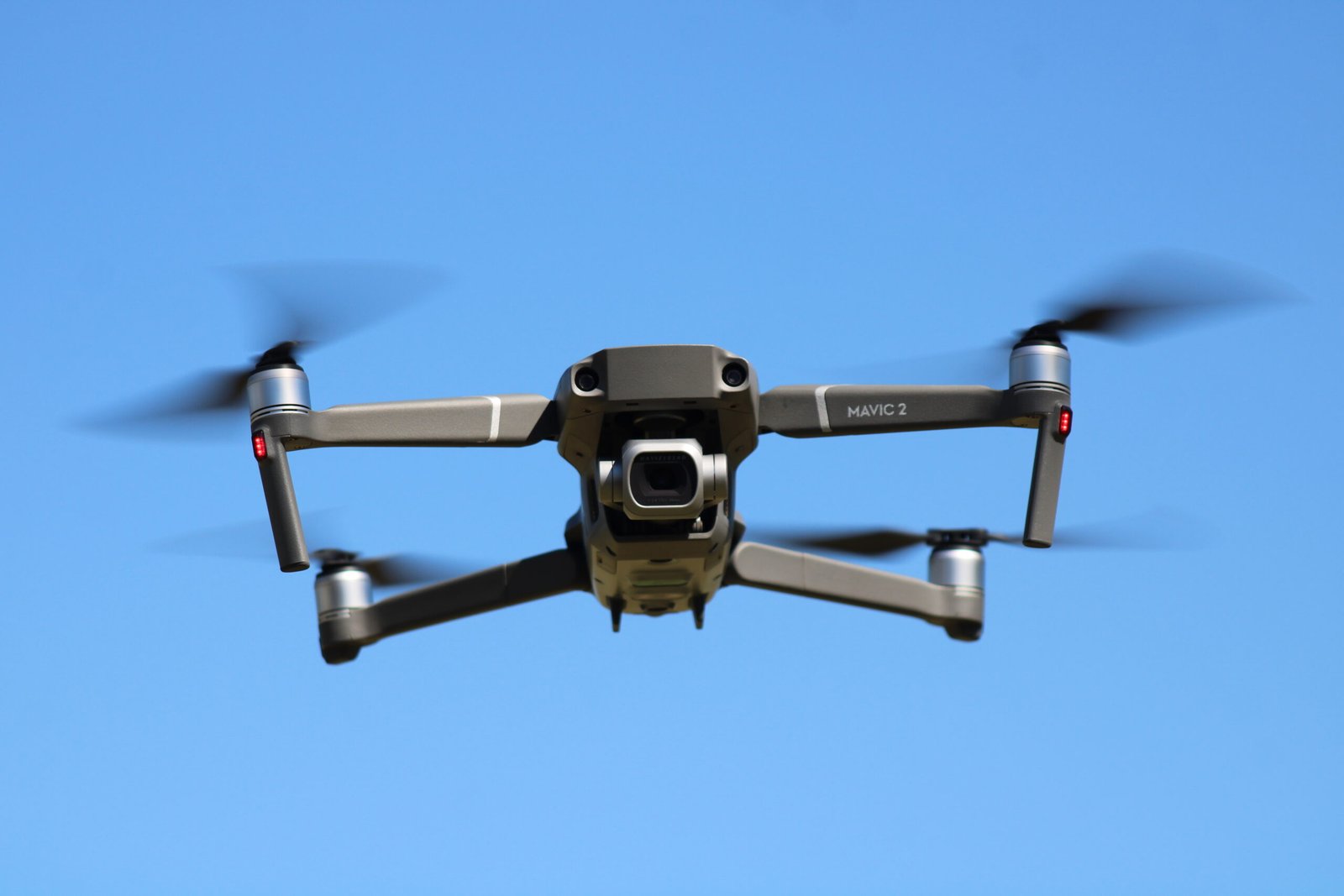
The DJI Mavic 2 Pro and DJI Mavic 2 Zoom share much of the same foldable aircraft platform, but they are separate camera models. The Pro prioritises a larger sensor and image-control options, while the Zoom offers optical framing flexibility. This page is a family overview; use the separate model reviews for complete specifications.
Key differences
| Feature | Mavic 2 Pro | Mavic 2 Zoom |
|---|---|---|
| Takeoff weight | 907g | 905g |
| Camera sensor | 1-inch CMOS, 20MP | 1/2.3-inch CMOS, 12MP |
| Lens | 28mm equivalent, f/2.8–f/11 | 24–48mm equivalent, 2× optical zoom |
| Colour profile | D-Log M 10-bit and HLG | D-Cinelike |
| Maximum flight time | 31min (DJI test) | 31min (DJI test) |
Which model should you choose?
Choose the Mavic 2 Pro if sensor size, 20MP still photos, adjustable aperture and colour-grading flexibility are your priorities. Choose the Mavic 2 Zoom if you value optical zoom and want to change framing without moving the aircraft closer to the subject. Both are older models, so used buyers should inspect batteries, gimbal condition, controller and parts availability.
Read the individual reviews
Official source
See DJI’s official Mavic 2 specifications and support page. Flight-time figures are manufacturer test results and actual performance varies with conditions.
The Mavic 2 family guide covers the Pro and Zoom consumer camera models
This comparison focuses on the consumer Mavic 2 Pro and Mavic 2 Zoom. DJI also sold Mavic 2 Enterprise variants with different cameras, accessories and operational features; those should be evaluated from their own model-specific specifications rather than folded into this Pro-versus-Zoom table. The aircraft name alone is not enough to identify the camera package when shopping for a used drone.
Camera choice: sensor size versus optical framing
The Mavic 2 Pro’s 1-inch 20MP sensor and adjustable aperture are useful when image detail, low-light flexibility and still-photo latitude are priorities. Its Hasselblad-branded camera records 10-bit Dlog-M and HLG video, giving editors more room for colour work than a basic consumer profile. The Mavic 2 Zoom uses a 12MP 1/2.3-inch sensor with a 24–48mm equivalent optical zoom lens. That makes it easier to change framing from a distance without relying only on digital cropping.
The Zoom’s Dolly Zoom creative mode changes focal length while the aircraft moves to create a perspective effect; it requires careful scene planning and sufficient open space. Optical zoom does not make the Zoom camera equivalent to the Pro’s larger sensor. Conversely, the Pro’s larger sensor does not provide the Zoom model’s 2× optical focal-length range.
Buying a used Mavic 2
- Confirm Pro or Zoom from the aircraft, camera and controller model information, not just the seller’s listing title.
- Inspect the gimbal for startup errors, horizon tilt, vibration and damaged dampers.
- Check the camera lens for scratches, haze, dust and signs of impact.
- Review battery health, swelling, cycle history and the ability to charge and discharge normally.
- Test GPS acquisition, obstacle-sensing functions, return-to-home and the remote-control link in a safe open area.
- Confirm the DJI Fly app and firmware combination still supports the aircraft and controller in your region.
- Check local registration, remote identification and operating requirements; an older aircraft is not automatically exempt from current rules.
DJI’s published 31-minute maximum flight time is a controlled test figure, not a realistic promise for every flight. Plan with a safe reserve and account for battery age, wind, temperature and the condition of a second-hand aircraft.
Who should consider DJI Mavic 2 Series Guide: Mavic 2 Pro vs Mavic 2 Zoom?
The best value is usually the configuration that contains the accessories you will genuinely use. Compare the aircraft-only price with packages that include a controller, extra batteries, charging hub, spare propellers and a case. Check the regional version, warranty provider, service location and replacement-battery availability before ordering. For DJI Mavic 2 Series Guide: Mavic 2 Pro vs Mavic 2 Zoom, compare the camera modes you will actually use with your phone or computer editing capability and storage budget.
Limitations and trade-offs to understand
Obstacle sensing has blind spots and operating limits. Thin wires, branches, low-contrast surfaces, darkness, reflective objects and fast movement can challenge sensors. Automated tracking and return-to-home features should be treated as assistance, not as a guarantee that the aircraft will avoid every hazard. For DJI Mavic 2 Series Guide: Mavic 2 Pro vs Mavic 2 Zoom, price the complete kit with controller, batteries, charging accessories and a protective case rather than the aircraft alone.
Alternatives worth comparing
Compare this model with the nearest aircraft in the same use category and total-kit budget. A smaller compact model may be easier to carry, while a higher-tier camera drone may offer more lens or low-light flexibility. Compare the practical difference you will notice, not just the number of specifications. For DJI Mavic 2 Series Guide: Mavic 2 Pro vs Mavic 2 Zoom, confirm take-off weight and destination rules for the exact battery configuration before travel.
Pre-purchase and ownership checklist
Check the official specification page and manual for the regional model, battery configuration, controller compatibility, weight, sensor limitations, firmware and service. Confirm local aviation rules and no-fly restrictions for every planned destination before flying. For DJI Mavic 2 Series Guide: Mavic 2 Pro vs Mavic 2 Zoom, review the manual limitations for wind, obstacle sensing and return-to-home rather than treating automation as a guarantee.
How to use this specification profile
This page is a research-based reference, not a claim that IGIDRONE has independently flight-tested the aircraft. Treat manufacturer maximums as test-condition figures and distinguish standard equipment from optional accessories or regional bundles. Before buying, compare the exact model code, firmware, battery, controller and payload configuration against the current official manual. If a field is marked unknown or is not documented by the manufacturer, do not infer a value from a similarly named variant. For DJI Mavic 2 Series Guide: Mavic 2 Pro vs Mavic 2 Zoom, compare the camera modes you will actually use with your phone or computer editing capability and storage budget.
Primary manufacturer reference: Open the manufacturer specification or support page. Confirm the current regional documentation before purchase. For DJI Mavic 2 Series Guide: Mavic 2 Pro vs Mavic 2 Zoom, price the complete kit with controller, batteries, charging accessories and a protective case rather than the aircraft alone.
Editorial update: 8 November 2026. Model availability, prices, software support and regional operating rules can change. Confirm them with the manufacturer, authorised distributor and relevant aviation authority before purchase or flight. For DJI Mavic 2 Series Guide: Mavic 2 Pro vs Mavic 2 Zoom, confirm take-off weight and destination rules for the exact battery configuration before travel.
Drone Specifications
| Brand | DJI |
|---|---|
| Camera | Mavic 2 Pro: 1-inch CMOS, 20 MP; Mavic 2 Zoom: 1/2.3-inch CMOS, 12 MP |
| Maximum Video Resolution | Both: 4K/30fps; 2.7K/60fps; 1080p/120fps; max 100 Mbps |
| Maximum Flight Time (minutes) | Up to 31 min (DJI no-wind test at 25 km/h) minutes |
| Maximum Transmission Range (km) | 10 km FCC; 6 km CE/SRRC/MIC, unobstructed km |
| Weight (g) | 907 g (Pro); 905 g (Zoom) g |
| Battery Capacity (mAh) | 3,850 mAh; 15.4 V; 59.29 Wh mAh |
| Wind Resistance (m/s) | 29–38 km/h m/s |
| Obstacle Sensing | Omnidirectional obstacle sensing, with lateral sensing limited to specified flight modes |
| Positioning / GPS | GPS + GLONASS |
| Maximum Speed (m/s) | 72 km/h (Sport mode, no wind) m/s |
Additional Notes
Series guide compares two camera variants. Camera, weight and sensor specifications are variant-specific; do not treat Pro and Zoom as the same camera.
Specification source: Official source
Last verified: 2026-11-08
Official Price (USD)
No public USD price was verified on the manufacturer’s official store during this check.
For enterprise or discontinued models, contact the manufacturer for a current quotation. We do not substitute third-party seller prices.
Price checked: 2026-11-07
MODEL TECHNICAL RECORD
Detailed Technical Specifications
Manufacturer-specific technical information recorded for this model. Values not present in the source record are not estimated.
General
| Sensor | 1” CMOS Effective Pixels: 20 million |
|---|---|
| Lens | FOV: about 77° 35 mm Format Equivalent: 28 mm Aperture: f/2.8–f/11 Shooting Range: 1 m to ∞ |
| ISO Range | Video: 100-6400 Photo: 100-3200 (auto) 100-12800 (manual) |
| Shutter Speed | Electronic Shutter: 8–1/8000s |
| Still Image Size | 5472×3648 |
| Still Photography Modes | Single shot Burst shooting: 3/5 frames Auto Exposure Bracketing (AEB): 3/5 bracketed frames at 0.7 EV Bias Interval (JPEG: 2/3/5/7/10/15/20/30/60s RAW:5/7/10/15/20/30/60s) |
| Video Resolution | 4K: 3840×2160 24/25/30p 2.7K: 2688x1512 24/25/30/48/50/60p FHD: 1920×1080 24/25/30/48/50/60/120p |
| Max Video Bitrate | 100Mbps |
| Color Mode | Dlog-M (10bit), support HDR video (HLG 10bit) |
| Supported File System | FAT32 (≤ 32 GB) exFAT (> 32 GB) |
| Photo Format | JPEG / DNG (RAW) |
| Video Format | MP4 / MOV (MPEG-4 AVC/H.264, HEVC/H.265) |
| Takeoff Weight | Mavic 2 Pro: 907 g Mavic 2 Zoom: 905g |
| Dimensions | Folded: 214×91×84 mm (length×width×height) Unfolded: 322×242×84 mm (length×width×height) |
| Diagonal Distance | 354 mm |
| Max Ascent Speed | 5 m/s (S-mode) 4 m/s (P-mode) |
| Max Descent Speed | 3 m/s (S-mode) 3 m/s (P-mode) |
| Max Speed (near sea level, no wind) | 72 kph (S-mode) |
| Maximum Takeoff Altitude | 6000 m |
| Max Flight Time (no wind) | 31 minutes (at a consistent 25 kph) |
| Max Hovering Time (no wind) | 29 minutes |
| Max Flight Distance (no wind) | 18 km (at a consistent 50 kph) |
| Max Wind Speed Resistance | 29–38 kph |
| Max Pitch Angle | 35° (S-mode, with remote controller) 25° (P-mode) |
| Max Angular Velocity | 200°/s |
| Operating Temperature Range | -10°C to 40°C |
| Operating Frequency | 2.400 - 2.483 GHz 5.725 - 5.850 GHz |
| Transmission Power (EIRP) | 2.400 - 2.483 GHz FCC:≤26 dBm CE:≤20 dBm SRRC:≤20 dBm MIC:≤20 dBm 5.725-5.850 GHz FCC:≤26 dBm CE:≤14 dBm SRRC:≤26 dBm |
| GNSS | GPS+GLONASS |
| Hovering Accuracy Range | Vertical: ± 0.1 m (when vision positioning is active) ± 0.5 m (with GPS positioning) Horizontal: ± 0.3 m (when vision positioning is active) ± 1.5 m (with GPS positioning) |
| Internal Storage | 8 GB |
| Sensing System | Omnidirectional Obstacle Sensing1 |
| Forward | Precision Measurement Range: 0.5 - 20 m Detectable Range: 20 - 40 m Effective Sensing Speed: ≤ 14m/s FOV: Horizontal: 40°, Vertical: 70° |
| Backward | Precision Measurement Range: 0.5 - 16 m Detectable Range: 16 - 32 m Effective Sensing Speed: ≤ 12m/s FOV: Horizontal: 60°, Vertical: 77° |
| Upward | Precision Measurement Range: 0.1 - 8 m |
| Downward | Precision Measurement Range: 0.5 - 11 m Detectable Range: 11 - 22 m |
| Sides | Precision Measurement Range: 0.5 - 10 m Effective Sensing Speed: ≤ 8m/s FOV: Horizontal: 80°, Vertical: 65° |
| Operating Environment | Forward, Backward and Sides: Surface with clear pattern and adequate lighting (lux > 15) Upward: Detects diffuse reflective surfaces (>20%) (walls, trees, people, etc.) Downward: Surface with clear pattern and adequate lighting (lux > 15) Detects diffuse reflective surfaces (>20%) (walls, trees, people, etc.) |
| Input | 100-240 V, 50/60 Hz, 1.8A |
| Output | Main: 17.6 V ⎓ 3.41 A or 17.0 V ⎓ 3.53 A USB: 5 V⎓2 A |
| Voltage | 17.6 ± 0.1 V |
| Rated Power | 60 W |
| Video Transmission System | OcuSync 2.0 |
| Name | DJI GO 4 |
| Live View Quality | Remote Controller: 720p@30fps / 1080p@30fps DJI Goggles: 720p@30fps / 1080p@30fps DJI Goggles RE: 720p@30fps / 1080p@30fps |
| Latency (depending on environmental conditions and mobile device) | 120 - 130 ms |
| Max Live View Bitrate | 12Mbps |
| Sensor (2) | 1/2.3" CMOSEffective Pixels: 12 million |
| Lens (2) | FOV: about 83° (24 mm); about 48° (48 mm) 35 mm Format Equivalent: 24-48 mm Aperture: f/2.8 (24 mm)–f/3.8 (48 mm) Shooting Range: 0.5 m to ∞ |
| ISO Range (2) | Video: 100-3200 Photo: 100-1600 (auto) 100-3200 (manual) |
| Shutter Speed (2) | Electronic Shutter: 8–1/8000s |
| Still Image Size (2) | 4000×3000 |
| Still Photography Modes (2) | Single shot Burst shooting: 3/5/7 frames Auto Exposure Bracketing (AEB): 3/5 bracketed frames at 0.7 EV Bias Interval (JPEG: 2/3/5/7/10/15/20/30/60s RAW:5/7/10/15/20/30/60s) |
| Video Resolution (2) | 4K: 3840×2160 24/25/30p 2.7K: 2688×1512 24/25/30/48/50/60p FHD: 1920×1080 24/25/30/48/50/60/120p |
| Max Video Bitrate (2) | 100Mbps |
| Color Mode (2) | D-Cinelike |
| Supported File System (2) | FAT32 (≤ 32 GB) exFAT (> 32 GB) |
| Photo Format (2) | JPEG / DNG (RAW) |
| Video Format (2) | MP4 / MOV (MPEG-4 AVC/H.264, HEVC/H.265) |
| Mechanical Range | Tilt: -135–45° Pan: -100–100° |
| Controllable Range | Tilt: -90–30° Pan: -75–75° |
| Stabilization | 3-axis (tilt, roll, pan) |
| Max Control Speed (tilt) | 120° /s |
| Angular Vibration Range | ±0.01° (Mavic 2 Pro) ±0.005° (Mavic 2 Zoom) |
| Operating Frequency (2) | 2.400 - 2.483 GHz; 5.725 - 5.850 GHz |
| Max Transmission Distance (unobstructed, free of interference) | 2.400 - 2.483 GHz; 5.725 - 5.850 GHz FCC: 10000 m CE: 6000 m SRRC: 6000 mMIC: 6000 m |
| Operating Temperature Range (2) | 0℃ - 40℃ |
| Transmission Power (EIRP) (2) | 2.400 - 2.483 GHz FCC: ≤26 dBm CE: ≤20 dBm SRRC: ≤20 dBmMIC: ≤20 dBm 5.725-5.850 GHz FCC: ≤26 dBm CE: ≤14 dBm SRRC: ≤26 dBm |
| Battery | 3950 mAh |
| Operating Current/Voltage | 1800 mA ⎓ 3.83 V |
| Supported Mobile Device Size | Max length: 160 mm; max thickness: 6.5–8.5 mm |
| Supported USB Port Types | Lightning, Micro USB (Type-B), USB-C |
| Capacity | 3850 mAh |
| Voltage (2) | 15.4 V |
| Max Charging Voltage | 17.6 V |
| Battery Type | LiPo 4S |
| Energy | 59.29 Wh |
| Net Weight | 297 g |
| Charging Temperature Range | 5℃ to 40℃ |
| Max Charging Power | 80 W |
| Supported SD Cards | Micro SD™ Supports a microSD with capacity of up to 128 GB. A UHS-I Speed Grade 3 rating microSD card is required. |
| Recommended microSD Cards | 32G Sandisk V30 Sandisk Extreme V30 Pro 64G Sandisk Extreme Pro V30 128G Sandisk Extreme V30 Sandisk Extreme Pro V30Kingston Canvas Go!Kingston Canvas React |
| Footnotes | [1] Omnidirectional Obstacle Sensing includes left/right, up/down, and forward/backward obstacle sensing. Sensing for left/right directions is only available in ActiveTrack , POI, QuickShot and Tripod mode. Omnidirectional Obstacle Sensing does not fully cover the circumference of a 360-degree arc. And left and right obstacle sensing system only works in specific modes and environments. DJI warranty does not cover any loss caused by crashing when flying left or right, even when ActiveTrack or Tripod mode is activated. Please be aware of your surroundings and App notifications when operating the Mavic 2 to ensure safety. |


MANUFACTURER DATA
Detailed official specifications
Technical figures below are transcribed from the manufacturer documentation linked with this profile. Test figures are maximum or controlled-condition ratings where stated; actual performance varies by configuration and operating conditions. A field is omitted when the cited source does not publish a reliable value.
Manufacturer source last checked: 2026-11-08
Evidence type: Official DJI manufacturer specifications / support documentation
Mavic 2 Pro Camera
| Sensor | 1” CMOS; Effective Pixels: 20 million |
|---|---|
| Lens | FOV: about 77°; 35 mm Format Equivalent: 28 mm; Aperture: f/2.8–f/11; Shooting Range: 1 m to ∞ |
| ISO Range | Video:; 100-6400; Photo: ; 100-3200 (auto); 100-12800 (manual) |
| Shutter Speed | Electronic Shutter: 8–1/8000s |
| Still Image Size | 5472 × 3648 |
| Still Photography Modes | Single shot; Burst shooting: 3/5 frames; Auto Exposure Bracketing (AEB): 3/5 bracketed frames at 0.7 EV Bias; Interval (JPEG: 2/3/5/7/10/15/20/30/60s RAW:5/7/10/15/20/30/60s) |
| Video Resolution | 4K: 3840 × 2160 24/25/30p; 2.7K: 2688x1512 24/25/30/48/50/60p; FHD: 1920 × 1080 24/25/30/48/50/60/120p; |
| Max Video Bitrate | 100Mbps |
| Color Mode | Dlog-M (10bit), support HDR video (HLG 10bit) |
| Supported File System | FAT32 (≤ 32 GB); exFAT (> 32 GB) |
| Photo Format | JPEG / DNG (RAW) |
| Video Format | MP4 / MOV (MPEG-4 AVC/H.264, HEVC/H.265) |
Aircraft
| Takeoff Weight | Mavic 2 Pro: 907 g; Mavic 2 Zoom: 905g |
|---|---|
| Dimensions | Folded:; 214 × 91 × 84 mm (length × width × height); Unfolded:; 322 × 242 × 84 mm (length × width × height) |
| Diagonal distance | 354 mm |
| Maximum ascent speed | 5 m/s (S-mode); 4 m/s (P-mode); |
| Maximum descent speed | 3 m/s (S-mode); 3 m/s (P-mode); |
| Max Speed (near sea level, no wind) | 72 km/h (S-mode) |
| Maximum Takeoff Altitude | 6000 m |
| Maximum flight time (manufacturer test conditions) | 31 minutes (at a consistent 25 km/h) |
| Max Hovering Time (no wind) | 29 minutes |
| Max Flight Distance (no wind) | 18 km (at a consistent 50 km/h) |
| Maximum wind resistance | 29–38 km/h |
| Max Pitch Angle | 35° (S-mode, with remote controller) 25° (P-mode) |
| Max Angular Velocity | 200°/s |
| Operating temperature range | -10°C to 40°C |
| Operating Frequency | 2.400 - 2.483 GHz; 5.725 - 5.850 GHz |
| Transmission Power (EIRP) | 2.400 - 2.483 GHz; FCC:≤26 dBm ; CE:≤20 dBm ; SRRC:≤20 dBm; MIC:≤20 dBm; 5.725-5.850 GHz; FCC:≤26 dBm ; CE:≤14 dBm; SRRC:≤26 dBm |
| Global navigation satellite system (GNSS) | GPS+GLONASS |
| Hovering Accuracy Range | Vertical:; ± 0.1 m (when vision positioning is active); ± 0.5 m (with GPS positioning); Horizontal:; ± 0.3 m (when vision positioning is active); ± 1.5 m (with GPS positioning) |
| Internal Storage | 8 GB |
Sensing System
| Sensing System | Omnidirectional Obstacle Sensing1 |
|---|---|
| Forward | Precision Measurement Range: 0.5 - 20 m; Detectable Range: 20 - 40 m; Effective Sensing Speed: ≤ 14m/s; FOV: Horizontal: 40°, Vertical: 70°; |
| Backward | Precision Measurement Range: 0.5 - 16 m; Detectable Range: 16 - 32 m; Effective Sensing Speed: ≤ 12m/s; FOV: Horizontal: 60°, Vertical: 77°; |
| Upward | Precision Measurement Range: 0.1 - 8 m |
| Downward | Precision Measurement Range: 0.5 - 11 m; Detectable Range: 11 - 22 m; |
| Sides | Precision Measurement Range: 0.5 - 10 m; Effective Sensing Speed: ≤ 8m/s; FOV: Horizontal: 80°, Vertical: 65° |
| Operating Environment | Forward, Backward and Sides:; Surface with clear pattern and adequate lighting (lux > 15); Upward:; Detects diffuse reflective surfaces (>20%) (walls, trees, people, etc.); Downward:; Surface with clear pattern and adequate lighting (lux > 15); Detects diffuse reflective surfaces (>20%) (walls, trees, people, etc.) |
Charger
| Input | 100-240 V, 50/60 Hz, 1.8A |
|---|---|
| Output | Main: 17.6 V ⎓ 3.41 A; or 17.0 V ⎓ 3.53 A USB: 5 V⎓2 A |
| Voltage | 17.6 ± 0.1 V |
| Rated Power | 60 W |
APP
| Video Transmission System | OcuSync 2.0 |
|---|---|
| Name | DJI GO 4 |
| Live View Quality | Remote Controller:; 720p@30fps / 1080p@30fps; DJI Goggles:; 720p@30fps / 1080p@30fps DJI Goggles RE:; 720p@30fps / 1080p@30fps |
| Latency (depending on environmental conditions and mobile device) | 120 - 130 ms |
| Max Live View Bitrate | 12Mbps |
Mavic 2 Zoom Camera
| Sensor | 1/2.3" CMOS; Effective Pixels: 12 million |
|---|---|
| Lens | FOV: about 83° (24 mm); about 48° (48 mm); 35 mm Format Equivalent: 24-48 mm; Aperture: f/2.8 (24 mm)–f/3.8 (48 mm); Shooting Range: 0.5 m to ∞ |
| ISO Range | Video: ; 100-3200; Photo: ; 100-1600 (auto); 100-3200 (manual) |
| Shutter Speed | Electronic Shutter: 8–1/8000s |
| Still Image Size | 4000 × 3000 |
| Still Photography Modes | Single shot; Burst shooting: 3/5/7 frames; Auto Exposure Bracketing (AEB): 3/5 bracketed frames at 0.7 EV Bias; Interval (JPEG: 2/3/5/7/10/15/20/30/60s RAW:5/7/10/15/20/30/60s) |
| Video Resolution | 4K: 3840 × 2160 24/25/30p ; 2.7K: 2688 × 1512 24/25/30/48/50/60p; FHD: 1920 × 1080 24/25/30/48/50/60/120p |
| Max Video Bitrate | 100Mbps |
| Color Mode | D-Cinelike |
| Supported File System | FAT32 (≤ 32 GB); exFAT (> 32 GB) |
| Photo Format | JPEG / DNG (RAW) |
| Video Format | MP4 / MOV (MPEG-4 AVC/H.264, HEVC/H.265) |
Gimbal
| Mechanical Range | Tilt: -135–45° Pan: -100–100° |
|---|---|
| Controllable Range | Tilt: -90–30° Pan: -75–75° |
| Stabilization | 3-axis (tilt, roll, pan) |
| Max Control Speed (tilt) | 120° /s |
| Angular Vibration Range | ±0.01° (Mavic 2 Pro); ±0.005° (Mavic 2 Zoom) |
Remote Controller
| Operating Frequency | 2.400 - 2.483 GHz; 5.725 - 5.850 GHz |
|---|---|
| Max Transmission Distance (unobstructed, free of interference) | 2.400 - 2.483 GHz; 5.725 - 5.850 GHz; FCC: 10000 m ; CE: 6000 m ; SRRC: 6000 m; MIC: 6000 m |
| Operating temperature range | 0°C - 40°C |
| Transmission Power (EIRP) | 2.400 - 2.483 GHz; FCC: ≤26 dBm ; CE: ≤20 dBm ; SRRC: ≤20 dBm; MIC: ≤20 dBm; 5.725-5.850 GHz; FCC: ≤26 dBm ; CE: ≤14 dBm; SRRC: ≤26 dBm |
| Battery | 3950 mAh |
| Operating Current/Voltage | 1800 mA ⎓ 3.83 V |
| Supported Mobile Device Size | Max length: 160 mm; max thickness: 6.5–8.5 mm |
| Supported USB Port Types | Lightning, Micro USB (Type-B), USB-C |
Intelligent Flight Battery
| Capacity | 3850 mAh |
|---|---|
| Voltage | 15.4 V |
| Max Charging Voltage | 17.6 V |
| Battery Type | LiPo 4S |
| Energy | 59.29 Wh |
| Net Weight | 297 g |
| Charging Temperature Range | 5°C to 40°C |
| Max Charging Power | 80 W |
Supported SD Cards
| Supported SD Cards | Micro SD™ ; Supports a microSD with capacity of up to 128 GB. A UHS-I Speed Grade 3 rating microSD card is required. |
|---|---|
| Recommended microSD Cards | 32G ; Sandisk V30; Sandisk Extreme V30 Pro; 64G; Sandisk Extreme Pro V30; 128G; Sandisk Extreme V30; Sandisk Extreme Pro V30; Kingston Canvas Go!; Kingston Canvas React |
Additional specifications
| Footnotes | [1] Omnidirectional Obstacle Sensing includes left/right, up/down, and forward/backward obstacle sensing. Sensing for left/right directions is only available in ActiveTrack , POI, QuickShot and Tripod mode. Omnidirectional Obstacle Sensing does not fully cover the circumference of a 360-degree arc. And left and right obstacle sensing system only works in specific modes and environments. DJI warranty does not cover any loss caused by crashing when flying left or right, even when ActiveTrack or Tripod mode is activated. Please be aware of your surroundings and App notifications when operating the Mavic 2 to ensure safety. |
|---|
Source: manufacturer technical specifications and official support documentation. Regional versions, payloads, batteries, firmware and test conditions can change the stated figures. Check the linked source for the applicable configuration.
Related Dji drones
Explore other published models from the same manufacturer.