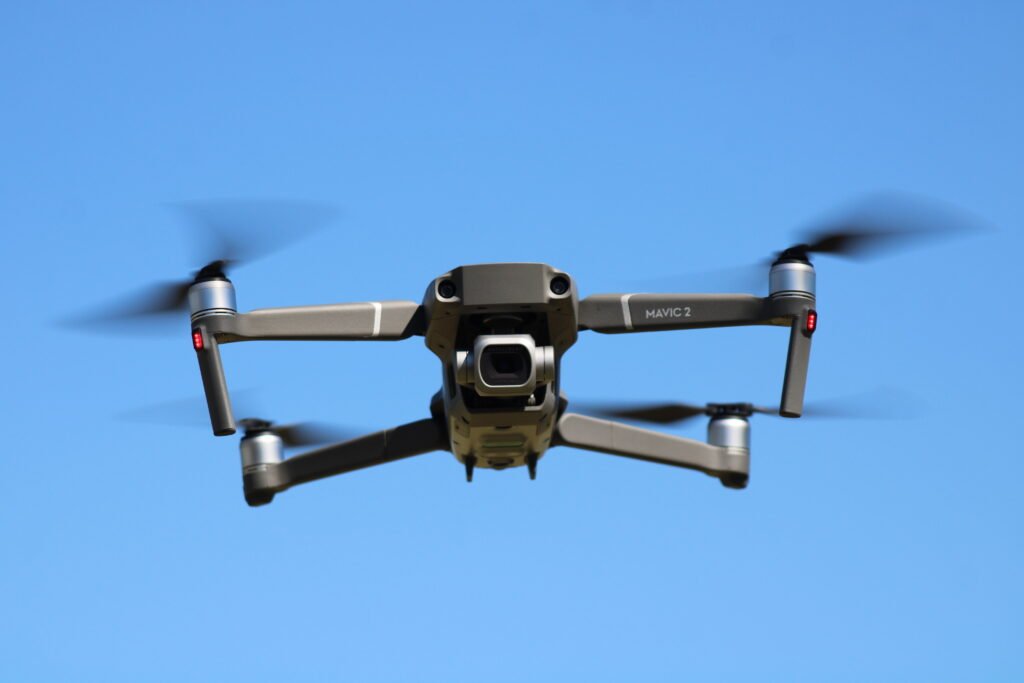
Photo: ZLEA · Licence: CC BY-SA 4.0 · View the original source and licence terms.
DJI / DRONE PROFILE
DJI Mavic 2 Pro Review: Camera, Flight Performance and Key Specifications
Explore the available technical information for this aircraft, including camera capabilities, flight performance and manufacturer-specific specifications.
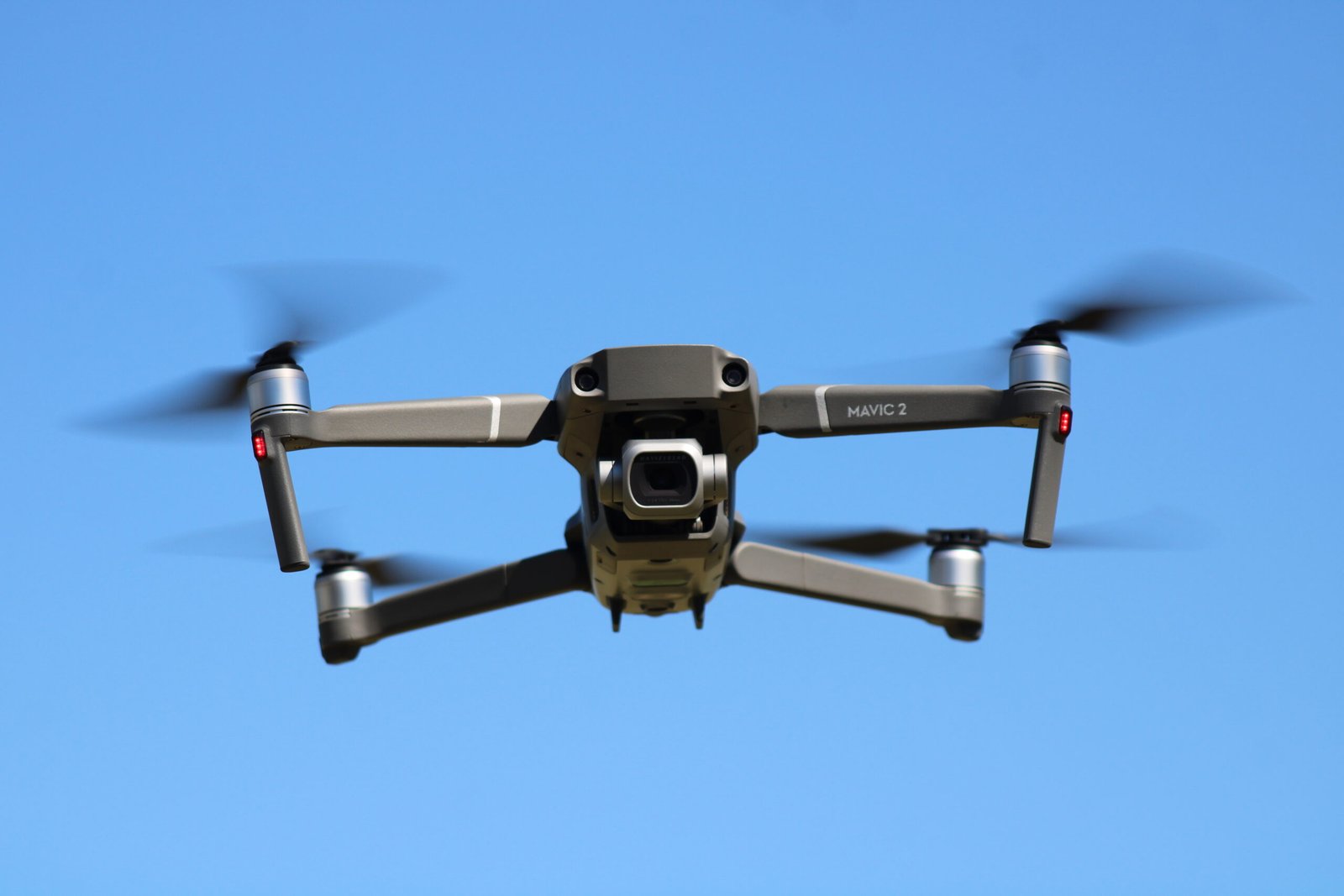
The DJI Mavic 2 Pro is a foldable camera drone built around a 1-inch CMOS camera with 20MP still-image capability. It belongs to DJI’s Mavic 2 generation and is best known for its larger camera sensor, adjustable aperture and 10-bit D-Log M video profile. This review explains what those specifications mean in practical terms and where the Mavic 2 Pro fits today.
DJI Mavic 2 Pro at a glance
- Camera: 1-inch CMOS sensor, effective 20MP
- Lens: 28mm-equivalent field of view, f/2.8–f/11 adjustable aperture
- Video: 4K up to 30fps; 2.7K up to 60fps; Full HD up to 120fps
- Maximum flight time: 31 minutes in DJI’s specified test conditions
- Takeoff weight: 907g
- Video transmission: OcuSync 2.0
- Internal storage: 8GB, with microSD expansion
Camera and image quality
The Mavic 2 Pro’s 1-inch sensor and 20MP resolution are its main advantages over the Mavic 2 Zoom. The larger sensor is useful when capturing detailed still images and gives photographers more flexibility in challenging light than a smaller sensor generally can. Its 28mm-equivalent lens has an adjustable f/2.8–f/11 aperture, allowing exposure control without relying only on shutter speed or ND filters.
For video, the camera records 4K at up to 30fps and supports 10-bit D-Log M and HLG. These profiles provide more room for colour grading than a basic standard profile, although they also require a suitable editing workflow. The camera records at up to 100Mbps and supports MP4 and MOV formats.
Flight performance and handling
DJI lists a maximum flight time of 31 minutes, measured in a controlled, no-wind test while flying at a consistent 25km/h. This is a laboratory-style maximum, not a promise of the time available on every real flight. Wind, temperature, battery condition, manoeuvres and the need to return safely all affect usable flight time.
The aircraft has a listed maximum speed of 72km/h in Sport mode under the specified near-sea-level, no-wind conditions. It uses GPS and GLONASS positioning and an omnidirectional sensing system. DJI notes that side obstacle sensing is limited to particular flight modes and conditions, so pilots should not treat the system as complete 360-degree collision protection.
Design, portability and transmission
The folding airframe makes the Mavic 2 Pro easier to transport than a conventional fixed-arm aircraft of similar capability. Its takeoff weight is 907g. OcuSync 2.0 provides the video link, while the official maximum transmission distance varies by regulatory region and assumes an unobstructed, interference-free environment. Real-world range can be much shorter.
DJI Mavic 2 Pro specifications
| Specification | DJI Mavic 2 Pro |
|---|---|
| Takeoff weight | 907g |
| Camera sensor | 1-inch CMOS, 20MP |
| Lens | 28mm equivalent; f/2.8–f/11 |
| Maximum video resolution | 4K at 24/25/30fps |
| Maximum video bitrate | 100Mbps |
| Maximum flight time | 31 minutes (DJI test conditions) |
| Maximum speed | 72km/h (Sport mode, specified conditions) |
| Maximum takeoff altitude | 6,000m |
| Wind resistance | 29–38km/h |
| Navigation | GPS + GLONASS |
| Video transmission | OcuSync 2.0 |
| Internal storage | 8GB |
Advantages and limitations
Advantages
- Large 1-inch sensor with 20MP still photos.
- Adjustable aperture for greater exposure control.
- 10-bit D-Log M and HLG recording options.
- Foldable design and a capable three-axis gimbal.
- Omnidirectional sensing features, subject to mode and environment limitations.
Limitations
- 4K recording is limited to 30fps.
- The aircraft weighs substantially more than sub-250g models.
- Its 31-minute figure is a maximum test result, not typical guaranteed airtime.
- It is an older generation, so buyers should check battery condition, parts availability, app compatibility and local support before purchasing used stock.
DJI Mavic 2 Pro vs DJI Mavic 2 Zoom
The two aircraft share much of their flight platform, but their cameras serve different purposes. The Mavic 2 Pro prioritises its 1-inch 20MP sensor, adjustable aperture and D-Log M/HLG profiles. The DJI Mavic 2 Zoom review covers the alternative 12MP camera with a 24–48mm-equivalent optical zoom lens. Choose based on whether sensor size and image control or framing flexibility is more important to your work.
Who should consider the Mavic 2 Pro?
The Mavic 2 Pro may suit experienced aerial photographers and video creators who value a larger sensor, RAW stills and more flexible colour profiles in a foldable aircraft. It is less compelling for buyers who need the latest automated features, lightweight travel convenience or guaranteed long-term support. Since this is an older model, condition and regional availability matter as much as the original specification sheet.
Verdict
The DJI Mavic 2 Pro remains notable for its 1-inch 20MP camera and adjustable aperture. Its strongest reason to choose it over the Mavic 2 Zoom is image capture flexibility rather than flight performance, because the two models share much of the same aircraft platform. Treat published maximum figures as controlled-test results and inspect any used unit carefully before buying.
Official source and specification notes
Specifications in this article are based on DJI’s official Mavic 2 support and specifications page and the Mavic 2 Pro/Zoom user manual. Actual performance varies with conditions, firmware, battery health and local regulatory requirements. This is a specification-based editorial review, not a claim of independent hands-on testing.
Who should consider DJI Mavic 2 Pro Review: Camera, Flight Performance and Key Specifications?
If you are moving up from a smaller drone, consider whether the added size, weight and camera capability will change your results enough to justify the extra cost and travel burden. If this is your first aircraft, budget for training, practice time, insurance where appropriate and a safe place to learn. For DJI Mavic 2 Pro Review: Camera, Flight Performance and Key Specifications, compare the camera modes you will actually use with your phone or computer editing capability and storage budget.
Limitations and trade-offs to understand
Camera specifications need context. Sensor size, lens aperture, focal length, shutter, bit depth, codec, stabilisation and image processing all affect the final file. Check sample images and video from the exact recording mode you intend to use, and confirm that your phone or computer can edit the resulting files. For DJI Mavic 2 Pro Review: Camera, Flight Performance and Key Specifications, price the complete kit with controller, batteries, charging accessories and a protective case rather than the aircraft alone.
Alternatives worth comparing
Compare this model with the nearest aircraft in the same use category and total-kit budget. A smaller compact model may be easier to carry, while a higher-tier camera drone may offer more lens or low-light flexibility. Compare the practical difference you will notice, not just the number of specifications. For DJI Mavic 2 Pro Review: Camera, Flight Performance and Key Specifications, confirm take-off weight and destination rules for the exact battery configuration before travel.
Pre-purchase and ownership checklist
Check the official specification page and manual for the regional model, battery configuration, controller compatibility, weight, sensor limitations, firmware and service. Confirm local aviation rules and no-fly restrictions for every planned destination before flying. For DJI Mavic 2 Pro Review: Camera, Flight Performance and Key Specifications, review the manual limitations for wind, obstacle sensing and return-to-home rather than treating automation as a guarantee.
How to use this specification profile
This page is a research-based reference, not a claim that IGIDRONE has independently flight-tested the aircraft. Treat manufacturer maximums as test-condition figures and distinguish standard equipment from optional accessories or regional bundles. Before buying, compare the exact model code, firmware, battery, controller and payload configuration against the current official manual. If a field is marked unknown or is not documented by the manufacturer, do not infer a value from a similarly named variant. For DJI Mavic 2 Pro Review: Camera, Flight Performance and Key Specifications, compare the camera modes you will actually use with your phone or computer editing capability and storage budget.
Primary manufacturer reference: Open the manufacturer specification or support page. Confirm the current regional documentation before purchase. For DJI Mavic 2 Pro Review: Camera, Flight Performance and Key Specifications, price the complete kit with controller, batteries, charging accessories and a protective case rather than the aircraft alone.
Editorial update: 8 November 2026. Model availability, prices, software support and regional operating rules can change. Confirm them with the manufacturer, authorised distributor and relevant aviation authority before purchase or flight. For DJI Mavic 2 Pro Review: Camera, Flight Performance and Key Specifications, confirm take-off weight and destination rules for the exact battery configuration before travel.
Drone Specifications
| Brand | DJI |
|---|---|
| Camera | 1-inch CMOS, 20 MP effective pixels; 28 mm equivalent lens, f/2.8–f/11 |
| Maximum Video Resolution | 4K/30fps; 2.7K/60fps; 1080p/120fps; H.264/H.265, up to 100 Mbps. |
| Maximum Flight Time (minutes) | Up to 31 min maximum flight time (DJI test conditions) |
| Maximum Transmission Range (km) | 10 km FCC; 6 km CE/SRRC/MIC (unobstructed, interference-free) |
| Weight (g) | 907 g (Mavic 2 Pro) |
| Battery Capacity (mAh) | 3,850 mAh (Mavic 2 Intelligent Flight Battery) |
| Wind Resistance (m/s) | 29–38 km/h (manufacturer specification) |
| Obstacle Sensing | Omnidirectional obstacle sensing: forward, backward, upward, downward and lateral vision sensors. DJI publishes directional measurement ranges; sensing performance depends on lighting, surface texture and speed. |
| Positioning / GPS | GPS+GLONASS |
| Maximum Speed (m/s) | 72 km/h |
| Folded Dimensions | 214×91×84 mm (length×width×height) |
Specification source: Official source
Last verified: 2026-11-08
Official Price (USD)
No public USD price was verified on the manufacturer’s official store during this check.
For enterprise or discontinued models, contact the manufacturer for a current quotation. We do not substitute third-party seller prices.
Price checked: 2026-11-07
MODEL TECHNICAL RECORD
Detailed Technical Specifications
Manufacturer-specific technical information recorded for this model. Values not present in the source record are not estimated.
Aircraft
| Takeoff Weight | 907 g |
|---|---|
| Dimensions | Folded 214×91×84 mm; unfolded 322×242×84 mm |
| Max Flight Time | 31 min (DJI no-wind test at 25 km/h) |
| Max Speed | 72 km/h (Sport mode, no wind) |
| Max Wind Resistance | 29–38 km/h |
| Max Takeoff Altitude | 6000 m |
| GNSS | GPS + GLONASS |
| Internal Storage | 8 GB |
Camera
| Sensor | 1-inch CMOS, 20 MP |
|---|---|
| Lens | 28 mm equivalent; f/2.8–f/11 adjustable aperture |
| Video Resolution | 4K 24/25/30fps; 2.7K up to 60fps; FHD up to 120fps |
| Max Video Bitrate | 100 Mbps |
| Color Mode | D-Log M 10-bit; HLG |
| Photo Format | JPEG / DNG RAW |


MANUFACTURER DATA
Detailed official specifications
Technical figures below are transcribed from the manufacturer documentation linked with this profile. Test figures are maximum or controlled-condition ratings where stated; actual performance varies by configuration and operating conditions. A field is omitted when the cited source does not publish a reliable value.
Manufacturer source last checked: 2026-11-08
Evidence type: Official DJI manufacturer specifications / support documentation
Mavic 2 Pro Camera
| Sensor | 1” CMOS; Effective Pixels: 20 million |
|---|---|
| Lens | FOV: about 77°; 35 mm Format Equivalent: 28 mm; Aperture: f/2.8–f/11; Shooting Range: 1 m to ∞ |
| ISO Range | Video:; 100-6400; Photo: ; 100-3200 (auto); 100-12800 (manual) |
| Shutter Speed | Electronic Shutter: 8–1/8000s |
| Still Image Size | 5472×3648 |
| Still Photography Modes | Single shot; Burst shooting: 3/5 frames; Auto Exposure Bracketing (AEB): 3/5 bracketed frames at 0.7 EV Bias; Interval (JPEG: 2/3/5/7/10/15/20/30/60s RAW:5/7/10/15/20/30/60s) |
| Video Resolution | 4K: 3840×2160 24/25/30p; 2.7K: 2688x1512 24/25/30/48/50/60p; FHD: 1920×1080 24/25/30/48/50/60/120p; |
| Max Video Bitrate | 100Mbps |
| Color Mode | Dlog-M (10bit), support HDR video (HLG 10bit) |
| Supported File System | FAT32 (≤ 32 GB); exFAT (> 32 GB) |
| Photo Format | JPEG / DNG (RAW) |
| Video Format | MP4 / MOV (MPEG-4 AVC/H.264, HEVC/H.265) |
Aircraft
| Takeoff Weight | Mavic 2 Pro: 907 g; Mavic 2 Zoom: 905g |
|---|---|
| Dimensions | Folded:; 214×91×84 mm (length×width×height); Unfolded:; 322×242×84 mm (length×width×height) |
| Diagonal Distance | 354 mm |
| Max Ascent Speed | 5 m/s (S-mode); 4 m/s (P-mode); |
| Max Descent Speed | 3 m/s (S-mode); 3 m/s (P-mode); |
| Max Speed (near sea level, no wind) | 72 kph (S-mode) |
| Maximum Takeoff Altitude | 6000 m |
| Max Flight Time (no wind) | 31 minutes (at a consistent 25 kph) |
| Max Hovering Time (no wind) | 29 minutes |
| Max Flight Distance (no wind) | 18 km (at a consistent 50 kph) |
| Max Wind Speed Resistance | 29–38 kph |
| Max Pitch Angle | 35° (S-mode, with remote controller) 25° (P-mode) |
| Max Angular Velocity | 200°/s |
| Operating Temperature Range | -10°C to 40°C |
| Operating Frequency | 2.400 - 2.483 GHz; 5.725 - 5.850 GHz |
| Transmission Power (EIRP) | 2.400 - 2.483 GHz; FCC:≤26 dBm ; CE:≤20 dBm ; SRRC:≤20 dBm; MIC:≤20 dBm; 5.725-5.850 GHz; FCC:≤26 dBm ; CE:≤14 dBm; SRRC:≤26 dBm |
| GNSS | GPS+GLONASS |
| Hovering Accuracy Range | Vertical:; ± 0.1 m (when vision positioning is active); ± 0.5 m (with GPS positioning); Horizontal:; ± 0.3 m (when vision positioning is active); ± 1.5 m (with GPS positioning) |
| Internal Storage | 8 GB |
Sensing System
| Sensing System | Omnidirectional Obstacle Sensing1 |
|---|---|
| Forward | Precision Measurement Range: 0.5 - 20 m; Detectable Range: 20 - 40 m; Effective Sensing Speed: ≤ 14m/s; FOV: Horizontal: 40°, Vertical: 70°; |
| Backward | Precision Measurement Range: 0.5 - 16 m; Detectable Range: 16 - 32 m; Effective Sensing Speed: ≤ 12m/s; FOV: Horizontal: 60°, Vertical: 77°; |
| Upward | Precision Measurement Range: 0.1 - 8 m |
| Downward | Precision Measurement Range: 0.5 - 11 m; Detectable Range: 11 - 22 m; |
| Sides | Precision Measurement Range: 0.5 - 10 m; Effective Sensing Speed: ≤ 8m/s; FOV: Horizontal: 80°, Vertical: 65° |
| Operating Environment | Forward, Backward and Sides:; Surface with clear pattern and adequate lighting (lux > 15); Upward:; Detects diffuse reflective surfaces (>20%) (walls, trees, people, etc.); Downward:; Surface with clear pattern and adequate lighting (lux > 15); Detects diffuse reflective surfaces (>20%) (walls, trees, people, etc.) |
Charger
| Input | 100-240 V, 50/60 Hz, 1.8A |
|---|---|
| Output | Main: 17.6 V ⎓ 3.41 A; or 17.0 V ⎓ 3.53 A USB: 5 V⎓2 A |
| Voltage | 17.6 ± 0.1 V |
| Rated Power | 60 W |
APP
| Video Transmission System | OcuSync 2.0 |
|---|---|
| Name | DJI GO 4 |
| Live View Quality | Remote Controller:; 720p@30fps / 1080p@30fps; DJI Goggles:; 720p@30fps / 1080p@30fps DJI Goggles RE:; 720p@30fps / 1080p@30fps |
| Latency (depending on environmental conditions and mobile device) | 120 - 130 ms |
| Max Live View Bitrate | 12Mbps |
Mavic 2 Zoom Camera
| Sensor | 1/2.3" CMOS; Effective Pixels: 12 million |
|---|---|
| Lens | FOV: about 83° (24 mm); about 48° (48 mm); 35 mm Format Equivalent: 24-48 mm; Aperture: f/2.8 (24 mm)–f/3.8 (48 mm); Shooting Range: 0.5 m to ∞ |
| ISO Range | Video: ; 100-3200; Photo: ; 100-1600 (auto); 100-3200 (manual) |
| Shutter Speed | Electronic Shutter: 8–1/8000s |
| Still Image Size | 4000×3000 |
| Still Photography Modes | Single shot; Burst shooting: 3/5/7 frames; Auto Exposure Bracketing (AEB): 3/5 bracketed frames at 0.7 EV Bias; Interval (JPEG: 2/3/5/7/10/15/20/30/60s RAW:5/7/10/15/20/30/60s) |
| Video Resolution | 4K: 3840×2160 24/25/30p ; 2.7K: 2688×1512 24/25/30/48/50/60p; FHD: 1920×1080 24/25/30/48/50/60/120p |
| Max Video Bitrate | 100Mbps |
| Color Mode | D-Cinelike |
| Supported File System | FAT32 (≤ 32 GB); exFAT (> 32 GB) |
| Photo Format | JPEG / DNG (RAW) |
| Video Format | MP4 / MOV (MPEG-4 AVC/H.264, HEVC/H.265) |
Gimbal
| Mechanical Range | Tilt: -135–45° Pan: -100–100° |
|---|---|
| Controllable Range | Tilt: -90–30° Pan: -75–75° |
| Stabilization | 3-axis (tilt, roll, pan) |
| Max Control Speed (tilt) | 120° /s |
| Angular Vibration Range | ±0.01° (Mavic 2 Pro); ±0.005° (Mavic 2 Zoom) |
Remote Controller
| Operating Frequency | 2.400 - 2.483 GHz; 5.725 - 5.850 GHz |
|---|---|
| Max Transmission Distance (unobstructed, free of interference) | 2.400 - 2.483 GHz; 5.725 - 5.850 GHz; FCC: 10000 m ; CE: 6000 m ; SRRC: 6000 m; MIC: 6000 m |
| Operating Temperature Range | 0℃ - 40℃ |
| Transmission Power (EIRP) | 2.400 - 2.483 GHz; FCC: ≤26 dBm ; CE: ≤20 dBm ; SRRC: ≤20 dBm; MIC: ≤20 dBm; 5.725-5.850 GHz; FCC: ≤26 dBm ; CE: ≤14 dBm; SRRC: ≤26 dBm |
| Battery | 3950 mAh |
| Operating Current/Voltage | 1800 mA ⎓ 3.83 V |
| Supported Mobile Device Size | Max length: 160 mm; max thickness: 6.5–8.5 mm |
| Supported USB Port Types | Lightning, Micro USB (Type-B), USB-C |
Intelligent Flight Battery
| Capacity | 3850 mAh |
|---|---|
| Voltage | 15.4 V |
| Max Charging Voltage | 17.6 V |
| Battery Type | LiPo 4S |
| Energy | 59.29 Wh |
| Net Weight | 297 g |
| Charging Temperature Range | 5℃ to 40℃ |
| Max Charging Power | 80 W |
Supported SD Cards
| Supported SD Cards | Micro SD™ ; Supports a microSD with capacity of up to 128 GB. A UHS-I Speed Grade 3 rating microSD card is required. |
|---|---|
| Recommended microSD Cards | 32G ; Sandisk V30; Sandisk Extreme V30 Pro; 64G; Sandisk Extreme Pro V30; 128G; Sandisk Extreme V30; Sandisk Extreme Pro V30; Kingston Canvas Go!; Kingston Canvas React |
Additional specifications
| Footnotes | [1] Omnidirectional Obstacle Sensing includes left/right, up/down, and forward/backward obstacle sensing. Sensing for left/right directions is only available in ActiveTrack , POI, QuickShot and Tripod mode. Omnidirectional Obstacle Sensing does not fully cover the circumference of a 360-degree arc. And left and right obstacle sensing system only works in specific modes and environments. DJI warranty does not cover any loss caused by crashing when flying left or right, even when ActiveTrack or Tripod mode is activated. Please be aware of your surroundings and App notifications when operating the Mavic 2 to ensure safety. |
|---|
Source: manufacturer technical specifications and official support documentation. Regional versions, payloads, batteries, firmware and test conditions can change the stated figures. Check the linked source for the applicable configuration.
Related Dji drones
Explore other published models from the same manufacturer.