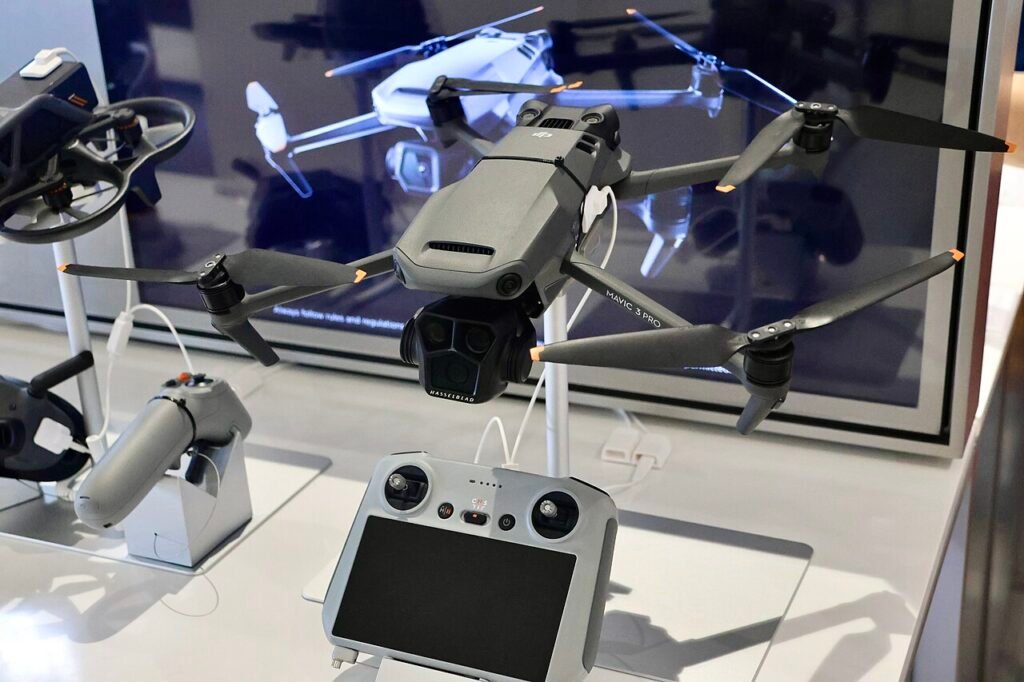
Photo: Pangalau · Licence: CC BY-SA 4.0 · View the original source and licence terms.
DJI / DRONE PROFILE
DJI Mavic 3 Pro
Explore the available technical information for this aircraft, including camera capabilities, flight performance and manufacturer-specific specifications.

DJI Mavic 3 Pro Review: Triple-Camera Flagship
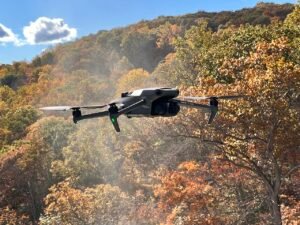
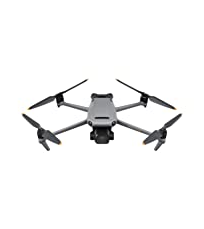
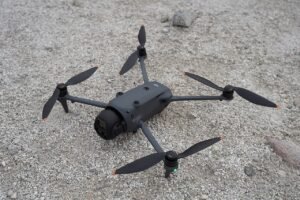
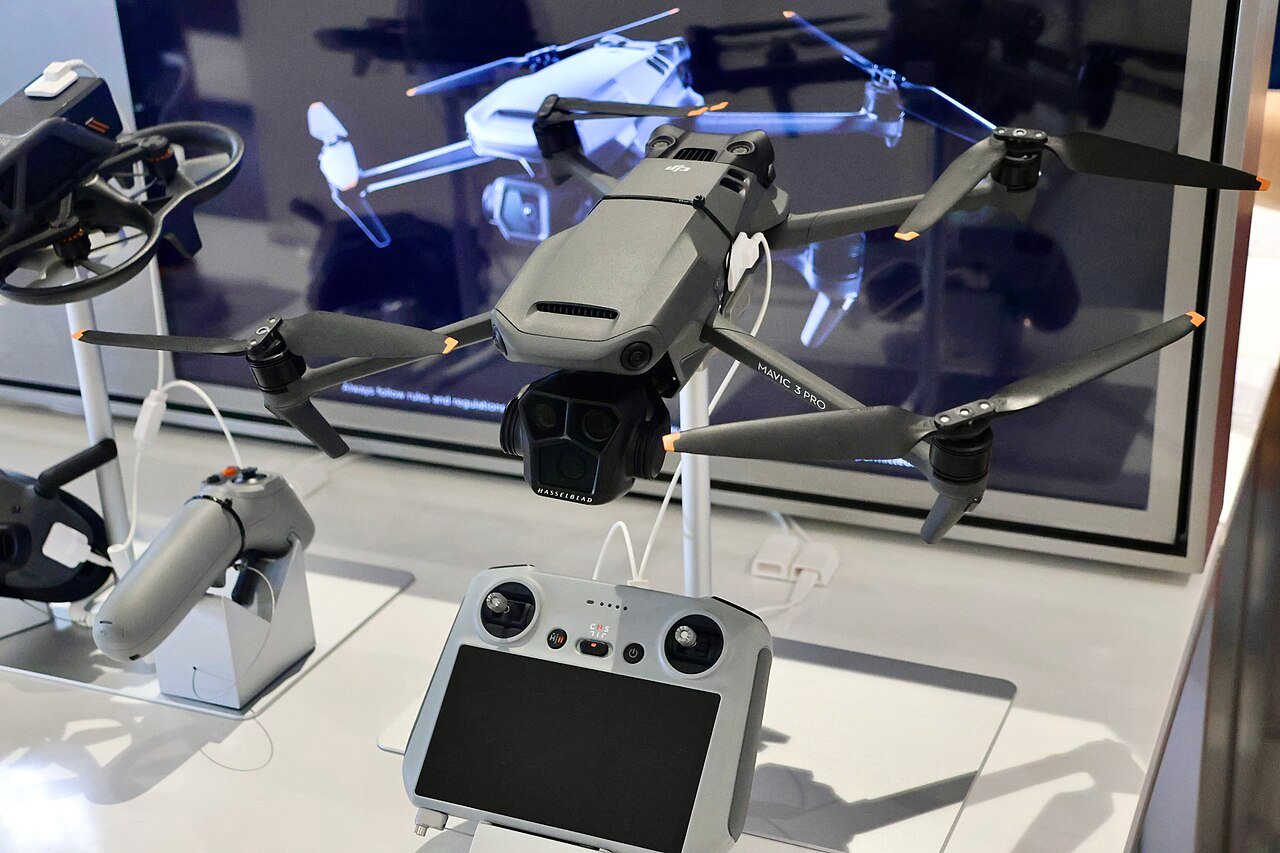
The DJI Mavic 3 Pro adds a three-camera system to the Mavic 3 family, giving aerial creators a Hasselblad main camera, a medium-tele camera and a tele camera. It is useful when a shoot benefits from changing perspective without moving the aircraft close to the subject. The following details are based on DJI’s official specifications.
Price & Where to Buy
$2,199 USD
Package: DJI Mavic 3 Pro (DJI RC), standard configuration
Official listing currently marked out of stock Out of stock
Check price: DJI Mavic 3 Pro (DJI RC)
Affiliate disclosure: IGIDRONE may earn a commission from qualifying purchases at no extra cost to you. Price checked 2026-11-06. Prices and package availability can change; confirm the selected configuration before ordering.
Three focal lengths
The main camera uses a 4/3 CMOS Hasselblad sensor with 20 MP effective pixels and a 24 mm-equivalent lens. The medium-tele camera uses a 1/1.3-inch CMOS sensor and a 70 mm-equivalent lens, while the tele camera offers a longer 166 mm-equivalent view. DJI lists 4K/60 capability across the three cameras, with available colour profiles and frame rates varying by camera.
Flight performance
DJI lists a take-off weight of 958 g for the standard Mavic 3 Pro and a maximum flight time of 43 minutes under controlled test conditions. Maximum flight distance and transmission range are separate measurements and must not be confused. Real-world endurance depends on weather, flight speed, battery condition and reserve requirements.
Obstacle sensing and transmission
The aircraft uses an omnidirectional vision sensing system and DJI O3+ video transmission. Detection depends on adequate light and surfaces with visible texture; thin wires and other difficult obstacles may not be detected. The pilot remains responsible for route clearance and safe operation.
Who should buy it?
Mavic 3 Pro is suited to photographers, filmmakers and creators who need multiple focal lengths in one portable platform. The standard Mavic 3 or Mavic 3 Classic may be better value if a single main camera meets the project needs.
Advantages and limitations
- Advantages: three distinct focal lengths, 4/3 Hasselblad main camera, high-resolution video and omnidirectional sensing.
- Limitations: higher price and weight than simpler Mavic models, larger storage needs and camera-specific limitations.
- Before buying: compare standard and Cine versions, controller, storage, batteries, charger and regional transmission rules.
IGIDRONE verdict
The Mavic 3 Pro is a flexible flagship for creators who will actually use its medium-tele and tele cameras. If those focal lengths are not important, a simpler Mavic model may deliver better value.
Manufacturer reference: DJI Mavic 3 Pro specifications.
Check DJI availability
View the DJI Mavic 3 Pro (DJI RC) through DJI.
Disclosure: IGIDRONE may earn a commission from qualifying purchases made through this affiliate link, at no extra cost to you.
Who should consider DJI Mavic 3 Pro?
If you are moving up from a smaller drone, consider whether the added size, weight and camera capability will change your results enough to justify the extra cost and travel burden. If this is your first aircraft, budget for training, practice time, insurance where appropriate and a safe place to learn. For DJI Mavic 3 Pro, compare the camera modes you will actually use with your phone or computer editing capability and storage budget.
Limitations and trade-offs to understand
Camera specifications need context. Sensor size, lens aperture, focal length, shutter, bit depth, codec, stabilisation and image processing all affect the final file. Check sample images and video from the exact recording mode you intend to use, and confirm that your phone or computer can edit the resulting files. For DJI Mavic 3 Pro, price the complete kit with controller, batteries, charging accessories and a protective case rather than the aircraft alone.
Alternatives worth comparing
Compare this model with the nearest aircraft in the same use category and total-kit budget. A smaller compact model may be easier to carry, while a higher-tier camera drone may offer more lens or low-light flexibility. Compare the practical difference you will notice, not just the number of specifications. For DJI Mavic 3 Pro, confirm take-off weight and destination rules for the exact battery configuration before travel.
Pre-purchase and ownership checklist
Check the official specification page and manual for the regional model, battery configuration, controller compatibility, weight, sensor limitations, firmware and service. Confirm local aviation rules and no-fly restrictions for every planned destination before flying. For DJI Mavic 3 Pro, review the manual limitations for wind, obstacle sensing and return-to-home rather than treating automation as a guarantee.
How to use this specification profile
This page is a research-based reference, not a claim that IGIDRONE has independently flight-tested the aircraft. Treat manufacturer maximums as test-condition figures and distinguish standard equipment from optional accessories or regional bundles. Before buying, compare the exact model code, firmware, battery, controller and payload configuration against the current official manual. If a field is marked unknown or is not documented by the manufacturer, do not infer a value from a similarly named variant. For DJI Mavic 3 Pro, compare the camera modes you will actually use with your phone or computer editing capability and storage budget.
Primary manufacturer reference: Open the manufacturer specification or support page. Confirm the current regional documentation before purchase. For DJI Mavic 3 Pro, price the complete kit with controller, batteries, charging accessories and a protective case rather than the aircraft alone.
Editorial update: 8 November 2026. Model availability, prices, software support and regional operating rules can change. Confirm them with the manufacturer, authorised distributor and relevant aviation authority before purchase or flight. For DJI Mavic 3 Pro, confirm take-off weight and destination rules for the exact battery configuration before travel.
Planning a realistic flight or shooting session
For a first-time owner, allow time to learn the controls and understand return-to-home, obstacle sensing, battery warnings and emergency procedures. Automated flight modes are useful aids, but the pilot remains responsible for selecting a safe route and maintaining awareness of people, aircraft and local restrictions. For DJI Mavic 3 Pro, compare the camera modes you will actually use with your phone or computer editing capability and storage budget.
Evidence to request before purchase
Use the manufacturer current user manual and specification page as the primary references. Ask the retailer to confirm the exact regional model, controller, battery bundle, warranty, repair route and spare-part availability in writing. If camera performance matters, inspect sample files from the same recording mode rather than relying only on edited promotional footage. For DJI Mavic 3 Pro, price the complete kit with controller, batteries, charging accessories and a protective case rather than the aircraft alone.
Editorial standard: buyer guidance is based on published manufacturer information and practical ownership considerations. IGIDRONE does not claim independent flight testing unless a page explicitly documents a real test. For DJI Mavic 3 Pro, confirm take-off weight and destination rules for the exact battery configuration before travel.
Drone Specifications
| Brand | DJI |
|---|---|
| Camera | Hasselblad Camera: 4/3 CMOS, Effective Pixels: 20 MP Medium Tele Camera: 1/1.3″ CMOS, Effective Pixels: 48 MP Tele Camera: 1/2″ CMOS, Effective Pixels: 12 MP |
| Maximum Video Resolution | Hasselblad: up to 5.1K/50fps and 4K/120fps; medium tele and tele: up to 4K/60fps; H.264/H.265. Cine version additionally supports Apple ProRes. |
| Maximum Flight Time (minutes) | 43 min |
| Maximum Transmission Range (km) | FCC: 15 km; CE: 8 km; SRRC: 8 km; MIC: 8 km; Measured in an unobstructed outdoor environment free of interference. The above data shows the farthest communication range for one-way, non-return flights under each standard. During your flight, please pay attention to RTH reminders in the DJI Fly app. |
| Weight (g) | 958 g (Mavic 3 Pro; Cine version 963 g) |
| Battery Capacity (mAh) | 5000 mAh |
| Wind Resistance (m/s) | 12 m/s |
| Obstacle Sensing | Omnidirectional binocular vision system, supplemented with an infrared sensor at the bottom of the aircraft |
| Positioning / GPS | GPS + Galileo + BeiDou |
| Maximum Speed (m/s) | 21 m/s maximum horizontal speed (Sport mode, sea level, no wind) |
| Folded Dimensions | 231.1×98×95.4 mm (L×W×H) |
Specification source: Official source
Last verified: 2026-11-08
Official Price (USD)
$2,199.00 USD
Listed configuration: DJI Mavic 3 Pro (DJI RC), standard configuration
Official store status: Out of stock at the time of checking.
Last verified official US Store price: USD 2,199 for DJI Mavic 3 Pro (DJI RC), standard configuration. The exact option is out of stock; not a current purchasable offer. Checked 2026-11-16.
Check price at the official store
Price checked: 2026-11-16
MODEL TECHNICAL RECORD
Detailed Technical Specifications
Manufacturer-specific technical information recorded for this model. Values not present in the source record are not estimated.
Aircraft
| Takeoff Weight | Mavic 3 Pro: 958 g Mavic 3 Pro Cine: 963 g |
|---|---|
| Dimensions | Folded (without propellers): 231.1×98×95.4 mm (L×W×H) Unfolded (without propellers): 347.5×290.8×107.7 mm (L×W×H) |
| Max Ascent Speed | 8 m/s |
| Max Descent Speed | 6 m/s |
| Max Horizontal Speed (at sea level, no wind) | 21 m/s Measured in a controlled wind tunnel environment under conditions equivalent to windless operation and sea-level altitude, with the aircraft ascending vertically to a height of 1.5 meters above the ground in Sport mode. Actual experience may vary depending on the environment, usage, and firmware version. |
| Max Takeoff Altitude | 6000 m |
| Max Flight Time | 43 minutes Measured in a controlled wind tunnel environment under conditions equivalent to windless operation and sea-level altitude, with the aircraft flying forward at a constant speed of 32.4 kph, Obstacle Avoidance Action set to Brake, and the camera in Photo mode, until a forced landing due to battery depletion. Actual experience may vary depending on the environment, usage, and firmware version. |
| Max Hovering Time | 37 minutes Measured in a controlled test environment. Specific test conditions are as follows: hovering in a windless environment at sea level, with APAS off, AirSense off, camera parameters set to 1080p/24fps, video mode off, and from 100% battery level until 0%. Results may vary depending on the environment, actual use, and firmware version. |
| Max Flight Distance | 28 km Measured in a controlled wind tunnel environment under conditions equivalent to windless operation and sea-level altitude, with the aircraft flying forward at a constant speed of 50.4 kph, Obstacle Avoidance Action set to Brake, and the camera in Photo mode, until a forced landing due to battery depletion. Actual experience may vary depending on the environment, usage, and firmware version. |
| Max Wind Speed Resistance | 12 m/s |
| Max Pitch Angle | 35° |
| Operating Temperature | -10° to 40° C (14° to 104° F) |
| Global Navigation Satellite System | GPS + Galileo + BeiDou |
| Hovering Accuracy Range | Vertical: ±0.1 m (with vision positioning) ±0.5 m (with satellite positioning) Horizontal: ±0.3 m (with vision positioning) ±0.5 m (with satellite positioning) |
| Internal Storage | Mavic 3 Pro: 8 GB (approx. 7.9GB available space) Mavic 3 Pro Cine: 1 TB (approx. 934.8GB available space) |
| Class | C2 (EU) |
Camera
| Image Sensor | Hasselblad Camera: 4/3 CMOS, Effective Pixels: 20 MP Medium Tele Camera: 1/1.3″ CMOS, Effective Pixels: 48 MP Tele Camera: 1/2″ CMOS, Effective Pixels: 12 MP |
|---|---|
| Lens | Hasselblad Camera FOV: 84° Format Equivalent: 24mm Aperture: f/2.8-f/11 Focus: 1 m to ∞ Medium Tele Camera FOV: 35° Format Equivalent: 70mm Aperture: f/2.8 Focus: 3 m to ∞ Tele Camera FOV: 15° Format Equivalent: 166mm Aperture: f/3.4 Focus: 3 m to ∞ |
| ISO Range | Video Normal and Slow Motion: 100-6400 (Normal) 400-1600 (D-Log) 100-1600 (D-Log M) 100-1600 (HLG) Night: 800-12800 (Normal) Photo 100-6400 |
| Shutter Speed | Hasselblad Camera: 8-1/8000 s Medium Tele Camera: 2-1/8000 s Tele Camera: 2-1/8000 s |
| Max Image Size | Hasselblad Camera: 5280×3956 Medium Tele Camera: 8064×6048 Tele Camera: 4000×3000 |
| Still Photography Modes | Hasselblad Camera Single Shot: 20 MP Burst Shooting: 20 MP, 3/5/7 frames Automatic Exposure Bracketing (AEB): 20 MP, 3/5 frames at 0.7 EV step Timed: 20 MP, 2/3/5/7/10/15/20/30/60 s Medium Tele Camera Single Shot: 12 MP or 48 MP Burst Shooting: 12 MP or 48 MP, 3/5/7 frames Automatic Exposure Bracketing (AEB): 12 MP or 48 MP, 3/5 frames at 0.7 EV step Timed: 12 MP: 2/3/5/7/10/15/20/30/60 s 48 MP: 7/10/15/20/30/60 s Tele Camera Single Shot: 12 MP Burst Shooting: 12 MP, 3/5/7 frames Automatic Exposure Bracketing (AEB): 12 MP, 3/5 frames at 0.7 EV step Timed: 12 MP, 2/3/5/7/10/15/20/30/60 s |
| Photo Format | JPEG/DNG (RAW) |
| Video Resolution | Hasselblad Camera Apple ProRes 422 HQ/422/422 LT 5.1K: 5120×2700@24/25/30/48/50fps DCI 4K: 4096×2160@24/25/30/48/50/60/120*fps 4K: 3840×2160@24/25/30/48/50/60/120*fps H.264/H.265 5.1K: 5120×2700@24/25/30/48/50fps DCI 4K: 4096×2160@24/25/30/48/50/60/120*fps 4K: 3840×2160@24/25/30/48/50/60/120*fps FHD: 1920×1080@24/25/30/48/50/60/120*/200*fps * Recording frame rates. The corresponding video plays as slow-motion video. Medium Tele Camera Apple ProRes 422 HQ/422/422 LT 4K: 3840×2160@24/25/30/48/50/60fps H.264/H.265 4K: 3840×2160@24/25/30/48/50/60fps FHD: 1920×1080@24/25/30/48/50/60fps Tele Camera Apple ProRes 422 HQ/422/422 LT 4K: 3840×2160@24/25/30/48/50/60fps H.264/H.265 4K: 3840×2160@24/25/30/50/60fps FHD: 1920×1080@24/25/30/50/60fps Only the Cine version supports ProRes recording. |
| Video Format | MP4/MOV (MPEG-4 AVC/H.264, HEVC/H.265) MOV (Apple ProRes 422 HQ/422/422 LT) Only the Cine version supports ProRes recording. |
| Max Video Bitrate | Hasselblad Camera: H.264/H.265: 200 Mbps ProRes 422 HQ: 3772 Mbps ProRes 422: 2514 Mbps ProRes 422 LT: 1750 Mbps Medium Tele Camera: H.264/H.265: 160 Mbps ProRes 422 HQ: 1768 Mbps ProRes 422: 1178 Mbps ProRes 422 LT: 821 Mbps Tele Camera: H.264/H.265: 160 Mbps ProRes 422 HQ: 1768 Mbps ProRes 422: 1178 Mbps ProRes 422 LT: 821 Mbps Only the Cine version supports ProRes recording. |
| Supported File System | exFAT |
| Color Mode and Sampling Method | Hasselblad Camera Normal: 10-bit 4:2:2 (Apple ProRes 422 HQ/422/422 LT) 8-bit 4:2:0 (H.264/H.265) D-Log: 10-bit 4:2:2 (Apple ProRes 422 HQ/422/422 LT) 10-bit 4:2:0 (H.264/H.265) HLG/D-Log M: 10-bit 4:2:2 (Apple ProRes 422 HQ/422/422 LT) 10-bit 4:2:0 (H.265) Medium Tele Camera Normal: 10-bit 4:2:2 (Apple ProRes 422 HQ/422/422 LT) 8-bit 4:2:0 (H.264/H.265) HLG/D-Log M: 10-bit 4:2:2 (Apple ProRes 422 HQ/422/422 LT) 10-bit 4:2:0 (H.265) Tele Camera Normal: 10-bit 4:2:2 (Apple ProRes 422 HQ/422/422 LT) 8-bit 4:2:0 (H.264/H.265) HLG/D-Log M: 10-bit 4:2:2 (Apple ProRes 422 HQ/422/422 LT) 10-bit 4:2:0 (H.265) Only the Cine version supports ProRes recording. |
| Digital Zoom (only in Normal Video Mode and Explore Mode) | Hasselblad Camera: 1-3x Medium Tele Camera: 3-7x Tele Camera: 7-28x |
Gimbal
| Stabilization | 3-axis mechanical gimbal (tilt, roll, pan) |
|---|---|
| Mechanical Range | Tilt: -140° to 50° Roll: -50° to 50° Pan: -23° to 23° |
| Controllable Range | Tilt: -90° to 35° Pan: -5° to 5° |
| Max Control Speed (tilt) | 100°/s |
| Angular Vibration Range | Hovering Without Wind: ±0.001° Normal Mode: ±0.003° Sport Mode: ±0.005° |
Sensing
| Sensing Type | Omnidirectional binocular vision system, supplemented with an infrared sensor at the bottom of the aircraft |
|---|---|
| Forward | Measurement Range: 0.5-20 m Detection Range: 0.5-200 m Effective Sensing Speed: Flight Speed ≤ 15 m/s FOV: Horizontal 90°, Vertical 103° |
| Backward | Measurement Range: 0.5-16 m Effective Sensing Speed: Flight Speed ≤ 12 m/s FOV: Horizontal 90°, Vertical 103° |
| Lateral | Measurement Range: 0.5-25 m Effective Sensing Speed: Flight Speed ≤ 15 m/s FOV: Horizontal 90°, Vertical 85° |
| Upward | Measurement Range: 0.2-10 m Effective Sensing Speed: Flight Speed ≤ 6 m/s FOV: Front and Back 100°, Left and Right 90° |
| Downward | Measurement Range: 0.3-18 m Effective Sensing Speed: Flight Speed ≤ 6 m/s FOV: Front and Back 130°, Left and Right 160° |
| Operating Environment | Forward, Backward, Left, Right, and Upward: surfaces with discernible patterns and adequate lighting (lux > 15) Downward: surfaces with discernible patterns, diffuse reflectivity > 20% (e.g. walls, trees, people), and adequate lighting (lux > 15) |
Video Transmission
| Video Transmission System | O3+ |
|---|---|
| Live View Quality | Remote Controller: 1080p/30fps, 1080p/60fps |
| Operating Frequency | 2.400-2.4835 GHz 5.725-5.850 GHz |
| Transmitter Power (EIRP) | 2.4 GHz: < 33 dBm (FCC) < 20 dBm (CE/SRRC/MIC) 5.8 GHz: < 33 dBm (FCC) < 30 dBm (SRRC) < 14 dBm (CE) |
| Max Transmission Distance (unobstructed, free of interference) | FCC: 15 km CE: 8 km SRRC: 8 km MIC: 8 km Measured in an unobstructed outdoor environment free of interference. The above data shows the farthest communication range for one-way, non-return flights under each standard. During your flight, please pay attention to RTH reminders in the DJI Fly app. |
| Max Transmission Distance (unobstructed, with interference) | Strong Interference: Urban landscape, approx. 1.5-3 km Medium Interference: Suburban landscape, approx. 3-9 km Low Interference: Suburb/seaside, approx. 9-15 km Data tested under FCC standard in unobstructed environments with typical interference. Used for reference purposes only and provides no guarantee for actual transmission distance. |
| Max Transmission Distance (obstructed, with interference) | Low Interference and Obstructed by Buildings: approx. 0-0.5 km Low Interference and Obstructed by Trees: approx. 0.5-3 km Data tested under FCC standard in environments with typical low interference. Used for reference purposes only and provides no guarantee for actual transmission distance. |
| Max Download Speed | O3+: 5.5 MB/s (with DJI RC-N1 Remote Controller) 15 MB/s (with DJI RC Pro) 5.5 MB/s (with DJI RC) Wi-Fi 6: 80 MB/s* * Measured in a laboratory environment with little interference in countries/regions that support both 2.4 GHz and 5.8 GHz, with footage saved to the internal storage. Download speeds may vary depending on the actual conditions. |
| Lowest Latency | 130 ms (with DJI RC-N1 Remote Controller) 120 ms (with DJI RC Pro) 130 ms (with DJI RC) Depending on the actual environment and mobile device. |
| Antenna | 4 antennas, 2T4R |
Battery
| Capacity | 5000 mAh |
|---|---|
| Weight | 335.5 g |
| Nominal Voltage | 15.4 V |
| Max Charging Voltage | 17.6 V |
| Type | Li-ion 4S |
| Energy | 77 Wh |
| Charging Temperature | 5° to 40° C (41° to 104° F) |
| Charging Time | Approx. 96 minutes Use the included data cable of the DJI 65W Portable Charger. Approx. 70 minutes Use the DJI 100W USB-C Power Adapter and DJI Mavic 3 Series 100W Battery Charging Hub. |
Charger
| Input | DJI 65W Portable Charger: 100-240 V (AC), 50-60 Hz, 2 A DJI 100W USB-C Power Adapter: 100-240 V (AC), 50-60 Hz, 2.5 A |
|---|---|
| Output | DJI 65W Portable Charger: USB-C: 5 V, 5 A 9 V, 5 A 12 V, 5 A 15 V, 4.3 A 20 V, 3.25 A 5-20 V, 3.25 A USB-A: 5 V, 2 A DJI 100W USB-C Power Adapter: Max 100 W (total) When both ports are used, the max output power of one port is 82 W, and the charger will dynamically allocate the output power of the two ports according to the power load. |
| Rated Power | DJI 65W Portable Charger: 65 W DJI 100W USB-C Power Adapter: 100 W |
Battery Charging Hub
| Input | USB-C: 5-20 V, max 5 A |
|---|---|
| Output | Battery Port: 12-17.6 V, max 5 A |
| Rated Power | Battery Charging Hub: 65 W Battery Charging Hub (100W): 100 W |
| Charging Type | Three batteries charged in sequence. |
| Compatibility | DJI Mavic 3 Intelligent Flight Battery |
Car Charger
| Input | Car Power Input: 12.7-16 V, 6.5 A, rated voltage 14 V (DC) |
|---|---|
| Output | USB-C: 5 V, 5 A 9 V, 5 A 12 V, 5 A 15 V, 4.3 A 20 V, 3.25 A 5-20 V, 3.25 A USB-A: 5 V, 2 A |
| Rated Power | 65 W |
| Charging Temperature | 5° to 40° C (41° to 104° F) |
Storage
| Recommended microSD Cards | Lexar 1066x 64GB V30 A2 microSDXC Lexar 1066x 128GB V30 A2 microSDXC Lexar 1066x 256GB V30 A2 microSDXC Lexar 1066x 512GB V30 A2 microSDXC SanDisk High Endurance 64GB V30 microSDXC SanDisk High Endurance 128GB V30 microSDXC SanDisk High Endurance 256GB V30 microSDXC Kingston Canvas Go! Plus 64GB V30 A2 microSDXC Kingston Canvas Go! Plus 128GB V30 A2 microSDXC Kingston Canvas Go! Plus 256GB V30 A2 microSDXC Kingston Canvas Go! Plus 512GB V30 A2 microSDXC |
|---|
Others
| Guaranteed software updates until | 2026/12/31 |
|---|


MANUFACTURER DATA
Detailed official specifications
Technical figures below are transcribed from the manufacturer documentation linked with this profile. Test figures are maximum or controlled-condition ratings where stated; actual performance varies by configuration and operating conditions. A field is omitted when the cited source does not publish a reliable value.
Manufacturer source last checked: 2026-11-08
Evidence type: Official DJI manufacturer specifications / support documentation
Aircraft
| Takeoff Weight | Mavic 3 Pro: 958 g; Mavic 3 Pro Cine: 963 g |
|---|---|
| Dimensions | Folded (without propellers): 231.1×98×95.4 mm (L×W×H); Unfolded (without propellers): 347.5×290.8×107.7 mm (L×W×H) |
| Max Ascent Speed | 8 m/s |
| Max Descent Speed | 6 m/s |
| Max Horizontal Speed (at sea level, no wind) | 21 m/s; ; Measured in a controlled wind tunnel environment under conditions equivalent to windless operation and sea-level altitude, with the aircraft ascending vertically to a height of 1.5 meters above the ground in Sport mode. Actual experience may vary depending on the environment, usage, and firmware version. |
| Max Takeoff Altitude | 6000 m |
| Max Flight Time | 43 minutes; ; Measured in a controlled wind tunnel environment under conditions equivalent to windless operation and sea-level altitude, with the aircraft flying forward at a constant speed of 32.4 kph, Obstacle Avoidance Action set to Brake, and the camera in Photo mode, until a forced landing due to battery depletion. Actual experience may vary depending on the environment, usage, and firmware version. |
| Max Hovering Time | 37 minutes; Measured in a controlled test environment. Specific test conditions are as follows: hovering in a windless environment at sea level, with APAS off, AirSense off, camera parameters set to 1080p/24fps, video mode off, and from 100% battery level until 0%. Results may vary depending on the environment, actual use, and firmware version. |
| Max Flight Distance | 28 km; ; Measured in a controlled wind tunnel environment under conditions equivalent to windless operation and sea-level altitude, with the aircraft flying forward at a constant speed of 50.4 kph, Obstacle Avoidance Action set to Brake, and the camera in Photo mode, until a forced landing due to battery depletion. Actual experience may vary depending on the environment, usage, and firmware version. |
| Max Wind Speed Resistance | 12 m/s |
| Max Pitch Angle | 35° |
| Operating Temperature | -10° to 40° C (14° to 104° F) |
| Global Navigation Satellite System | GPS + Galileo + BeiDou |
| Hovering Accuracy Range | Vertical:; ±0.1 m (with vision positioning); ±0.5 m (with satellite positioning); ; Horizontal:; ±0.3 m (with vision positioning); ±0.5 m (with satellite positioning) |
| Internal Storage | Mavic 3 Pro: 8 GB (approx. 7.9GB available space); Mavic 3 Pro Cine: 1 TB (approx. 934.8GB available space) |
| Class | C2 (EU) |
Camera
| Image Sensor | Hasselblad Camera: 4/3 CMOS, Effective Pixels: 20 MP; Medium Tele Camera: 1/1.3″ CMOS, Effective Pixels: 48 MP; Tele Camera: 1/2″ CMOS, Effective Pixels: 12 MP |
|---|---|
| Lens | Hasselblad Camera; FOV: 84°; Format Equivalent: 24mm; Aperture: f/2.8-f/11; Focus: 1 m to ∞; ; Medium Tele Camera; FOV: 35°; Format Equivalent: 70mm; Aperture: f/2.8; Focus: 3 m to ∞; ; Tele Camera; FOV: 15°; Format Equivalent: 166mm; Aperture: f/3.4; Focus: 3 m to ∞ |
| ISO Range | Video; Normal and Slow Motion: ; 100-6400 (Normal); 400-1600 (D-Log); 100-1600 (D-Log M); 100-1600 (HLG); ; Night: ; 800-12800 (Normal); ; Photo; 100-6400 |
| Shutter Speed | Hasselblad Camera: 8-1/8000 s; Medium Tele Camera: 2-1/8000 s; Tele Camera: 2-1/8000 s |
| Max Image Size | Hasselblad Camera: 5280×3956; Medium Tele Camera: 8064×6048; Tele Camera: 4000×3000 |
| Still Photography Modes | Hasselblad Camera; Single Shot: 20 MP; Burst Shooting: 20 MP, 3/5/7 frames; Automatic Exposure Bracketing (AEB): 20 MP, 3/5 frames at 0.7 EV step; Timed: 20 MP, 2/3/5/7/10/15/20/30/60 s; ; Medium Tele Camera; Single Shot: 12 MP or 48 MP; Burst Shooting: 12 MP or 48 MP, 3/5/7 frames; Automatic Exposure Bracketing (AEB): 12 MP or 48 MP, 3/5 frames at 0.7 EV step; Timed: ; 12 MP: 2/3/5/7/10/15/20/30/60 s; 48 MP: 7/10/15/20/30/60 s; ; Tele Camera; Single Shot: 12 MP; Burst Shooting: 12 MP, 3/5/7 frames; Automatic Exposure Bracketing (AEB): 12 MP, 3/5 frames at 0.7 EV step; Timed: 12 MP, 2/3/5/7/10/15/20/30/60 s |
| Photo Format | JPEG/DNG (RAW) |
| Video Resolution | Hasselblad Camera; Apple ProRes 422 HQ/422/422 LT; 5.1K: 5120×2700@24/25/30/48/50fps; DCI 4K: 4096×2160@24/25/30/48/50/60/120*fps; 4K: 3840×2160@24/25/30/48/50/60/120*fps; ; H.264/H.265; 5.1K: 5120×2700@24/25/30/48/50fps; DCI 4K: 4096×2160@24/25/30/48/50/60/120*fps; 4K: 3840×2160@24/25/30/48/50/60/120*fps; FHD: 1920×1080@24/25/30/48/50/60/120*/200*fps; * Recording frame rates. The corresponding video plays as slow-motion video. ; ; Medium Tele Camera; Apple ProRes 422 HQ/422/422 LT; 4K: 3840×2160@24/25/30/48/50/60fps; ; H.264/H.265; 4K: 3840×2160@24/25/30/48/50/60fps; FHD: 1920×1080@24/25/30/48/50/60fps; ; Tele Camera; Apple ProRes 422 HQ/422/422 LT; 4K: 3840×2160@24/25/30/48/50/60fps; ; H.264/H.265; 4K: 3840×2160@24/25/30/50/60fps; FHD: 1920×1080@24/25/30/50/60fps; ; Only the Cine version supports ProRes recording. |
| Video Format | MP4/MOV (MPEG-4 AVC/H.264, HEVC/H.265); MOV (Apple ProRes 422 HQ/422/422 LT); ; Only the Cine version supports ProRes recording. |
| Max Video Bitrate | Hasselblad Camera: ; H.264/H.265: 200 Mbps; ProRes 422 HQ: 3772 Mbps; ProRes 422: 2514 Mbps; ProRes 422 LT: 1750 Mbps; ; Medium Tele Camera: ; H.264/H.265: 160 Mbps; ProRes 422 HQ: 1768 Mbps; ProRes 422: 1178 Mbps; ProRes 422 LT: 821 Mbps; ; Tele Camera: ; H.264/H.265: 160 Mbps; ProRes 422 HQ: 1768 Mbps; ProRes 422: 1178 Mbps; ProRes 422 LT: 821 Mbps; ; Only the Cine version supports ProRes recording. |
| Supported File System | exFAT |
| Color Mode and Sampling Method | Hasselblad Camera; Normal: ; 10-bit 4:2:2 (Apple ProRes 422 HQ/422/422 LT); 8-bit 4:2:0 (H.264/H.265); D-Log: ; 10-bit 4:2:2 (Apple ProRes 422 HQ/422/422 LT); 10-bit 4:2:0 (H.264/H.265); HLG/D-Log M: ; 10-bit 4:2:2 (Apple ProRes 422 HQ/422/422 LT); 10-bit 4:2:0 (H.265); ; Medium Tele Camera; Normal: ; 10-bit 4:2:2 (Apple ProRes 422 HQ/422/422 LT); 8-bit 4:2:0 (H.264/H.265); HLG/D-Log M: ; 10-bit 4:2:2 (Apple ProRes 422 HQ/422/422 LT); 10-bit 4:2:0 (H.265); ; Tele Camera; Normal: ; 10-bit 4:2:2 (Apple ProRes 422 HQ/422/422 LT); 8-bit 4:2:0 (H.264/H.265); HLG/D-Log M: ; 10-bit 4:2:2 (Apple ProRes 422 HQ/422/422 LT); 10-bit 4:2:0 (H.265); ; Only the Cine version supports ProRes recording. |
| Digital Zoom (only in Normal Video Mode and Explore Mode) | Hasselblad Camera: 1-3x; Medium Tele Camera: 3-7x; Tele Camera: 7-28x |
Gimbal
| Stabilization | 3-axis mechanical gimbal (tilt, roll, pan) |
|---|---|
| Mechanical Range | Tilt: -140° to 50°; Roll: -50° to 50°; Pan: -23° to 23° |
| Controllable Range | Tilt: -90° to 35°; Pan: -5° to 5° |
| Max Control Speed (tilt) | 100°/s |
| Angular Vibration Range | Hovering Without Wind: ±0.001°; Normal Mode: ±0.003°; Sport Mode: ±0.005° |
Sensing
| Sensing Type | Omnidirectional binocular vision system, supplemented with an infrared sensor at the bottom of the aircraft |
|---|---|
| Forward | Measurement Range: ; 0.5-20 m; Detection Range: ; 0.5-200 m; Effective Sensing Speed: ; Flight Speed ≤ 15 m/s; FOV: ; Horizontal 90°, Vertical 103° |
| Backward | Measurement Range: ; 0.5-16 m; Effective Sensing Speed: ; Flight Speed ≤ 12 m/s; FOV: ; Horizontal 90°, Vertical 103° |
| Lateral | Measurement Range: ; 0.5-25 m; Effective Sensing Speed: ; Flight Speed ≤ 15 m/s; FOV: ; Horizontal 90°, Vertical 85° |
| Upward | Measurement Range: ; 0.2-10 m; Effective Sensing Speed: ; Flight Speed ≤ 6 m/s; FOV: ; Front and Back 100°, Left and Right 90° |
| Downward | Measurement Range: ; 0.3-18 m; Effective Sensing Speed: ; Flight Speed ≤ 6 m/s; FOV: ; Front and Back 130°, Left and Right 160° |
| Operating Environment | Forward, Backward, Left, Right, and Upward: ; surfaces with discernible patterns and adequate lighting (lux > 15); Downward: ; surfaces with discernible patterns, diffuse reflectivity > 20% (e.g. walls, trees, people), and adequate lighting (lux > 15) |
Video Transmission
| Video Transmission System | O3+ |
|---|---|
| Live View Quality | Remote Controller: ; 1080p/30fps, 1080p/60fps |
| Operating Frequency | 2.400-2.4835 GHz; 5.725-5.850 GHz |
| Transmitter Power (EIRP) | 2.4 GHz: ; < 33 dBm (FCC); < 20 dBm (CE/SRRC/MIC); ; 5.8 GHz: ; < 33 dBm (FCC); < 30 dBm (SRRC); < 14 dBm (CE) |
| Max Transmission Distance (unobstructed, free of interference) | FCC: 15 km; CE: 8 km; SRRC: 8 km; MIC: 8 km; Measured in an unobstructed outdoor environment free of interference. The above data shows the farthest communication range for one-way, non-return flights under each standard. During your flight, please pay attention to RTH reminders in the DJI Fly app. |
| Max Transmission Distance (unobstructed, with interference) | Strong Interference: Urban landscape, approx. 1.5-3 km; Medium Interference: Suburban landscape, approx. 3-9 km; Low Interference: Suburb/seaside, approx. 9-15 km; Data tested under FCC standard in unobstructed environments with typical interference. Used for reference purposes only and provides no guarantee for actual transmission distance. |
| Max Transmission Distance (obstructed, with interference) | Low Interference and Obstructed by Buildings: approx. 0-0.5 km; Low Interference and Obstructed by Trees: approx. 0.5-3 km; Data tested under FCC standard in environments with typical low interference. Used for reference purposes only and provides no guarantee for actual transmission distance. |
| Max Download Speed | O3+: ; 5.5 MB/s (with DJI RC-N1 Remote Controller); 15 MB/s (with DJI RC Pro); 5.5 MB/s (with DJI RC); ; Wi-Fi 6: 80 MB/s*; * Measured in a laboratory environment with little interference in countries/regions that support both 2.4 GHz and 5.8 GHz, with footage saved to the internal storage. Download speeds may vary depending on the actual conditions. |
| Lowest Latency | 130 ms (with DJI RC-N1 Remote Controller); 120 ms (with DJI RC Pro); 130 ms (with DJI RC); Depending on the actual environment and mobile device. |
| Antenna | 4 antennas, 2T4R |
Battery
| Capacity | 5000 mAh |
|---|---|
| Weight | 335.5 g |
| Nominal Voltage | 15.4 V |
| Max Charging Voltage | 17.6 V |
| Type | Li-ion 4S |
| Energy | 77 Wh |
| Charging Temperature | 5° to 40° C (41° to 104° F) |
| Charging Time | Approx. 96 minutes; Use the included data cable of the DJI 65W Portable Charger. ; ; Approx. 70 minutes; Use the DJI 100W USB-C Power Adapter and DJI Mavic 3 Series 100W Battery Charging Hub. |
Charger
| Input | DJI 65W Portable Charger: ; 100-240 V (AC), 50-60 Hz, 2 A; ; DJI 100W USB-C Power Adapter: ; 100-240 V (AC), 50-60 Hz, 2.5 A |
|---|---|
| Output | DJI 65W Portable Charger: ; USB-C: ; 5 V, 5 A; 9 V, 5 A; 12 V, 5 A; 15 V, 4.3 A; 20 V, 3.25 A; 5-20 V, 3.25 A; ; USB-A: ; 5 V, 2 A; ; DJI 100W USB-C Power Adapter: ; Max 100 W (total); When both ports are used, the max output power of one port is 82 W, and the charger will dynamically allocate the output power of the two ports according to the power load. |
| Rated Power | DJI 65W Portable Charger: 65 W; DJI 100W USB-C Power Adapter: 100 W |
Battery Charging Hub
| Input | USB-C: 5-20 V, max 5 A |
|---|---|
| Output | Battery Port: 12-17.6 V, max 5 A |
| Rated Power | Battery Charging Hub: 65 W; Battery Charging Hub (100W): 100 W |
| Charging Type | Three batteries charged in sequence. |
| Compatibility | DJI Mavic 3 Intelligent Flight Battery |
Car Charger
| Input | Car Power Input: ; 12.7-16 V, 6.5 A, rated voltage 14 V (DC) |
|---|---|
| Output | USB-C: ; 5 V, 5 A; 9 V, 5 A; 12 V, 5 A; 15 V, 4.3 A; 20 V, 3.25 A; 5-20 V, 3.25 A; ; USB-A: ; 5 V, 2 A |
| Rated Power | 65 W |
| Charging Temperature | 5° to 40° C (41° to 104° F) |
Storage
| Recommended microSD Cards | Lexar 1066x 64GB V30 A2 microSDXC; Lexar 1066x 128GB V30 A2 microSDXC; Lexar 1066x 256GB V30 A2 microSDXC; Lexar 1066x 512GB V30 A2 microSDXC; SanDisk High Endurance 64GB V30 microSDXC; SanDisk High Endurance 128GB V30 microSDXC; SanDisk High Endurance 256GB V30 microSDXC; Kingston Canvas Go! Plus 64GB V30 A2 microSDXC; Kingston Canvas Go! Plus 128GB V30 A2 microSDXC; Kingston Canvas Go! Plus 256GB V30 A2 microSDXC; Kingston Canvas Go! Plus 512GB V30 A2 microSDXC |
|---|
Others
| Guaranteed software updates until | 2026/12/31 |
|---|
Source: manufacturer technical specifications and official support documentation. Regional versions, payloads, batteries, firmware and test conditions can change the stated figures. Check the linked source for the applicable configuration.
Related Dji drones
Explore other published models from the same manufacturer.