DJI / DRONE PROFILE
DJI FlyCart 100
Explore the available technical information for this aircraft, including camera capabilities, flight performance and manufacturer-specific specifications.
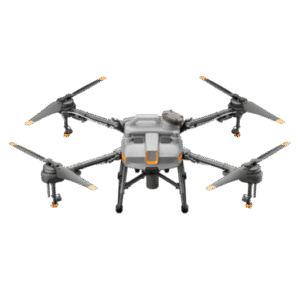
DJI FlyCart 100 is a heavy-lift aerial delivery aircraft designed for logistics, construction, emergency supply and industrial transport. It is not a camera drone for casual photography. The platform supports two delivery configurations: a dual-battery lifting system and a flagship winch system with a cable and powered hook.
Featured image: original IGIDRONE illustrative artwork. It does not depict the exact DJI FlyCart 100 aircraft.
Payload and mission planning
DJI lists a maximum takeoff weight of 170 kg and payload capacity up to 100 kg in the single-battery configuration. The official support guidance lists up to 85 kg for the dual-battery configuration, while DJI launch material gives example delivery missions of 65 kg over 12 km with dual batteries and 80 kg over 6 km with a single battery. Operators must follow the loading recommendation shown in the DJI Delivery App; maximum payload is not a universal safe load for every route or altitude.
Flight endurance and range
At a 149.9 kg takeoff weight, DJI specifies up to 14 minutes flight time and 12 minutes hover endurance in dual-battery mode, or 7 minutes flight time and 6 minutes hover endurance in single-battery emergency mode. These figures are windless, sea-level test results and are not equivalent to practical delivery range with reserve, wind, route and cargo effects.
Safety and operating limits
The aircraft combines LiDAR, millimetre-wave radar, a multi-camera vision system and an integrated parachute. DJI specifies IP55 protection, 12 m/s wind resistance during takeoff and landing, and a 20 m/s maximum horizontal speed. The protection rating does not cover the propulsion system and can decline with wear. Cargo, cable and hook can change the aircraft handling and obstacle-clearance envelope.
Delivery systems
- Flagship winch system: up to 30 m cable, powered hook, weighing, controlled release and retrieval.
- Dual-battery lifting system: cable lifting and load management with dual-battery power configuration.
- Energy system: 41 Ah battery modules, hot-swapping and high-power charging options.
Who should consider FlyCart 100?
It is intended for specialist logistics operators, emergency-response organisations, construction and infrastructure teams, and industrial users with the training, permits, loading procedures, landing zones and maintenance capability required for heavy-lift unmanned aircraft. Check local aviation, cargo, insurance and operating approvals before deployment.
Official source: DJI FlyCart 100 specifications and DJI FlyCart 100 support documentation.
Buyer assessment: payload, route and delivery method
FlyCart 100 is a specialist cargo aircraft, not a camera drone. The first decision is the delivery method: DJI lists a dual-battery lifting system and a winch system, each with different cable, battery and operating considerations. A headline payload figure is not a safe payload for every route. Capacity changes with configuration, take-off elevation, weather and route profile; follow the load guidance in DJI Delivery App and the manual for the exact aircraft.
DJI lists a 170 kg maximum take-off weight, but the permitted maximum is restricted to 150 kg in some markets. The official specifications distinguish aircraft weight from battery, accessories, cable and hook mass. Request a complete configuration sheet rather than comparing MTOW alone. The winch option supports a cable up to 30 m; the dual-battery lifting system uses a 10 m cable.
Operational limitations and site planning
Heavy-lift work needs a surveyed launch and landing area, load inspection, exclusion zones, trained crew, emergency procedures and a route-specific risk assessment. A suspended load can swing, snag or strike obstacles even when the aircraft has sensing equipment. DJI describes radar, LiDAR and vision sensors, but warns that cargo and cable obstacle avoidance is auxiliary and moving objects may not be automatically avoided. Do not assume sensing removes the need for a clear corridor and ground observers.
Endurance depends on load, battery mode, altitude and reserve policy. Confirm local aviation approvals, cargo rules, insurance, operator training, spectrum permissions and maintenance support. Consider FlyCart 100 only when the task genuinely requires heavy aerial logistics. Compare total system cost, including lifting or winch kit, batteries, charging, transport, spares, training and permits. A conventional enterprise camera drone is more suitable for routine imaging.
Primary source: DJI FlyCart 100 official specifications. Manufacturer test figures are not independent IGIDRONE results.
Who should consider DJI FlyCart 100?
This is a cargo and logistics aircraft, so the buying case should be built around a defined route, payload, landing or winch procedure and ground-handling plan. Identify the load's mass, dimensions, centre of gravity, attachment method, weather exposure and delivery location before comparing advertised maximum payload. The route must also account for people, vehicles, obstacles, emergency landing areas and communications. For DJI FlyCart 100, use the current manufacturer load chart for the exact lifting system and route; do not dispatch against the maximum payload alone.
Limitations and trade-offs to understand
Maximum payload, take-off mass and maximum range are separate figures. The usable payload on a particular route depends on battery configuration, altitude, temperature, wind, route profile, cable or hook equipment and the manufacturer's load chart. A headline payload figure should never be used as a default dispatch limit. For DJI FlyCart 100, document the load attachment, release method, exclusion zone and lost-load response before a live delivery.
Alternatives worth comparing
Compare the aircraft with a smaller delivery platform such as DJI FlyCart 30 and with non-aircraft alternatives for the same route. A lower-capacity platform may be easier to deploy for frequent light loads, while a ground vehicle or cable system may be more economical for predictable routes. Compare actual mission cost, not payload headline alone. For DJI FlyCart 100, calculate round-trip battery reserve with route altitude, wind and ground turnaround included.
Pre-purchase and ownership checklist
Before purchase, obtain the current manufacturer load chart and operating manual for the exact lifting or winch configuration. Ask for a demonstration with a representative load and route, confirm local permissions and airspace, and obtain written support arrangements for the aircraft, batteries and cargo system. For DJI FlyCart 100, verify permissions, insurance and crew responsibilities for the actual delivery corridor.
How to use this specification profile
This page is a research-based reference, not a claim that IGIDRONE has independently flight-tested the aircraft. Treat manufacturer maximums as test-condition figures and distinguish standard equipment from optional accessories or regional bundles. Before buying, compare the exact model code, firmware, battery, controller and payload configuration against the current official manual. If a field is marked unknown or is not documented by the manufacturer, do not infer a value from a similarly named variant. For DJI FlyCart 100, use the current manufacturer load chart for the exact lifting system and route; do not dispatch against the maximum payload alone.
Primary manufacturer reference: Open the manufacturer specification or support page. Confirm the current regional documentation before purchase. For DJI FlyCart 100, document the load attachment, release method, exclusion zone and lost-load response before a live delivery.
Editorial update: 8 November 2026. Model availability, prices, software support and regional operating rules can change. Confirm them with the manufacturer, authorised distributor and relevant aviation authority before purchase or flight. For DJI FlyCart 100, calculate round-trip battery reserve with route altitude, wind and ground turnaround included.
Drone Specifications
| Brand | DJI |
|---|---|
| Maximum Flight Time (minutes) | At 149.9 kg takeoff weight: 14 min dual-battery; 7 min single-battery emergency mode minutes |
| Weight (g) | 55.2 kg with lifting system or 60.2 kg with winch system, excluding batteries, compartment and accessories g |
| Battery Capacity (mAh) | 41 Ah Li-ion battery modules, 52 V mAh |
| Wind Resistance (m/s) | 12 m/s during takeoff and landing m/s |
| Obstacle Sensing | Front millimetre-wave radar, rear/downward radar, LiDAR, quad-vision system and FPV camera |
| Positioning / GPS | GPS + Galileo + BeiDou + GLONASS; RTK supported |
| Maximum Speed (m/s) | 20 m/s m/s |
Additional Notes
Heavy-lift cargo aircraft. Payload and endurance are strongly configuration-dependent; follow DJI Delivery App load recommendations and local aviation rules.
Specification source: Official source
Last verified: 2026-11-08
Official Price (USD)
No public USD price was verified on the manufacturer’s official store during this check.
For enterprise or discontinued models, contact the manufacturer for a current quotation. We do not substitute third-party seller prices.
MODEL TECHNICAL RECORD
Detailed Technical Specifications
Manufacturer-specific technical information recorded for this model. Values not present in the source record are not estimated.
Aircraft
| Basic empty weight | 55.2 kg with lifting system; 60.2 kg with winch system (excludes batteries, compartment, cable, hook and accessories) |
|---|---|
| Maximum takeoff weight | 170 kg; regional restrictions may lower this to 150 kg |
| Payload | Up to 100 kg single-battery; up to 85 kg dual-battery per DJI support FAQ |
| Max flight time at 149.9 kg takeoff weight | 14 min dual battery; 7 min single battery |
| Max hover endurance at 149.9 kg takeoff weight | 12 min dual battery; 6 min single battery |
| Max flight distance at 149.9 kg takeoff weight | 12 km dual battery; 6 km single battery |
| Maximum horizontal speed | 20 m/s |
| Maximum ascent/descent speed | 5 m/s |
| Maximum flight altitude above takeoff point | 1,500 m |
| Maximum takeoff altitude | 6,000 m above sea level with no payload; check launch-altitude/load limits |
| Maximum wind resistance | 12 m/s during takeoff and landing |
| Ingress protection | IP55; propulsion system excluded |
Delivery systems
| Flagship winch cable | 0–30 m cable; powered hook; weighing and controlled release/retrieval |
|---|---|
| Dual-battery lifting system | 10 m cable; load weighing and auto-balance control |
Safety
| Sensors | Front mmWave radar, rear and downward radar, LiDAR, quad-vision and FPV camera |
|---|---|
| Parachute | Integrated parachute; minimum opening height 100 m; touchdown speed ≤7 m/s in stated full-load test |
Transmission
| System | DJI O4 |
|---|---|
| Maximum range | 20 km FCC; 10 km CE/MIC; 12 km SRRC, unobstructed |
Battery
| Battery capacity | 41 Ah per battery module |
|---|---|
| Standard voltage | 52 V |


Aircraft & Flight
| Maximum takeoff altitude | 6,000 m above sea level with no payload; takeoff altitude limited by load and configuration |
|---|---|
| Maximum ascent speed | 5 m/s |
| Maximum descent speed | 5 m/s |
| Maximum flight distance | At 149.9 kg takeoff weight: 12 km dual-battery; 6 km single-battery |
| Maximum takeoff weight | 170 kg (some regions restrict MTOW to 150 kg) |
MANUFACTURER DATA
Detailed official specifications
Technical figures below are transcribed from the manufacturer documentation linked with this profile. Test figures are maximum or controlled-condition ratings where stated; actual performance varies by configuration and operating conditions. A field is omitted when the cited source does not publish a reliable value.
Manufacturer source last checked: 2026-11-08
Evidence type: Official DJI manufacturer specifications, support documentation and user manual
Open official manufacturer specification source ↗
Source: manufacturer technical specifications and official support documentation. Regional versions, payloads, batteries, firmware and test conditions can change the stated figures. Check the linked source for the applicable configuration.
Related Dji drones
Explore other published models from the same manufacturer.