DJI / DRONE PROFILE
DJI Mavic 3 Classic
Explore the available technical information for this aircraft, including camera capabilities, flight performance and manufacturer-specific specifications.
Check DJI Mavic 3 Classic (DJI RC-N1): View DJI Mavic 3 Classic package at DJI
Price & Where to Buy
$1,179 USD
Package: DJI Mavic 3 Classic, drone only (remote controller not included)
Official listing currently marked out of stock Out of stock
Check price: DJI Mavic 3 Classic (DJI RC-N1)
Affiliate disclosure: IGIDRONE may earn a commission from qualifying purchases at no extra cost to you. Price checked 2026-11-06. Prices and package availability can change; confirm the selected configuration before ordering.
Affiliate disclosure: IGIDRONE may earn a commission from qualifying purchases at no additional cost to you. Package contents, price and availability may change.
DJI Mavic 3 Classic Review and Buying Guide
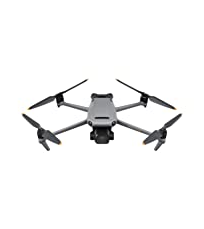
The DJI Mavic 3 Classic is the simpler single-camera member of the Mavic 3 family. It retains the 4/3 CMOS Hasselblad main camera while omitting the additional telephoto cameras found on the Mavic 3 and Mavic 3 Pro. That makes it an appealing option for creators who prioritise the main camera and do not need multiple focal lengths.
Hasselblad camera
The main camera has a 4/3 CMOS sensor with 20 MP effective pixels, a 24 mm-equivalent lens and a variable f/2.8–f/11 aperture. DJI lists 5.1K video recording and 4K modes, with H.264/H.265 recording and JPEG/DNG still-photo formats. The three-axis mechanical gimbal supports stable camera movement.
Flight time and airframe
The aircraft weighs 895 g and has a maximum rated flight time of 46 minutes in DJI’s controlled test environment. DJI lists a maximum flight distance of 30 km, which is not the same as the video transmission distance. Both figures are laboratory measurements and should not be treated as practical flight targets.
Sensing and transmission
Mavic 3 Classic includes an omnidirectional binocular vision system supplemented by a downward infrared sensor, plus O3+ video transmission. Obstacle sensing performance depends on light, surface texture, speed and obstacle shape. Pilots must not rely on automatic sensing to detect every hazard.
Who should consider it?
It suits photographers and video creators who want a large main camera sensor and a folding airframe but do not need the extra tele cameras. Those who regularly shoot distant subjects may prefer Mavic 3 Pro; budget-conscious buyers should compare current bundles and used-market condition.
Advantages and limitations
- Advantages: 4/3 Hasselblad camera, variable aperture, 5.1K video, omnidirectional sensing and long manufacturer-rated flight time.
- Limitations: only one camera focal length, premium size/weight compared with Mini models and flight-time figures that exceed typical field use.
- Before buying: confirm controller bundle, battery condition, storage card, warranty, firmware and local C1/category requirements where applicable.
IGIDRONE verdict
Mavic 3 Classic is the sensible Mavic 3-family choice when image quality from the main Hasselblad camera matters more than telephoto flexibility. Compare it with the Mavic 3 Pro based on actual shooting needs, not simply the number of cameras.
Manufacturer reference: DJI Mavic 3 Classic specifications.
Who should consider DJI Mavic 3 Classic?
This model should be selected around the kind of images or missions you expect to produce. A casual traveller, a social-video creator and a commercial photographer can value very different features. Consider camera focal lengths, sensor size, stabilisation, supported recording modes, portability, controller choice and the complete battery kit. A headline resolution or maximum flight time does not by itself determine whether the drone suits your work. For DJI Mavic 3 Classic, compare the camera modes you will actually use with your phone or computer editing capability and storage budget.
Limitations and trade-offs to understand
Maximum flight time and transmission distance are controlled-condition manufacturer figures, not promises for every location. Wind, cold, battery age, camera use, signal interference, altitude and the need to return with reserve affect real operation. Plan conservatively and read the operating limitations in the current manual. For DJI Mavic 3 Classic, price the complete kit with controller, batteries, charging accessories and a protective case rather than the aircraft alone.
Alternatives worth comparing
Compare this model with the nearest aircraft in the same use category and total-kit budget. A smaller compact model may be easier to carry, while a higher-tier camera drone may offer more lens or low-light flexibility. Compare the practical difference you will notice, not just the number of specifications. For DJI Mavic 3 Classic, confirm take-off weight and destination rules for the exact battery configuration before travel.
Pre-purchase and ownership checklist
Check the official specification page and manual for the regional model, battery configuration, controller compatibility, weight, sensor limitations, firmware and service. Confirm local aviation rules and no-fly restrictions for every planned destination before flying. For DJI Mavic 3 Classic, review the manual limitations for wind, obstacle sensing and return-to-home rather than treating automation as a guarantee.
How to use this specification profile
This page is a research-based reference, not a claim that IGIDRONE has independently flight-tested the aircraft. Treat manufacturer maximums as test-condition figures and distinguish standard equipment from optional accessories or regional bundles. Before buying, compare the exact model code, firmware, battery, controller and payload configuration against the current official manual. If a field is marked unknown or is not documented by the manufacturer, do not infer a value from a similarly named variant. For DJI Mavic 3 Classic, compare the camera modes you will actually use with your phone or computer editing capability and storage budget.
Primary manufacturer reference: Open the manufacturer specification or support page. Confirm the current regional documentation before purchase. For DJI Mavic 3 Classic, price the complete kit with controller, batteries, charging accessories and a protective case rather than the aircraft alone.
Editorial update: 8 November 2026. Model availability, prices, software support and regional operating rules can change. Confirm them with the manufacturer, authorised distributor and relevant aviation authority before purchase or flight. For DJI Mavic 3 Classic, confirm take-off weight and destination rules for the exact battery configuration before travel.
Planning a realistic flight or shooting session
Plan around a complete outing rather than the maximum number printed in the specification table. Include setup, firmware and compass checks, safe launch and recovery locations, wind, battery reserve, time needed to capture the subject and a backup plan if conditions change. This produces a more useful estimate of how many usable clips or photographs a battery can support. For DJI Mavic 3 Classic, compare the camera modes you will actually use with your phone or computer editing capability and storage budget.
Evidence to request before purchase
Use the manufacturer current user manual and specification page as the primary references. Ask the retailer to confirm the exact regional model, controller, battery bundle, warranty, repair route and spare-part availability in writing. If camera performance matters, inspect sample files from the same recording mode rather than relying only on edited promotional footage. For DJI Mavic 3 Classic, price the complete kit with controller, batteries, charging accessories and a protective case rather than the aircraft alone.
Editorial standard: buyer guidance is based on published manufacturer information and practical ownership considerations. IGIDRONE does not claim independent flight testing unless a page explicitly documents a real test. For DJI Mavic 3 Classic, confirm take-off weight and destination rules for the exact battery configuration before travel.
Drone Specifications
| Brand | DJI |
|---|---|
| Camera | 4/3-inch CMOS Hasselblad camera, 20 MP effective pixels; 24 mm equivalent lens, f/2.8–f/11 |
| Maximum Video Resolution | 5.1K/50fps; DCI 4K/120fps; 4K/120fps; 1080p up to 200fps (recording frame rates; high frame rates play as slow motion); H.264/H.265. |
| Maximum Flight Time (minutes) | 46 min |
| Maximum Transmission Range (km) | FCC: 15 km; CE: 8 km; SRRC: 8 km; MIC: 8 km; Measured in an unobstructed outdoor environment free of interference. The above data shows the farthest communication range for one-way, non-return flights under each standard. During your flight, please pay attention to RTH reminders in the DJI Fly app. |
| Weight (g) | 895 g |
| Battery Capacity (mAh) | 5000 mAh |
| Wind Resistance (m/s) | 12 m/s |
| Obstacle Sensing | Omnidirectional binocular vision system, supplemented with an infrared sensor at the bottom of the aircraft |
| Positioning / GPS | GPS + Galileo + BeiDou |
| Maximum Speed (m/s) | 21 m/s maximum horizontal speed (19 m/s limit in EU regions) |
| Folded Dimensions | 221×96.3×90.3 mm (L×W×H) |
Specification source: Official source
Last verified: 2026-11-08
Official Price (USD)
$1,179.00 USD
Listed configuration: DJI Mavic 3 Classic (Drone Only), base aircraft configuration
Official store status: Out of stock at the time of checking.
Last verified official US Store price: USD 1,179 for DJI Mavic 3 Classic (Drone Only). The exact option is out of stock; the RC-N1 and DJI RC bundles are different configurations. Not a current purchasable offer. Checked 2026-11-16.
Check price at the official store
Price checked: 2026-11-16
MODEL TECHNICAL RECORD
Detailed Technical Specifications
Manufacturer-specific technical information recorded for this model. Values not present in the source record are not estimated.
Aircraft
| Takeoff Weight | 895 g |
|---|---|
| Dimensions | Folded (without propellers): 221×96.3×90.3 mm (L×W×H) Unfolded (without propellers): 347.5×283×107.7 mm (L×W×H) |
| Max Ascent Speed | 8 m/s |
| Max Descent Speed | 6 m/s |
| Max Horizontal Speed (at sea level, no wind) | 21 m/s No faster than 19 m/s in EU regions. |
| Max Takeoff Altitude | 6000 m |
| Max Flight Time | 46 minutes Measured in a controlled test environment. Specific test conditions are as follows: flying at a constant speed of 32.4 kph in a windless environment at sea level, with APAS off, AirSense off, camera parameters set to 1080p/24fps, video mode off, and from 100% battery level until 0%. Results may vary depending on the environment, actual use, and firmware version. |
| Max Hovering Time | 40 minutes Measured in a controlled test environment. Specific test conditions are as follows: hovering in a windless environment at sea level, with APAS off, AirSense off, camera parameters set to 1080p/24fps, video mode off, and from 100% battery level until 0%. Results may vary depending on environment, actual use, and firmware version. |
| Max Flight Distance | 30 km The flight distance is different from the video transmission distance. The data was tested in a controlled environment, under the following specific test conditions: flying at a constant speed of 50.4 kph in a windless environment at sea level, with APAS off, AirSense off, camera parameters set to 1080p/24fps, video mode off, and from 100% battery level until 0%. Results may vary depending on the environment, actual use, and firmware version. |
| Max Wind Speed Resistance | 12 m/s |
| Max Pitch Angle | 35° |
| Operating Temperature | -10° to 40° C (14° to 104° F) |
| Global Navigation Satellite System | GPS + Galileo + BeiDou |
| Hovering Accuracy Range | Vertical: ±0.1 m (with vision positioning) ±0.5 m (with satellite positioning) Horizontal: ±0.3 m (with vision positioning) ±0.5 m (with satellite positioning) |
| Internal Storage | 8 GB (approx. 7.9GB available space) |
| Class | C1 (EU) |
Hasselblad Camera
| Image Sensor | 4/3 CMOS, Effective Pixels: 20 MP |
|---|---|
| Lens | FOV: 84° Format Equivalent: 24 mm Aperture: f/2.8-f/11 Focus: 1 m to ∞ |
| ISO Range | Video: Normal, Slow-motion: 100-6400 (normal color) 400-1600 (D-Log) 100-1600 (D-Log M) 100-1600 (HLG) Night Mode: 800-12800 (normal color) Photo: 100-6400 |
| Shutter Speed | Electronic Shutter: 8-1/8000 s |
| Max Image Size | 5280×3956 |
| Still Photography Modes | Single Shot: 20 MP Burst Shooting: 20 MP, 3/5/7 frames Automatic Exposure Bracketing (AEB): 20 MP, 3/5 frames at 0.7 EV step Timed: 20 MP, 2/3/5/7/10/15/20/30/60 s |
| Photo Format | JPEG/DNG (RAW) |
| Video Resolution | H.264/H.265 5.1K: 5120×2700@24/25/30/48/50 fps DCI 4K: 4096×2160@24/25/30/48/50/60/120* fps 4K: 3840×2160@24/25/30/48/50/60/120* fps FHD: 1920×1080@24/25/30/48/50/60/120*/200* fps * Recording frame rates. The corresponding video plays as slow-motion video. |
| Video Format | MP4/MOV (MPEG-4 AVC/H.264, HEVC/H.265) |
| Max Video Bitrate | H.264/H.265: 200 Mbps |
| Supported File System | exFAT |
| Color Mode | Normal/HLG/D-Log/D-Log M |
| Digital Zoom | 3× (only in Video Mode) |
Gimbal
| Stabilization | 3-axis mechanical gimbal (tilt, roll, pan) |
|---|---|
| Mechanical Range | Tilt: -135° to 100° Roll: -45° to 45° Pan: -27° to 27° |
| Controllable Range | Tilt: -90° to 35° Pan: -5° to 5° |
| Max Control Speed (tilt) | 100°/s |
| Angular Vibration Range | ±0.007° |
Sensing
| Sensing Type | Omnidirectional binocular vision system, supplemented with an infrared sensor at the bottom of the aircraft |
|---|---|
| Forward | Measurement Range: 0.5-20 m Detection Range: 0.5-200 m Effective Sensing Speed: Flight Speed ≤ 15 m/s FOV: Horizontal 90°, Vertical 103° |
| Backward | Measurement Range: 0.5-16 m Effective Sensing Speed: Flight Speed ≤ 12 m/s FOV: Horizontal 90°, Vertical 103° |
| Lateral | Measurement Range: 0.5-25 m Effective Sensing Speed: Flight Speed ≤ 15 m/s FOV: Horizontal 90°, Vertical 85° |
| Upward | Measurement Range: 0.2-10 m Effective Sensing Speed: Flight Speed ≤ 6 m/s FOV: Front and Back 100°, Left and Right 90° |
| Downward | Measurement Range: 0.3-18 m Effective Sensing Speed: Flight Speed ≤ 6 m/s FOV: Front and Back 130°, Left and Right 160° |
| Operating Environment | Forward, Backward, Left, Right, and Upward: surfaces with discernible patterns and adequate lighting (lux >15) Downward: surfaces with discernible patterns, diffuse reflectivity >20% (e.g. walls, trees, people), and adequate lighting (lux >15) |
Video Transmission
| Video Transmission System | O3+ |
|---|---|
| Live View Quality | Remote Controller: 1080p/30fps, 1080p/60fps |
| Operating Frequency | 2.400-2.4835 GHz 5.725-5.850 GHz |
| Transmission Power (EIRP) | 2.400-2.4835 GHz: < 33 dBm (FCC) < 20 dBm (CE/SRRC/MIC) 5.725-5.850 GHz: < 33 dBm (FCC) < 30 dBm (SRRC) < 14 dBm (CE) |
| Max Transmission Distance (free of interference) | FCC: 15 km CE: 8 km SRRC: 8 km MIC: 8 km Measured in an unobstructed outdoor environment free of interference. The above data shows the farthest communication range for one-way, non-return flights under each standard. During your flight, please pay attention to RTH reminders in the DJI Fly app. |
| Max Transmission Distance (with interference) | Strong Interference: urban landscape, approx. 1.5-3 km Medium Interference: suburban landscape, approx. 3-9 km Low Interference: suburb/seaside, approx. 9-15 km Data tested under FCC standard in unobstructed environments with typical interference. Used for reference purposes only and provides no guarantee for actual flight distance. |
| Max Download Speed | O3+: 5.5 MB/s (with DJI RC-N1 Remote Controller) 15 MB/s (with DJI RC Pro) 5.5 MB/s (with DJI RC) Wi-Fi 6: 80 MB/s* * Measured in a laboratory environment with little interference in countries/regions that support both 2.4 GHz and 5.8 GHz, with footage saved to the internal storage. Download speeds may vary depending on the actual conditions. |
| Lowest Latency | 130 ms (with DJI RC-N1 Remote Controller) 120 ms (with DJI RC Pro) 130 ms (with DJI RC) Depending on the actual environment and mobile device. |
| Antennas | 4 antennas, 2T4R |
Battery
| Capacity | 5000 mAh |
|---|---|
| Weight | 335.5 g |
| Nominal Voltage | 15.4 V |
| Charging Voltage Limit | 17.6 V |
| Type | Li-ion 4S |
| Energy | 77 Wh |
| Charging Temperature | 5° to 40° C (41° to 104° F) |
| Charging Time | Approx. 96 minutes Use the included data cable of the DJI 65W Portable Charger. |
Charger
| Input | 100-240 V (AC), 47-63 Hz, 2 A |
|---|---|
| Output | USB-C: 5 V, 5 A 9 V, 5 A 12 V, 5 A 15 V, 4.3 A 20 V, 3.25 A 5-20 V, 3.25 A USB-A: 5 V, 2 A |
| Rated Power | 65 W |
Battery Charging Hub
| Input | USB-C: 5-20 V, max 5 A |
|---|---|
| Output | Battery Port: 12-17.6 V, max. 5 A |
| Rated Power | DJI Mavic 3 Battery Charging Hub: 65 W DJI Mavic 3 Battery Charging Hub (100W): 100 W |
| Charging Type | Three batteries charged in sequence |
| Compatibility | DJI Mavic 3 Intelligent Flight Battery |
Car Charger
| Input | Car Power Input: 12.7-16 V, 6.5 A, rated voltage 14 V (DC) |
|---|---|
| Output | USB-C: 5 V, 5 A 9 V, 5 A 12 V, 5 A 15 V, 4.3 A 20 V, 3.25 A 5-20 V, 3.25 A USB-A: 5 V, 2 A |
| Rated Power | 65 W |
| Charging Temperature | 5° to 40° C (41° to 104° F) |
Storage
| Recommended microSD Cards | Lexar 1066x 64GB V30 A2 microSDXC Lexar 1066x 128GB V30 A2 microSDXC Lexar 1066x 256GB V30 A2 microSDXC Lexar 1066x 512GB V30 A2 microSDXC SanDisk High Endurance 64GB V30 microSDXC SanDisk High Endurance 128GB V30 microSDXC SanDisk High Endurance 256GB V30 microSDXC Kingston Canvas Go! Plus 64GB V30 A2 microSDXC Kingston Canvas Go! Plus 128GB V30 A2 microSDXC Kingston Canvas Go! Plus 256GB V30 A2 microSDXC Kingston Canvas Go! Plus 512GB V30 A2 microSDXC |
|---|
Remote Controller
| Max Operating Time | DJI RC-N1 Remote Controller Without charging any mobile device: 6 hours When charging a mobile device: 4 hours |
|---|---|
| Max Supported Mobile Device Size | DJI RC-N1 Remote Controller 180×86×10 mm (L×W×H) |
| Operating Temperature | DJI RC-N1 Remote Controller -10° to 40° C (14° to 104° F) |
| Transmitter Power (EIRP) | DJI RC-N1 Remote Controller 2.400-2.4835 GHz: < 26 dBm (FCC) < 20 dBm (CE/SRRC/MIC) 5.725-5.850 GHz: < 26 dBm (FCC) < 23 dBm (SRRC) < 14 dBm (CE) |
Others
| Guaranteed software updates until | 2026/12/31 |
|---|


MANUFACTURER DATA
Detailed official specifications
Technical figures below are transcribed from the manufacturer documentation linked with this profile. Test figures are maximum or controlled-condition ratings where stated; actual performance varies by configuration and operating conditions. A field is omitted when the cited source does not publish a reliable value.
Manufacturer source last checked: 2026-11-08
Evidence type: Official DJI manufacturer specifications / support documentation
Aircraft
| Takeoff Weight | 895 g |
|---|---|
| Dimensions | Folded (without propellers): 221×96.3×90.3 mm (L×W×H); Unfolded (without propellers): 347.5×283×107.7 mm (L×W×H) |
| Max Ascent Speed | 8 m/s |
| Max Descent Speed | 6 m/s |
| Max Horizontal Speed (at sea level, no wind) | 21 m/s; No faster than 19 m/s in EU regions. |
| Max Takeoff Altitude | 6000 m |
| Max Flight Time | 46 minutes; Measured in a controlled test environment. Specific test conditions are as follows: flying at a constant speed of 32.4 kph in a windless environment at sea level, with APAS off, AirSense off, camera parameters set to 1080p/24fps, video mode off, and from 100% battery level until 0%. Results may vary depending on the environment, actual use, and firmware version. |
| Max Hovering Time | 40 minutes; Measured in a controlled test environment. Specific test conditions are as follows: hovering in a windless environment at sea level, with APAS off, AirSense off, camera parameters set to 1080p/24fps, video mode off, and from 100% battery level until 0%. Results may vary depending on environment, actual use, and firmware version. |
| Max Flight Distance | 30 km; The flight distance is different from the video transmission distance. The data was tested in a controlled environment, under the following specific test conditions: flying at a constant speed of 50.4 kph in a windless environment at sea level, with APAS off, AirSense off, camera parameters set to 1080p/24fps, video mode off, and from 100% battery level until 0%. Results may vary depending on the environment, actual use, and firmware version. |
| Max Wind Speed Resistance | 12 m/s |
| Max Pitch Angle | 35° |
| Operating Temperature | -10° to 40° C (14° to 104° F) |
| Global Navigation Satellite System | GPS + Galileo + BeiDou |
| Hovering Accuracy Range | Vertical:; ±0.1 m (with vision positioning); ±0.5 m (with satellite positioning); ; Horizontal:; ±0.3 m (with vision positioning); ±0.5 m (with satellite positioning) |
| Internal Storage | 8 GB (approx. 7.9GB available space) |
| Class | C1 (EU) |
Hasselblad Camera
| Image Sensor | 4/3 CMOS, Effective Pixels: 20 MP |
|---|---|
| Lens | FOV: 84°; Format Equivalent: 24 mm; Aperture: f/2.8-f/11; Focus: 1 m to ∞ |
| ISO Range | Video: ; Normal, Slow-motion:; 100-6400 (normal color); 400-1600 (D-Log); 100-1600 (D-Log M); 100-1600 (HLG); Night Mode:; 800-12800 (normal color); ; Photo:; 100-6400 |
| Shutter Speed | Electronic Shutter: 8-1/8000 s |
| Max Image Size | 5280×3956 |
| Still Photography Modes | Single Shot: 20 MP; Burst Shooting: 20 MP, 3/5/7 frames; Automatic Exposure Bracketing (AEB): 20 MP, 3/5 frames at 0.7 EV step; Timed: 20 MP, 2/3/5/7/10/15/20/30/60 s |
| Photo Format | JPEG/DNG (RAW) |
| Video Resolution | H.264/H.265; 5.1K: 5120×2700@24/25/30/48/50 fps; DCI 4K: 4096×2160@24/25/30/48/50/60/120* fps; 4K: 3840×2160@24/25/30/48/50/60/120* fps; FHD: 1920×1080@24/25/30/48/50/60/120*/200* fps; * Recording frame rates. The corresponding video plays as slow-motion video. |
| Video Format | MP4/MOV (MPEG-4 AVC/H.264, HEVC/H.265) |
| Max Video Bitrate | H.264/H.265: 200 Mbps |
| Supported File System | exFAT |
| Color Mode | Normal/HLG/D-Log/D-Log M |
| Digital Zoom | 3× (only in Video Mode) |
Gimbal
| Stabilization | 3-axis mechanical gimbal (tilt, roll, pan) |
|---|---|
| Mechanical Range | Tilt: -135° to 100°; Roll: -45° to 45°; Pan: -27° to 27° |
| Controllable Range | Tilt: -90° to 35°; Pan: -5° to 5° |
| Max Control Speed (tilt) | 100°/s |
| Angular Vibration Range | ±0.007° |
Sensing
| Sensing Type | Omnidirectional binocular vision system, supplemented with an infrared sensor at the bottom of the aircraft |
|---|---|
| Forward | Measurement Range: ; 0.5-20 m; Detection Range: ; 0.5-200 m; Effective Sensing Speed: ; Flight Speed ≤ 15 m/s; FOV: ; Horizontal 90°, Vertical 103° |
| Backward | Measurement Range: ; 0.5-16 m; Effective Sensing Speed: ; Flight Speed ≤ 12 m/s; FOV: ; Horizontal 90°, Vertical 103° |
| Lateral | Measurement Range: ; 0.5-25 m; Effective Sensing Speed: ; Flight Speed ≤ 15 m/s; FOV: ; Horizontal 90°, Vertical 85° |
| Upward | Measurement Range: ; 0.2-10 m; Effective Sensing Speed: ; Flight Speed ≤ 6 m/s; FOV: ; Front and Back 100°, Left and Right 90° |
| Downward | Measurement Range: ; 0.3-18 m; Effective Sensing Speed: ; Flight Speed ≤ 6 m/s; FOV: ; Front and Back 130°, Left and Right 160° |
| Operating Environment | Forward, Backward, Left, Right, and Upward: ; surfaces with discernible patterns and adequate lighting (lux >15); Downward: ; surfaces with discernible patterns, diffuse reflectivity >20% (e.g. walls, trees, people), and adequate lighting (lux >15) |
Video Transmission
| Video Transmission System | O3+ |
|---|---|
| Live View Quality | Remote Controller:; 1080p/30fps, 1080p/60fps |
| Operating Frequency | 2.400-2.4835 GHz; 5.725-5.850 GHz |
| Transmission Power (EIRP) | 2.400-2.4835 GHz:; < 33 dBm (FCC); < 20 dBm (CE/SRRC/MIC); ; 5.725-5.850 GHz: ; < 33 dBm (FCC); < 30 dBm (SRRC) ; < 14 dBm (CE) |
| Max Transmission Distance (free of interference) | FCC: 15 km; CE: 8 km; SRRC: 8 km; MIC: 8 km; Measured in an unobstructed outdoor environment free of interference. The above data shows the farthest communication range for one-way, non-return flights under each standard. During your flight, please pay attention to RTH reminders in the DJI Fly app. |
| Max Transmission Distance (with interference) | Strong Interference: urban landscape, approx. 1.5-3 km; Medium Interference: suburban landscape, approx. 3-9 km; Low Interference: suburb/seaside, approx. 9-15 km; Data tested under FCC standard in unobstructed environments with typical interference. Used for reference purposes only and provides no guarantee for actual flight distance. |
| Max Download Speed | O3+: ; 5.5 MB/s (with DJI RC-N1 Remote Controller); 15 MB/s (with DJI RC Pro); 5.5 MB/s (with DJI RC); ; Wi-Fi 6: 80 MB/s*; * Measured in a laboratory environment with little interference in countries/regions that support both 2.4 GHz and 5.8 GHz, with footage saved to the internal storage. Download speeds may vary depending on the actual conditions. |
| Lowest Latency | 130 ms (with DJI RC-N1 Remote Controller); 120 ms (with DJI RC Pro); 130 ms (with DJI RC); Depending on the actual environment and mobile device. |
| Antennas | 4 antennas, 2T4R |
Battery
| Capacity | 5000 mAh |
|---|---|
| Weight | 335.5 g |
| Nominal Voltage | 15.4 V |
| Charging Voltage Limit | 17.6 V |
| Type | Li-ion 4S |
| Energy | 77 Wh |
| Charging Temperature | 5° to 40° C (41° to 104° F) |
| Charging Time | Approx. 96 minutes; Use the included data cable of the DJI 65W Portable Charger. |
Charger
| Input | 100-240 V (AC), 47-63 Hz, 2 A |
|---|---|
| Output | USB-C: ; 5 V, 5 A; 9 V, 5 A; 12 V, 5 A; 15 V, 4.3 A; 20 V, 3.25 A; 5-20 V, 3.25 A; ; USB-A: ; 5 V, 2 A |
| Rated Power | 65 W |
Battery Charging Hub
| Input | USB-C: 5-20 V, max 5 A |
|---|---|
| Output | Battery Port: 12-17.6 V, max. 5 A |
| Rated Power | DJI Mavic 3 Battery Charging Hub: 65 W; DJI Mavic 3 Battery Charging Hub (100W): 100 W |
| Charging Type | Three batteries charged in sequence |
| Compatibility | DJI Mavic 3 Intelligent Flight Battery |
Car Charger
| Input | Car Power Input:; 12.7-16 V, 6.5 A, rated voltage 14 V (DC) |
|---|---|
| Output | USB-C: ; 5 V, 5 A; 9 V, 5 A; 12 V, 5 A; 15 V, 4.3 A; 20 V, 3.25 A; 5-20 V, 3.25 A; ; USB-A: ; 5 V, 2 A |
| Rated Power | 65 W |
| Charging Temperature | 5° to 40° C (41° to 104° F) |
Storage
| Recommended microSD Cards | Lexar 1066x 64GB V30 A2 microSDXC; Lexar 1066x 128GB V30 A2 microSDXC; Lexar 1066x 256GB V30 A2 microSDXC; Lexar 1066x 512GB V30 A2 microSDXC; SanDisk High Endurance 64GB V30 microSDXC; SanDisk High Endurance 128GB V30 microSDXC; SanDisk High Endurance 256GB V30 microSDXC; Kingston Canvas Go! Plus 64GB V30 A2 microSDXC; Kingston Canvas Go! Plus 128GB V30 A2 microSDXC; Kingston Canvas Go! Plus 256GB V30 A2 microSDXC; Kingston Canvas Go! Plus 512GB V30 A2 microSDXC |
|---|
Remote Controller
| Max Operating Time | DJI RC-N1 Remote Controller; Without charging any mobile device: 6 hours; When charging a mobile device: 4 hours |
|---|---|
| Max Supported Mobile Device Size | DJI RC-N1 Remote Controller; 180×86×10 mm (L×W×H) |
| Operating Temperature | DJI RC-N1 Remote Controller; -10° to 40° C (14° to 104° F) |
| Transmitter Power (EIRP) | DJI RC-N1 Remote Controller; 2.400-2.4835 GHz:; < 26 dBm (FCC); < 20 dBm (CE/SRRC/MIC); ; 5.725-5.850 GHz:; < 26 dBm (FCC); < 23 dBm (SRRC); < 14 dBm (CE) |
Others
| Guaranteed software updates until | 2026/12/31 |
|---|
Source: manufacturer technical specifications and official support documentation. Regional versions, payloads, batteries, firmware and test conditions can change the stated figures. Check the linked source for the applicable configuration.
Related Dji drones
Explore other published models from the same manufacturer.