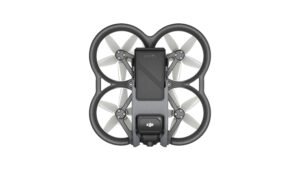
DJI / DRONE PROFILE
DJI Avata 360
Explore the available technical information for this aircraft, including camera capabilities, flight performance and manufacturer-specific specifications.
DJI Avata 360 is a current DJI camera-drone model. The specifications below distinguish standard and optional battery configurations and retain manufacturer test-condition notes where they materially affect the advertised numbers.
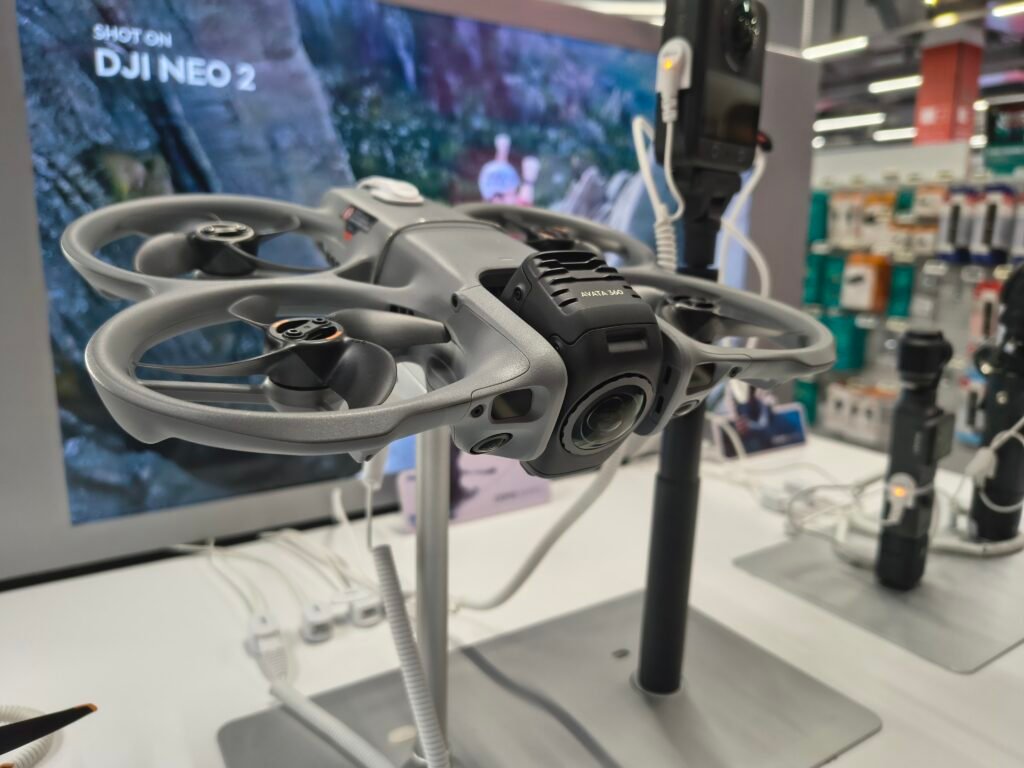
Image credit: NDG, via Wikimedia Commons. Licensed under CC BY-SA 4.0. No edits made.
Key specifications and buying notes
DJI Avata 360 is a specialist 360-degree FPV camera platform. Its buyer decision includes the capture format, lens protection, compatible goggles and controller, memory-card requirements and the editing workflow needed to reframe footage after flight.
Manufacturer source: Official DJI documentation.
360-degree capture and reframing
Avata 360 is a specialised FPV-style aircraft built around 360-degree capture rather than a conventional forward-facing camera alone. DJI’s published documentation lists two 1/1.1-inch square CMOS sensors, 8K 360-degree video modes, single-lens 4K modes and a 360-degree virtual gimbal. This changes the shooting workflow: the pilot can capture the scene first and choose the final viewing direction during editing, but large 360-degree files require storage, transfer and editing capacity.
Flight and safety trade-offs
DJI lists approximately 455 g take-off weight, around 23 minutes maximum flight time and C1 classification in the EU. Maximum flight time is a controlled test figure, not a practical flight plan. Battery reserve, wind, manoeuvres and camera operation reduce usable time. The aircraft’s sensing system has defined operating conditions; obstacle sensing is not a substitute for maintaining visual awareness and choosing a safe route.
Who should buy it?
Consider Avata 360 if you specifically want immersive 360-degree footage and are comfortable with the editing workflow. If you mainly need conventional cinematic footage, compare a standard camera drone and the Avata 2 before paying for 360 capture. Check replacement-lens availability, supported controllers and goggles, editing software, microSD requirements and regional flight rules.
Primary sources: DJI Avata 360 product listing and DJI Avata 360 user manual. This is a research-based profile, not a hands-on test.
Who should consider DJI Avata 360?
This model is best assessed by its piloting style and intended environment. FPV buyers should decide whether they need indoor practice, immersive goggles, freestyle manoeuvres, racing, cinematic proximity flying or a simple lightweight trainer. The controller, goggles, video link, batteries, propeller guards and simulator compatibility can have as much impact on the learning experience as the aircraft itself. For DJI Avata 360, verify the exact controller, goggles, battery and firmware pairing before ordering a bundle.
Limitations and trade-offs to understand
FPV flight can be demanding and fast. Beginners should not treat automated return-to-home or obstacle sensing as a substitute for training, visual awareness and a safe flying area. Check local rules for FPV goggles, visual line of sight, spotters, registration and operating category before flight. For DJI Avata 360, plan simulator practice and controlled-area flights before attempting speed or proximity manoeuvres.
Alternatives worth comparing
Compare this aircraft with a conventional camera drone if smooth aerial photography is the priority, or with another FPV platform in the same size and skill category if immersive piloting is the goal. For DJI FPV-style buyers, review the Avata family and the DJI FPV platform as separate operating choices rather than interchangeable models. For DJI Avata 360, check the price and availability of propellers, guards, motors and frame parts as well as the aircraft itself.
Pre-purchase and ownership checklist
Before purchase, verify the exact controller and goggles compatibility, battery and charger type, spare propeller availability, repair support, firmware requirements and regional radio compliance. New pilots should plan simulator practice and supervised low-risk flights before attempting high-speed manoeuvres. For DJI Avata 360, distinguish recorded camera quality from the live goggles feed when comparing video specifications.
How to use this specification profile
This page is a research-based reference, not a claim that IGIDRONE has independently flight-tested the aircraft. Treat manufacturer maximums as test-condition figures and distinguish standard equipment from optional accessories or regional bundles. Before buying, compare the exact model code, firmware, battery, controller and payload configuration against the current official manual. If a field is marked unknown or is not documented by the manufacturer, do not infer a value from a similarly named variant. For DJI Avata 360, verify the exact controller, goggles, battery and firmware pairing before ordering a bundle.
Editorial update: 8 November 2026. Model availability, prices, software support and regional operating rules can change. Confirm them with the manufacturer, authorised distributor and relevant aviation authority before purchase or flight. For DJI Avata 360, plan simulator practice and controlled-area flights before attempting speed or proximity manoeuvres.
Skill level, repairability and practice
Choose a practice environment before choosing the aircraft. Indoor micro-FPV, open-field freestyle and cinematic proximity flights have different space, speed and safety requirements. A beginner should build control confidence gradually and avoid flying near people, traffic, animals or property. For DJI Avata 360, verify the exact controller, goggles, battery and firmware pairing before ordering a bundle.
Evidence to request from a supplier
Ask for a current compatibility list for controller, goggles and batteries; a spare-parts list; repair guidance; and the exact recording specifications. For a first FPV aircraft, ask whether the package supports simulator practice and whether a local trainer or service centre can help with setup. For DJI Avata 360, plan simulator practice and controlled-area flights before attempting speed or proximity manoeuvres.
Editorial standard: buyer guidance is based on published manufacturer information and practical ownership considerations. IGIDRONE does not claim independent flight testing unless a page explicitly documents a real test. For DJI Avata 360, check the price and availability of propellers, guards, motors and frame parts as well as the aircraft itself.
Avata 360: storage, editing and protection
360-degree footage changes the post-production workload. Confirm the supported memory-card speed and capacity, the file format, transfer method and the editing application required to reframe footage. A phone that handles ordinary 4K clips may struggle with high-bitrate 360 files, so test the workflow on the device you intend to use. Plan for extra storage and a reliable backup before deleting or formatting cards. For DJI Avata 360, verify the exact controller, goggles, battery and firmware pairing before ordering a bundle.
Inspect the lens protection system and check whether replacement lens covers or repair services are available in your region. Wide 360-degree optics can be exposed during close-proximity flying, and scratches or dirt can be especially visible after reframing. Compare the Avata 360 with a conventional camera drone if your main goal is straightforward landscape footage; choose 360 capture when the ability to select the viewing direction later is genuinely valuable. For DJI Avata 360, plan simulator practice and controlled-area flights before attempting speed or proximity manoeuvres.
Drone Specifications
| Brand | DJI |
|---|---|
| Maximum Flight Time (minutes) | Approx. 23 min maximum flight time (manufacturer product data; verify regional spec sheet) minutes |
| Weight (g) | Approx. 455 g takeoff weight (C1 MTOM) g |
| Battery Capacity (mAh) | At least 2,700 mAh; 14.32 V; approx. 149.5 g mAh |
| Positioning / GPS | GPS + Galileo + BeiDou |
| Maximum Speed (m/s) | 18 m/s Sport mode (regional specification page; confirm against current manual before relying) m/s |
Additional Notes
The DJI manual confirms C1 class and 455 g MTOM. Some camera and performance values in earlier draft metadata were not sufficiently supported by the accessible primary manual and have been removed pending verification. Do not rely on unverified 360 camera sensor size or pixel-count claims.
Specification source: Official source
Last verified: 2026-11-08
Official Price (USD)
No public USD price was verified on the manufacturer’s official store during this check.
For enterprise or discontinued models, contact the manufacturer for a current quotation. We do not substitute third-party seller prices.
MODEL TECHNICAL RECORD
Detailed Technical Specifications
Manufacturer-specific technical information recorded for this model. Values not present in the source record are not estimated.
Aircraft
| UAS class | C1 |
|---|---|
| Maximum takeoff mass | 455 g |
| Dimensions | 246 × 199 × 55.5 mm |
| Maximum ascent speed | 2 m/s Cine; 6 m/s Normal; 10 m/s Sport |
| Maximum descent speed | 1.5 m/s Cine; 6 m/s Normal; 10 m/s Sport |
| Maximum horizontal speed | 6 m/s Cine; 16 m/s Normal (adjustable); 18 m/s Sport |
| Maximum takeoff altitude | 4,500 m |
| Maximum propeller speed | 27,150 rpm |
| Sound power level | 81 dB |
Battery
| Model | BWXVN1-2700-14.32 |
|---|---|
| Capacity | At least 2,700 mAh |
| Voltage | 14.32 V |
| Weight | Approx. 149.5 g |
Important notes
| Camera system | Camera sensor size, 360 video modes and storage capacity should be populated only from an accessible official DJI specification source. |
|---|---|
| Source limitation | This record uses the official user manual as the primary source; several headline camera/performance values need additional manufacturer confirmation. |


MANUFACTURER DATA
Detailed official specifications
Technical figures below are transcribed from the manufacturer documentation linked with this profile. Test figures are maximum or controlled-condition ratings where stated; actual performance varies by configuration and operating conditions. A field is omitted when the cited source does not publish a reliable value.
Manufacturer source last checked: 2026-11-08
Evidence type: Official DJI manufacturer specifications / user manual
Source: manufacturer technical specifications and official support documentation. Regional versions, payloads, batteries, firmware and test conditions can change the stated figures. Check the linked source for the applicable configuration.
Related Dji drones
Explore other published models from the same manufacturer.