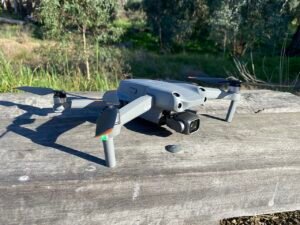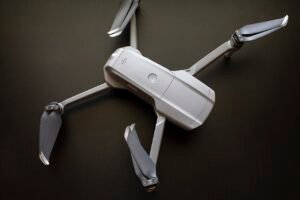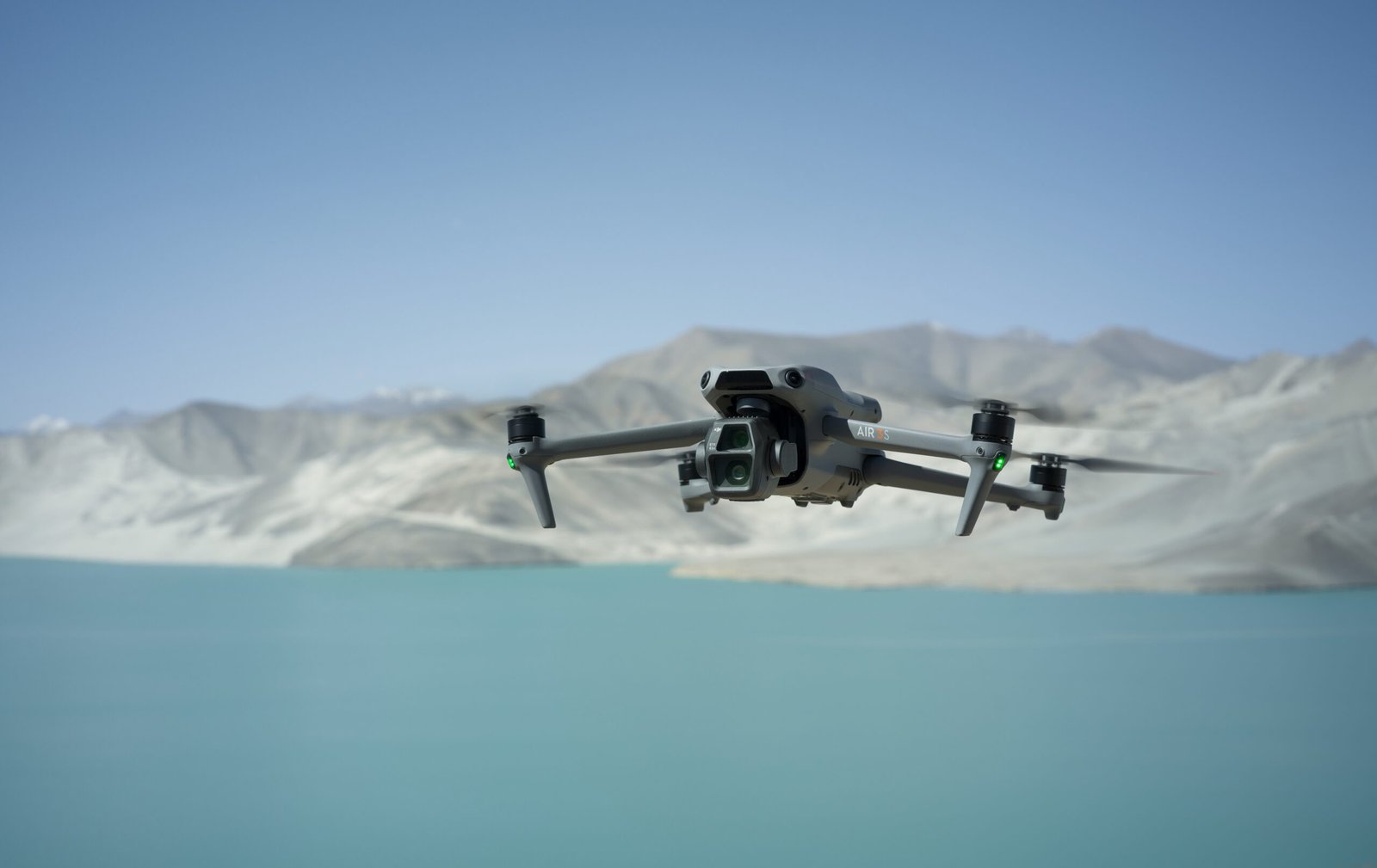

Photo: DJI Europe · View DJI Europe media-use source listing.
DJI / DRONE PROFILE
DJI Air 3S
Explore the available technical information for this aircraft, including camera capabilities, flight performance and manufacturer-specific specifications.
Image credit: DJI Europe media library (Media Use).
Price & Where to Buy
$1,099 USD
Package: DJI Air 3S (DJI RC-N3), standard configuration
Official listing currently marked out of stock Out of stock
Check price: DJI Air 3S (DJI RC-N3)
Affiliate disclosure: IGIDRONE may earn a commission from qualifying purchases at no extra cost to you. Price checked 2026-11-05. Prices and package availability can change; confirm the selected configuration before ordering.
DJI Air 3S Review and Buying Guide
DJI Air 3S sits within DJI’s wider drone range, but the right choice depends on the type of flying, imaging or professional work you need to do. This guide brings the published specifications into context and highlights the practical questions worth checking before you buy. It is based on manufacturer information rather than claimed hands-on testing.
Check the DJI store:
Affiliate disclosure: IGIDRONE may earn a commission if you purchase through these links, at no additional cost to you. Product, bundle, price and availability are determined by DJI and may change.
Design and intended use
When considering the DJI Air 3S, start with the job you want the aircraft to do. This model is relevant to aerial photography and video. Think about where you will fly, how much equipment you need to carry, the amount of setup you are comfortable with and whether the selected package includes the controller, batteries and accessories you need.
Camera and image quality
Camera specifications help set expectations, but sensor size, lens design, recording modes, stabilization and post-production workflow all matter. The listed camera information is: Dual-camera system: Wide-angle 50 MP, 1-inch CMOS; medium tele 48 MP, 1/1.3-inch CMOS.. For paid or important projects, confirm the exact photo formats, frame rates, colour profiles and lens configuration against the manufacturer page before committing.
Flight performance and battery considerations
Manufacturer-rated flight time is a laboratory or controlled-condition figure, not a promise of the time available on every outing. Wind, temperature, flight speed, battery age, payload and return-to-home reserve can all reduce practical flight time. The specification record lists 45 min for flight time. The recorded wind-resistance figure is 12 m/s. Plan conservative battery reserves and follow local aviation rules.
Safety, control and connectivity
For the Air 3S, check how the wide-angle main camera and telephoto camera fit your shooting style, and review the exact obstacle-sensing coverage in DJI’s manual. Do not assume sensing works equally well in darkness, low-contrast scenes or around thin wires; maintain visual awareness and a safe return reserve.
Key specifications at a glance
- Camera / imaging: Dual-camera system: Wide-angle 50 MP, 1-inch CMOS; medium tele 48 MP, 1/1.3-inch CMOS.
- Video capability: Both cameras record up to 4K/120 fps; 10-bit 4K HLG/D-Log M supported.
- Manufacturer-rated flight time: 45 min
- Weight: 724 g
- Transmission range: 20 km (FCC); 10 km (CE/SRRC/MIC)
Who should consider this drone?
The Air 3S is positioned for creators who want a more advanced main camera alongside a second telephoto perspective in a folding aircraft. When assessing it, consider low-light performance, focal-length choices, obstacle sensing, vertical content workflow, battery package and controller compatibility together. The advertised maximum flight time is not the same as a safe real-world shooting window with wind, repeated camera movement and a return reserve. Confirm the exact regional bundle and current official availability before purchase.
Advantages and points to check
- Model-specific advantage: The wide and medium-tele cameras give Air 3S buyers two distinct framing options; compare low-light output from both cameras.
- Model-specific limitation: Check how the camera modes, sensor sizes and exposure behaviour differ between the two lenses in the situations you shoot.
- Purchase check: Compare the exact controller and battery package with local stock and warranty terms before purchase.
IGIDRONE verdict
The DJI Air 3S should be judged by how well its documented capabilities match your actual work and budget. Use the specifications on this page to shortlist it, then confirm any critical detail on the official manufacturer page and compare it with alternatives before purchasing.
Official DJI references: DJI Air 3S – Official Support · DJI Air 3S – Official Specifications.
Where to check the price
For the listed DJI package options, check the current product details and availability directly with DJI:
Disclosure: These are affiliate links. IGIDRONE may receive a commission from qualifying purchases; this does not change the price you pay.
Who should consider DJI Air 3S?
This model should be selected around the kind of images or missions you expect to produce. A casual traveller, a social-video creator and a commercial photographer can value very different features. Consider camera focal lengths, sensor size, stabilisation, supported recording modes, portability, controller choice and the complete battery kit. A headline resolution or maximum flight time does not by itself determine whether the drone suits your work. For DJI Air 3S, compare the camera modes you will actually use with your phone or computer editing capability and storage budget.
Limitations and trade-offs to understand
Maximum flight time and transmission distance are controlled-condition manufacturer figures, not promises for every location. Wind, cold, battery age, camera use, signal interference, altitude and the need to return with reserve affect real operation. Plan conservatively and read the operating limitations in the current manual. For DJI Air 3S, price the complete kit with controller, batteries, charging accessories and a protective case rather than the aircraft alone.
Alternatives worth comparing
Compare this model with the nearest aircraft in the same use category and total-kit budget. A smaller compact model may be easier to carry, while a higher-tier camera drone may offer more lens or low-light flexibility. Compare the practical difference you will notice, not just the number of specifications. For DJI Air 3S, confirm take-off weight and destination rules for the exact battery configuration before travel.
Pre-purchase and ownership checklist
Check the official specification page and manual for the regional model, battery configuration, controller compatibility, weight, sensor limitations, firmware and service. Confirm local aviation rules and no-fly restrictions for every planned destination before flying. For DJI Air 3S, review the manual limitations for wind, obstacle sensing and return-to-home rather than treating automation as a guarantee.
How to use this specification profile
This page is a research-based reference, not a claim that IGIDRONE has independently flight-tested the aircraft. Treat manufacturer maximums as test-condition figures and distinguish standard equipment from optional accessories or regional bundles. Before buying, compare the exact model code, firmware, battery, controller and payload configuration against the current official manual. If a field is marked unknown or is not documented by the manufacturer, do not infer a value from a similarly named variant. For DJI Air 3S, compare the camera modes you will actually use with your phone or computer editing capability and storage budget.
Primary manufacturer reference: Open the manufacturer specification or support page. Confirm the current regional documentation before purchase. For DJI Air 3S, price the complete kit with controller, batteries, charging accessories and a protective case rather than the aircraft alone.
Editorial update: 8 November 2026. Model availability, prices, software support and regional operating rules can change. Confirm them with the manufacturer, authorised distributor and relevant aviation authority before purchase or flight. For DJI Air 3S, confirm take-off weight and destination rules for the exact battery configuration before travel.
Drone Specifications
| Brand | DJI |
|---|---|
| Camera | Dual-camera system: Wide-angle 50 MP, 1-inch CMOS; medium tele 48 MP, 1/1.3-inch CMOS. |
| Maximum Video Resolution | Both cameras record up to 4K/120 fps; 10-bit 4K HLG/D-Log M supported. |
| Maximum Flight Time (minutes) | 45 min minutes |
| Maximum Transmission Range (km) | FCC: 20 km; CE: 10 km; SRRC: 10 km; MIC: 10 km; ; Measured in an unobstructed outdoor environment free of interference. The above data shows the farthest communication range for one-way, non-return flights under each standard. Always pay attention to RTH reminders in the app during your flight. km |
| Weight (g) | 724 g g |
| Battery Capacity (mAh) | 4276 mAh mAh |
| Wind Resistance (m/s) | 12 m/s m/s |
| Obstacle Sensing | Omnidirectional binocular vision system, supplemented with forward-facing LiDAR and a downward infrared sensor. |
| Positioning / GPS | GPS + Galileo + BeiDou |
| Maximum Speed (m/s) | 21 m/s m/s |
| Folded Dimensions | 214.19 × 100.63 × 89.17 mm |
Specification source: Official source
Last verified: 2026-11-07
Official Price (USD)
$1,099.00 USD
Listed configuration: DJI Air 3S (DJI RC-N3), standard configuration
Official store status: Out of stock at the time of checking.
Last verified official US Store price: USD 1,099 for DJI Air 3S (DJI RC-N3), standard configuration. The exact option is out of stock; not a current purchasable offer. Checked 2026-11-16.
Check price at the official store
Price checked: 2026-11-16
MODEL TECHNICAL RECORD
Detailed Technical Specifications
Manufacturer-specific technical information recorded for this model. Values not present in the source record are not estimated.
Aircraft
| Takeoff Weight | 724 g |
|---|---|
| Dimensions | Folded (without propellers): 214.19×100.63×89.17 mm (L×W×H) Unfolded (without propellers): 266.11×325.47×106.00 mm (L×W×H) |
| Max Ascent Speed | 10 m/s |
| Max Descent Speed | 10 m/s |
| Max Horizontal Speed | At equivalent sea level and in an equivalent windless environment: 21 m/s At equivalent sea level and with an equivalent tailwind of 6 m/s, flying with the wind: 27 m/s Measured in a controlled wind tunnel environment, with the aircraft ascending vertically to a height of 1.5 meters above the ground in Sport mode. Actual experience may vary depending on the environment, usage, and firmware version. 19 m/s in the EU region. |
| Max Takeoff Altitude | 6000 m |
| Max Flight Time | 45 minutes Measured in a controlled wind tunnel environment under conditions equivalent to windless operation and sea-level altitude, with the aircraft flying forward at a constant speed of 32.4 kph, Obstacle Avoidance Action set to Brake, and the camera in Photo mode, until a forced landing due to battery depletion. Actual experience may vary depending on the environment, usage, and firmware version. |
| Max Hovering Time | 41 minutes Measured by DJI Air 3S hovering in a windless environment at sea level, with Obstacle Avoidance Action set to Brake, in photo mode, and from 100% battery level until 0%. Data is for reference only. Always pay attention to reminders in the app during your flight. |
| Max Flight Distance | 32 km Measured in a controlled wind tunnel environment under conditions equivalent to windless operation and sea-level altitude, with the aircraft flying forward at a constant speed of 48.6 kph, Obstacle Avoidance Action set to Brake, and the camera in Photo mode, until a forced landing due to battery depletion. Actual experience may vary depending on the environment, usage, and firmware version. |
| Max Wind Speed Resistance | 12 m/s |
| Max Pitch Angle | 36° |
| Operating Temperature | -10° to 40° C (14° to 104° F) |
| Global Navigation Satellite System | GPS + Galileo + BeiDou |
| Hovering Accuracy Range | Vertical: ±0.1 m (with vision positioning) ±0.5 m (with satellite positioning) Horizontal: ±0.3 m (with vision positioning) ±0.5 m (with satellite positioning) |
| Internal Storage | 42 GB |
| Class | C1 (EU) |
Camera
| Image Sensor | Wide-Angle Camera: 1-inch CMOS, 50MP Effective Pixels Medium Tele Camera: 1/1.3-inch CMOS, 48MP Effective Pixels |
|---|---|
| Lens | Wide-Angle Camera FOV: 84° Format Equivalent: 24 mm Aperture: f/1.8 Focus: 0.5 m to ∞ Medium Tele Camera FOV: 35° Format Equivalent: 70 mm Aperture: f/2.8 Focus: 3 m to ∞ |
| ISO Range | Video Normal: 100-12800 (Normal) 100-3200 (D-Log M) 100-3200 (HLG) Slow Motion: 100-6400 (Normal) 100-3200 (D-Log M) 100-3200 (HLG) Photo 100-6400 (12 MP) 100-3200 (48 MP and 50 MP) |
| Shutter Speed | Wide-Angle Camera 12MP Photo: 1/8000-2 s (2.5-8 s for simulated long exposure) 50MP Photo: 1/8000-2 s Medium Tele Camera 12MP Photo: 1/16000-2 s (2.5-8 s for simulated long exposure) 48MP Photo: 1/8000-2 s |
| Max Image Size | Wide-Angle Camera: 8192×6144 Medium Tele Camera: 8064×6048 |
| Still Photography Modes | Wide-Angle Camera Single Shot: 12 MP and 50 MP Burst Shooting: 12 MP, 3/5/7 frames; 50 MP, 3/5 frames Automatic Exposure Bracketing (AEB): 12 MP, 3/5/7 frames; 50 MP, 3/5 frames at 0.7 EV step Timed: 12 MP, 2/3/5/7/10/15/20/30/60 s; 50 MP, 5/7/10/15/20/30/60 s Medium Tele Camera Single Shot: 12 MP and 48 MP Burst Shooting: 12 MP, 3/5/7 frames; 48 MP, 3/5 frames Automatic Exposure Bracketing (AEB): 12 MP, 3/5/7 frames; 48 MP, 3/5 frames at 0.7 EV step Timed: 12 MP, 2/3/5/7/10/15/20/30/60 s; 48 MP, 5/7/10/15/20/30/60 s |
| Photo Format | JPEG/DNG (RAW) |
| Video Resolution | Wide-Angle Camera/Medium Tele Camera: H.264/H.265 4K: 3840×2160@24/25/30/48/50/60/120*fps FHD: 1920×1080@24/25/30/48/50/60/120*/240*fps 2.7K Vertical Shooting: 1512×2688@24/25/30/48/50/60fps * Recording frame rates. The corresponding video plays as a slow-motion video. Slow-motion videos and 4K video recordings only support H.265 encoding. |
| Video Format | MP4 (MPEG-4 AVC/H.264, HEVC/H.265) |
| Max Video Bitrate | H.264/H.265: 130 Mbps* * When shooting 4K/120fps video in D-Log M mode with the DJI Air 3S, the video encoding bitrate can reach up to 130Mbps, corresponding to a video stream frame rate of 120fps. However, since slow-motion video files are encapsulated at 30fps, the video length displayed on the player is four times the recording duration, and the bitrate of the parsed encapsulated file is approximately one-fourth of the original encoding bitrate. |
| Supported File System | exFAT |
| Color Mode and Sampling Method | Wide-Angle/Medium Tele Camera Normal (FHD/2.7K): 8-bit 4:2:0 (H.264) Normal (FHD/2.7K): 10-bit 4:2:0 (H.265) HLG/D-Log M (FHD/2.7K): 10-bit 4:2:0 (H.264/H.265) Normal/HLG/D-Log M (4K): 10-bit 4:2:0 (H.265) |
| Digital Zoom | Wide-Angle Camera: 1-2.9x Medium Tele Camera: 3-9x |
Gimbal
| Stabilization | 3-axis mechanical gimbal (tilt, roll, pan) |
|---|---|
| Mechanical Range | Tilt: -135° to 70° Roll: -50° to 50° Pan: -27° to 27° |
| Controllable Range | Tilt: -90° to 60° Pan: -5° to 5° |
| Max Control Speed (tilt) | 100°/s |
| Angular Vibration Range | ±0.0037° |
Sensing
| Sensing Type | Omnidirectional binocular vision system, supplemented with forward-facing LiDAR and an infrared sensor at the bottom of the aircraft |
|---|---|
| Forward | Measurement Range: 0.5-18 m Detection Range: 0.5-200 m Effective Sensing Speed: Flight Speed ≤ 15 m/s FOV: Horizontal 90°, Vertical 72° |
| Backward | Measurement Range: 0.5-18 m Effective Sensing Speed: Flight Speed ≤ 14 m/s FOV: Horizontal 90°, Vertical 72° |
| Lateral | Measurement Range: 0.5-30 m Effective Sensing Speed: Flight Speed ≤ 14 m/s FOV: Horizontal 90°, Vertical 72° |
| Upward | Measurement Range: 0.5-18 m Effective Sensing Speed: Flight Speed ≤ 6 m/s FOV: Front and Back 72°, Left and Right 90° |
| Downward | Measurement Range: 0.3-14 m Effective Sensing Speed: Flight Speed ≤ 6 m/s FOV: Front and Back 106°, Left and Right 90° |
| Operating Environment | Forward, Backward, Left, Right, and Upward: Surfaces with discernible patterns and adequate lighting (lux > 1) Downward: Surfaces with discernible patterns, diffuse reflectivity > 20% (e.g., walls, trees, people), and adequate lighting (lux > 1) |
| 3D Infrared Sensor | Forward-Facing LiDAR Measurement Range (nighttime): 0.5-25 m (reflectivity > 10%) FOV: Up and Down 60°, Left and Right 60° Downward-Facing Infrared Sensor Measurement Range: 0.3-8 m (reflectivity > 10%) FOV: Front and Back 60°, Left and Right 60° |
Video Transmission
| Video Transmission System | O4 |
|---|---|
| Live View Quality | Remote Controller: 1080p/30fps, 1080p/60fps |
| Operating Frequency | 2.4000-2.4835 GHz 5.170-5.250 GHz 5.725-5.850 GHz Operating frequency allowed varies among countries and regions. Refer to local laws and regulations for more information. |
| Transmitter Power (EIRP) | 2.4 GHz: < 33 dBm (FCC) < 20 dBm (CE/SRRC/MIC) 5.1 GHz: < 23 dBm (CE) 5.8 GHz: < 33 dBm (FCC) < 30 dBm (SRRC) < 14 dBm (CE) |
| Max Transmission Distance (unobstructed, free of interference) | FCC: 20 km CE: 10 km SRRC: 10 km MIC: 10 km Measured in an unobstructed outdoor environment free of interference. The above data shows the farthest communication range for one-way, non-return flights under each standard. Always pay attention to RTH reminders in the app during your flight. |
| Max Transmission Distance (unobstructed, with interference) | Strong Interference: Urban landscape, approx. 1.5-4 km Medium Interference: Suburban landscape, approx. 4-10 km Low Interference: Suburb/Seaside, approx. 10-20 km Measured under FCC standard in unobstructed environments with typical interference. Used for reference purposes only and provides no guarantee for actual transmission distance. |
| Max Transmission Distance (obstructed, with interference) | Low Interference and Obstructed by Buildings: Approx. 0-0.5 km Low Interference and Obstructed by Trees: Approx. 0.5-3 km Measured under FCC standard in obstructed environments with typical low interference. Used for reference purposes only and provides no guarantee for actual transmission distance. |
| Max Download Speed | O4: 10 MB/s (with DJI RC-N3) 10 MB/s (with DJI RC 2) Wi-Fi 5: 30 MB/s* * Measured in a laboratory environment with little interference in countries/regions that support both 2.4 GHz and 5.8 GHz. Download speeds may vary depending on the actual conditions. |
| Lowest Latency | Aircraft + Remote Controller: Approx. 120 ms Depending on the actual environment and mobile device. |
| Antenna | 6 antennas, 2T4R |
Wi-Fi
| Protocol | 802.11 a/b/g/n/ac |
|---|---|
| Operating Frequency | 2.400-2.4835 GHz 5.725-5.850 GHz |
| Transmitter Power (EIRP) | 2.4 GHz: < 20 dBm (FCC/CE/SRRC/MIC) 5.8 GHz: < 20 dBm (FCC/SRRC) < 14 dBm (CE) |
Bluetooth
| Protocol | Bluetooth 5.2 |
|---|---|
| Operating Frequency | 2.400-2.4835 GHz |
| Transmitter Power (EIRP) | < 10 dBm |
Battery
| Capacity | 4276 mAh |
|---|---|
| Weight | Approx. 247 g |
| Nominal Voltage | 14.6 V |
| Max Charging Voltage | 17.2 V |
| Type | Li-ion 4S |
| Energy | 62.5 Wh |
| Charging Temperature | 5° to 40° C (41° to 104° F) |
| Charging Time | Approx. 80 minutes (with DJI 65W Portable Charger) Approx. 60 minutes (with DJI 100W USB-C Power Adapter and Battery Charging Hub) |
Charger
| Input | DJI 65W Portable Charger: 100-240 V (AC), 50-60 Hz, 2 A DJI 100W USB-C Power Adapter: 100-240 V (AC), 50-60 Hz, 2.5 A |
|---|---|
| Output | DJI 65W Portable Charger: USB-C 5 V, 5 A 9 V, 5 A 12 V, 5 A 15 V, 4.3 A 20 V, 3.25 A 5-20 V, 3.25 A USB-A 5 V, 2 A DJI 100W USB-C Power Adapter: Max 100 W (total) When both ports are used, the max output power of one port is 82 W, and the charger will dynamically allocate the output power of the two ports according to the power load. |
| Rated Power | DJI 65W Portable Charger: 65 W DJI 100W USB-C Power Adapter: 100 W |
Battery Charging Hub
| Input | USB-C: 5-20 V, max 5 A |
|---|---|
| Output (power accumulation) | Battery Port: 12-17.2 V, 3.5 A |
| Output (charging) | Battery Port: 12-17.2 V, max 5 A |
| Output (USB) | USB-C: 5 V, 3 A 9 V, 5 A 12 V, 5 A 15 V, 5 A 20 V, 4.1 A |
| Charging Type | Three batteries charged in sequence |
| Compatibility | DJI Air 3 Intelligent Flight Battery DJI Air 3S Intelligent Flight Battery |
Car Charger
| Input | Car Power Input: 12.7-16 V, 6.5 A, rated voltage 14 V (DC) |
|---|---|
| Output | USB-C: 5 V, 5 A 9 V, 5 A 12 V, 5 A 15 V, 4.3 A 20 V, 3.25 A 5-20 V, 3.25 A USB-A: 5 V, 2 A |
| Rated Power | 65 W |
| Charging Temperature | 5° to 40° C (41° to 104° F) |
Storage
| Recommended microSD Cards | Lexar 1066x 64GB V30 U3 A2 microSDXC Lexar 1066x 128GB V30 U3 A2 microSDXC Lexar 1066x 256GB V30 U3 A2 microSDXC Lexar 1066x 512GB V30 U3 A2 microSDXC Kingston Canvas GO! Plus 64GB V30 U3 A2 microSDXC Kingston Canvas GO! Plus 128GB V30 U3 A2 microSDXC Kingston Canvas GO! Plus 256GB V30 U3 A2 microSDXC Kingston Canvas GO! Plus 512GB V30 U3 A2 microSDXC |
|---|
DJI RC-N3 Remote Controller
| Max Operating Time | Without Charging Any Mobile Device: 3.5 hours When Charging a Mobile Device: 1.5 hours |
|---|---|
| Max Supported Mobile Device Size | 180×86×10 mm (L×W×H) |
| Operating Temperature | -10° to 40° C (14° to 104° F) |
| Charging Temperature | 5° to 40° C (41° to 104° F) |
| Charging Time | 2 hours |
| Charging Type | It is recommended to use a 5V/2A charger. |
| Battery Capacity | 9.36 Wh (3.6 V, 2600 mAh) |
| Weight | Approx. 320 g |
| Dimensions | 104.2×150×45.2 mm (L×W×H) |
| Supported Mobile Device Port Type | Lightning, USB-C, Micro-USB Using a mobile device with a Micro-USB port requires the DJI RC-N Series RC Cable (Standard Micro USB Connector), which is sold separately. |
| Video Transmission Operating Frequency | 2.4000-2.4835 GHz 5.170-5.250 GHz 5.725-5.850 GHz Operating frequency allowed varies among countries and regions. Refer to local laws and regulations for more information. |
| Video Transmission Transmitter Power (EIRP) | 2.4 GHz: < 33 dBm (FCC) < 20 dBm (CE/SRRC/MIC) 5.1 GHz: < 23 dBm (CE) 5.8 GHz: < 33 dBm (FCC) < 14 dBm (CE) < 30 dBm (SRRC) |


Aircraft & Flight
| Maximum takeoff altitude | 6,000 m |
|---|---|
| Maximum ascent speed | 10 m/s |
| Maximum descent speed | 10 m/s |
| Maximum horizontal speed | 21 m/s (27 m/s with a 6 m/s tailwind under DJI test conditions; 19 m/s in EU region) |
| Maximum flight distance | 32 km (DJI controlled test conditions) |
| Maximum pitch angle | 36° |
| Hovering accuracy range | Vertical: ±0.1 m (vision), ±0.5 m (satellite). Horizontal: ±0.3 m (vision), ±0.5 m (satellite). |
| Maximum takeoff weight | 724 g |
| Aircraft class | C1 (EU) |
Camera & Imaging
| Camera sensor | Wide-angle: 1-inch CMOS, 50 MP effective pixels. Medium tele: 1/1.3-inch CMOS, 48 MP effective pixels. |
|---|---|
| Photo resolution | Wide-angle: 50 MP (8192 × 6144), plus 12 MP mode. Medium tele: 48 MP (8064 × 6048), plus 12 MP mode. |
| Lens / focal length | Wide-angle: 24 mm equivalent, 84° FOV. Medium tele: 70 mm equivalent, 35° FOV. |
| Aperture | Wide-angle: f/1.8. Medium tele: f/2.8. |
| ISO range | Video Normal: 100–12800; D-Log M/HLG: 100–3200. Slow motion: Normal 100–6400; D-Log M/HLG 100–3200. Photo: 100–6400 (12 MP); 100–3200 (48/50 MP). |
| Digital zoom | Wide-angle: 1–2.9×. Medium tele: 3–9×. |
| Gimbal / stabilization | 3-axis mechanical gimbal (tilt, roll, pan) |
Video & Photography
| Video resolutions | Both cameras: 4K (3840 × 2160) at 24/25/30/48/50/60/120 fps; FHD (1920 × 1080) at 24/25/30/48/50/60/120/240 fps; 2.7K vertical at 24/25/30/48/50/60 fps. 120/240 fps are slow-motion recording modes. |
|---|---|
| Frame rates | 4K: 24/25/30/48/50/60/120 fps; FHD: 24/25/30/48/50/60/120/240 fps; vertical 2.7K: 24/25/30/48/50/60 fps. |
| Video codec | MP4 (H.264 / H.265); slow-motion and 4K recording support H.265 only. |
| Photo formats | JPEG / DNG (RAW) |
| Video formats | MP4 (MPEG-4 AVC/H.264, HEVC/H.265) |
Battery & Charging
| Battery type | Li-ion 4S |
|---|---|
| Battery voltage | 14.6 V nominal; 17.2 V maximum charging voltage |
| Battery energy | 62.5 Wh |
| Charging time | Approx. 80 min with DJI 65W Portable Charger; approx. 60 min with DJI 100W USB-C Power Adapter and Battery Charging Hub. |
| Charging port | USB-C charging system (compatible DJI charger / battery charging hub) |
Transmission & Connectivity
| Transmission system | DJI O4 |
|---|---|
| Operating frequency | 2.4000–2.4835 GHz; 5.170–5.250 GHz; 5.725–5.850 GHz (regional restrictions apply). |
| Live view quality | Remote controller: 1080p/30fps and 1080p/60fps |
| Maximum transmission distance | FCC: 20 km; CE/SRRC/MIC: 10 km (unobstructed, interference-free DJI test conditions). |
| Connectivity | Wi-Fi 5 (802.11 a/b/g/n/ac); Bluetooth 5.2 |
Navigation & Obstacle Sensing
| Supported GNSS systems | GPS + Galileo + BeiDou |
|---|---|
| Obstacle sensing system | Omnidirectional binocular vision system, forward-facing LiDAR, and downward infrared sensor. |
Operating Conditions & Dimensions
| Unfolded dimensions | 266.11 × 325.47 × 106.00 mm (without propellers) |
|---|---|
| Operating temperature | -10° to 40° C (14° to 104° F) |
| Maximum wind resistance | 12 m/s |
| Internal storage | 42 GB |
| Supported memory card | Lexar 1066x 64/128/256/512 GB V30 U3 A2 microSDXC; Kingston Canvas GO! Plus 64/128/256/512 GB V30 U3 A2 microSDXC. |
MANUFACTURER DATA
Detailed official specifications
Technical figures below are transcribed from the manufacturer documentation linked with this profile. Test figures are maximum or controlled-condition ratings where stated; actual performance varies by configuration and operating conditions. A field is omitted when the cited source does not publish a reliable value.
Manufacturer source last checked: 2026-11-07
Evidence type: Official DJI manufacturer specifications / support documentation
Aircraft
| Takeoff Weight | 724 g |
|---|---|
| Dimensions | Folded (without propellers): 214.19×100.63×89.17 mm (L×W×H); Unfolded (without propellers): 266.11×325.47×106.00 mm (L×W×H) |
| Max Ascent Speed | 10 m/s |
| Max Descent Speed | 10 m/s |
| Max Horizontal Speed | At equivalent sea level and in an equivalent windless environment:; 21 m/s; ; At equivalent sea level and with an equivalent tailwind of 6 m/s, flying with the wind:; 27 m/s; ; Measured in a controlled wind tunnel environment, with the aircraft ascending vertically to a height of 1.5 meters above the ground in Sport mode. Actual experience may vary depending on the environment, usage, and firmware version. ; 19 m/s in the EU region. |
| Max Takeoff Altitude | 6000 m |
| Max Flight Time | 45 minutes; ; Measured in a controlled wind tunnel environment under conditions equivalent to windless operation and sea-level altitude, with the aircraft flying forward at a constant speed of 32.4 kph, Obstacle Avoidance Action set to Brake, and the camera in Photo mode, until a forced landing due to battery depletion. Actual experience may vary depending on the environment, usage, and firmware version. |
| Max Hovering Time | 41 minutes; ; Measured by DJI Air 3S hovering in a windless environment at sea level, with Obstacle Avoidance Action set to Brake, in photo mode, and from 100% battery level until 0%. Data is for reference only. Always pay attention to reminders in the app during your flight. |
| Max Flight Distance | 32 km; ; Measured in a controlled wind tunnel environment under conditions equivalent to windless operation and sea-level altitude, with the aircraft flying forward at a constant speed of 48.6 kph, Obstacle Avoidance Action set to Brake, and the camera in Photo mode, until a forced landing due to battery depletion. Actual experience may vary depending on the environment, usage, and firmware version. |
| Max Wind Speed Resistance | 12 m/s |
| Max Pitch Angle | 36° |
| Operating Temperature | -10° to 40° C (14° to 104° F) |
| Global Navigation Satellite System | GPS + Galileo + BeiDou |
| Hovering Accuracy Range | Vertical:; ±0.1 m (with vision positioning); ±0.5 m (with satellite positioning); ; Horizontal:; ±0.3 m (with vision positioning); ±0.5 m (with satellite positioning) |
| Internal Storage | 42 GB |
| Class | C1 (EU) |
Camera
| Image Sensor | Wide-Angle Camera: 1-inch CMOS, 50MP Effective Pixels; Medium Tele Camera: 1/1.3-inch CMOS, 48MP Effective Pixels |
|---|---|
| Lens | Wide-Angle Camera; FOV: 84°; Format Equivalent: 24 mm; Aperture: f/1.8; Focus: 0.5 m to ∞; ; Medium Tele Camera; FOV: 35°; Format Equivalent: 70 mm; Aperture: f/2.8; Focus: 3 m to ∞ |
| ISO Range | Video; Normal:; 100-12800 (Normal); 100-3200 (D-Log M); 100-3200 (HLG); Slow Motion:; 100-6400 (Normal); 100-3200 (D-Log M); 100-3200 (HLG); ; Photo; 100-6400 (12 MP); 100-3200 (48 MP and 50 MP) |
| Shutter Speed | Wide-Angle Camera; 12MP Photo: 1/8000-2 s (2.5-8 s for simulated long exposure); 50MP Photo: 1/8000-2 s; ; Medium Tele Camera; 12MP Photo: 1/16000-2 s (2.5-8 s for simulated long exposure); 48MP Photo: 1/8000-2 s |
| Max Image Size | Wide-Angle Camera: 8192×6144; Medium Tele Camera: 8064×6048 |
| Still Photography Modes | Wide-Angle Camera; Single Shot: 12 MP and 50 MP; Burst Shooting: 12 MP, 3/5/7 frames; 50 MP, 3/5 frames; Automatic Exposure Bracketing (AEB): 12 MP, 3/5/7 frames; 50 MP, 3/5 frames at 0.7 EV step; Timed: 12 MP, 2/3/5/7/10/15/20/30/60 s; 50 MP, 5/7/10/15/20/30/60 s; ; Medium Tele Camera; Single Shot: 12 MP and 48 MP; Burst Shooting: 12 MP, 3/5/7 frames; 48 MP, 3/5 frames; Automatic Exposure Bracketing (AEB): 12 MP, 3/5/7 frames; 48 MP, 3/5 frames at 0.7 EV step; Timed: 12 MP, 2/3/5/7/10/15/20/30/60 s; 48 MP, 5/7/10/15/20/30/60 s |
| Photo Format | JPEG/DNG (RAW) |
| Video Resolution | Wide-Angle Camera/Medium Tele Camera:; H.264/H.265; 4K: 3840×2160@24/25/30/48/50/60/120*fps; FHD: 1920×1080@24/25/30/48/50/60/120*/240*fps; 2.7K Vertical Shooting: 1512×2688@24/25/30/48/50/60fps; ; * Recording frame rates. The corresponding video plays as a slow-motion video. Slow-motion videos and 4K video recordings only support H.265 encoding. |
| Video Format | MP4 (MPEG-4 AVC/H.264, HEVC/H.265) |
| Max Video Bitrate | H.264/H.265: 130 Mbps*; ; * When shooting 4K/120fps video in D-Log M mode with the DJI Air 3S, the video encoding bitrate can reach up to 130Mbps, corresponding to a video stream frame rate of 120fps. However, since slow-motion video files are encapsulated at 30fps, the video length displayed on the player is four times the recording duration, and the bitrate of the parsed encapsulated file is approximately one-fourth of the original encoding bitrate. |
| Supported File System | exFAT |
| Color Mode and Sampling Method | Wide-Angle/Medium Tele Camera; Normal (FHD/2.7K): 8-bit 4:2:0 (H.264); Normal (FHD/2.7K): 10-bit 4:2:0 (H.265); HLG/D-Log M (FHD/2.7K): 10-bit 4:2:0 (H.264/H.265); Normal/HLG/D-Log M (4K): 10-bit 4:2:0 (H.265) |
| Digital Zoom | Wide-Angle Camera: 1-2.9x; Medium Tele Camera: 3-9x |
Gimbal
| Stabilization | 3-axis mechanical gimbal (tilt, roll, pan) |
|---|---|
| Mechanical Range | Tilt: -135° to 70°; Roll: -50° to 50°; Pan: -27° to 27° |
| Controllable Range | Tilt: -90° to 60°; Pan: -5° to 5° |
| Max Control Speed (tilt) | 100°/s |
| Angular Vibration Range | ±0.0037° |
Sensing
| Sensing Type | Omnidirectional binocular vision system, supplemented with forward-facing LiDAR and an infrared sensor at the bottom of the aircraft |
|---|---|
| Forward | Measurement Range: 0.5-18 m; Detection Range: 0.5-200 m; Effective Sensing Speed: Flight Speed ≤ 15 m/s; FOV: Horizontal 90°, Vertical 72° |
| Backward | Measurement Range: 0.5-18 m; Effective Sensing Speed: Flight Speed ≤ 14 m/s; FOV: Horizontal 90°, Vertical 72° |
| Lateral | Measurement Range: 0.5-30 m; Effective Sensing Speed: Flight Speed ≤ 14 m/s; FOV: Horizontal 90°, Vertical 72° |
| Upward | Measurement Range: 0.5-18 m; Effective Sensing Speed: Flight Speed ≤ 6 m/s; FOV: Front and Back 72°, Left and Right 90° |
| Downward | Measurement Range: 0.3-14 m; Effective Sensing Speed: Flight Speed ≤ 6 m/s; FOV: Front and Back 106°, Left and Right 90° |
| Operating Environment | Forward, Backward, Left, Right, and Upward:; Surfaces with discernible patterns and adequate lighting (lux > 1); Downward:; Surfaces with discernible patterns, diffuse reflectivity > 20% (e.g., walls, trees, people), and adequate lighting (lux > 1) |
| 3D Infrared Sensor | Forward-Facing LiDAR; Measurement Range (nighttime): 0.5-25 m (reflectivity > 10%); FOV: Up and Down 60°, Left and Right 60°; ; Downward-Facing Infrared Sensor; Measurement Range: 0.3-8 m (reflectivity > 10%); FOV: Front and Back 60°, Left and Right 60° |
Video Transmission
| Video Transmission System | O4 |
|---|---|
| Live View Quality | Remote Controller:; 1080p/30fps, 1080p/60fps |
| Operating Frequency | 2.4000-2.4835 GHz; 5.170-5.250 GHz; 5.725-5.850 GHz; ; Operating frequency allowed varies among countries and regions. Refer to local laws and regulations for more information. |
| Transmitter Power (EIRP) | 2.4 GHz:; < 33 dBm (FCC); < 20 dBm (CE/SRRC/MIC); ; 5.1 GHz:; < 23 dBm (CE); ; 5.8 GHz:; < 33 dBm (FCC); < 30 dBm (SRRC); < 14 dBm (CE) |
| Max Transmission Distance (unobstructed, free of interference) | FCC: 20 km; CE: 10 km; SRRC: 10 km; MIC: 10 km; ; Measured in an unobstructed outdoor environment free of interference. The above data shows the farthest communication range for one-way, non-return flights under each standard. Always pay attention to RTH reminders in the app during your flight. |
| Max Transmission Distance (unobstructed, with interference) | Strong Interference: Urban landscape, approx. 1.5-4 km; Medium Interference: Suburban landscape, approx. 4-10 km; Low Interference: Suburb/Seaside, approx. 10-20 km; ; Measured under FCC standard in unobstructed environments with typical interference. Used for reference purposes only and provides no guarantee for actual transmission distance. |
| Max Transmission Distance (obstructed, with interference) | Low Interference and Obstructed by Buildings: Approx. 0-0.5 km; Low Interference and Obstructed by Trees: Approx. 0.5-3 km; ; Measured under FCC standard in obstructed environments with typical low interference. Used for reference purposes only and provides no guarantee for actual transmission distance. |
| Max Download Speed | O4:; 10 MB/s (with DJI RC-N3); 10 MB/s (with DJI RC 2); Wi-Fi 5: 30 MB/s*; ; * Measured in a laboratory environment with little interference in countries/regions that support both 2.4 GHz and 5.8 GHz. Download speeds may vary depending on the actual conditions. |
| Lowest Latency | Aircraft + Remote Controller: Approx. 120 ms; ; Depending on the actual environment and mobile device. |
| Antenna | 6 antennas, 2T4R |
Wi-Fi
| Protocol | 802.11 a/b/g/n/ac |
|---|---|
| Operating Frequency | 2.400-2.4835 GHz; 5.725-5.850 GHz |
| Transmitter Power (EIRP) | 2.4 GHz:; < 20 dBm (FCC/CE/SRRC/MIC); ; 5.8 GHz:; < 20 dBm (FCC/SRRC); < 14 dBm (CE) |
Bluetooth
| Protocol | Bluetooth 5.2 |
|---|---|
| Operating Frequency | 2.400-2.4835 GHz |
| Transmitter Power (EIRP) | < 10 dBm |
Battery
| Capacity | 4276 mAh |
|---|---|
| Weight | Approx. 247 g |
| Nominal Voltage | 14.6 V |
| Max Charging Voltage | 17.2 V |
| Type | Li-ion 4S |
| Energy | 62.5 Wh |
| Charging Temperature | 5° to 40° C (41° to 104° F) |
| Charging Time | Approx. 80 minutes (with DJI 65W Portable Charger); Approx. 60 minutes (with DJI 100W USB-C Power Adapter and Battery Charging Hub) |
Charger
| Input | DJI 65W Portable Charger:; 100-240 V (AC), 50-60 Hz, 2 A; ; DJI 100W USB-C Power Adapter:; 100-240 V (AC), 50-60 Hz, 2.5 A |
|---|---|
| Output | DJI 65W Portable Charger:; USB-C; 5 V, 5 A; 9 V, 5 A; 12 V, 5 A; 15 V, 4.3 A; 20 V, 3.25 A; 5-20 V, 3.25 A; ; USB-A; 5 V, 2 A; ; DJI 100W USB-C Power Adapter:; Max 100 W (total); ; When both ports are used, the max output power of one port is 82 W, and the charger will dynamically allocate the output power of the two ports according to the power load. |
| Rated Power | DJI 65W Portable Charger: 65 W; DJI 100W USB-C Power Adapter: 100 W |
Battery Charging Hub
| Input | USB-C: 5-20 V, max 5 A |
|---|---|
| Output (power accumulation) | Battery Port: 12-17.2 V, 3.5 A |
| Output (charging) | Battery Port: 12-17.2 V, max 5 A |
| Output (USB) | USB-C:; 5 V, 3 A; 9 V, 5 A; 12 V, 5 A; 15 V, 5 A; 20 V, 4.1 A |
| Charging Type | Three batteries charged in sequence |
| Compatibility | DJI Air 3 Intelligent Flight Battery; DJI Air 3S Intelligent Flight Battery |
Car Charger
| Input | Car Power Input:; 12.7-16 V, 6.5 A, rated voltage 14 V (DC) |
|---|---|
| Output | USB-C:; 5 V, 5 A; 9 V, 5 A; 12 V, 5 A; 15 V, 4.3 A; 20 V, 3.25 A; 5-20 V, 3.25 A; ; USB-A:; 5 V, 2 A |
| Rated Power | 65 W |
| Charging Temperature | 5° to 40° C (41° to 104° F) |
Storage
| Recommended microSD Cards | Lexar 1066x 64GB V30 U3 A2 microSDXC; Lexar 1066x 128GB V30 U3 A2 microSDXC; Lexar 1066x 256GB V30 U3 A2 microSDXC; Lexar 1066x 512GB V30 U3 A2 microSDXC; Kingston Canvas GO! Plus 64GB V30 U3 A2 microSDXC; Kingston Canvas GO! Plus 128GB V30 U3 A2 microSDXC; Kingston Canvas GO! Plus 256GB V30 U3 A2 microSDXC; Kingston Canvas GO! Plus 512GB V30 U3 A2 microSDXC |
|---|
DJI RC-N3 Remote Controller
| Max Operating Time | Without Charging Any Mobile Device: 3.5 hours; When Charging a Mobile Device: 1.5 hours |
|---|---|
| Max Supported Mobile Device Size | 180×86×10 mm (L×W×H) |
| Operating Temperature | -10° to 40° C (14° to 104° F) |
| Charging Temperature | 5° to 40° C (41° to 104° F) |
| Charging Time | 2 hours |
| Charging Type | It is recommended to use a 5V/2A charger. |
| Battery Capacity | 9.36 Wh (3.6 V, 2600 mAh) |
| Weight | Approx. 320 g |
| Dimensions | 104.2×150×45.2 mm (L×W×H) |
| Supported Mobile Device Port Type | Lightning, USB-C, Micro-USB; ; Using a mobile device with a Micro-USB port requires the DJI RC-N Series RC Cable (Standard Micro USB Connector), which is sold separately. |
| Video Transmission Operating Frequency | 2.4000-2.4835 GHz; 5.170-5.250 GHz; 5.725-5.850 GHz ; ; Operating frequency allowed varies among countries and regions. Refer to local laws and regulations for more information. |
| Video Transmission Transmitter Power (EIRP) | 2.4 GHz:; < 33 dBm (FCC); < 20 dBm (CE/SRRC/MIC); ; 5.1 GHz:; < 23 dBm (CE); ; 5.8 GHz:; < 33 dBm (FCC); < 14 dBm (CE); < 30 dBm (SRRC) |
Source: manufacturer technical specifications and official support documentation. Regional versions, payloads, batteries, firmware and test conditions can change the stated figures. Check the linked source for the applicable configuration.
Related Dji drones
Explore other published models from the same manufacturer.