
Photo: ZLEA · Licence: CC BY-SA 4.0 · View the original source and licence terms.
DJI / DRONE PROFILE
DJI Mavic 3 Thermal (3T) Review: Thermal Camera and Inspection Features
Explore the available technical information for this aircraft, including camera capabilities, flight performance and manufacturer-specific specifications.
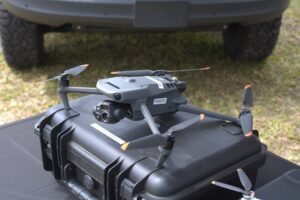
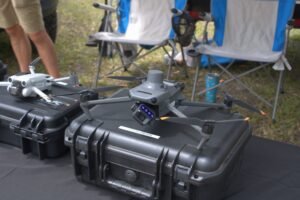
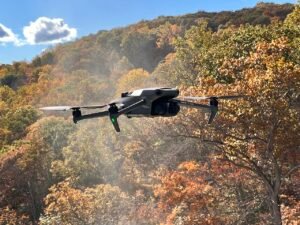
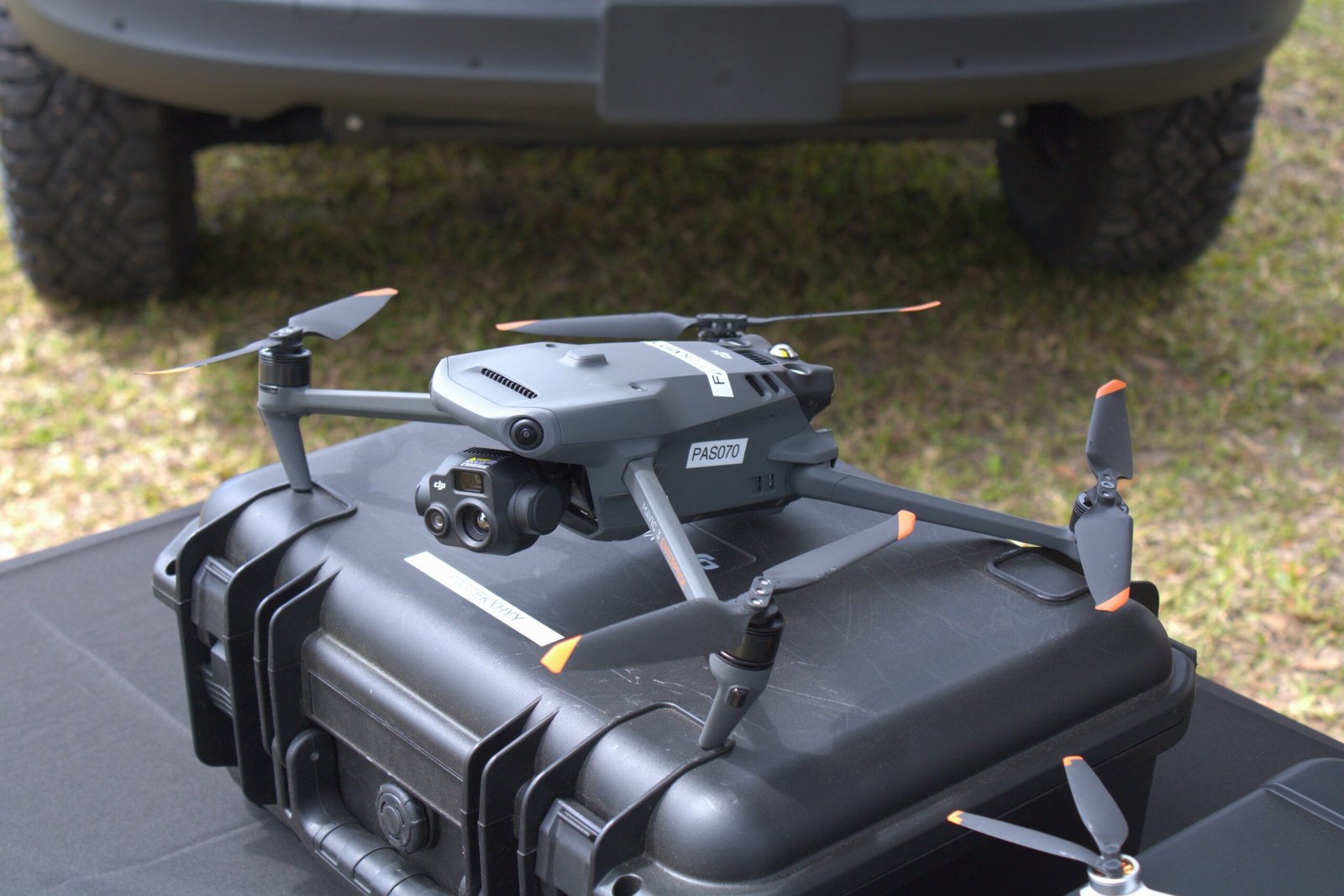
The DJI Mavic 3 Thermal (3T) is a compact enterprise drone for thermal inspection, public safety and industrial monitoring. It combines a thermal camera with wide-angle and tele cameras, giving operators visual context alongside heat-pattern information. It is distinct from the Mavic 3 Thermal Advanced (3TA), which uses a different thermal lens and pixel pitch.
Thermal and visual camera system
The 3T thermal camera uses an uncooled VOx microbolometer with 640×512 resolution at 30Hz and a 12μm pixel pitch. Its thermal lens is 40mm-equivalent with a 61° diagonal field of view and f/1.0 aperture. DJI lists spot and area temperature measurement, 640×512 thermal video, R-JPEG stills and up to 28× digital zoom.
The wide camera uses a 1/2-inch CMOS sensor with 48MP effective pixels and a 24mm-equivalent f/2.8 lens. The tele camera has a 12MP 1/2-inch CMOS sensor with a 162mm-equivalent f/4.4 lens and up to 8× hybrid zoom. The combined system supports visual inspection and thermal observation, but temperature measurements should be interpreted carefully because emissivity, distance and environmental conditions affect results.
Flight performance and enterprise features
DJI lists a weight of approximately 920g with propellers and without accessories and a maximum takeoff weight of 1,050g. Maximum flight time is 45 minutes in a no-wind test with the standard battery and enterprise propellers. The aircraft supports DJI O3 Enterprise transmission, omnidirectional sensing and optional RTK functionality.
DJI Mavic 3T specifications
| Specification | Mavic 3 Thermal |
|---|---|
| Weight without accessories | Approx. 920g |
| Maximum takeoff weight | 1,050g |
| Wide camera | 1/2-inch CMOS, 48MP |
| Tele camera | 1/2-inch CMOS, 12MP, 162mm equivalent |
| Thermal sensor | Uncooled VOx, 640×512 at 30Hz |
| Thermal pixel pitch | 12μm |
| Thermal lens | 40mm equivalent, DFOV 61°, f/1.0 |
| Thermal measurement range | -20°C to 150°C (high gain); 0°C to 500°C (low gain) |
| Maximum flight time | 45min (DJI test conditions) |
| Wind resistance | 12m/s |
| Video transmission | DJI O3 Enterprise |
Mavic 3T vs Mavic 3TA
The standard 3T uses a 12μm thermal pixel pitch and a 40mm-equivalent lens with a wider 61° diagonal field of view. The 3TA uses an 8μm pixel pitch and a 60mm-equivalent lens with a narrower 41.2° diagonal field of view. Both are listed with 640×512 thermal resolution. See the Mavic 3 Thermal Advanced review for the 3TA configuration.
Who should consider the Mavic 3T?
The 3T is suited to enterprise teams that need a broad thermal view together with visual and telephoto cameras in a compact platform. It can support inspection and public-safety workflows, but thermal interpretation requires training and suitable procedures. Check local rules, software compatibility and thermal measurement requirements before deployment.
Official source and verification notes
Specifications are based on DJI’s official Mavic 3 Enterprise Series specifications. The 12μm thermal sensor and 40mm-equivalent thermal lens are the standard 3T configuration; the 3TA uses different thermal optics. This is a specification-based review, not a claim of hands-on testing.
Related IGIDRONE reading
Compare this aircraft with related enterprise models: DJI Mavic 3 Thermal Advanced review | DJI Mavic 3E review.
Flight, dimensions and thermal measurement details
The Mavic 3T shares the Mavic 3 Enterprise Series airframe dimensions: 347.5 × 283 × 107.7mm unfolded and 221 × 96.3 × 90.3mm folded, excluding propellers. Its approximate weight is 920g with propellers and without accessories, and maximum takeoff weight is 1,050g. DJI lists a maximum ascent speed of 6m/s in Normal mode and 8m/s in Sport mode, a maximum descent speed of 6m/s, and maximum horizontal speed of 15m/s in Normal mode or 21m/s forward in Sport mode.
The standard Mavic 3T thermal camera has a NETD of ≤50mK at f/1.0. DJI specifies temperature-measurement accuracy of ±2°C or ±2% in high-gain mode and ±5°C or ±3% in low-gain mode, using whichever value is larger. The stated measurement ranges are -20°C to 150°C in high gain and 0°C to 500°C in low gain. These are laboratory specifications; surface emissivity, reflections, distance, angle, atmospheric conditions and camera settings influence field readings.
DJI’s 45-minute maximum flight-time and 38-minute maximum hovering figures are controlled-test results with the standard battery and enterprise propellers. The EU C1 battery and low-noise propeller configuration has different published endurance figures. Check the exact battery, propeller and aircraft label before comparing specifications or planning a mission.
Is the Mavic 3T the right thermal drone?
The Mavic 3T is aimed at teams that need a portable aircraft with both conventional visual imagery and thermal context. It can be a practical fit for building inspections, solar surveys, public safety, search support and routine industrial checks where a compact kit matters. It is not a substitute for a larger payload aircraft when a project requires specialist LiDAR, a dedicated mapping camera or a more flexible sensor configuration.
Thermal camera interpretation
Thermal images need context. Apparent temperature can be affected by emissivity, reflected energy, distance, viewing angle, wind, moisture and the condition of the surface. A thermal hotspot is a clue to investigate, not automatic proof of a defect. For electrical, solar or building inspections, follow the relevant professional procedure, capture visible-light context and use qualified personnel to interpret anomalies. Do not compare readings taken under materially different conditions as if they were directly equivalent.
Mavic 3T vs Mavic 3E and larger enterprise platforms
The Mavic 3T prioritises thermal and visual inspection. The Mavic 3 Enterprise (3E) is more closely oriented toward mapping workflows, including its mapping camera and mechanical-shutter capability. They are not interchangeable just because they share a compact aircraft family. If your core task is orthomosaic production or survey mapping, compare the 3E and the full processing workflow. If the task requires multiple specialist payloads, extended operational flexibility or heavier accessories, compare the Matrice 350 RTK and its total system cost.
Ownership and procurement checks
- Confirm the exact 3T or 3TA variant and thermal-camera specification in the quotation; do not assume every Mavic 3 Thermal model has identical thermal optics.
- Check controller, batteries, charger, spare props, carrying case and service coverage included in the package.
- Review battery cycles, cell condition, firmware history, gimbal movement, camera focus and aircraft logs when buying used.
- Plan secure storage and transfer of thermal imagery, especially for public-safety, customer-site and critical-infrastructure work.
- Check local flight permissions, remote-pilot requirements, airspace restrictions, privacy law and any rules for commercial thermal inspections.
Editorial note
This profile is based on manufacturer documentation and research-based buyer considerations. It does not claim hands-on testing. Maximum flight time is a controlled-condition figure, not a reliable mission-planning target.
Drone Specifications
| Brand | DJI |
|---|---|
| Camera | Wide: 1/2-inch CMOS, 48 MP; tele: 1/2-inch CMOS, 12 MP; thermal: uncooled VOx 640×512 at 30 Hz, 12 μm pixel pitch |
| Maximum Flight Time (minutes) | 45 min with standard Mavic 3 Series battery and Enterprise propellers; 36 min with EU C1 battery and low-noise propellers (controlled tests) minutes |
| Weight (g) | 920 g |
| Wind Resistance (m/s) | 12 m/s m/s |
| Obstacle Sensing | Omnidirectional vision sensing |
| Positioning / GPS | GPS, Galileo, BeiDou; GLONASS with RTK module |
| Maximum Speed (m/s) | 21 m/s m/s |
Additional Notes
Thermal lens: 40 mm equivalent, f/1.0, DFOV 61°; temperature range -20°C to 150°C high gain and 0°C to 500°C low gain; NETD ≤50 mK. Do not confuse the wide camera with the tele camera.
Specification source: Official source
Last verified: 2026-11-08
Official Price (USD)
No public USD price was verified on the manufacturer’s official store during this check.
For enterprise or discontinued models, contact the manufacturer for a current quotation. We do not substitute third-party seller prices.
Price checked: 2026-11-07
MODEL TECHNICAL RECORD
Detailed Technical Specifications
Manufacturer-specific technical information recorded for this model. Values not present in the source record are not estimated.
Aircraft
| Weight with propellers, no accessories | Approx. 920 g |
|---|---|
| Maximum takeoff weight | 1,050 g; 899 g in EU C1 battery/low-noise propeller configuration |
| Maximum flight time | 45 min standard battery/propellers; 36 min EU C1 battery/low-noise propellers |
| Maximum hovering time | 38 min standard battery/propellers; 30 min EU C1 configuration |
| Maximum speed | 21 m/s forward in Sport; 15 m/s Normal |
| Wind resistance | 12 m/s |
| Maximum takeoff altitude | 6,000 m without payload |
| GNSS | GPS, Galileo, BeiDou; GLONASS when RTK module enabled |
Wide camera
| Sensor | 1/2-inch CMOS, 48 MP |
|---|---|
| Lens | 24 mm equivalent, f/2.8 |
| Photo resolution | 8,000 × 6,000 |
| Video | 4K/30fps; FHD/30fps |
Tele camera
| Sensor | 1/2-inch CMOS, 12 MP |
|---|---|
| Lens | 162 mm equivalent, f/4.4 |
| Optical/digital zoom | Up to 8× optical/digital; 56× hybrid zoom |
Thermal camera
| Sensor | Uncooled VOx microbolometer, 640 × 512, 30 Hz |
|---|---|
| Pixel pitch | 12 μm |
| Lens | 40 mm equivalent, f/1.0, DFOV 61° |
| NETD | ≤50 mK |
| Temperature range | -20°C to 150°C high gain; 0°C to 500°C low gain |
| Thermal video | 640 × 512 at 30fps |
| Thermal digital zoom | 28× |
Sensing
| System | Omnidirectional binocular vision with downward infrared sensor |
|---|
Transmission
| System | DJI O3 Enterprise |
|---|---|
| Maximum range | 15 km FCC; 8 km CE/SRRC/MIC, unobstructed |
Battery
| Capacity | 5,000 mAh, 15.4 V, 77 Wh |
|---|


Aircraft & Flight
| Maximum horizontal speed | 21 m/s (manufacturer maximum; mode-dependent) |
|---|---|
| Maximum takeoff weight | 1,050 g; EU C1 battery/low-noise propeller configuration MTOM 899 g |
Navigation & Obstacle Sensing
| Supported GNSS systems | GPS + Galileo + BeiDou + GLONASS (GLONASS requires RTK module) |
|---|
Operating Conditions & Dimensions
| Maximum wind resistance | 12 m/s |
|---|
MANUFACTURER DATA
Detailed official specifications
Technical figures below are transcribed from the manufacturer documentation linked with this profile. Test figures are maximum or controlled-condition ratings where stated; actual performance varies by configuration and operating conditions. A field is omitted when the cited source does not publish a reliable value.
Manufacturer source last checked: 2026-11-08
Evidence type: Official DJI manufacturer specifications / enterprise support documentation
Aircraft
| Weight (with propellers, without accessories) | DJI Mavic 3E: 915 g; DJI Mavic 3T: 920 g |
|---|---|
| Maximum takeoff weight | DJI Mavic 3E/3T/3T Advanced: 1050 g; ; With DJI Mavic 3 Enterprise Series Battery (EU C1 Version) and DJI Mavic 3 Enterprise Series Low-Noise Propellers, the max takeoff weight of DJI Mavic 3T, Mavic 3T Advanced, and Mavic 3E is 899 g. |
| Dimensions | Folded (without propellers): 221 × 96.3 × 90.3 mm (L × W × H); Unfolded (without propellers): 347.5 × 283 × 107.7 mm (L × W × H) |
| Diagonal distance | 380.1 mm |
| Maximum ascent speed | 6 m/s (Normal Mode); 8 m/s (Sport Mode) |
| Maximum descent speed | 6 m/s (Normal Mode); 6 m/s (Sport Mode) |
| Max Flight Speed (at sea level, no wind) | 15 m/s (Normal Mode); Forward: 21 m/s, Side: 20 m/s, Backward: 19 m/s (Sport Mode) [2] |
| Maximum wind resistance | 12 m/s [3] |
| Maximum takeoff altitude above sea level | 6000 m (without payload) |
| Maximum flight time (manufacturer test conditions) | 45 minutes[4] (with DJI Mavic 3 Series Intelligent Flight Battery and DJI Mavic 3 Enterprise Series Propellers); 36 minutes (with DJI Mavic 3 Enterprise Series Battery (EU C1 Version) and DJI Mavic 3 Enterprise Series Low-Noise Propellers) |
| Max Hovering Time (no wind) | 38 minutes (with DJI Mavic 3 Series Intelligent Flight Battery and DJI Mavic 3 Enterprise Series Propellers); 30 minutes (with DJI Mavic 3 Enterprise Series Battery (EU C1 Version) and DJI Mavic 3 Enterprise Series Low-Noise Propellers) |
| Max Flight Distance | 32 km (with DJI Mavic 3 Series Intelligent Flight Battery and DJI Mavic 3 Enterprise Series Propellers); 24 km (with DJI Mavic 3 Enterprise Series Battery (EU C1 Version) and DJI Mavic 3 Enterprise Series Low-Noise Propellers) |
| Max Pitch Angle | 30° (Normal Mode); 35° (Sport Mode) |
| Max Angular Velocity | 200°/s |
| Global navigation satellite system (GNSS) | GPS+Galileo+BeiDou+GLONASS (GLONASS is supported only when the RTK module is enabled) |
| Hovering Accuracy | Vertical: ±0.1 m (with Vision System); ±0.5 m (with GNSS); ±0.1 m (with RTK); Horizontal: ±0.3 m (with Vision System); ±0.5 m (with High-Precision Positioning System); ±0.1 m (with RTK) |
| Operating temperature range | -10° to 40°C (14° to 104° F) |
| Internal Storage | N/A |
| Motor Model | 2008 |
| Propeller Model | 9453F Propellers for Enterprise |
| Beacon | Built into the aircraft |
| Class | C2 (EU) |
Wide Camera
| Sensor | DJI Mavic 3E: 4/3 CMOS, Effective pixels: 20 MP; DJI Mavic 3T: 1/2-inch CMOS, Effective pixels: 48 MP |
|---|---|
| Lens | DJI Mavic 3E: ; FOV: 84°; Format Equivalent: 24 mm; Aperture: f/2.8-f/11; Focus: 1 m to ∞; ; DJI Mavic 3T: ; FOV: 84°; Format Equivalent: 24 mm; Aperture: f/2.8; Focus: 1 m to ∞ |
| ISO Range | DJI Mavic 3E: 100-6400; DJI Mavic 3T: 100-25600 |
| Shutter Speed | DJI Mavic 3E: ; Electronic Shutter: 8-1/8000 s; Mechanical Shutter: 8-1/2000 s; ; DJI Mavic 3T: ; Electronic Shutter: 8-1/8000 s |
| Max Image Size | DJI Mavic 3E: 5280 × 3956; DJI Mavic 3T: 8000 × 6000 |
| Still Photography Modes | DJI Mavic 3E: ; Single: 20 MP; Timed: 20 MP; JPEG: 0.7/1/2/3/5/7/10/15/20/30/60 s; JPEG+RAW: 3/5/7/10/15/20/30/60 s; Smart Low-light Shooting: 20 MP; Panorama: 20 MP (raw image); ; DJI Mavic 3T: ; Single: 12 MP/48 MP; Timed: 12 MP/48 MP; JPEG: 2/3/5/7/10/15/20/30/60 s*; Panorama: 12 MP (raw image); 100 MP (stitched image); ; * Shooting 48MP photo does not support 2s interval; Smart Low-light Shooting: 12 MP |
| Video Resolution | H.264; 4K: 3840 × 2160@30fps; FHD: 1920 × 1080@30fps |
| Bitrate | DJI Mavic 3E: ; 4K: 130 Mbps; FHD: 70 Mbps; ; DJI Mavic 3T: ; 4K: 85 Mbps; FHD: 30 Mbps |
| Supported File Formats | exFAT |
| Photo Format | DJI Mavic 3E: JPEG/DNG (RAW) ; DJI Mavic 3T: JPEG |
| Video Format | MP4 (MPEG-4 AVC/H.264) |
Tele Camera
| Sensor | 1/2-inch CMOS, Effective pixels: 12 MP |
|---|---|
| Lens | FOV: 15°; Format Equivalent: 162 mm; Aperture: f/4.4; Focus: 3 m to ∞ |
| ISO Range | DJI Mavic 3E: 100-6400; DJI Mavic 3T: 100-25600 |
| Shutter Speed | Electronic Shutter: 8-1/8000 s |
| Max Image Size | 4000 × 3000 |
| Photo Format | JPEG |
| Video Format | MP4 (MPEG-4 AVC/H.264) |
| Still Photography Modes | DJI Mavic 3E: ; Single: 12 MP; Timed: 12 MP; JPEG: 0.7/1/2/3/5/7/10/15/20/30/60 s; Smart Low-light Shooting: 12 MP; ; DJI Mavic 3T: ; Single: 12 MP; Timed: 12 MP; JPEG: 2/3/5/7/10/15/20/30/60 s; Smart Low-light Shooting: 12 MP; |
| Video Resolution | H.264; 4K: 3840 × 2160@30fps; FHD: 1920 × 1080@30fps |
| Bitrate | DJI Mavic 3E: ; 4K: 130 Mbps; FHD: 70 Mbps; ; DJI Mavic 3T: ; 4K: 85 Mbps; FHD: 30 Mbps |
| Digital Zoom | 8x (56x hybrid zoom) |
Thermal Camera [5]
| Thermal Imager | Uncooled VOx Microbolometer |
|---|---|
| Pixel Pitch | DJI Mavic 3T: 12 μm; DJI Mavic 3T Advanced: 8 μm |
| Frame Rate | 30 Hz |
| Lens | DJI Mavic 3T:; DFOV: 61°; Format Equivalent: 40 mm; Aperture: f/1.0; Focus: 5 m to ∞; ; DJI Mavic 3T Advanced:; DFOV: 41.2°; Format Equivalent: 60 mm; Aperture: f/1.0; Focus: 5 m to ∞ |
| Noise Equivalent Temperature Difference (NETD) | ≤50 mK@F1.0F1.0 |
| Temperature Measurement Method | Spot Meter, Area Measurement |
| Temperature Measurement Range | -20° to 150°C (-4° to 302° F, High Gain Mode); 0° to 500°C (32° to 932° F, Low Gain Mode) |
| Palette | White Hot/Black Hot/Tint/Iron Red/Hot Iron/Arctic/Medical/Fulgurite/Rainbow 1/Rainbow 2 |
| Photo Format | JPEG (8-bit) ; R-JPEG (16-bit) |
| Video Resolution | 640 × 512@30fps |
| Bitrate | 6 Mbps |
| Video Format | MP4 (MPEG-4 AVC/H.264) |
| Still Photography Modes | DJI Mavic 3T: ; Single: 640 × 512; Timed: 640 × 512; JPEG: 2/3/5/7/10/15/20/30/60 s |
| Digital Zoom | 28x |
| Infrared Wavelength | 8-14 μm |
| Infrared Temperature Measurement Accuracy | High Gain: ±2°C or ±2% (using the larger value); Low Gain: ±5°C or ±3% (using the larger value) |
Gimbal
| Stabilization | 3-axis (tilt, roll, pan) |
|---|---|
| Mechanical Range | DJI Mavic 3E: ; Tilt: -135° to 100°; Roll: -45° to 45°; Pan: -27° to 27°; ; DJI Mavic 3T: ; Tilt: -135° to 45°; Roll: -45° to 45°; Pan: -27° to 27° |
| Controllable Range | Tilt: -90° to 35°; Pan: Not controllable |
| Max Control Speed (tilt) | 100°/s |
| Angular Vibration Range | ±0.007° |
Sensing
| Type | Omnidirectional binocular vision system, supplemented with an infrared sensor at the bottom of the aircraft. |
|---|---|
| Forward | Measurement Range: 0.5-20 m; Detection Range: 0.5-200 m; Effective Sensing Speed: Flight Speed ≤15 m/s; FOV: Horizontal 90°, Vertical 103° |
| Backward | Measurement Range: 0.5-16 m; Effective Sensing Speed: Flight Speed ≤12 m/s; FOV: Horizontal 90°, Vertical 103° |
| Lateral | Measurement Range: 0.5-25 m; Effective Sensing Speed: Flight Speed ≤15 m/s; FOV: Horizontal 90°, Vertical 85° |
| Upward | Measurement Range: 0.2-10 m; Effective Sensing Speed: Flight Speed ≤6 m/s; FOV: Front and Back 100°, Left and Right 90° |
| Downward | Measurement Range: 0.3-18 m; Effective Sensing Speed: Flight Speed ≤6 m/s; FOV: Front and Back 130°, Left and Right 160° |
| Operating Environment | Forward, Backward, Lateral, and Upward: Surface with a clear pattern and adequate lighting (lux >15); Downward: Diffuse reflective surface with diffuse reflectivity>20% (e.g. walls, trees, people) and adequate lighting (lux >15) |
Video Transmission
| Video Transmission System | DJI O3 Enterprise Transmission |
|---|---|
| Live View Quality | Remote Controller: 1080p/30fps |
| Operating Frequency | 2.400-2.4835 GHz; 5.725-5.850 GHz |
| Max Transmission Distance (unobstructed, free of interference) | DJI Mavic 3E: ; FCC: 15 km ; CE: 8 km ; SRRC: 8 km ; MIC: 8 km ; ; DJI Mavic 3T: ; FCC: 15 km ; CE: 8 km ; SRRC: 8 km ; MIC: 8 km |
| Max Transmission Distance (Obstructed) | Strong Interference (dense buildings, residential areas, etc.): 1.5-3 km (FCC/CE/SRRC/MIC); Medium Interference (suburban areas, city parks, etc.): 3-9 km (FCC), 3-6 km (CE/SRRC/MIC); Low Interference (open spaces, remote areas, etc.): 9-15 km (FCC), 6-8 km (CE/SRRC/MIC); |
| Max Download Speed | 15 MB/s (with DJI RC Pro Enterprise) |
| Latency (depending on environmental conditions and mobile device) | Approx. 200 ms |
| Antenna | 4 Antennas, 2T4R |
| Transmission Power (EIRP) | 2.4 GHz: <33 dBm (FCC), <20 dBm (CE/SRRC/MIC); 5.8 GHz: <33 dBm (FCC), <30 dBm (SRRC), <14 dBm (CE) |
DJI RC Pro Enterprise
| Video Transmission System | DJI O3 Enterprise Transmission |
|---|---|
| Max Transmission Distance (unobstructed, free of interference) | FCC: 15 km; CE/SRRC/MIC: 8 km |
| Video Transmission Operating Frequency | 2.400-2.4835 GHz; 5.725-5.850 GHz |
| Antenna | 4 Antennas, 2T4R |
| Video Transmission Transmitter Power (EIRP) | 2.4 GHz: <33 dBm (FCC), <20 dBm (CE/SRRC/MIC); 5.8 GHz: <33 dBm (FCC), <14 dBm (CE), <23 dBm (SRRC) |
| Wi-Fi Protocol | 802.11 a/b/g/n/ac/ax; Support 2 × 2 MIMO Wi-Fi |
| Wi-Fi Operating Frequency | 2.400-2.4835 GHz; 5.150-5.250 GHz; 5.725-5.850 GHz |
| Wi-Fi Transmitter Power (EIRP) | 2.4 GHz: <26 dBm (FCC), <20 dBm (CE/SRRC/MIC); 5.1 GHz: <26 dBm (FCC), <23 dBm (CE/SRRC/MIC); 5.8 GHz: <26 dBm (FCC/SRRC), <14 dBm (CE) |
| Bluetooth Protocol | Bluetooth 5.1 |
| Bluetooth Operating Frequency | 2.400-2.4835 GHz |
| Bluetooth Transmitter Power (EIRP) | < 10 dBm |
| Screen Resolution | 1920 × 1080 |
| Screen Size | 5.5 inches |
| Screen | 60 fps |
| Brightness | 1,000 nits |
| Touchscreen Control | 10-point multi-touch |
| Battery | Li-ion (5000 mAh @ 7.2 V) |
| Charging Type | Recommended to be charged with the included DJI USB-C Power Adapter (100W) or USB charger at 12 V or 15 V |
| Rated Power | 12 W |
| Storage Capacity | Internal Storage (ROM): 64 GB; Supports a microSD card for expanded capacity. |
| Charging Time | Approx. 1 hour 30 minutes (with the included DJI USB-C Power Adapter (100W) only charging the remote controller or a USB charger at 15 V); Approx. 2 hours (with a USB charger at 12 V); Approx. 2 hours 50 minutes (with the included DJI USB-C Power Adapter (100W) charging the aircraft and remote controller simultaneously) |
| Operating Time | Approx. 3 hours |
| Video Output Port | Mini-HDMI port |
| Operating temperature range | -10° to 40°C (14° to 104° F) |
| Storage Temperature | -30° to 60°C (-22° to 140° F) (within one month); -30° to 45°C (-22° to 113° F) (one to three months); -30° to 35°C (-22° to 95° F) (three to six months); -30° to 25°C (-22° to 77° F) (more than six months) |
| Charging Temperature | 5° to 40°C (41° to 104° F) |
| Supported DJI Aircraft | DJI Mavic 3E; DJI Mavic 3T |
| Global navigation satellite system (GNSS) | GPS+Galileo+GLONASS |
| Dimensions | Antennas folded and controller sticks unmounted: ; 183.27 × 137.41 × 47.6 mm (L × W × H); Antennas unfolded and controller sticks mounted: ; 183.27 × 203.35 × 59.84 mm (L × W × H) |
| Weight | Approx. 680 g |
| Model | RM510B |
Storage
| Supported Memory Cards | Aircraft: ; U3/Class10/V30 or above is required. A list of recommended microSD cards can be found below. |
|---|---|
| Recommended microSD Cards | Remote Controller: ; SanDisk Extreme PRO 64GB V30 A2 microSDXC; SanDisk High Endurance 64GB V30 microSDXC; SanDisk Extreme 128GB V30 A2 microSDXC; SanDisk Extreme 256GB V30 A2 microSDXC; SanDisk Extreme 512GB V30 A2 microSDXC; Lexar 667x 64GB V30 A2 microSDXC; Lexar High-Endurance 64GB V30 microSDXC; Lexar High-Endurance 128GB V30 microSDXC; Lexar 667x 256GB V30 A2 microSDXC; Lexar 512GB V30 A2 microSDXC; Samsung EVO Plus 64GB V30 microSDXC; Samsung EVO Plus 128GB V30 microSDXC; Samsung EVO Plus 256GB V30 microSDXC; Samsung EVO Plus 512GB V30 microSDXC; Kingston Canvas Go! Plus 128GB V30 A2 microSDXC; Kingston Canvas React Plus 128GB V90 A1 microSDXC; ; Aircraft: ; SanDisk Extreme 32GB V30 A1 microSDHC; SanDisk Extreme PRO 32GB V30 A1 microSDHC; SanDisk Extreme 512GB V30 A2 microSDXC; Lexar 1066x 64GB V30 A2 microSDXC; Kingston Canvas Go! Plus 64GB V30 A2 microSDXC; Kingston Canvas React Plus 64GB V90 A1 microSDXC; Kingston Canvas Go! Plus 128GB V30 A2 microSDXC; Kingston Canvas React Plus 128GB V90 A1 microSDXC; Kingston Canvas React Plus 256GB V90 A2 microSDXC; Samsung PRO Plus 256GB V30 A2 microSDXC; |
Battery
| Capacity | DJI Mavic 3 Series Intelligent Flight Battery: 5000 mAh; DJI Mavic 3 Enterprise Series Battery (EU C1 Version): 4230 mAh |
|---|---|
| Standard Voltage | 15.4 V |
| Max Charging Voltage | 17.6 V |
| Type | LiPo 4S |
| Chemical System | LiCoO2 |
| Energy | DJI Mavic 3 Series Intelligent Flight Battery: 77 Wh; DJI Mavic 3 Enterprise Series Battery (EU C1 Version): 65.15 Wh |
| Weight | DJI Mavic 3 Series Intelligent Flight Battery: 335.5 g; DJI Mavic 3 Enterprise Series Battery (EU C1 Version): 285 g |
| Charging Temperature | 5° to 40°C (41° to 104° F) |
Charger
| Input | 100-240 V (AC Power), 50-60 Hz, 2.5 A |
|---|---|
| Output Power | 100 W |
| Output | Max. 100 W (total); When both ports are used, the maximum output power of each interface is 82 W, and the charger will dynamically allocate the output power of the two ports according to the load power. |
Charging Hub
| Input | USB-C: 5-20 V, 5.0 A |
|---|---|
| Output | Battery Port: 12-17.6 V, 8.0 A |
| Rated Power | 100 W |
| Charging Type | Three batteries charged in sequence |
| Charging Temperature Range | 5° to 40°C (41° to 104° F) |
RTK Module
| Dimensions | 50.2 × 40.2 × 66.2 mm (L × W × H) |
|---|---|
| Weight | 24±2 g |
| Interface | USB-C |
| Power | Approx. 1.2 W |
| RTK Positioning Accuracy | RTK Fix: ; Horizontal: 1 cm + 1 ppm; Vertical: 1.5 cm + 1 ppm |
Speaker
| Dimensions | 114.1 × 82.0 × 54.7 mm (L × W × H) |
|---|---|
| Weight | 85±2 g |
| Interface | USB-C |
| Rated Power | 3 W |
| Max Volume | 110 dB @ 1 m |
| Effective Broadcast Distance | 100 m @ 70 dB |
| Bit Rate | 16 Kbps/32 Kbps |
| Operating temperature range | -10° to 40°C (14° to 104° F) |
Other
| Notes | 1. The standard weight of the aircraft (including the battery, propellers, and a microSD card). The actual product weight may vary due to differences in batch materials and external factors. When using the DJI Mavic 3 Enterprise Series Battery (EU C1 Version), the bare weight of the Mavic 3E (with battery, low-noise propellers, and microSD card) is 865 grams, and the Mavic 3T (with battery, low-noise propellers, and microSD card) is 870 grams. Always verify and comply with local regulations before flight. ; 2. When using the DJI Mavic 3 Enterprise Series Battery (EU C1 Version), the drone will disable the Attitude Mode to ensure flight speed remains below 19 m/s in windless conditions. ; 3. Max wind speed resistance during takeoff and landing. ; 4. Measured by Mavic 3 Enterprise Series flying at a constant speed of 32.4 km/h in a windless environment at sea level until the battery reached 0%. Data is for reference only. Please pay attention to the RTH reminder on the DJI Fly app during flight. ; 5. DO NOT expose the infrared camera lenses to strong sources of energy such as the sun, lava, or a laser beam. Otherwise, the camera sensor may be burned leading to permanent damage. ; 6. In some countries and regions, the 5.8 and 5.1GHz frequencies are prohibited, or the 5.1GHz frequency is only allowed for indoor use. Check local laws and regulations for more information. ; 7. Measured in an unobstructed environment free of interference. The above data shows the farthest communication range for one-way, non-return flights (with no payload) under each standard. During your flight, please pay attention to RTH reminder on the DJI Pilot 2 app. ; 8. Data tested under different standards in unobstructed environments with typical interference. Used for reference purposes only and provides no guarantee as to the actual flight distance. ; 9. Measured in a laboratory environment with little interference in countries/regions that support both 2.4 GHz and 5.8 GHz. With footage saved on the built-in SSD or the internal storage. Download speeds may vary depending on actual conditions. ; 10. Will support more DJI aircraft in the future. Visit the official website for the latest information. ; 11. The data is measured in an experimental environment and is for reference only. The actual situation will be slightly different due to different software versions, sound sources, specific environments, and other conditions. The final result is subject to actual use. |
|---|---|
| Guaranteed software updates until | 2024/12/31 |
Source: manufacturer technical specifications and official support documentation. Regional versions, payloads, batteries, firmware and test conditions can change the stated figures. Check the linked source for the applicable configuration.
Related Dji drones
Explore other published models from the same manufacturer.