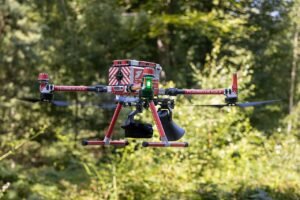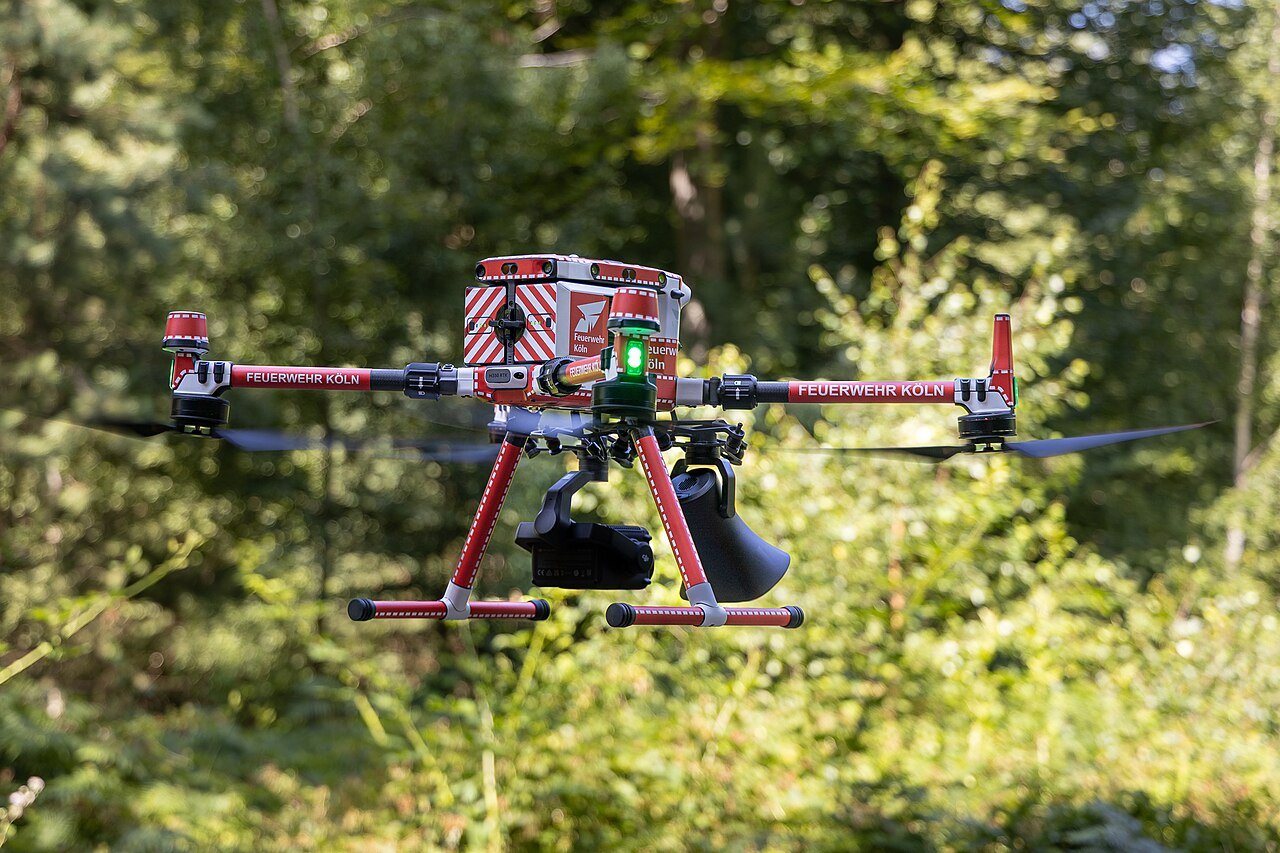
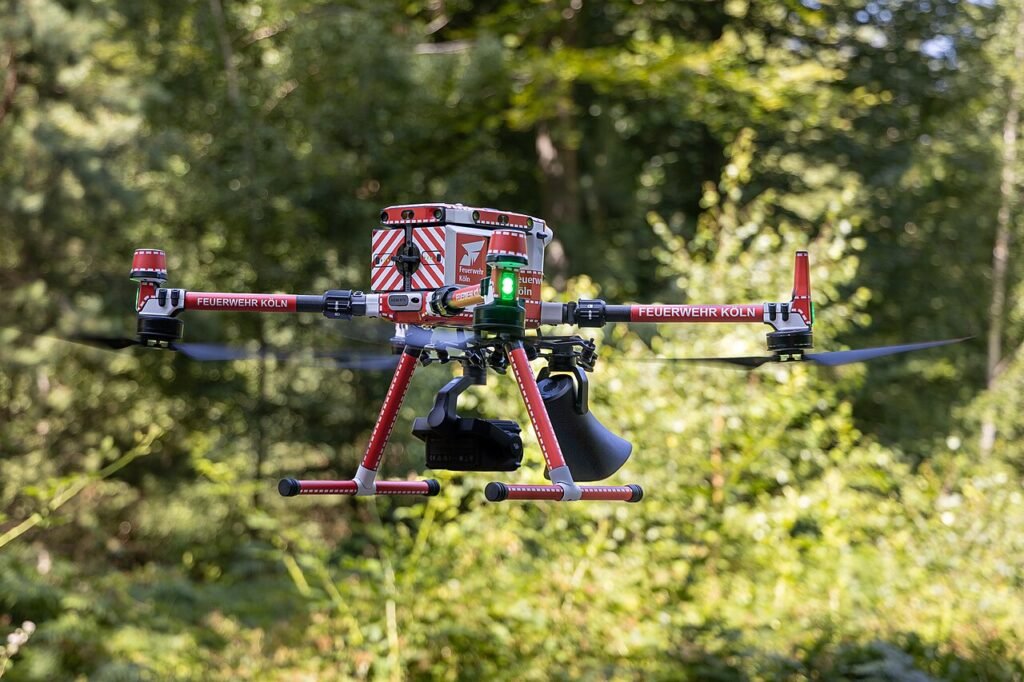
Photo: Superbass · Licence: CC BY-SA 4.0 · View the original source and licence terms.
DJI / DRONE PROFILE
DJI Matrice 350 RTK Review: TB65 Batteries, Payloads and RTK Accuracy
Explore the available technical information for this aircraft, including camera capabilities, flight performance and manufacturer-specific specifications.
The DJI Matrice 350 RTK (M350 RTK) is a configurable enterprise aircraft for inspection, surveying, public safety and industrial operations. Its key selling point is not a built-in camera but its payload ecosystem: teams can configure the aircraft with compatible optical, thermal, mapping or LiDAR sensors. The aircraft uses DJI’s TB65 dual-battery system, O3 Enterprise video transmission and RTK positioning. This is a specification-led buyer guide, not an independent flight test.
Payload flexibility: the main reason to choose it
DJI lists compatibility with Zenmuse H30, H30T, H20, H20T, H20N, L2, L1, P1, S1 and V1 gimbals. Certified third-party payloads developed using DJI’s Payload SDK may also be supported. Available gimbal arrangements include a single downward gimbal, a single upward gimbal, dual downward gimbals, an upward-and-downward combination, and a triple arrangement with one upward and two downward gimbals. Compatibility depends on the exact payload, connector, firmware and configuration; verify the current DJI compatibility information before procurement.
Do not confuse the 960 g maximum for a single gimbal damper with the aircraft’s overall payload capacity. DJI’s product information lists up to 2.7 kg maximum payload for supported configurations, while the 960 g figure applies to a specific single-gimbal damper. Check the payload and takeoff-weight limits for the exact mounting arrangement.
DJI Matrice 350 RTK specifications
| Specification | Manufacturer information |
|---|---|
| Weight without batteries | Approx. 3.77 kg, single downward-gimbal configuration |
| Weight with two TB65 batteries | Approx. 6.47 kg, single downward-gimbal configuration |
| Maximum takeoff weight | 9.2 kg |
| Maximum payload | Up to 2.7 kg, depending on configuration |
| Maximum flight time | 55 minutes, no-payload, windless test |
| Maximum horizontal speed | 23 m/s |
| Maximum wind resistance | 12 m/s |
| Ingress protection | IP55, subject to correct condition and configuration |
| RTK FIX accuracy | 1 cm + 1 ppm horizontal; 1.5 cm + 1 ppm vertical |
| GNSS | GPS, GLONASS, BeiDou and Galileo |
| Operating temperature | -20°C to 50°C |
| Battery | TB65, 5,880 mAh, 263.2 Wh |
| Video transmission | DJI O3 Enterprise |
Flight time, batteries and operating limits
DJI’s 55-minute maximum flight time is measured at approximately 8 m/s without payload in a windless environment until the battery reaches 0%. It is a reference test, not a safe operational flight plan. Payload mass, wind, temperature, battery age, route, hover time and return reserves reduce usable mission time. Plan around a conservative reserve and the real task profile rather than the headline maximum.
The TB65 battery has a published capacity of 5,880 mAh and energy of 263.2 Wh. DJI’s battery station can store multiple TB65 batteries and charging time varies with input voltage and temperature. Fleet operators should budget for spare matched batteries, charging equipment, safe storage, cycle tracking and replacement. Battery condition can become a major part of the total cost of ownership.
RTK accuracy and mapping workflows
DJI specifies RTK FIX positioning accuracy of 1 cm + 1 ppm horizontally and 1.5 cm + 1 ppm vertically. Those figures require a functioning RTK correction workflow and suitable conditions; they are not a guarantee of final survey accuracy. Results also depend on the payload, calibration, control points, flight planning, ground conditions, processing software and survey method. Teams doing professional mapping should validate the complete workflow against their required deliverable tolerances.
Transmission, sensing and weather protection
DJI O3 Enterprise uses four video-transmission antennas. DJI lists maximum unobstructed distances of 20 km under FCC conditions and 8 km under CE/SRRC/MIC conditions. Actual range is affected by terrain, buildings, trees, radio interference, antenna orientation and local frequency rules. A long-range specification is not permission to operate beyond visual line of sight or outside local aviation requirements.
The aircraft has six-directional vision sensing and an infrared sensing system, but obstacle detection depends on lighting, surface texture, obstacle size and environment. Thin wires and other difficult-to-detect objects remain hazards. DJI specifies IP55 protection when the aircraft is correctly configured with TB65 batteries and required covers and seals in place. The rating can decrease with wear; inspect the airframe and seals, and follow DJI’s rainfall restrictions. IP55 does not mean the aircraft is waterproof or suitable for every storm.
Who should consider the M350 RTK?
The M350 RTK is worth evaluating for survey firms, utilities, infrastructure inspectors, public-safety teams and industrial operators that need a configurable aircraft and compatible specialist payloads. It may be excessive for organisations that only need a fixed-camera drone or occasional basic aerial photographs. The real purchase is the complete system: aircraft, payload, controller, batteries, charging, RTK service, software, training, insurance, maintenance and data governance.
Firmware and support lifecycle
DJI lists a guaranteed software-update period ending 31 December 2025 on its specifications page. That published guarantee date has passed, but it should not be interpreted as proof that firmware development or support has stopped. DJI’s downloads page lists Matrice 350 RTK aircraft firmware v17.03.00.05 and remote-controller firmware v06.02.13.14 dated 11 August 2026. The battery-station firmware listed there is dated 16 April 2025. Check the official DJI Matrice 350 RTK downloads and release notes before deployment, and ask DJI or an authorised enterprise dealer to confirm current security, repair, parts and regional support for the exact aircraft and configuration.
Trade-offs and alternatives
The M350 RTK’s flexibility is valuable, but payload selection and compatibility require careful planning. If the mission uses one integrated thermal-and-zoom camera, compare a suitable compact enterprise model such as the Matrice 4T. For newer heavy-payload workflows, compare the DJI enterprise drone platform comparison and the Matrice 400, checking payload capacity, endurance, support and total cost. These aircraft are not interchangeable; select against the actual sensor and workflow requirements.
Pre-purchase and fleet checklist
- Obtain written confirmation that the exact aircraft, payload, gimbal, connector, firmware and software versions are compatible.
- Confirm the maximum payload for the intended gimbal arrangement and calculate takeoff weight with batteries and accessories.
- Inspect TB65 battery cycle history, storage condition, charging behaviour and matched-pair health, especially for used equipment.
- Check the controller, battery station, propellers, landing gear, seals, gimbal connectors and airframe for damage or wear.
- Confirm RTK correction availability, mapping software, payload calibration, data export and secure data-retention procedures.
- Ask about warranty, repair turnaround, spare-part availability, firmware support, operator training and local service arrangements.
- Run a representative mission test and confirm local aviation permissions, operator qualifications and site-specific safety procedures.
DJI Matrice 350 RTK: buyer verdict
The M350 RTK makes the most sense when an organisation needs its modular payload options, RTK-enabled workflows and enterprise operating ecosystem. Its strongest advantage is adaptability, not the 55-minute headline flight time. Buyers should choose the payload and workflow first, then verify compatibility, field performance, support and whole-life cost. If the mission does not need interchangeable specialist sensors, a simpler aircraft may be more economical.
Official specifications and further reading
Primary references: DJI Matrice 350 RTK official specifications, DJI Matrice 350 RTK FAQ and the DJI support and downloads page. Check the current manuals and regional documentation before buying or operating.
Editorial note: Manufacturer specifications are test-condition figures and may change. Confirm the exact payload, configuration, support status and local operating rules with DJI or an authorised supplier. IGIDRONE has not independently flight-tested this aircraft.
Drone Specifications
| Brand | DJI |
|---|---|
| Camera | Payload-dependent enterprise gimbal platform |
| Maximum Flight Time (minutes) | 55 min (without payload, windless test; not typical mission time) |
| Maximum Transmission Range (km) | 20 km (FCC); 8 km (CE/SRRC/MIC) |
| Weight (g) | 6470 g |
| Battery Capacity (mAh) | Intelligent Flight Battery: 5880 mAh |
| Wind Resistance (m/s) | 12 m/s |
| Obstacle Sensing | Six-directional vision and infrared sensing |
| Positioning / GPS | GPS, GLONASS, BeiDou, Galileo; RTK |
| Maximum Speed (m/s) | 23 m/s |
Additional Notes
Matrice 350 RTK review entry: see official aircraft table. Approx. 3.77 kg without batteries / 6.47 kg with two TB65 batteries; max takeoff weight 9.2 kg; max no-payload flight time 55 min; IP55; RTK fixed accuracy 1 cm + 1 ppm horizontal / 1.5 cm + 1 ppm vertical.
Specification source: Official source
Last verified: 2026-11-26
Official Price (USD)
No public USD price was verified on the manufacturer’s official store during this check.
For enterprise or discontinued models, contact the manufacturer for a current quotation. We do not substitute third-party seller prices.
Price checked: 2026-11-26
MODEL TECHNICAL RECORD
Detailed Technical Specifications
Manufacturer-specific technical information recorded for this model. Values not present in the source record are not estimated.
Aircraft
| Dimensions (unfolded, without propellers) | 810×670×430 mm (L×W×H) |
|---|---|
| Dimensions (folded, with propellers) | 430×420×430 mm (L×W×H) |
| Diagonal Wheelbase | 895 mm |
| Weight (with single downward gimbal) | Without batteries: Approx. 3.77 kg With two TB65 batteries: Approx. 6.47 kg |
| Single Gimbal Damper’s Max Payload | 960 g |
| Max Takeoff Weight | 9.2 kg |
| Operating Frequency | 2.4000-2.4835 GHz 5.150-5.250 GHz (CE: 5.170-5.250 GHz) 5.725-5.850 GHz In some countries and regions, the 5.1GHz and 5.8GHz frequency bands are prohibited, or the 5.1GHz frequency band is only allowed for indoor use. Please refer to local laws and regulations for more information. |
| Transmitter Power (EIRP) | 2.4000-2.4835 GHz: < 33 dBm (FCC) < 20 dBm (CE/SRRC/MIC) 5.150-5.250 GHz (CE: 5.170-5.250 GHz): < 23 dBm (CE) 5.725-5.850 GHz: < 33 dBm (FCC/SRRC) < 14 dBm (CE) |
| Hovering Accuracy (with moderate or no wind) | Vertical: ±0.1 m (with vision positioning) ±0.5 m (with GNSS positioning) ±0.1 m (with RTK positioning) Horizontal: ±0.3 m (with vision positioning) ±1.5 m (with GNSS positioning) ±0.1 m (with RTK positioning) |
| RTK Positioning Accuracy (RTK FIX) | 1 cm + 1 ppm (horizontal) 1.5 cm + 1 ppm (vertical) |
| Max Angular Velocity | Pitch: 300°/s Yaw: 100°/s |
| Max Pitch Angle | 30° When in N mode and with the forward vision system enabled: 25°. |
| Max Ascent Speed | 6 m/s |
| Max Descent Speed (vertical) | 5 m/s |
| Max Tilted Descent Speed | 7 m/s |
| Max Horizontal Speed | 23 m/s |
| Max Flight Altitude | 5000 m When using the 2110s propellers and with the takeoff weight ≤ 7.4 kg. 7000 m When using the 2112 High-Altitude Low-Noise Propellers and with the takeoff weight ≤ 7.2 kg. |
| Max Wind Speed Resistance | 12 m/s |
| Max Flight Time | 55 minutes Measured with Matrice 350 RTK flying at approximately 8 m/s without payloads in a windless environment until the battery level reached 0%. Data is for reference only. Actual usage time may vary depending on the flight mode, accessories, and environment. Please pay attention to reminders in the app. |
| Supported DJI Gimbals | Zenmuse H30, Zenmuse H30T, Zenmuse H20, Zenmuse H20T, Zenmuse H20N, Zenmuse L2, Zenmuse L1, Zenmuse P1, Zenmuse S1, and Zenmuse V1 |
| Third-Party Payload | Supports only certified payloads developed based on DJI Payload SDK. |
| Supported Gimbal Configurations | Single downward gimbal Single upward gimbal Dual downward gimbals Single downward gimbal + single upward gimbal Dual downward gimbals + single upward gimbal |
| Ingress Protection Rating | IP55 The IP rating is not permanently effective and may decrease due to product wear and tear. |
| Global Navigation Satellite System | GPS + GLONASS + BeiDou + Galileo |
| Operating Temperature | -20° to 50° C (-4° to 122° F) |
| Class | C3 (EU) |
Remote Controller
| Screen | 7.02-inch LCD touchscreen; resolution: 1920×1200; max brightness: 1200 nits |
|---|---|
| Weight | Approx. 1.25 kg (without WB37 battery) Approx. 1.42 kg (with WB37 battery) |
| Global Navigation Satellite System | GPS + Galileo + BeiDou |
| Built-in Battery | Type: Li-ion (6500 mAh@7.2 V) Charging Type: Use the battery station or USB-C fast charger with a max power of 65 W (max voltage of 20 V). Charging Time: 2 hours Chemical System: LiNiCoAlO2 |
| External Battery (WB37 Intelligent Battery) | Capacity: 4920 mAh Voltage: 7.6 V Type: Li-ion Energy: 37.39 Wh Chemical System: LiCoO2 |
| Ingress Protection Rating | IP54 |
| Operating Time | Built-in Battery: approx. 3.3 hours Built-in Battery + External Battery: approx. 6 hours |
| Operating Temperature | -20° to 50° C (-4° to 122° F) |
| Operating Frequency | 2.4000-2.4835 GHz 5.725-5.850 GHz |
| Transmitter Power (EIRP) | 2.4000-2.4835 GHz: < 33 dBm (FCC) < 20 dBm (CE/SRRC/MIC) 5.725-5.850 GHz: < 33 dBm (FCC) < 14 dBm (CE) < 23 dBm (SRRC) |
| Wi-Fi Protocol | Wi-Fi 6 |
| Wi-Fi Operating Frequency | 2.4000-2.4835 GHz 5.150-5.250 GHz 5.725-5.850 GHz |
| Bluetooth Protocol | Bluetooth 5.1 |
| Bluetooth Operating Frequency | 2.4000-2.4835 GHz |
Video Transmission
| Video Transmission System | DJI O3 Enterprise Transmission |
|---|---|
| Antenna | 4 video transmission antennas, 2T4R |
| Max Transmission Distance (unobstructed, free of interference) | 20 km (FCC) 8 km (CE/SRRC/MIC) |
| Max Transmission Distance (with interference) | Low Interference and Obstructed by Buildings: approx. 0-0.5 km Low Interference and Obstructed by Trees: approx. 0.5-3 km Strong Interference and Unobstructed: urban landscape, approx. 1.5-3 km Medium Interference and Unobstructed: suburban landscape, approx. 3-9 km Low Interference and Unobstructed: suburb/seaside, approx. 9-20 km Measured with FCC compliance in unobstructed environments with typical interference at a flight altitude of approximately 120 m. Data is for reference only. The actual transmission distance may vary depending on the environment’s obstruction and interference conditions. Please pay attention to reminders in the app. |
Vision System
| Obstacle Sensing Range | Forward/Backward/Left/Right: 0.7-40 m Upward/Downward: 0.6-30 m |
|---|---|
| FOV | Forward/Backward/Downward: 65° (horizontal), 50° (vertical) Left/Right/Upward: 75° (horizontal), 60° (vertical) |
| Operating Environment | Surfaces with discernible patterns and adequate lighting (lux > 15) |
Infrared Sensing System
| Obstacle Sensing Range | 0.1-8 m |
|---|---|
| FOV | 30° (±15°) |
| Operating Environment | Large, diffuse, and reflective obstacles (reflectivity > 10%) |
LED Auxiliary Light
| Effective Illumination Distance | 5 m |
|---|---|
| Illumination Type | 60 Hz, solid glow |
FPV Camera
| Resolution | 1080p |
|---|---|
| FOV | 142° |
| Frame Rate | 30fps |
Intelligent Flight Battery
| Model | TB65 |
|---|---|
| Capacity | 5880 mAh |
| Voltage | 44.76 V |
| Type | Li-ion |
| Energy | 263.2 Wh |
| Weight | Approx. 1.35 kg |
| Operating Temperature | -20° to 50° C (-4° to 122° F) |
| Ideal Storage Temperature | 22° to 30° C (71.6° to 86° F) |
| Charging Temperature | -20° to 40° C (-4° to 104° F) When the ambient temperature is below 5° C (41° F), the battery will trigger the auto-heating function. Charging at low temperatures may reduce battery life. It is recommended to charge at 15° to 35° C (59° to 95° F). |
| Charging Time | With a 220V power supply, it takes approximately 60 minutes to fully charge two TB65 Intelligent Flight Batteries and approximately 30 minutes to charge them from 20% to 90%. With a 110V power supply, it takes approximately 70 minutes to fully charge two TB65 Intelligent Flight Batteries and approximately 40 minutes to charge them from 20% to 90%. |
Intelligent Battery Station
| Dimensions | 580×358×254 mm (L×W×H) |
|---|---|
| Net Weight | Approx. 8.98 kg |
| Compatible Stored Items | Eight TB65 Intelligent Flight Batteries Four WB37 Intelligent Batteries |
| Input Voltage | 100-120 VAC, 50-60 Hz 220-240 VAC, 50-60 Hz |
| Max Input Power | 1070 W |
| Output Power | 100-120 V: 750 W 220-240 V: 992 W |
| Operating Temperature | -20° to 40° C (-4° to 104° F) |
Others
| Guaranteed software updates until | 2025/12/31 |
|---|


Aircraft & Flight
| Maximum horizontal speed | 23 m/s |
|---|---|
| Maximum takeoff weight | 9.2 kg |
Navigation & Obstacle Sensing
| Supported GNSS systems | GPS + GLONASS + BeiDou + Galileo |
|---|
Operating Conditions & Dimensions
| Maximum wind resistance | 12 m/s |
|---|
MANUFACTURER DATA
Detailed official specifications
Technical figures below are transcribed from the manufacturer documentation linked with this profile. Test figures are maximum or controlled-condition ratings where stated; actual performance varies by configuration and operating conditions. A field is omitted when the cited source does not publish a reliable value.
Manufacturer source last checked: 2026-11-26
Evidence type: Official manufacturer specifications / support documentation
Aircraft
| Dimensions (unfolded, without propellers) | 810 × 670 × 430 mm (L × W × H) |
|---|---|
| Dimensions (folded, with propellers) | 430 × 420 × 430 mm (L × W × H) |
| Diagonal Wheelbase | 895 mm |
| Weight (with single downward gimbal) | Without batteries: ; Approx. 3.77 kg; ; With two TB65 batteries: ; Approx. 6.47 kg |
| Single Gimbal Damper’s Max Payload | 960 g |
| Maximum takeoff weight | 9.2 kg |
| Operating Frequency | 2.4000-2.4835 GHz; 5.150-5.250 GHz (CE: 5.170-5.250 GHz); 5.725-5.850 GHz; ; In some countries and regions, the 5.1GHz and 5.8GHz frequency bands are prohibited, or the 5.1GHz frequency band is only allowed for indoor use. Please refer to local laws and regulations for more information. |
| Transmitter Power (EIRP) | 2.4000-2.4835 GHz: ; < 33 dBm (FCC); < 20 dBm (CE/SRRC/MIC); ; 5.150-5.250 GHz (CE: 5.170-5.250 GHz): ; < 23 dBm (CE); ; 5.725-5.850 GHz: ; < 33 dBm (FCC/SRRC); < 14 dBm (CE) |
| Hovering Accuracy (with moderate or no wind) | Vertical: ; ±0.1 m (with vision positioning); ±0.5 m (with GNSS positioning); ±0.1 m (with RTK positioning); ; Horizontal: ; ±0.3 m (with vision positioning); ±1.5 m (with GNSS positioning); ±0.1 m (with RTK positioning) |
| RTK Positioning Accuracy (RTK FIX) | 1 cm + 1 ppm (horizontal); 1.5 cm + 1 ppm (vertical) |
| Max Angular Velocity | Pitch: 300°/s; Yaw: 100°/s |
| Max Pitch Angle | 30°; When in N mode and with the forward vision system enabled: 25°. |
| Maximum ascent speed | 6 m/s |
| Max Descent Speed (vertical) | 5 m/s |
| Max Tilted Descent Speed | 7 m/s |
| Maximum horizontal speed | 23 m/s |
| Max Flight Altitude | 5000 m; When using the 2110s propellers and with the takeoff weight ≤ 7.4 kg. ; ; 7000 m; When using the 2112 High-Altitude Low-Noise Propellers and with the takeoff weight ≤ 7.2 kg. |
| Maximum wind resistance | 12 m/s |
| Maximum flight time | 55 minutes; Measured with Matrice 350 RTK flying at approximately 8 m/s without payloads in a windless environment until the battery level reached 0%. Data is for reference only. Actual usage time may vary depending on the flight mode, accessories, and environment. Please pay attention to reminders in the app. |
| Supported DJI Gimbals | Zenmuse H30, Zenmuse H30T, Zenmuse H20, Zenmuse H20T, Zenmuse H20N, Zenmuse L2, Zenmuse L1, Zenmuse P1, Zenmuse S1, and Zenmuse V1 |
| Third-Party Payload | Supports only certified payloads developed based on DJI Payload SDK. |
| Supported Gimbal Configurations | Single downward gimbal; Single upward gimbal; Dual downward gimbals; Single downward gimbal + single upward gimbal; Dual downward gimbals + single upward gimbal |
| Ingress Protection Rating | IP55; The IP rating is not permanently effective and may decrease due to product wear and tear. |
| Global Navigation Satellite System | GPS + GLONASS + BeiDou + Galileo |
| Operating temperature range | -20° to 50°C (-4° to 122° F) |
| Class | C3 (EU) |
Remote Controller
| Screen | 7.02-inch LCD touchscreen; resolution: 1920 × 1200; max brightness: 1200 nits |
|---|---|
| Weight | Approx. 1.25 kg (without WB37 battery); Approx. 1.42 kg (with WB37 battery) |
| Global Navigation Satellite System | GPS + Galileo + BeiDou |
| Built-in Battery | Type: Li-ion (6500 mAh@7.2 V); Charging Type: Use the battery station or USB-C fast charger with a max power of 65 W (max voltage of 20 V).; Charging Time: 2 hours; Chemical System: LiNiCoAlO2 |
| External Battery (WB37 Intelligent Battery) | Capacity: 4920 mAh; Voltage: 7.6 V; Type: Li-ion; Energy: 37.39 Wh; Chemical System: LiCoO2 |
| Ingress Protection Rating | IP54 |
| Operating Time | Built-in Battery: approx. 3.3 hours; Built-in Battery + External Battery: approx. 6 hours |
| Operating temperature range | -20° to 50°C (-4° to 122° F) |
| Operating Frequency | 2.4000-2.4835 GHz; 5.725-5.850 GHz |
| Transmitter Power (EIRP) | 2.4000-2.4835 GHz: ; < 33 dBm (FCC); < 20 dBm (CE/SRRC/MIC); ; 5.725-5.850 GHz: ; < 33 dBm (FCC); < 14 dBm (CE); < 23 dBm (SRRC) |
| Wi-Fi Protocol | Wi-Fi 6 |
| Wi-Fi Operating Frequency | 2.4000-2.4835 GHz; 5.150-5.250 GHz; 5.725-5.850 GHz |
| Bluetooth Protocol | Bluetooth 5.1 |
| Bluetooth Operating Frequency | 2.4000-2.4835 GHz |
Video Transmission
| Video Transmission System | DJI O3 Enterprise Transmission |
|---|---|
| Antenna | 4 video transmission antennas, 2T4R |
| Max Transmission Distance (unobstructed, free of interference) | 20 km (FCC); 8 km (CE/SRRC/MIC) |
| Max Transmission Distance (with interference) | Low Interference and Obstructed by Buildings: approx. 0-0.5 km; Low Interference and Obstructed by Trees: approx. 0.5-3 km; Strong Interference and Unobstructed: urban landscape, approx. 1.5-3 km; Medium Interference and Unobstructed: suburban landscape, approx. 3-9 km; Low Interference and Unobstructed: suburb/seaside, approx. 9-20 km; ; Measured with FCC compliance in unobstructed environments with typical interference at a flight altitude of approximately 120 m. Data is for reference only. The actual transmission distance may vary depending on the environment’s obstruction and interference conditions. Please pay attention to reminders in the app. |
Vision System
| Obstacle Sensing Range | Forward/Backward/Left/Right: 0.7-40 m; Upward/Downward: 0.6-30 m |
|---|---|
| FOV | Forward/Backward/Downward: 65° (horizontal), 50° (vertical); Left/Right/Upward: 75° (horizontal), 60° (vertical) |
| Operating Environment | Surfaces with discernible patterns and adequate lighting (lux > 15) |
Infrared Sensing System
| Obstacle Sensing Range | 0.1-8 m |
|---|---|
| FOV | 30° (±15°) |
| Operating Environment | Large, diffuse, and reflective obstacles (reflectivity > 10%) |
LED Auxiliary Light
| Effective Illumination Distance | 5 m |
|---|---|
| Illumination Type | 60 Hz, solid glow |
FPV Camera
| Resolution | 1080p |
|---|---|
| FOV | 142° |
| Frame Rate | 30fps |
Intelligent Flight Battery
| Model | TB65 |
|---|---|
| Capacity | 5880 mAh |
| Voltage | 44.76 V |
| Type | Li-ion |
| Energy | 263.2 Wh |
| Weight | Approx. 1.35 kg |
| Operating temperature range | -20° to 50°C (-4° to 122° F) |
| Ideal Storage Temperature | 22° to 30°C (71.6° to 86° F) |
| Charging Temperature | -20° to 40°C (-4° to 104° F); When the ambient temperature is below 5°C (41° F), the battery will trigger the auto-heating function. Charging at low temperatures may reduce battery life. It is recommended to charge at 15° to 35°C (59° to 95° F). |
| Charging Time | With a 220V power supply, it takes approximately 60 minutes to fully charge two TB65 Intelligent Flight Batteries and approximately 30 minutes to charge them from 20% to 90%. ; With a 110V power supply, it takes approximately 70 minutes to fully charge two TB65 Intelligent Flight Batteries and approximately 40 minutes to charge them from 20% to 90%. |
Intelligent Battery Station
| Dimensions | 580 × 358 × 254 mm (L × W × H) |
|---|---|
| Net Weight | Approx. 8.98 kg |
| Compatible Stored Items | Eight TB65 Intelligent Flight Batteries; Four WB37 Intelligent Batteries |
| Input Voltage | 100-120 VAC, 50-60 Hz; 220-240 VAC, 50-60 Hz |
| Max Input Power | 1070 W |
| Output Power | 100-120 V: 750 W; 220-240 V: 992 W |
| Operating temperature range | -20° to 40°C (-4° to 104° F) |
Others
| Guaranteed software updates until | 2025/12/31 |
|---|
Source: manufacturer technical specifications and official support documentation. Regional versions, payloads, batteries, firmware and test conditions can change the stated figures. Check the linked source for the applicable configuration.
Related Dji drones
Explore other published models from the same manufacturer.