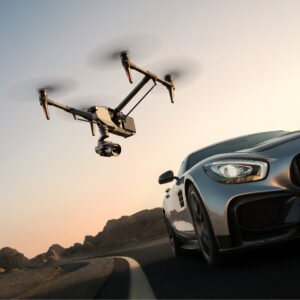

Photo: DJI Europe · View DJI Europe media-use source listing.
DJI / DRONE PROFILE
DJI Inspire 2
Explore the available technical information for this aircraft, including camera capabilities, flight performance and manufacturer-specific specifications.
DJI Inspire 2 Review and Cinema Buying Guide
The DJI Inspire 2 is a professional aerial production platform designed for cinematographers who need an interchangeable camera and gimbal ecosystem. It is an older model, so the exact camera, licence, media and firmware configuration matter when evaluating a used or remaining-stock kit. This guide summarises DJI’s published information and does not claim independent flight testing.
Camera options and recording
Inspire 2 supports Zenmuse camera systems such as X4S, X5S and X7, depending on compatibility and configuration. The available resolution, frame rates, codecs and colour workflows differ by camera and licence. Some configurations support 5.2K or 6K recording. Buyers should identify the included camera and verify its exact recording formats, media requirements and activation status rather than assuming every Inspire 2 kit has the same capability.
Flight platform
DJI lists a flight time in the approximate 23–27 minute range depending on configuration and conditions, and a maximum speed up to 94 km/h. The aircraft uses a dual-battery design and a transforming landing gear that clears the camera’s field of view. Actual endurance varies with camera, lens, battery health, temperature, wind and flight style.
Professional workflow
The platform supports pilot and camera-operator workflows, interchangeable payloads and DJI’s professional transmission ecosystem. Production teams should account for battery pairs, charging equipment, camera licences, media, lens calibration, monitoring and post-production compatibility.
Buying considerations
- Strengths: interchangeable cinema cameras, professional gimbal options, dual-battery design and a dedicated production workflow.
- Limitations: legacy platform, heavier transport kit, camera-specific accessories and potential difficulty sourcing batteries or service.
- Check before purchase: exact aircraft version, camera/gimbal, licences, SSD/media, battery cycle and health, controller, firmware and repair history.
IGIDRONE verdict
Inspire 2 can still make sense for a production team that already owns compatible cameras and accessories. For a new investment, compare the total cost of a complete working kit with newer cinema platforms and verify support availability first.
Manufacturer reference: DJI Inspire 2 product and specifications information.
Inspire 2: cinema workflow and configuration
The Inspire 2 is a professional imaging aircraft whose performance depends on the selected camera and recording workflow. The aircraft platform, camera payload and recording media should be evaluated as a system: a body-only listing is not equivalent to a complete cinema package. Confirm the exact Zenmuse camera, licenses or recording options, media, batteries, charger, controller and firmware. For production work, also assess media costs, post-production compatibility, spare-part availability and whether the aircraft can be maintained safely. Advertised maximum flight time is not the same as a practical shoot window with a camera payload and reserve battery requirement.
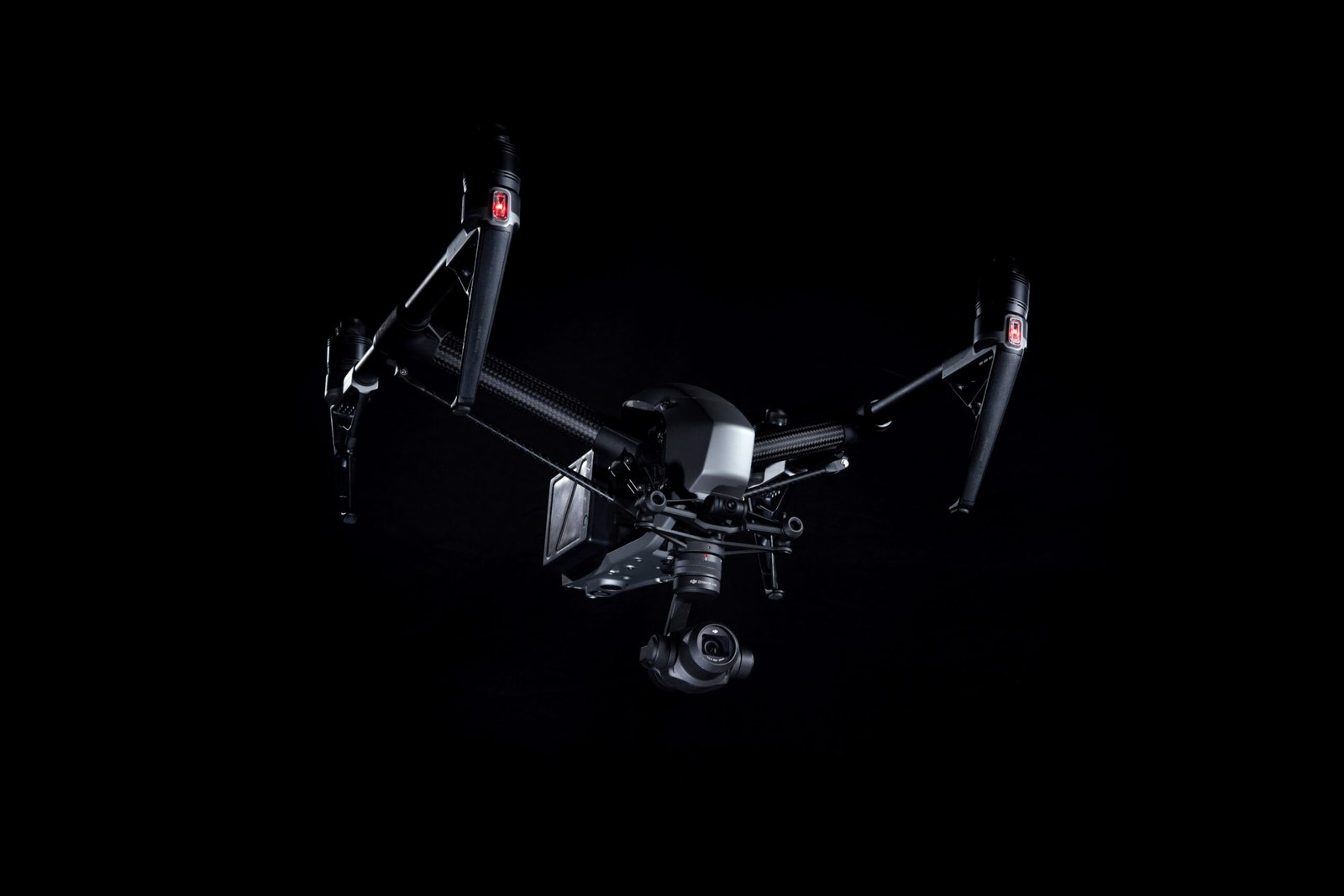
Image credit: DJI Europe / Mynewsdesk. The source item is listed as “Media Use”. View source and media listing. Image used without edits.
Who should consider DJI Inspire 2?
Production teams should assess the complete system: aircraft, camera or gimbal, lenses, media, controller, focus accessories, batteries, charging, monitoring, editing and backup. Check how quickly the crew can set up, balance and change a camera configuration, and whether the resulting files fit the post-production pipeline. A supplier demonstration should use the actual camera, lens and recording mode planned for the production. For DJI Inspire 2, test the complete camera-to-edit pipeline using the lens, codec, frame rate and colour profile intended for production.
Limitations and trade-offs to understand
Image quality is affected by sensor format, lens, recording codec, dynamic range, shutter behaviour, stabilisation, exposure and grading. Do not infer final production quality from resolution alone. Check sample files from the same camera, lens and recording mode, and test whether the footage matches the production's colour and post-production workflow. For DJI Inspire 2, confirm payload balance, media capacity and battery reserve with the exact camera configuration.
Alternatives worth comparing
Compare the aircraft with other professional camera platforms and with a smaller camera drone for jobs where a large cinema payload is unnecessary. The best choice depends on the camera package, crew workflow and deliverable—not on a single maximum-speed or flight-time number. For DJI Inspire 2, include crew workflow, permissions, insurance and repair support in the cost of ownership.
Pre-purchase and ownership checklist
Confirm payload and lens compatibility, media requirements, camera-control workflow, battery logistics, firmware support, repair turnaround, insurance and the exact permissions required at each filming location. Ask for sample footage and a demonstration using the production's intended recording settings. For DJI Inspire 2, compare rental and ownership using expected shoot days and specialist crew costs.
How to use this specification profile
This page is a research-based reference, not a claim that IGIDRONE has independently flight-tested the aircraft. Treat manufacturer maximums as test-condition figures and distinguish standard equipment from optional accessories or regional bundles. Before buying, compare the exact model code, firmware, battery, controller and payload configuration against the current official manual. If a field is marked unknown or is not documented by the manufacturer, do not infer a value from a similarly named variant. For DJI Inspire 2, test the complete camera-to-edit pipeline using the lens, codec, frame rate and colour profile intended for production.
Primary manufacturer reference: Open the manufacturer specification or support page. Confirm the current regional documentation before purchase. For DJI Inspire 2, confirm payload balance, media capacity and battery reserve with the exact camera configuration.
Editorial update: 8 November 2026. Model availability, prices, software support and regional operating rules can change. Confirm them with the manufacturer, authorised distributor and relevant aviation authority before purchase or flight. For DJI Inspire 2, include crew workflow, permissions, insurance and repair support in the cost of ownership.
Production workflow and crew planning
Test the complete camera pipeline before a paid production. Record sample clips at the intended frame rate, codec, colour profile and resolution, then confirm ingest, editing, grading and delivery. Check storage capacity and transfer speed so that media handling does not become a bottleneck during a multi-battery shoot. For DJI Inspire 2, test the complete camera-to-edit pipeline using the lens, codec, frame rate and colour profile intended for production.
Evidence to request from a supplier
Request a payload compatibility chart, camera-control guide, sample original footage, firmware support details, maintenance schedule and service response terms. Confirm whether the advertised camera modes require a particular lens, gimbal, media type or firmware. Test the actual recording workflow before committing to a production deadline. For DJI Inspire 2, confirm payload balance, media capacity and battery reserve with the exact camera configuration.
Editorial standard: buyer guidance is based on published manufacturer information and practical ownership considerations. IGIDRONE does not claim independent flight testing unless a page explicitly documents a real test. For DJI Inspire 2, include crew workflow, permissions, insurance and repair support in the cost of ownership.
Drone Specifications
| Brand | DJI |
|---|---|
| Camera | Supports Zenmuse X7, X5S and X4S interchangeable gimbal cameras |
| Maximum Video Resolution | Up to 6K CinemaDNG/RAW and 5.2K Apple ProRes with Zenmuse X7; camera-dependent |
| Maximum Flight Time (minutes) | Approx. 27 min with Zenmuse X4S; approx. 23 min with Zenmuse X7 (no-wind hovering test) |
| Maximum Transmission Range (km) | Remote-controller/video transmission distance (unobstructed): 2.4 GHz: 7 km FCC, 3.5 km CE, 4 km SRRC/MIC; 5.8 GHz: 7 km FCC, 2 km CE, 5 km SRRC (MIC not listed). |
| Weight (g) | 3,440 g including propellers and two batteries, without gimbal/camera |
| Battery Capacity (mAh) | Battery (Standard): 4280 mAh |
| Wind Resistance (m/s) | 10 m/s |
| Obstacle Sensing | Forward vision system (0.7–30 m), downward vision/ultrasonic positioning and upward infrared sensing |
| Positioning / GPS | GPS + GLONASS |
| Maximum Speed (m/s) | 94 km/h (26.1 m/s) in Sport mode |
Additional Notes
DJI Inspire 2 flight time depends on camera payload: approx. 27 min with Zenmuse X4S and 23 min with Zenmuse X7 in no-wind sea-level hover tests. Max speed 94 km/h in Sport mode; wind resistance 10 m/s. TB50 battery capacity 4,280 mAh each; aircraft weight 3,440 g includes two batteries but excludes gimbal/camera. Transmission distance depends on frequency and region; 2.4 GHz: FCC 7 km, CE 3.5 km, SRRC/MIC 4 km. 5.8 GHz regional figures differ. Camera is interchangeable (X4S/X5S/X7); do not treat one camera as built-in.
Specification source: Official source
Last verified: 2026-11-08
Official Price (USD)
No public USD price was verified on the manufacturer’s official store during this check.
The official DJI US Store page states that Inspire 2 X5S Standard Kit is not available in the selected country/region. No current US USD price is displayed. Checked 2026-11-16.
For enterprise or discontinued models, contact the manufacturer for a current quotation. We do not substitute third-party seller prices.
Price checked: 2026-11-16
MODEL TECHNICAL RECORD
Detailed Technical Specifications
Manufacturer-specific technical information recorded for this model. Values not present in the source record are not estimated.
Core Specs
| Flight time | 23-27 MINS |
|---|---|
| Control range | 7 KM |
| Speed | 94 KM/H |
| Video resolution | 6K/5.2K |
| Sensory range | 30 M |
| Live view | 1080 P |
Aircraft
| Model | T650A |
|---|---|
| Weight | 7.58 lbs (3440 g, including propellers and two batteries, without gimbal and camera) |
| Max Takeoff Weight | 9.37lbs (4250 g) |
| GPS Hovering Accuracy | Vertical: ±1.64 feet (0.5 m) or ±0.33 feet (0.1 m, Downward Vision System enabled) Horizontal: ±4.92 feet (1.5 m) or ±0.98 feet (0.3 m, Downward Vision System enabled) |
| Max Angular Velocity | Pitch: 300°/s Yaw: 150°/s |
| Max Tilt Angle | P-mode: 35° (Forward Vision System enabled: 25°) A-mode: 35° S-mode: 40° |
| Max Ascent Speed | P-mode/A-mode: 16.4 ft/s (5 m/s) S-mode: 19.7 ft/s (6 m/s) |
| Max Descent Speed | Vertical: 13.1 ft/s (4 m/s) Tilt: 13.1-29.5 ft/s (4-9 m/s) |
| Max Takeoff Sea Level | 1.55 mi (2500 m) 3.1 mi (5000 m with specially-designed propeller) |
| Max Wind Speed Resistance | 10 m/s |
| Max Flight Time | Approx. 27min (with Zenmuse X4S) Approx. 23min (with Zenmuse X7) (Hovering at sea level with no wind.) |
| Motor Model | DJI 3512 |
| Propeller Model | DJI 1550T |
| Indoor Hovering | Enabled by default |
| Operating Temperature | -4° to 104° F (-20° to 40° C) |
| Diagonal Distance(propeller excluded) | 23.8 inch (605 mm, Landing Mode) |
| Max Speed | 58 mph or 94 kph(Sport mode) |
Gimbal
| Model | ZENMUSE X7(optional) ZENMUSE X5S(optional) ZENMUSE X4S(optional) |
|---|---|
| Angular Vibration Range | ±0.01° |
| Controllable Range | Pitch: -130° to+40° Roll: ±20° Pan: ±320° |
| Max Controllable Speed | Pitch: 180°/s Roll: 180°/s Pan: 270°/s |
| Interface Type | Detachable |
| Mechanical Range | Pitch: -140° to+50° Roll: -50° to+90° Pan: ±330° |
Remote Controller
| Model | GL6D10A |
|---|---|
| Operating Frequency | 2.400-2.483 GHz 5.725-5.850 GHz |
| Max Transmitting Distance(unobstructed, free of interference) | 2.4 GHz: FCC: 4.3 miles (7 km); CE: 2.2 miles (3.5 km); SRRC: 2.5 miles (4 km); MIC: 2.5 miles (4 km); 5.8 GHz: FCC: 4.3 miles (7 km); CE: 1.2 miles (2 km); SRRC: 3.1 miles (5 km); MIC: - ; |
| EIRP | 2.4 GHz: FCC: 26 dBm; CE: 17 dBm; SRRC: 20 dBm; MIC: 17dBm; 5.8 GHz: FCC: 28 dBm; CE:14 dBm; SRRC: 20 dBm; MIC: - ; |
| Video Output Ports | USB, HDMI |
| Power Supply | Built-in battery |
| Charging | DJI charger |
| Dual User Capability | Host-and-Slave connection |
| Mobile Device Holder | Tablet or Smart Phone |
| Max Mobile Device Width | 170 mm |
| Output Power | 9 W (Without supplying power to smart device) |
| Operating Temperature | -4° to 104° F (-20° to 40° C) |
| Storage Temperature | Less than 3 months: -4° to 113° F (-20° to 45° C) More than 3 months: 72° to 82° F (22° to 28° C) |
| Charging Temperature | 32° to 104° F (0° to 40° C) |
| Battery | 6000mAh 2S LiPo |
| USB Supply Power | iOS: 1 A @ 5.2 V (Max); Android: 1.5 A @ 5.2 V (Max) |
Charger
| Model | IN2C180 |
|---|---|
| Voltage | 26.1 V |
| Rated Power | 180 W |
Battery (Standard)
| Name | Intelligent Flight Battery |
|---|---|
| Model | TB50 |
| Capacity | 4280 mAh |
| Voltage | 22.8 V |
| Battery Type | LiPo 6S |
| Energy | 97.58 Wh |
| Net Weight | 515 g |
| Charging Temperature | 41° to 104° F (5° to 40° C) |
| Operating Temperature | -4° to 104° F (-20° to 40° C) |
| Max Charging Power | 180 W |
| Storage Temperature | Less than 3 months: -4° to 113° F (-20° to 45° C) More than 3 months: 72° to 82° F (22° to 28° C) |
Charging Hub
| Model | IN2CH |
|---|---|
| Input Voltage | 26.1 V |
| Input Current | 6.9 A |
Downward Vision System
| Velocity Range | Not listed in the DJI specification source used for this profile. |
|---|---|
| Altitude Range | Not listed in the DJI specification source used for this profile. |
| Operating Range | Not listed in the DJI specification source used for this profile. |
| Operating Environment | Surfaces with clear patterns and adequate lighting (> 15 lux) |
| Ultrasonic Sensor Operating Range | 0.33-16.4 feet (10-500 cm) |
| Ultrasonic Sensor Operating Environment | Non-absorbing material, rigid surface (thick indoor carpeting will reduce performance) |
Forward Vision System
| Obstacle Sensing Range | 2.3-98.4 feet (0.7-30 m) |
|---|---|
| FOV | Horizontal: 60°; Vertical: 54° |
| Operating Environment | Surfaces with clear patterns and adequate lighting (> 15 lux) |
Upward Infrared Sensor
| Obstacle Sensing Range | 0-16.4 feet (0-5 m) |
|---|---|
| FOV | ±5° |
| Operating Environment | Large-size non-reflective obstacles |
App
| Name | DJI GO 4 |
|---|


MANUFACTURER DATA
Detailed official specifications
Technical figures below are transcribed from the manufacturer documentation linked with this profile. Test figures are maximum or controlled-condition ratings where stated; actual performance varies by configuration and operating conditions. A field is omitted when the cited source does not publish a reliable value.
Manufacturer source last checked: 2026-11-08
Evidence type: Official DJI manufacturer specifications / support documentation / user manual
Core Specs
| Flight time | 23-27 MINS |
|---|---|
| Control range | 7 KM |
| Speed | 94 KM/H |
| Video resolution | 6K/5.2K |
| Sensory range | 30 M |
| Live view | 1080 P |
Aircraft
| Model | T650A |
|---|---|
| Weight | 7.58 lbs (3440 g, including propellers and two batteries, without gimbal and camera) |
| Max Takeoff Weight | 9.37lbs (4250 g) |
| GPS Hovering Accuracy | Vertical: ±1.64 feet (0.5 m) or ±0.33 feet (0.1 m, Downward Vision System enabled); Horizontal: ±4.92 feet (1.5 m) or ±0.98 feet (0.3 m, Downward Vision System enabled) |
| Max Angular Velocity | Pitch: 300°/s; Yaw: 150°/s |
| Max Tilt Angle | P-mode: 35° (Forward Vision System enabled: 25°); A-mode: 35°; S-mode: 40° |
| Max Ascent Speed | P-mode/A-mode: 16.4 ft/s (5 m/s); S-mode: 19.7 ft/s (6 m/s) |
| Max Descent Speed | Vertical: 13.1 ft/s (4 m/s); Tilt: 13.1-29.5 ft/s (4-9 m/s) |
| Max Takeoff Sea Level | 1.55 mi (2500 m); 3.1 mi (5000 m with specially-designed propeller) |
| Max Wind Speed Resistance | 10 m/s |
| Max Flight Time | Approx. 27min (with Zenmuse X4S); Approx. 23min (with Zenmuse X7); (Hovering at sea level with no wind.) |
| Motor Model | DJI 3512 |
| Propeller Model | DJI 1550T |
| Indoor Hovering | Enabled by default |
| Operating Temperature | -4° to 104° F (-20° to 40° C) |
| Diagonal Distance(propeller excluded) | 23.8 inch (605 mm, Landing Mode) |
| Max Speed | 58 mph or 94 kph(Sport mode) |
Gimbal
| Model | ZENMUSE X7(optional); ZENMUSE X5S(optional); ZENMUSE X4S(optional) |
|---|---|
| Angular Vibration Range | ±0.01° |
| Controllable Range | Pitch: -130° to+40°; Roll: ±20°; Pan: ±320° |
| Max Controllable Speed | Pitch: 180°/s; Roll: 180°/s; Pan: 270°/s |
| Interface Type | Detachable |
| Mechanical Range | Pitch: -140° to+50°; Roll: -50° to+90°; Pan: ±330° |
Remote Controller
| Model | GL6D10A |
|---|---|
| Operating Frequency | 2.400-2.483 GHz; 5.725-5.850 GHz |
| Max Transmitting Distance(unobstructed, free of interference) | 2.4 GHz:; FCC: 4.3 miles (7 km);; CE: 2.2 miles (3.5 km);; SRRC: 2.5 miles (4 km);; MIC: 2.5 miles (4 km);; 5.8 GHz: ; FCC: 4.3 miles (7 km);; CE: 1.2 miles (2 km);; SRRC: 3.1 miles (5 km); ; MIC: - ; |
| EIRP | 2.4 GHz:; FCC: 26 dBm; ; CE: 17 dBm; ; SRRC: 20 dBm;; MIC: 17dBm;; 5.8 GHz: ; FCC: 28 dBm;; CE:14 dBm;; SRRC: 20 dBm;; MIC: - ; |
| Video Output Ports | USB, HDMI |
| Power Supply | Built-in battery |
| Charging | DJI charger |
| Dual User Capability | Host-and-Slave connection |
| Mobile Device Holder | Tablet or Smart Phone |
| Max Mobile Device Width | 170 mm |
| Output Power | 9 W (Without supplying power to smart device) |
| Operating Temperature | -4° to 104° F (-20° to 40° C) |
| Storage Temperature | Less than 3 months: -4° to 113° F (-20° to 45° C); More than 3 months: 72° to 82° F (22° to 28° C) |
| Charging Temperature | 32° to 104° F (0° to 40° C) |
| Battery | 6000mAh 2S LiPo |
| USB Supply Power | iOS: 1 A @ 5.2 V (Max); Android: 1.5 A @ 5.2 V (Max) |
Charger
| Model | IN2C180 |
|---|---|
| Voltage | 26.1 V |
| Rated Power | 180 W |
Battery (Standard)
| Name | Intelligent Flight Battery |
|---|---|
| Model | TB50 |
| Capacity | 4280 mAh |
| Voltage | 22.8 V |
| Battery Type | LiPo 6S |
| Energy | 97.58 Wh |
| Net Weight | 515 g |
| Charging Temperature | 41° to 104° F (5° to 40° C) |
| Operating Temperature | -4° to 104° F (-20° to 40° C) |
| Max Charging Power | 180 W |
| Storage Temperature | Less than 3 months: -4° to 113° F (-20° to 45° C); More than 3 months: 72° to 82° F (22° to 28° C) |
Charging Hub
| Model | IN2CH |
|---|---|
| Input Voltage | 26.1 V |
| Input Current | 6.9 A |
Downward Vision System
| Velocity Range | <32.8 ft/s (10 m/s) at height of 6.56 feet (2 m) |
|---|---|
| Altitude Range | <32.8 feet (10 m) |
| Operating Range | <32.8 feet (10 m) |
| Operating Environment | Surfaces with clear patterns and adequate lighting (> 15 lux) |
| Ultrasonic Sensor Operating Range | 0.33-16.4 feet (10-500 cm) |
| Ultrasonic Sensor Operating Environment | Non-absorbing material, rigid surface (thick indoor carpeting will reduce performance) |
Forward Vision System
| Obstacle Sensing Range | 2.3-98.4 feet (0.7-30 m) |
|---|---|
| FOV | Horizontal: 60°; Vertical: 54° |
| Operating Environment | Surfaces with clear patterns and adequate lighting (> 15 lux) |
Upward Infrared Sensor
| Obstacle Sensing Range | 0-16.4 feet (0-5 m) |
|---|---|
| FOV | ±5° |
| Operating Environment | Large-size non-reflective obstacles |
APP
| Name | DJI GO 4 |
|---|
Source: manufacturer technical specifications and official support documentation. Regional versions, payloads, batteries, firmware and test conditions can change the stated figures. Check the linked source for the applicable configuration.
Related Dji drones
Explore other published models from the same manufacturer.