
DJI / DRONE PROFILE
DJI Matrice 30
Explore the available technical information for this aircraft, including camera capabilities, flight performance and manufacturer-specific specifications.
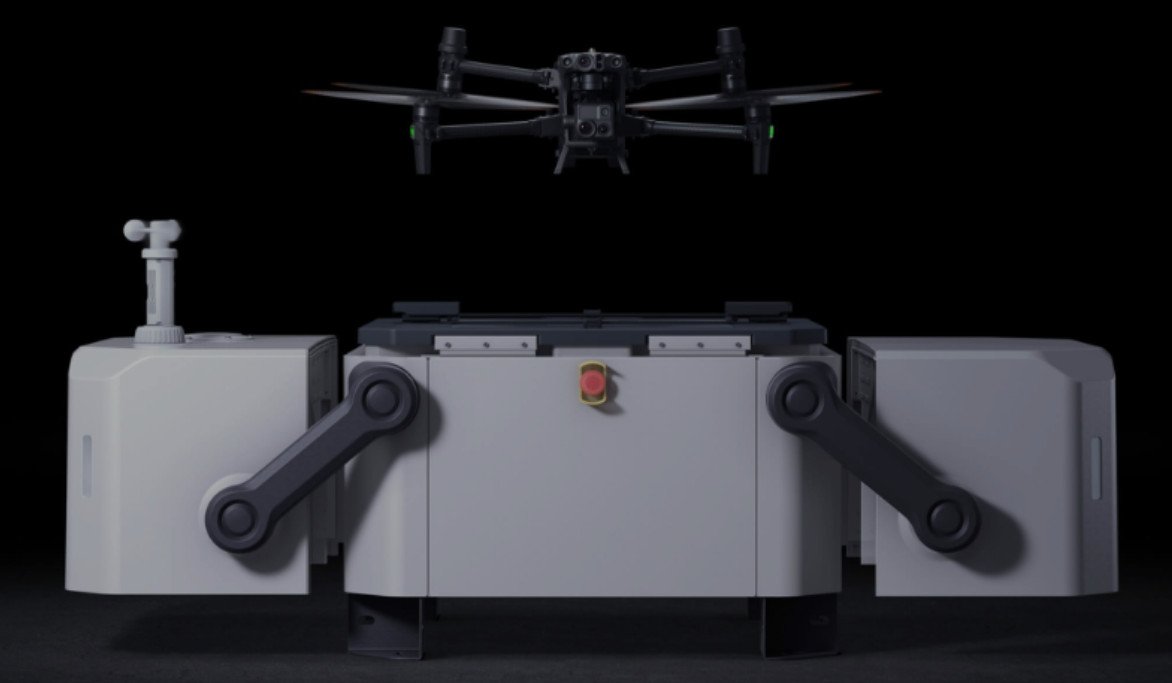
The DJI Matrice 30 is a compact enterprise drone designed for inspection, public safety and industrial operations. It combines a folding weather-resistant aircraft with an integrated multi-camera payload, allowing teams to collect wide-angle and zoom imagery without installing a separate camera gimbal for every mission. The Matrice 30 and Matrice 30T are related models; the 30T adds a thermal camera and should not be treated as the same camera configuration.
Key aircraft specifications
- Weight: 3,770 ± 10 g with two batteries.
- Maximum takeoff weight: 4,069 g.
- Maximum flight time: up to 41 minutes in DJI’s stated test.
- Maximum horizontal speed: 23 m/s.
- Maximum wind resistance: 12 m/s.
- Maximum service ceiling: 5,000 m with standard propellers; higher with the specified high-altitude propellers.
- Protection rating: IP55.
- Satellite systems: GPS, Galileo and BeiDou; GLONASS support is listed when the RTK module is enabled.
Integrated camera system
The standard Matrice 30 includes a 12 MP wide camera and a 48 MP zoom camera. DJI lists 4K video recording for both camera modules. The zoom camera covers an equivalent focal-length range of approximately 113–405 mm, supporting closer inspection from a safer stand-off distance. The Matrice 30T is the thermal-equipped sibling, so buyers who require thermal inspection should compare that model’s sensor package separately.
Positioning and operational use
The platform supports RTK positioning, vision-assisted hovering and obstacle-sensing systems. DJI lists a fixed RTK accuracy of 1 cm + 1 ppm horizontally and 1.5 cm + 1 ppm vertically. The IP55 rating indicates a level of dust and water protection under the manufacturer’s test conditions; it does not mean the aircraft is waterproof or maintenance-free.
Who should consider it?
The Matrice 30 is suited to teams that need an integrated zoom-and-wide camera system in a portable enterprise aircraft. It may be useful for infrastructure inspection, emergency response and site monitoring. Before purchase, check the required camera configuration, RTK needs, battery and charging logistics, software workflow, training and regional service availability.
This product overview is based on DJI’s published specifications, not a hands-on flight test. Flight time, sensing and protection claims are subject to test conditions and operating limits.
Official reference: DJI Matrice 30 Series official specifications.
Drone Specifications
| Brand | DJI |
|---|---|
| Camera | 12 MP wide + 48 MP zoom; 4K video |
| Maximum Flight Time (minutes) | 41 min (maximum, DJI test conditions) minutes |
| Weight (g) | 3770 g |
| Wind Resistance (m/s) | 12 m/s |
| Obstacle Sensing | Omnidirectional vision and infrared sensing |
| Positioning / GPS | GPS, Galileo, BeiDou; GLONASS with RTK module |
| Maximum Speed (m/s) | 23 m/s |
Additional Notes
Matrice 30: 3,770 ±10 g with two batteries; max takeoff weight 4,069 g. Folded dimensions 365 × 215 × 195 mm; unfolded 470 × 585 × 215 mm (excluding propellers). Max service ceiling 5,000 m with standard propellers. RTK fixed accuracy 1 cm + 1 ppm horizontal / 1.5 cm + 1 ppm vertical. IP55.
Specification source: Official source
Official Price (USD)
No public USD price was verified on the manufacturer’s official store during this check.
For enterprise or discontinued models, contact the manufacturer for a current quotation. We do not substitute third-party seller prices.
Price checked: 2026-11-07


Aircraft & Flight
| Maximum horizontal speed | 23 m/s |
|---|---|
| Maximum takeoff weight | 4069 g (EU C2 limit: 3998 g) |
Navigation & Obstacle Sensing
| Supported GNSS systems | GPS + Galileo + BeiDou + GLONASS (GLONASS supported when RTK module is enabled) |
|---|
Operating Conditions & Dimensions
| Maximum wind resistance | 12 m/s |
|---|
MANUFACTURER DATA
Detailed official specifications
Technical figures below are transcribed from the manufacturer documentation linked with this profile. Test figures are maximum or controlled-condition ratings where stated; actual performance varies by configuration and operating conditions. A field is omitted when the cited source does not publish a reliable value.
| Aircraft — Dimensions(unfolded, excl. propellers) | 470×585×215 mm (L×W×H) |
|---|---|
| Aircraft — Dimensions (folded) | 365×215×195 mm (L×W×H) |
| Aircraft — Diagonal Wheelbase | 668 mm |
| Aircraft — Weight (incl. two batteries) | 3770 ± 10 g |
| Aircraft — Max Takeoff Weight | 4069 g |
| Aircraft — Max Takeoff Weight for C2 Certification in EU | 3998 g |
| Aircraft — Operation Frequency[1] | 2.4000-2.4835 GHz; 5.725-5.850 GHz |
| Aircraft — Transmitter Power (EIRP) | 2.4 GHz: <33 dBm (FCC); <20 dBm (CE/SRRC/MIC)5.8 GHz: <33 dBm (FCC/SRRC); <14 dBm (CE) |
| Aircraft — Hovering Accuracy(windless or breezy) | Vertical: ±0.1 m (Vision System enabled); ±0.5 m (N-mode with GPS); ±0.1 m (RTK)Horizontal: ±0.3 m (Vision System enabled); ±1.5 m (N-mode with GPS); ±0.1 m (RTK) |
| Aircraft — RTK Positioning Accuracy(fixed RTK enabled) | 1 cm+1 ppm (horizontal)1.5 cm+1 ppm (vertical) |
| Aircraft — Max Angular Velocity | Pitch: 150°/sec.; Yaw: 100°/sec. |
| Aircraft — Max Pitch Angle | 35° (N-mode and Forward Vision System enabled: 25°) |
| Aircraft — Max Ascent/Descent Speed | 6 m/s, 5 m/s |
| Aircraft — Max Tilt Descent Speed | 7 m/s |
| Aircraft — Max Horizontal Speed | 23 m/s |
| Aircraft — Max Service Ceiling Above Sea Level (without other payload) | 5,000 m (with 1671 propellers)7,000 m (with 1676 propellers) |
| Aircraft — Max Wind Resistance | 12 m/s |
| Aircraft — Max Hover Time [2] | 36 min |
| Aircraft — Max Flight Time[2] | 41 min |
| Aircraft — Motor Model | 3511 |
| Aircraft — Propeller Model | 16711676 High Altitude (not included) |
| Aircraft — Ingress Protection Rating[3] | IP55 |
| Aircraft — GNSS | GPS+Galileo+BeiDou+GLONASS(GLONASS is supported only when RTK module is enabled) |
| Aircraft — Operating Temperature | -20° to 50° C (-4° to 122° F) |
| Aircraft — Class | C2 (EU) |
| Gimbal — Angular Vibration Range | ±0.01° |
| Gimbal — Controllable Range | Pan: ±90°Tilt: -120° to +45° |
| Gimbal — Mechanical Range | Pan: ±105°Tilt: -135° to +60°Roll: ±45° |
| Zoom Camera — Sensor | 1/2" CMOS, Effective pixels: 48M |
| Zoom Camera — Lens | Focal length: 21-75 mm (equivalent: 113-405 mm)Aperture: f/2.8-f/4.2Focus: 5 m to ∞ |
| Zoom Camera — Exposure Compensation | ±3 ev (using 1/3 ev as step length) |
| Zoom Camera — Electronic Shutter Speed | Auto Mode:Photo: 1/8000-1/2 sVideo: 1/8000-1/30 sM Mode:Photo: 1/8000-8 s Video: 1/8000 -1/30 s |
| Zoom Camera — ISO Range | 100-25600 |
| Zoom Camera — Max. Video Resolution | 3840×2160 |
| Zoom Camera — Max Photo Size | 8000×6000 |
| Wide Camera — Sensor | 1/2" CMOS, Effective pixels: 12M |
| Wide Camera — Lens | DFOV: 84°Focal length: 4.5 mm (equivalent: 24 mm)Aperture: f/2.8Focus: 1 m to ∞ |
| Wide Camera — Exposure Compensation | ±3 ev (using 1/3 ev as step length) |
| Wide Camera — Electronic Shutter Speed | Auto Mode: Photo: 1/8000-1/2 s Video: 1/8000-1/30 s M Mode: Photo: 1/8000-8 s Video: 1/8000-1/30 s |
| Wide Camera — ISO Range | 100-25600 |
| Wide Camera — Max. Video Resolution | 3840×2160 |
| Wide Camera — Photo Size | 4000×3000 |
| FPV Camera — Resolution | 1920×1080 |
| FPV Camera — DFOV | 161° |
| FPV Camera — Frame Rate | 30 fps |
| Vision Systems — Obstacle Sensing Range | Forward: 0.6-38 mUpward/Downward/Backward/Sideward: 0.5-33 m |
| Vision Systems — FOV | 65° (H), 50° (V) |
| Vision Systems — Operating Environment | Surfaces with clear patterns and adequate lighting (> 15 lux) |
| Infrared Sensing Systems — Obstacle Sensing Range | 0.1 to 10 m |
| Infrared Sensing Systems — FOV | 30° |
| Infrared Sensing Systems — Operating Environment | Large, diffuse, and reflective obstacles (reflectivity >10%) |
| TB30 Intelligent Flight Battery — Capacity | 5880 mAh |
| TB30 Intelligent Flight Battery — Voltage | 26.1 V |
| TB30 Intelligent Flight Battery — Battery Type | Li-ion 6S |
| TB30 Intelligent Flight Battery — Energy | 131.6 Wh |
| TB30 Intelligent Flight Battery — Net Weight | Approx. 685 g |
| TB30 Intelligent Flight Battery — Operating Temperature | -20° to 50° C (-4° to 122° F) |
| TB30 Intelligent Flight Battery — Storage Temperature | 20° to 30° C (68° to 86° F) |
| TB30 Intelligent Flight Battery — Charging Temperature | -20° to 40° C (-4° to 104° F)(When the temperature is lower than 10° C (50° F), the self-heating function will be automatically enabled. Charging in a low temperature may shorten the lifetime of the battery) |
| TB30 Intelligent Flight Battery — Chemical System | LiNiMnCoO2 |
| Auxiliary Lights — Effective Illumination Distance | 5 m |
| Auxiliary Lights — Illumination Type | 60 Hz, solid glow |
| Remote Controller — Screen | 7.02 inch LCD touchscreen, with a resolution of 1920×1200 pixels, and high brightness of 1200 cd/m2 |
| Remote Controller — Internal Battery | Type: Li-ion (6500 mAh @ 7.2 V)Charge Type: Supports battery station or USB-C charger maximum rated power 65W (max voltage of 20V)Charge Time: 2 hoursChemical System: LiNiCoAIO2 |
| Remote Controller — External Battery(WB37 Intelligent Battery) | Capacity: 4920 mAhVoltage: 7.6 VBattery Type: Li-ionEnergy: 37.39 WhChemical System: LiCoO2 |
| Remote Controller — Operating Time[5] | Internal Battery: Approx. 3 hours 18 minInternal Battery + External Battery: Approx. 6 hours |
| Remote Controller — Ingress Protection Rating[3] | IP54 |
| Remote Controller — GNSS | GPS+Galileo+BeiDou |
| Remote Controller — Operating Temperature | -20° to 50° C (-4° to 122° F) |
| O3 Enterprise — Operating Frequency[1] | 2.4000-2.4835 GHz, 5.725-5.850 GHz |
| O3 Enterprise — Max Transmission Distance (unobstructed, free of interference) | 15 km (FCC); 8 km (CE/SRRC/MIC) |
| O3 Enterprise — Max Transmission Distance (with interference) | Strong Interference (urban landscape, limited line of sight, many competing signals): 1.5-3 km (FCC/CE/SRRC/MIC)Medium Interference (suburban landscape, open line of sight, some competing signals): 3-9 km (FCC); 3-6 km (CE/SRRC/MIC)Weak Interference (open landscape abundant line of sight, few competing signals): 9-15 km (FCC); 6-8 km (CE/SRRC/MIC) |
| O3 Enterprise — Transmitter Power (EIRP) | 2.4 GHz: <33 dBm (FCC); <20 dBm (CE/SRRC/MIC)5.8 GHz: <33 dBm (FCC); <14 dBm (CE); <23 dBm (SRRC) |
| Wi-Fi — Protocol | Wi-Fi 6 |
| Wi-Fi — Operating Frequency[1] | 2.4000-2.4835 GHz; 5.150-5.250 GHz; 5.725-5.850 GHz |
| Wi-Fi — Transmitter Power (EIRP) | 2.4 GHz: <26 dBm (FCC); <20 dBm (CE/ SRRC/MIC)5.1 GHz: <26 dBm (FCC); <23 dBm (CE/ SRRC/MIC)5.8 GHz: <26 dBm (FCC/SRRC); <14 dBm(CE) |
| Bluetooth — Protocol | Bluetooth 5.1 |
| Bluetooth — Operating Frequency | 2.4000-2.4835 GHz |
| Bluetooth — Transmitter Power (EIRP) | <10 dBm |
| BS30 Intelligent Battery Station — Dimensions | 353×267×148 mm |
| BS30 Intelligent Battery Station — Net Weight | 3.95 kg |
| BS30 Intelligent Battery Station — Compatible Battery Type | TB30 Intelligent Flight BatteryWB37 Intelligent Battery |
| BS30 Intelligent Battery Station — Input | 100-240 VAC, 50/60 Hz |
| BS30 Intelligent Battery Station — Output | TB30 Battery Port: 26.1 V, 8.9 A (supported up to two outputs simultaneously)WB37 Intelligent Battery: 8.7 V, 6 A |
| BS30 Intelligent Battery Station — Output Power | 525 W |
| BS30 Intelligent Battery Station — USB-C port | Max. output power of 65 W |
| BS30 Intelligent Battery Station — USB-A port | Max. output power of 10 W (5 V, 2 A) |
| BS30 Intelligent Battery Station — Power Consumption (when not charging battery) | < 8 W |
| BS30 Intelligent Battery Station — Output Power (when warming up battery) | Approx. 30 W |
| BS30 Intelligent Battery Station — Operating Temperature | -20° to 40° C (-4° to 104° F) |
| BS30 Intelligent Battery Station — Ingress Protection Rating[3] | IP55 (with the cover closed properly) |
| BS30 Intelligent Battery Station — Charging Time[6] | Approx. 30 min (charging two TB30 batteries from 20% to 90%)Approx. 50 min (charging two TB30 batteries from 0% to 100%) |
| BS30 Intelligent Battery Station — Protection Features | Anti-Backflow ProtectionShort Circuit ProtectionOver Voltage ProtectionOver Current ProtectionTemperature Protection |
| Other — Footnotes | [1] 5.8 and 5.1GHz frequencies are prohibited in some countries. In some countries, the 5.1GHz frequency is only allowed for use indoors.[2] The maximum flight time and the hover time were tested in a lab environment and is for reference only.[3] This protection rating is not permanent and may reduce over time after long-term use.[4] Infrared temperature measurement accuracy was tested in a lab environment and is for reference only.[5] The maximum operating time was tested in a lab environment and is for reference only.[6] The charging time was tested in a lab environment at room temperature. The value provided should be used for reference only. |
| Other — Guaranteed software updates until | 2024/12/31 |
Source: manufacturer technical specifications and official support documentation. Regional versions, payloads, batteries, firmware and test conditions can change the stated figures. Check the linked source for the applicable configuration.