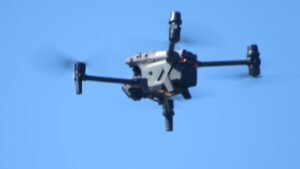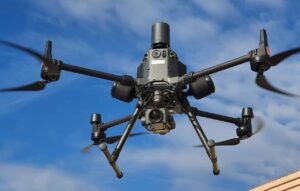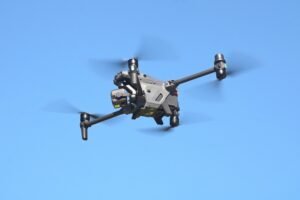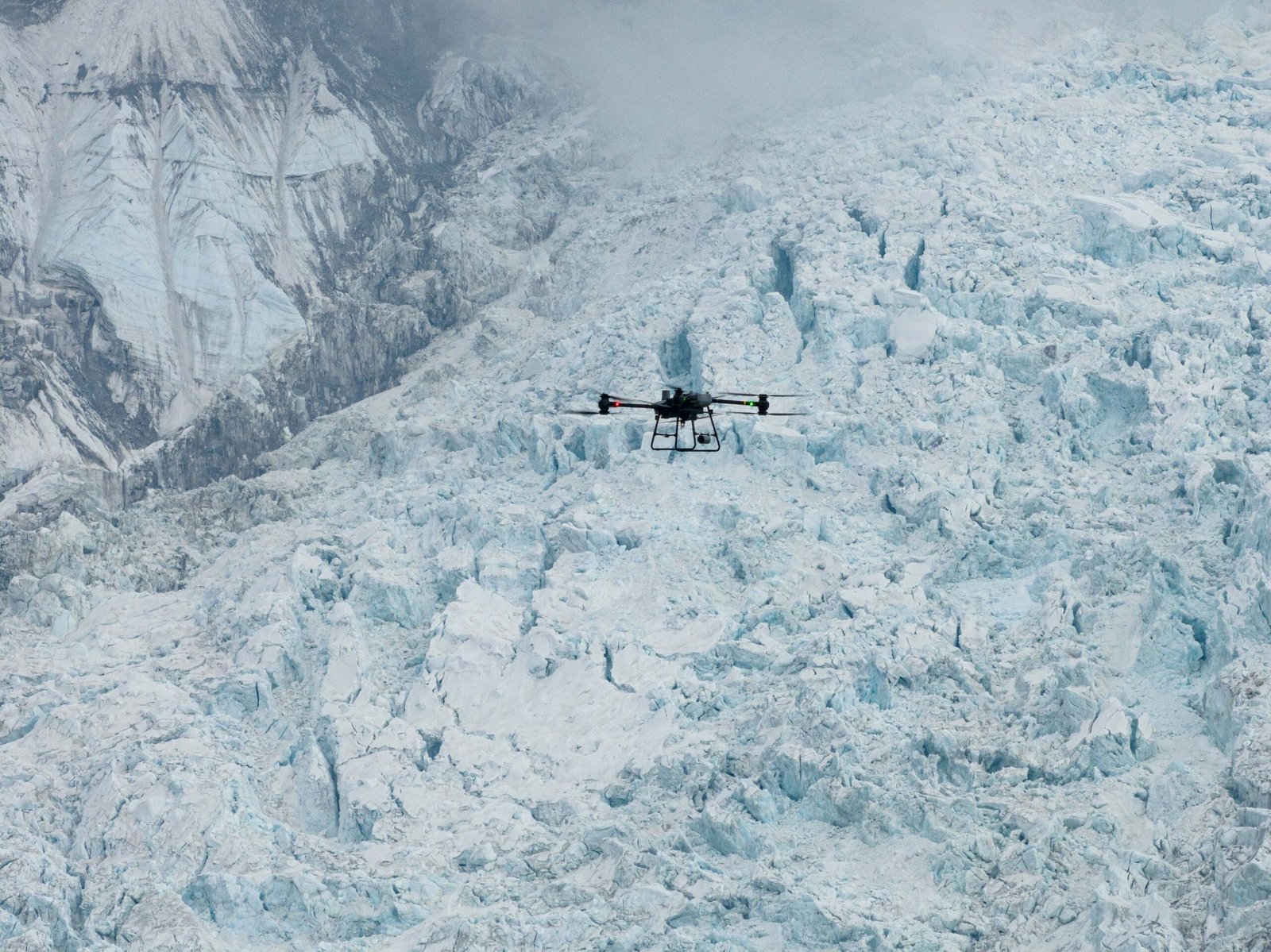

Photo: DJI Europe · View DJI Europe media-use source listing.
DJI / DRONE PROFILE
DJI FlyCart 30
Explore the available technical information for this aircraft, including camera capabilities, flight performance and manufacturer-specific specifications.
DJI FlyCart 30 Review: Heavy-Lift Delivery Drone
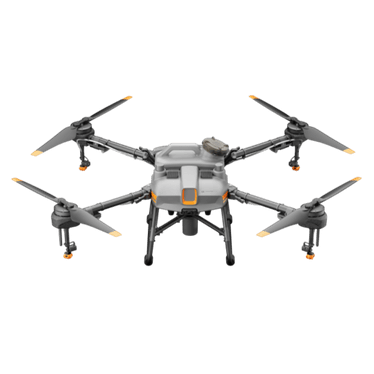
The DJI FlyCart 30 is a cargo aircraft built for delivery operations where ground access is difficult or conventional transport is impractical. It is a specialised logistics platform, not a camera drone. Operators must plan payload, route, weather, landing or winch zones, emergency procedures and the relevant aviation permissions.
Payload and delivery configurations
DJI lists a maximum take-off weight of 95 kg at sea level and supports cargo-case or optional winch configurations. The cargo case is specified for loads up to 40 kg. The winch system supports different payload limits depending on single- or dual-battery operation; check the exact configuration and manual before planning a lift. The aircraft also supports a parachute system as an additional safety component.
Flight endurance and range
DJI publishes different endurance and distance figures for empty and loaded aircraft. In its controlled tests, empty dual-battery hovering endurance is listed at 29 minutes, while the maximum-load figures are substantially lower. Maximum flight distance also changes with payload and battery mode. These test results are not an operational route guarantee; reserve, wind, temperature, elevation and landing requirements reduce practical mission range.
Navigation, sensing and connectivity
The platform combines RTK/GNSS positioning, radar and binocular vision features, ADS-B awareness and DJI O3 image transmission. DJI lists an IP55 rating for the aircraft under specified conditions. Sensing and weather ratings do not make every route safe; operators must assess obstacles, cables, terrain, people, wind and emergency landing options.
Who should consider it?
FlyCart 30 may suit logistics providers, industrial sites and organisations with repeatable delivery routes and the infrastructure to manage heavy batteries and cargo. It requires specialist operational planning, staff training and a suitable legal framework.
Advantages and limitations
- Advantages: heavy-lift capacity, cargo case and winch options, dual-battery operation, RTK support and dedicated delivery software ecosystem.
- Limitations: high acquisition and operating costs, load-sensitive endurance, substantial battery/charging logistics and strict regulatory requirements.
- Before buying: confirm regional edition, payload configuration, battery and charger package, parachute, winch accessories, support and route permissions.
IGIDRONE verdict
FlyCart 30 is designed for organisations that can justify a dedicated aerial logistics system. Evaluate the complete route economics and safety case—not simply the maximum payload or empty-aircraft range.
Manufacturer reference: DJI FlyCart 30 specifications.
Image credit: DJI Europe media library. This image is listed as “Media Use” by DJI Europe on Mynewsdesk. View source and media listing. Image used without edits.
Who should consider DJI FlyCart 30?
Potential buyers include specialist logistics, construction, emergency-response and remote-site operators. The practical value depends on whether aerial delivery solves a real access problem better than ground transport or conventional lifting equipment. Map the route, estimate round-trip energy with reserve, calculate loading and unloading time, and assess how often the aircraft can be used in the operating season. For DJI FlyCart 30, use the current manufacturer load chart for the exact lifting system and route; do not dispatch against the maximum payload alone.
Limitations and trade-offs to understand
Cargo introduces risks that a camera drone does not have: swinging loads, snagging, shifting centre of gravity, dropped objects and people entering the drop zone. The winch or lifting system needs inspection and maintenance, and the ground team needs a clear exclusion zone and emergency procedure. Do not plan flights over uninvolved people unless the operation is specifically authorised and controlled. For DJI FlyCart 30, document the load attachment, release method, exclusion zone and lost-load response before a live delivery.
Alternatives worth comparing
Compare the aircraft with a smaller delivery platform such as DJI FlyCart 30 and with non-aircraft alternatives for the same route. A lower-capacity platform may be easier to deploy for frequent light loads, while a ground vehicle or cable system may be more economical for predictable routes. Compare actual mission cost, not payload headline alone. For DJI FlyCart 30, calculate round-trip battery reserve with route altitude, wind and ground turnaround included.
Pre-purchase and ownership checklist
Before purchase, obtain the current manufacturer load chart and operating manual for the exact lifting or winch configuration. Ask for a demonstration with a representative load and route, confirm local permissions and airspace, and obtain written support arrangements for the aircraft, batteries and cargo system. For DJI FlyCart 30, verify permissions, insurance and crew responsibilities for the actual delivery corridor.
How to use this specification profile
This page is a research-based reference, not a claim that IGIDRONE has independently flight-tested the aircraft. Treat manufacturer maximums as test-condition figures and distinguish standard equipment from optional accessories or regional bundles. Before buying, compare the exact model code, firmware, battery, controller and payload configuration against the current official manual. If a field is marked unknown or is not documented by the manufacturer, do not infer a value from a similarly named variant. For DJI FlyCart 30, use the current manufacturer load chart for the exact lifting system and route; do not dispatch against the maximum payload alone.
Primary manufacturer reference: Open the manufacturer specification or support page. Confirm the current regional documentation before purchase. For DJI FlyCart 30, document the load attachment, release method, exclusion zone and lost-load response before a live delivery.
Editorial update: 8 November 2026. Model availability, prices, software support and regional operating rules can change. Confirm them with the manufacturer, authorised distributor and relevant aviation authority before purchase or flight. For DJI FlyCart 30, calculate round-trip battery reserve with route altitude, wind and ground turnaround included.
Route design and ground-team requirements
Define the cargo hand-off procedure before the first operational flight. Confirm how the load is attached, weighed, checked for movement, released and recovered if the mechanism fails. The team should know who can enter the drop zone and how the site is secured during loading and unloading. For DJI FlyCart 30, use the current manufacturer load chart for the exact lifting system and route; do not dispatch against the maximum payload alone.
Evidence to request from a supplier
Request the latest load chart, cargo-system manual, inspection intervals, battery operating limits, emergency procedures, training syllabus and written service coverage. Have the supplier demonstrate the planned load and route under controlled conditions. Record actual payload, battery reserve, wind, route time and ground handling time. Do not extrapolate a test demonstration to a different altitude, temperature or route without manufacturer guidance. For DJI FlyCart 30, document the load attachment, release method, exclusion zone and lost-load response before a live delivery.
Editorial standard: buyer guidance is based on published manufacturer information and practical ownership considerations. IGIDRONE does not claim independent flight testing unless a page explicitly documents a real test. For DJI FlyCart 30, calculate round-trip battery reserve with route altitude, wind and ground turnaround included.
Drone Specifications
| Brand | DJI |
|---|---|
| Camera | Full HD FPV camera, 1920×1440, 149° diagonal FOV, 30 fps, single-axis gimbal |
| Maximum Video Resolution | FPV live view camera: 1920×1440 at 30 fps |
| Maximum Flight Time (minutes) | Hover endurance: 29 min empty dual-battery; 15 min empty single-battery. At max payload: 18 min with 30 kg dual-battery; 9 min with 40 kg single-battery (controlled tests) |
| Maximum Transmission Range (km) | FCC: 20 km; CE/SRRC/MIC: 8 km (O3 video transmission, unobstructed environments with typical interference) |
| Weight (g) | 42.5 kg without batteries; 65 kg with two DB2000 batteries |
| Battery Capacity (mAh) | DJI DB2000 Intelligent Battery: 38000 mAH |
| Wind Resistance (m/s) | 12 m/s |
| Obstacle Sensing | Forward and rear active phased-array radar plus binocular vision; multidirectional sensing, rear range 1.5–50 m |
| Positioning / GPS | GNSS: GPS, BeiDou, Galileo and QZSS; RTK additionally supports GLONASS |
| Maximum Speed (m/s) | 20 m/s maximum horizontal speed (30 kg payload test); 15 m/s cruising speed |
Additional Notes
DJI FlyCart 30: 42.5 kg without batteries; 65 kg with two DB2000 batteries; max takeoff weight 95 kg. DB2000 battery 38,000 mAh each. Payload up to 30 kg dual-battery / 40 kg single-battery. Max horizontal speed 20 m/s (30 kg test); cruising speed 15 m/s; wind resistance 12 m/s. O3 video transmission 20 km FCC / 8 km CE/SRRC/MIC. Maximum flight distance is a separate metric: empty 28 km dual-battery / 12 km single-battery; full payload 16 km (30 kg dual) / 8 km (40 kg single), controlled no-wind tests at 15 m/s. Hovering endurance and max-payload flight-time figures vary by payload/battery mode.
Specification source: Official source
Last verified: 2026-11-07
Official Price (USD)
No public USD price is displayed. Contact the manufacturer for an official quotation.
No public USD price is published for DJI FlyCart 30. The official DJI United States product page invites purchase enquiries through Contact Us and directs buyers to authorized local DJI dealers for regional availability. Classified as quote-only; no dealer price is used. Checked 2026-11-23.
Contact the manufacturer / official source
Price checked: 2026-11-23
MODEL TECHNICAL RECORD
Detailed Technical Specifications
Manufacturer-specific technical information recorded for this model. Values not present in the source record are not estimated.
Aircraft
| Weight | 42.5 kg (without battery) 65 kg (with two DB2000 batteries) |
|---|---|
| Max Takeoff Weight | 95 kg (with cargo at sea level) |
| Max Diagonal Wheelbase | 2200 mm |
| Dimensions | 1590 x 1900 x 947 mm (LxWxH) (arms unfolded, propellers folded) 2800x3085x947 mm (LxWxH) (arms & propellers unfolded) 1115x760x1027 mm (LxWxH) (arms & propellers folded) |
| Folding Method | Towards body |
| Loadable Battery Quantity | 2 |
| Hovering Endurance (empty weight, with max battery capacity) | 29 mins (dual battery mode) 15 mins (single battery mode) *The data was collected in controlled conditions: zero altitude and a windless environment. For reference only. |
| Hovering Endurance (max weight, with max battery capacity) | 18 mins (30 kg weight load, dual battery mode) 8 mins (40 kg weight load, single battery mode) *The data was collected in controlled conditions: zero altitude and a windless environment. For reference only. |
| Max Flight Distance (empty weight, with max battery capacity) | 28 km (dual battery mode) 12 km (single battery mode) *The data was collected in controlled conditions: zero altitude and windless environment, at a constant speed of 15m/s. For reference only. |
| Max Flight Distance (max weight, with max battery capacity) | 16 km (30 kg weight load, dual battery mode) 8 km (40 kg weight load, single battery mode) *The data was collected in controlled conditions: zero altitude and windless environment, at a constant speed of 15 m/s. For reference only. |
| Max Flight Time (max weight, with max battery capacity) | 18 mins (30 kg weight load, dual battery mode) 9 mins (40 kg weight load, single battery mode) *The data was collected in controlled conditions: zero altitude and a windless environment, at a constant speed of 15 m/s. For reference only. |
| Operating Temperature | -20° to 45° C |
| Ingress Protection Rating | IP55 |
| Hovering Accuracy (with strong GNSS signal) | RTK positioning enabled: ±10 cm horizontal, ±10 cm vertical RTK positioning disabled: ±60 cm horizontal and ±30 cm vertical (radar enabled: ±10 cm) |
| RTK/GNSS Operating Frequency | RTK: GPS L1/L2, Galileo F1/F2, BeiDou B1I/B2I/B3I, Galieo E1/E5b, QZSS L1/L2 GNSS: GPS L1, BeiDou B1I, Galileo F1, Galieo E1, QZSS L1 |
| Max Pitch Angle | 30° |
| Max Ascent Speed | 5 m/s *The data was collected in controlled conditions: zero altitude and a windless environment, with a 30 kg payload. For reference only. |
| Max Descent Speed | 3 m/s (vertical) 5 m/s (tilted) *The data was collected in controlled conditions: zero altitude and a windless environment, with a 30 kg payload. For reference only. |
| Max Horizontal Speed | 20 m/s *The data was collected in controlled conditions: zero altitude and a windless environment, with a 30 kg payload, for reference only. |
| Max Flight Altitude | 6000 m (without payload) |
| Max Wind Speed Resistance | 12 m/s *The data was collected in controlled conditions: zero altitude and a windless environment, with a 30 kg payload. For reference only. |
Propulsion System
| Stator Size | 100x33 mm |
|---|---|
| Motor KV Value | 48 rpm/V |
| Max Motor Power | 4000 W/rotor |
| Propellers Material | Carbon fiber composite |
| Propellers Diameter | 54 inch |
| Propellers Type | Foldable double-blade propellers |
| Main-rotor Diameter | 1375 mm |
| Rotor Quantity | 8 |
LED Light
| Effective Illumination Distance | 10 m |
|---|---|
| Illumination Mode | 60 Hz, automatically switch on according to ambient light |
DJI O3 Image Transmission
| Model | Pigeon (with DDR)-2T4R |
|---|---|
| Signal Effective Distance | 20 km (FCC) 8 km (CE/SRRC/MIC) *Measured with FCC compliance in unobstructed environments with typical interference. Data is for reference only. The actual transmission distance may vary depending on the environment's obstruction and interference conditions. Please pay attention to reminders in the app. |
| O3 Operating Frequency | 2.4000 to 2.4835 GHz 5.725 to 5.850 GHz *Some countries or regions do not support the 5.8 GHz frequency band. Please refer to local flight laws and regulations for details. |
| EIRP | 2.400 GHz - 2.4835 GHz: <33 dBm(FCC) <20 dBm(CE/SRRC/MIC) 5.725 GHz - 5.850 GHz: <33 dBm(FCC) <30 dBm(SRRC) <14 dBm(CE) |
| Data Security | AES-256 |
| ADS-B | Supported |
Forward and Backward Active Phased Array Radar
| Model Number | RD241608RF (forward) RD241608RB (backward) |
|---|---|
| Altitude Detection | Fixed altitude range: 1.5-200 m |
| Rear Obstacle Avoidance | Sensible distance (rear): 1.5-50 m FOV Forward: 360° horizontal, ±45° vertical,±45°upward Backward: ±45° horizontal, 360° vertical Operating conditions: Available during takeoff, landing, and ascending when an obstacle is more than 1.5 m away from the aircraft Safe distance: 3.5 m (distance between the propeller tip and obstacle when the aircraft is hovering after braking) Sensing direction: multi-direction |
Binocular Vision System
| FOV | Horizontal: 90; Vertical: 106° |
|---|---|
| Work Environment Requirements | Normal lighting with clearly textured surfaces |
FPV Camera
| Resolution | 1920x1440 |
|---|---|
| DFOV | 149° |
| Frame Rate | 30fps |
| Type | Full HD FPV Single Axis Gimbal Camera |
| Fill Light | Supported |
Cargo Case
| Dimension | 754x472x385 mm (LxWxH) |
|---|---|
| Inner Space | 573x416x305 mm (LxWxH) |
| Material | EPP plus aluminum alloy frame |
| Weighing Feature | Supported |
| Weight | Approx. 3 kg |
| Load Capacity | 0-40 kg |
Parachute
| Max Payload | ≤ 95 kg |
|---|---|
| Dimension | 300x200x120 mm (LxWxH) |
| Weight | Approx. 2.1 kg |
| Automatic Reaction Time | Approx. 1000 ms |
| Descending Speed | ≤ 6 m/s (at sea level, no wind) |
| Parachute Shape | Square |
| Material | Nylon |
| Surface Area | Approx. 22 ㎡ |
| Minimum Opening Height | 60 m |
| Operating Temperature | -20° to 45° C |
| Ingress Protection Rating | IP55 |
| Mainboard Power-off Battery Life | ≥ 1 hour |
| Memory Card Capacity | Real-time record for 10 flights |
| Buzzar Alarm | Supported |
| Lighting Alarm | Supported |
| Manually Opening | Supported |
| Automatic Opening | Supported |
Winch System (Optional)
| Model | A2EWI-30A |
|---|---|
| Dimension | 252x195x193 mm (LxWxH) |
| Body Weight | 2.5 kg (without clump and couple) |
| Clump Weight | 1.9 kg |
| Couple Weight | 0.6 kg |
| Touchdown Release Feature | Supported |
| Payload Capacity | 5-30 kg (dual battery)5-40 kg (single battery) |
| Cable Length | 20 m |
| Max Retraction Speed | 0.8 m/s |
| Operating Temperature | -20° to 45° C |
| Ingress Protection Rating | IP55 |
| Weighing Function | Supported |
| Cut Cable Protection | Supported |
| Swing Control Feature | Supported |
| Manual Operation | Supported |
| Automatic Operation | Supported |
| Deceleration Protection | Supported |
DJI DB2000 Intelligent Battery
| Model | DB2000 |
|---|---|
| Capacity | 38000 mAH |
| Nominal Voltage | 52.22 V |
| Type | 14S1P |
| Energy | 1984.4 Wh |
| Weight | Approx. 11.3 kg |
| Installation Method | Plug |
| Dimension | 316x152x279 mm (LxWxH) |
| Operating Temperature | -20° to 45° C |
| Charging Rate | 5 to 15° C: 1.0C15 to 45° C: 2.5C |
| Max Charging Power | 5700 W |
| Automatic Heating Feature | Supported (when the battery temperature is below 10° C, pressing and holding the button or turning on the drone will activate the self-heating function. When the battery temperature is below 20° C, connecting the charger to the battery will activate the self-heating function. Charging and discharging in a low-temperature environment may reduce the battery's lifespan) |
DJI C8000 Intelligent Charger
| Model | CHX101-7000 |
|---|---|
| Input | 90-264 V AC |
| Output | 42-59.92 V DC |
| Max Output Power | 7200 W (Dual input)3600 W (Single input) |
| Output Channel Quantity | 2 |
| Protection Feature | The feature is designed to respond to issues including overheating, overvoltage, undervoltage, short circuits, fan stalls, etc. |
| Operating Temperature | -20° to 45° C |
| Charging Security | Connector protection feature available |
Remote Controller
| Type | DJI RC Plus |
|---|---|
| APP | DJI Pilot 2 |
| Operating Frequency | 2.400-2.483 GHz 5.725-5.850 GHz |
| EIRP | 2.400-2.4835 GHz: <33 dBm(FCC) <20 dBm(CE/SRRC/MIC) 5.725-5.850 GHz: <33 dBm(FCC) <23 dBm(SRRC) <14 dBm(CE) |
| Operating Temperature | -20° to 50° C |
| Charging Environment Temperature | 5° to 40° C |
| Built-in Battery Life | 3.3 hours |
| External Battery | 2.7 hours |
| Charging Method | Use a USB-C fast charging charger with a maximum power of no less than 65 W (maximum voltage of 20 V). A DJI portable charger is recommended. |
| Charging Time | 2 hours with built-in battery, 2.5 hours with built-in and external battery (shutdown status according to official charging method) |
| Ingress Protection Rating | IP54 |
| Video Output Interface | HDMI |
| Wi-Fi Protocol | Wi-Fi 6 |
| Wi-Fi Working Frequency | 2.4000-2.4835 GHz 5.150-5.250 GHz 5.725-5.850 GHz |
| Bluetooth Protocol | Bluetooth 5.1 |
| Bluetooth Working Frequency | 2.4000 - 2.4835 GHz |
| EIRP (2) | Not listed in the DJI specification source used for this profile. |
| GNSS | GPS+Galileo+BeiDou |
| Screen | 7.02 inch touch LCD display screen, resolution 1920*1200, brightness 1200 nits |
| Dual Operator Mode | Supported |
Others
| Guaranteed software updates until | 2026/12/31 |
|---|


MANUFACTURER DATA
Detailed official specifications
Technical figures below are transcribed from the manufacturer documentation linked with this profile. Test figures are maximum or controlled-condition ratings where stated; actual performance varies by configuration and operating conditions. A field is omitted when the cited source does not publish a reliable value.
Manufacturer source last checked: 2026-11-07
Evidence type: Official DJI manufacturer specifications / support documentation
Aircraft
| Weight | 42.5 kg (without battery) ; 65 kg (with two DB2000 batteries) |
|---|---|
| Max Takeoff Weight | 95 kg (with cargo at sea level) |
| Max Diagonal Wheelbase | 2200 mm |
| Dimensions | 1590 x 1900 x 947 mm; (LxWxH) (arms unfolded, propellers folded); 2800x3085x947 mm; (LxWxH) (arms & propellers unfolded); 1115x760x1027 mm; (LxWxH) (arms & propellers folded) |
| Folding Method | Towards body |
| Loadable Battery Quantity | 2 |
| Hovering Endurance (empty weight, with max battery capacity) | 29 mins (dual battery mode); 15 mins (single battery mode); ; *The data was collected in controlled conditions: zero altitude and a windless environment. For reference only. |
| Hovering Endurance (max weight, with max battery capacity) | 18 mins (30 kg weight load, dual battery mode); 8 mins (40 kg weight load, single battery mode); ; *The data was collected in controlled conditions: zero altitude and a windless environment. For reference only. |
| Max Flight Distance (empty weight, with max battery capacity) | 28 km (dual battery mode); 12 km (single battery mode); ; *The data was collected in controlled conditions: zero altitude and windless environment, at a constant speed of 15m/s. For reference only. |
| Max Flight Distance (max weight, with max battery capacity) | 16 km (30 kg weight load, dual battery mode); 8 km (40 kg weight load, single battery mode); ; *The data was collected in controlled conditions: zero altitude and windless environment, at a constant speed of 15 m/s. For reference only. |
| Max Flight Time (max weight, with max battery capacity) | 18 mins (30 kg weight load, dual battery mode); 9 mins (40 kg weight load, single battery mode); ; *The data was collected in controlled conditions: zero altitude and a windless environment, at a constant speed of 15 m/s. For reference only. |
| Operating Temperature | -20° to 45° C |
| Ingress Protection Rating | IP55 |
| Hovering Accuracy (with strong GNSS signal) | RTK positioning enabled:; ±10 cm horizontal, ±10 cm vertical; ; RTK positioning disabled:; ±60 cm horizontal and ±30 cm vertical (radar enabled: ±10 cm) |
| RTK/GNSS Operating Frequency | RTK: GPS L1/L2, Galileo F1/F2, BeiDou B1I/B2I/B3I, Galieo E1/E5b, QZSS L1/L2; GNSS: GPS L1, BeiDou B1I, Galileo F1, Galieo E1, QZSS L1 |
| Max Pitch Angle | 30° |
| Max Ascent Speed | 5 m/s; ; *The data was collected in controlled conditions: zero altitude and a windless environment, with a 30 kg payload. For reference only. |
| Max Descent Speed | 3 m/s (vertical); 5 m/s (tilted); ; *The data was collected in controlled conditions: zero altitude and a windless environment, with a 30 kg payload. For reference only. |
| Max Horizontal Speed | 20 m/s; ; *The data was collected in controlled conditions: zero altitude and a windless environment, with a 30 kg payload, for reference only. |
| Max Flight Altitude | 6000 m (without payload) |
| Max Wind Speed Resistance | 12 m/s; ; *The data was collected in controlled conditions: zero altitude and a windless environment, with a 30 kg payload. For reference only. |
Propulsion System
| Stator Size | 100x33 mm |
|---|---|
| Motor KV Value | 48 rpm/V |
| Max Motor Power | 4000 W/rotor |
| Propellers Material | Carbon fiber composite |
| Propellers Diameter | 54 inch |
| Propellers Type | Foldable double-blade propellers |
| Main-rotor Diameter | 1375 mm |
| Rotor Quantity | 8 |
LED Light
| Effective Illumination Distance | 10 m |
|---|---|
| Illumination Mode | 60 Hz, automatically switch on according to ambient light |
DJI O3 Image Transmission
| Model | Pigeon (with DDR)-2T4R |
|---|---|
| Signal Effective Distance | 20 km (FCC); 8 km (CE/SRRC/MIC); ; *Measured with FCC compliance in unobstructed environments with typical interference. Data is for reference only. The actual transmission distance may vary depending on the environment's obstruction and interference conditions. Please pay attention to reminders in the app. |
| O3 Operating Frequency | 2.4000 to 2.4835 GHz; 5.725 to 5.850 GHz; ; *Some countries or regions do not support the 5.8 GHz frequency band. Please refer to local flight laws and regulations for details. |
| EIRP | 2.400 GHz - 2.4835 GHz: ; <33 dBm(FCC); <20 dBm(CE/SRRC/MIC); ; 5.725 GHz - 5.850 GHz:; <33 dBm(FCC); <30 dBm(SRRC); <14 dBm(CE) |
| Data Security | AES-256 |
| ADS-B | Supported |
Forward and Backward Active Phased Array Radar
| Model Number | RD241608RF (forward); RD241608RB (backward) |
|---|---|
| Altitude Detection | Fixed altitude range: 1.5-200 m |
| Rear Obstacle Avoidance | Sensible distance (rear): 1.5-50 m; FOV Forward: 360° horizontal, ±45° vertical,±45°upward; Backward: ±45° horizontal, 360° vertical; Operating conditions: Available during takeoff, landing, and ascending when an obstacle is more than 1.5 m away from the aircraft; Safe distance: 3.5 m (distance between the propeller tip and obstacle when the aircraft is hovering after braking); Sensing direction: multi-direction |
Binocular Vision System
| FOV | Horizontal: 90; Vertical: 106° |
|---|---|
| Work Environment Requirements | Normal lighting with clearly textured surfaces |
FPV Camera
| Resolution | 1920x1440 |
|---|---|
| DFOV | 149° |
| Frame Rate | 30fps |
| Type | Full HD FPV Single Axis Gimbal Camera |
| Fill Light | Supported |
Cargo Case
| Dimension | 754x472x385 mm (LxWxH) |
|---|---|
| Inner Space | 573x416x305 mm (LxWxH) |
| Material | EPP plus aluminum alloy frame |
| Weighing Feature | Supported |
| Weight | Approx. 3 kg |
| Load Capacity | 0-40 kg |
Parachute
| Max Payload | ≤ 95 kg |
|---|---|
| Dimension | 300x200x120 mm (LxWxH) |
| Weight | Approx. 2.1 kg |
| Automatic Reaction Time | Approx. 1000 ms |
| Descending Speed | ≤ 6 m/s (at sea level, no wind) |
| Parachute Shape | Square |
| Material | Nylon |
| Surface Area | Approx. 22 ㎡ |
| Minimum Opening Height | 60 m |
| Operating Temperature | -20° to 45° C |
| Ingress Protection Rating | IP55 |
| Mainboard Power-off Battery Life | ≥ 1 hour |
| Memory Card Capacity | Real-time record for 10 flights |
| Buzzar Alarm | Supported |
| Lighting Alarm | Supported |
| Manually Opening | Supported |
| Automatic Opening | Supported |
Winch System (Optional)
| Model | A2EWI-30A |
|---|---|
| Dimension | 252x195x193 mm (LxWxH) |
| Body Weight | 2.5 kg (without clump and couple) |
| Clump Weight | 1.9 kg |
| Couple Weight | 0.6 kg |
| Touchdown Release Feature | Supported |
| Payload Capacity | 5-30 kg (dual battery)5-40 kg (single battery) |
| Cable Length | 20 m |
| Max Retraction Speed | 0.8 m/s |
| Operating Temperature | -20° to 45° C |
| Ingress Protection Rating | IP55 |
| Weighing Function | Supported |
| Cut Cable Protection | Supported |
| Swing Control Feature | Supported |
| Manual Operation | Supported |
| Automatic Operation | Supported |
| Deceleration Protection | Supported |
DJI DB2000 Intelligent Battery
| Model | DB2000 |
|---|---|
| Capacity | 38000 mAH |
| Nominal Voltage | 52.22 V |
| Type | 14S1P |
| Energy | 1984.4 Wh |
| Weight | Approx. 11.3 kg |
| Installation Method | Plug |
| Dimension | 316x152x279 mm (LxWxH) |
| Operating Temperature | -20° to 45° C |
| Charging Rate | 5 to 15° C: 1.0C15 to 45° C: 2.5C |
| Max Charging Power | 5700 W |
| Automatic Heating Feature | Supported (when the battery temperature is below 10° C, pressing and holding the button or turning on the drone will activate the self-heating function. When the battery temperature is below 20° C, connecting the charger to the battery will activate the self-heating function. Charging and discharging in a low-temperature environment may reduce the battery's lifespan) |
DJI C8000 Intelligent Charger
| Model | CHX101-7000 |
|---|---|
| Input | 90-264 V AC |
| Output | 42-59.92 V DC |
| Max Output Power | 7200 W (Dual input)3600 W (Single input) |
| Output Channel Quantity | 2 |
| Protection Feature | The feature is designed to respond to issues including overheating, overvoltage, undervoltage, short circuits, fan stalls, etc. |
| Operating Temperature | -20° to 45° C |
| Charging Security | Connector protection feature available |
Remote Controller
| Type | DJI RC Plus |
|---|---|
| APP | DJI Pilot 2 |
| Operating Frequency | 2.400-2.483 GHz; 5.725-5.850 GHz |
| EIRP | <10 dBm |
| Operating Temperature | -20° to 50° C |
| Charging Environment Temperature | 5° to 40° C |
| Built-in Battery Life | 3.3 hours |
| External Battery | 2.7 hours |
| Charging Method | Use a USB-C fast charging charger with a maximum power of no less than 65 W (maximum voltage of 20 V). A DJI portable charger is recommended. |
| Charging Time | 2 hours with built-in battery, 2.5 hours with built-in and external battery (shutdown status according to official charging method) |
| Ingress Protection Rating | IP54 |
| Video Output Interface | HDMI |
| Wi-Fi Protocol | Wi-Fi 6 |
| Wi-Fi Working Frequency | 2.4000-2.4835 GHz; 5.150-5.250 GHz; 5.725-5.850 GHz |
| Bluetooth Protocol | Bluetooth 5.1 |
| Bluetooth Working Frequency | 2.4000 - 2.4835 GHz |
| GNSS | GPS+Galileo+BeiDou |
| Screen | 7.02 inch touch LCD display screen, resolution 1920*1200, brightness 1200 nits |
| Dual Operator Mode | Supported |
Others
| Guaranteed software updates until | 2026/12/31 |
|---|
Source: manufacturer technical specifications and official support documentation. Regional versions, payloads, batteries, firmware and test conditions can change the stated figures. Check the linked source for the applicable configuration.
Related Dji drones
Explore other published models from the same manufacturer.