DJI / DRONE PROFILE
DJI Avata 2
Explore the available technical information for this aircraft, including camera capabilities, flight performance and manufacturer-specific specifications.
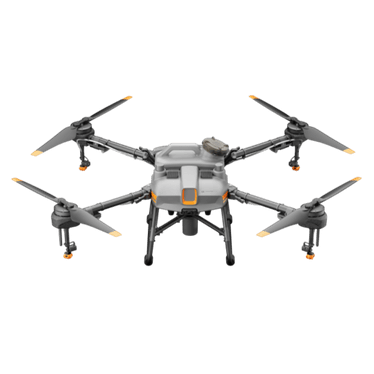
Image credit: DJI Europe media library.
Price & Where to Buy
$849 USD
Package: DJI Avata 2 Fly More Combo (Single Battery)
Official listing currently marked out of stock Out of stock
Check price: DJI Avata 2 Fly More Combo (Single Battery)
Affiliate disclosure: IGIDRONE may earn a commission from qualifying purchases at no extra cost to you. Price checked 2026-11-05. Prices and package availability can change; confirm the selected configuration before ordering.
DJI Avata 2 Review: Specs, Camera, Flight Performance and Buying Guide
The DJI Avata 2 is an FPV (first-person-view) drone designed for immersive flying and dynamic, close-to-the-action video. Its integrated propeller guards, motion-controller support and wide-angle camera make it different from conventional camera drones such as the DJI Air and Mavic series. This guide explains the manufacturer-published specifications and practical points buyers should understand. It is based on official product information, not claimed hands-on testing.
Check the official DJI package:
Affiliate disclosure: IGIDRONE may earn a commission if you buy through this link, at no additional cost to you. This link is for the Fly More Combo (Single Battery), not a drone-only package. Product details, price and availability can change.
Design and FPV flying experience
Avata 2 has a compact cinewhoop-style design with built-in propeller guards. It is intended to be flown while viewing the live camera feed through compatible DJI goggles. DJI states that the aircraft cannot be used without goggles. Buyers should include the cost and compatibility of goggles and a suitable controller when comparing packages.
The aircraft supports Normal, Sport and Manual flight modes. Manual mode is intended for experienced FPV pilots and requires a compatible DJI FPV Remote Controller. New pilots should learn in a suitable open area, use beginner settings and practise the controls before attempting complex manoeuvres.
Camera and video quality
The camera uses a 1/1.3-inch sensor with 12 MP effective pixels, a 155-degree field of view and an f/2.8 lens. DJI lists 4K recording at up to 60 frames per second in 4:3, and up to 100 fps in 16:9 for slow-motion footage. It also supports 10-bit D-Log M, H.264/H.265 recording and electronic stabilisation options including RockSteady 3.0+ and HorizonSteady.
This combination is aimed at immersive FPV footage rather than traditional aerial photography. The very wide field of view creates an energetic perspective, while the single-axis mechanical tilt gimbal works with electronic stabilisation. Buyers who mainly need conventional landscape photography, long-range mapping or a multi-camera zoom system should compare other DJI models too.
Flight time, speed and range
DJI rates the maximum flight time at approximately 23 minutes under controlled test conditions. Its listed maximum flight distance is 13 km, also measured under controlled conditions. These are manufacturer test figures, not a recommended distance or a guarantee of real-world performance. Wind, temperature, battery condition, flight style, signal conditions and the need to keep a safe return reserve all affect usable flight time and distance.
The DJI O4 video transmission system is rated for up to 13 km under the FCC standard and up to 10 km under CE, SRRC and MIC standards in unobstructed, interference-free conditions. Maximum flight distance and video-transmission distance are different measurements. Neither figure overrides local flight rules, visual-line-of-sight requirements or safe operating limits.
Positioning, obstacle sensing and safety
Important: DJI Avata 2 does not have obstacle avoidance. DJI specifies downward and backward visual positioning, which can help with positioning in supported conditions; these sensors do not detect and avoid obstacles in the way that an obstacle-avoidance system does. Do not rely on them to prevent collisions. The aircraft’s propeller guards are a physical design feature, not a substitute for safe flight planning.
Check the flight area for people, trees, wires, buildings and other hazards. Follow local aviation rules, maintain appropriate separation and use the return-to-home and battery warnings carefully.
Key DJI Avata 2 specifications
- Takeoff weight: approximately 377 g
- Dimensions: 185 × 212 × 64 mm
- Camera: 1/1.3-inch sensor, 12 MP effective pixels, 155° field of view, f/2.8
- Video: 4K/60 fps (4:3); 4K/100 fps (16:9); 10-bit D-Log M
- Stabilisation: RockSteady 3.0+ and HorizonSteady; single-axis mechanical tilt gimbal
- Maximum flight time: approximately 23 minutes (manufacturer test figure)
- Maximum flight distance: 13 km (manufacturer test figure)
- Video transmission: DJI O4; up to 13 km FCC / 10 km CE, SRRC and MIC under specified conditions
- Wind resistance: 10.7 m/s (Level 5)
- Internal storage: 46 GB, with microSD card support
- Positioning: GPS, Galileo and BeiDou; downward and backward visual positioning
- Obstacle avoidance: not supported
Who should consider the DJI Avata 2?
Avata 2 is worth considering if you specifically want FPV flying, immersive goggles-based control and wide-angle action footage. It may suit experienced FPV pilots, creators producing dynamic movement shots and beginners who are prepared to learn with the recommended equipment and safety precautions.
It is less suitable if you want a simple point-and-shoot camera drone, automated obstacle avoidance, optical zoom or the longest possible flight time. In those cases, compare DJI’s Air or Mavic models before choosing.
Advantages and limitations
- Advantages: 1/1.3-inch camera sensor; 4K video with high-frame-rate options; 10-bit D-Log M; integrated propeller guards; 46 GB internal storage; DJI O4 transmission.
- Limitations: no obstacle avoidance; goggles are required; flight time is shorter than many conventional camera drones; the wide-angle FPV look is not ideal for every filming style.
- Before buying: check which goggles, controller, batteries, charging hub and accessories are included in the exact package sold in your region.
DJI Avata 2 vs DJI Avata
Compared with the original Avata, Avata 2 brings a larger 1/1.3-inch camera sensor, 4K/60 fps HDR recording, 10-bit D-Log M, downward and backward visual positioning, DJI O4 transmission and a manufacturer-rated maximum flight time of approximately 23 minutes. The original Avata uses a 1/1.7-inch sensor and DJI O3+ transmission. The newer model still does not provide obstacle avoidance, so the positioning sensors should not be mistaken for collision prevention.
IGIDRONE verdict
The DJI Avata 2 is a specialised FPV drone, not an all-purpose replacement for a conventional camera drone. Its strongest reasons to buy are immersive flight, a wide-angle 4K camera and the flexibility of D-Log M footage. Its key trade-offs are the need for compatible goggles, limited flight time compared with many camera drones and the absence of obstacle avoidance. Choose it when FPV is the experience you want, and compare the complete package rather than the aircraft price alone.
Official manufacturer references: DJI Avata 2 technical specifications · DJI Avata 2 FAQ · DJI Avata 2 support.
Check the DJI Avata 2 package
See the current package details, regional availability and price directly with DJI:
Affiliate disclosure: IGIDRONE may receive a commission from qualifying purchases. This does not increase the price you pay.
Drone Specifications
| Brand | DJI |
|---|---|
| Camera | 1/1.3-inch image sensor, 12 MP effective pixels; 155° FOV, f/2.8 lens |
| Maximum Video Resolution | 4K up to 100 fps (16:9); 4K up to 60 fps (4:3); H.264/H.265, up to 130 Mbps |
| Maximum Flight Time (minutes) | Approx. 23 min maximum flight time (DJI controlled test conditions); approx. 21 min maximum hovering time on the official specs page minutes |
| Maximum Transmission Range (km) | 13 km maximum flight distance (controlled test conditions) km |
| Weight (g) | Approx. 377 g g |
| Wind Resistance (m/s) | 10.7 m/s (Level 5) m/s |
| Obstacle Sensing | No obstacle avoidance; downward and backward visual positioning only |
| Positioning / GPS | GPS + Galileo + BeiDou |
| Maximum Speed (m/s) | 27 m/s maximum horizontal speed in Manual mode (EU limit: 19 m/s); 16 m/s Sport; 8 m/s Normal m/s |
Additional Notes
FPV drone requiring compatible DJI goggles and controller. Downward/backward visual positioning is not obstacle avoidance. Maximum flight time and distance are controlled-test figures; real-world results vary.
Specification source: Official source
Last verified: 2026-11-04
Official Price (USD)
$849.00 USD
Listed configuration: DJI Avata 2 Fly More Combo (Single Battery)
Official store status: Out of stock at the time of checking.
This is a bundle price, not a drone-only price; official US store marks it out of stock.
Check price at the official store
Price checked: 2026-11-05
MODEL TECHNICAL RECORD
Detailed Technical Specifications
Manufacturer-specific technical information recorded for this model. Values not present in the source record are not estimated.
Aircraft
| Takeoff Weight | Approx. 377 g |
|---|---|
| Dimensions | 185×212×64 mm (L×W×H) |
| Max Ascent Speed | 6 m/s (Normal mode) 9 m/s (Sport mode) |
| Max Descent Speed | 6 m/s (Normal mode) 9 m/s (Sport mode) |
| Max Horizontal Speed | 8 m/s (Normal mode) 16 m/s (Sport mode) 27 m/s (Manual mode)* Measured in a controlled wind tunnel environment under conditions equivalent to windless operation and sea-level altitude, with the aircraft ascending vertically to a height of 1.5 meters above the ground. Actual experience may vary depending on the environment, usage, and firmware version. * No faster than 19 m/s with the Manual mode in the EU regions. |
| Max Takeoff Altitude | 5000 m Measured in a windless environment when taking off from an altitude of 5000 m and ascending vertically by 500 m, using Sport mode, and from 100% battery level until 20%. Data is for reference only. Always pay attention to reminders on the goggles' screens during your flight. |
| Max Flight Time | Approx. 23 mins Measured in a controlled wind tunnel environment under conditions equivalent to windless operation and sea-level altitude, with the aircraft flying forward at a constant speed of 21.6 kph, Obstacle Avoidance Action set to Brake, and the camera in Photo mode, until a forced landing due to battery depletion. Actual experience may vary depending on the environment, usage, and firmware version. |
| Max Hovering Time | Approx. 21 mins Measured when hovering in a windless environment at sea level, with camera parameters set to 1080p/30fps, video mode off, and from 100% battery level until 0%. Data is for reference only. Always pay attention to reminders on the goggles' screens during your flight. |
| Max Flight Distance | 13 km Measured in a controlled wind tunnel environment under conditions equivalent to windless operation and sea-level altitude, with the aircraft flying forward at a constant speed of 43.2 kph, Obstacle Avoidance Action set to Brake, and the camera in Photo mode, until a forced landing due to battery depletion. Actual experience may vary depending on the environment, usage, and firmware version. |
| Max Wind Speed Resistance | 10.7 m/s (Level 5) |
| Operating Temperature | -10° to 40° C (14° to 104° F) |
| Global Navigation Satellite System | GPS + Galileo + BeiDou |
| Hovering accuracy range | Vertical: ±0.1 m (with vision positioning) ±0.5 m (with GNSS positioning) Horizontal: ±0.3 m (with vision positioning) ±1.5 m (with GNSS positioning) |
| Internal Storage | 46 GB |
| Class | C1 (EU) |
Camera
| Image Sensor | 1/1.3-inch image sensor Effective Pixels: 12 MP |
|---|---|
| Lens | FOV: 155° Format Equivalent: 12 mm Aperture: f/2.8 Focus: 0.6 m to ∞ |
| ISO Range | 100-25600 (Auto) 100-25600 (Manual) |
| Shutter Speed | Video: 1/8000-1/30 s Photo: 1/8000-1/50 s |
| Max Image Size | 4000×2256 (16∶9) 4000×3000 (4∶3) |
| Still Photography Mode | Single shot |
| Photo Format | JPEG |
| Video Resolution | 4K (4∶3): 3840×2880@30/50/60fps 4K (16∶9): 3840×2160@30/50/60/100fps 2.7K (4∶3): 2688×2016@30/50/60fps 2.7K (16∶9): 2688×1512@30/50/120fps 1080p (4∶3): 1440×1080@30/50/120fps 1080p (16∶9): 1920×1080@30/50/120fps |
| Video Format | MP4 (H.264/H.265) |
| Max Video Bitrate | 130 Mbps |
| Supported File System | exFAT |
| Color Mode | Standard D-Log M |
| Camera FOV | Supports normal mode, wide-angle mode, and ultra-wide-angle mode. |
| EIS | Supports RockSteady 3.0+ and HorizonSteady Can be disabled* * When stabilization is turned off, footage captured with the wide-angle view supports offline stabilization Gyroflow. |
Gimbal
| Stabilization | Single-axis mechanical gimbal (tilt) |
|---|---|
| Mechanical Range | Tilt: -95° to 90° |
| Controllable Range | Tilt: -85° to 80° |
| Max Control Speed (tilt) | 100°/s |
| Angular Vibration Range | ±0.01° |
| Electronic Roll Axis | Real-time screen correction is unavailable during recording, but can be applied to the footage recorded on the drone. |
Sensing
| Sensing Type | Downward and backward visual positioning |
|---|---|
| Downward | ToF Effective Measurement Height: 10 m Precise Hovering Range: 0.3-10 m Measurement Range: 0.3-20 m FOV: Horizontal 78°, Vertical 78° |
| Backward | Measurement Range: 0.5-20 m FOV: Horizontal 78°, Vertical 78° |
| Operating Environment | Diffuse reflective surfaces with discernible patterns, diffuse reflectivity > 20% (such as concrete pavement) Adequate lighting (lux > 15, normal indoor lighting conditions) |
Video Transmission
| Video Transmission System | O4 |
|---|---|
| Live View Quality | 1080p@30/50/60/100fps |
| Operating Frequency | 2.400-2.4835 GHz 5.170-5.250 GHz* 5.725-5.850 GHz* * 5.170-5.250 GHz and 5.725-5.850 GHz can be used only in countries and regions where permitted by local laws and regulations. |
| Transmitter Power (EIRP) | 2.4 GHz: <33 dBm (FCC) <20 dBm (CE/SRRC/MIC) 5.1 GHz: < 23 dBm (CE) 5.8 GHz: <33 dBm (FCC) <30 dBm (SRRC) < 14 dBm (CE) |
| Communication Bandwidth | Max 60 MHz |
| Max Transmission Distance (unobstructed, free of interference) | FCC: 13 km (subject to the aircraft's max flight distance) CE: 10 km SRRC: 10 km MIC: 10 km Measured in an unobstructed outdoor environment free of interference. The above data shows the farthest communication range for one-way, non-return flights under each standard. Always pay attention to RTH reminders on the goggles screen during your flight. |
| Max Transmission Distance (unobstructed, with interference) | Strong Interference: Urban landscape, approx. 1.5-4 km Medium Interference: Suburban landscape, approx. 4-10 km Low Interference: Suburb/seaside, approx. 10-13 km Data tested under FCC standard in unobstructed environments with typical interference. Used for reference purposes only and provides no guarantee for actual transmission distance. |
| Max Transmission Distance (obstructed, with interference) | Low Interference and Obstructed by Buildings: approx. 0-0.5 km Low Interference and Obstructed by Trees: approx. 0.5-3 km Data tested under FCC standard in environments with typical low interference. Used for reference purposes only and provides no guarantee for actual transmission distance. |
| Max Download Speed | Wi-Fi: 30 MB/s* * Measured in a laboratory environment with little interference in countries/regions that support both 2.4 GHz and 5.8 GHz. Download speeds may vary depending on the actual conditions. |
| Lowest Latency | With DJI Goggles 3: 1080p/100fps Video Transmission Quality: 24 ms 1080p/60fps Video Transmission Quality: 40 ms |
| Max Video Bitrate | 60Mbps |
| Antennas | 4 antennas, 2T4R |
Wi-Fi
| Protocol | 802.11a/b/g/n/ac |
|---|---|
| Operating Frequency | 2.400-2.4835 GHz 5.725-5.850 GHz |
| Transmitter Power (EIRP) | 2.4 GHz: <20 dBm (FCC/CE/SRRC/MIC) 5.8 GHz: <20 dBm (FCC/SRRC) < 14 dBm (CE) |
Bluetooth
| Protocol | Bluetooth 5.0 |
|---|---|
| Operating Frequency | 2.400-2.4835 GHz |
| Transmitter Power (EIRP) | Not listed in the DJI specification source used for this profile. |
Intelligent Flight Battery
| Capacity | 2150 mAh |
|---|---|
| Weight | Approx. 145 g |
| Standard Voltage | 14.76 V |
| Max Charging Voltage | 17 V |
| Battery Type | Li-ion |
| Energy | 31.7 Wh@0.5C |
| Charging Temperature | 5° to 40° C (41° to 104° F) |
| Charging Time | With Charging Hub (60W max charging power): From 0 to 100%: approx. 45 min From 10 to 90%: approx. 30 min Directly Charging the Drone (30 W max charging power): From 0 to 100%: approx. 88 min From 10 to 90%: approx. 60 min |
Charger
| Recommended Charger | DJI 65W Portable Charger DJI 65W Car Charger USB Power Delivery charger |
|---|
Battery Charging Hub
| Input | 5-20 V, max 3 A |
|---|---|
| Output (power accumulation) | Max 65 W |
| Output (charging) | Max 17 V |
| Output (USB) | 5 V, 2 A |
| Charging Type | Three batteries charged in sequence. |
| Compatibility | DJI Avata 2 Intelligent Flight Battery |
Storage
| Recommended microSD Cards | Kingston CANVAS Go! Plus 64GB U3 A2 V30 microSDXC Kingston CANVAS Go! Plus 128GB U3 A2 V30 microSDXC Kingston CANVAS Go! Plus 256GB U3 A2 V30 microSDXC Kingston CANVAS Go! Plus 512GB U3 A2 V30 microSDXC Lexar Professional 1066x 64GB U3 A2 V30 microSDXC Lexar Professional 1066x 128GB U3 A2 V30 microSDXC Lexar Professional 1066x 256GB U3 A2 V30 microSDXC Lexar Professional 1066x 512GB U3 A2 V30 microSDXC |
|---|
DJI FPV Remote Controller 3
| Max Operating Time | Approx. 10 hours |
|---|---|
| Operating Temperature | -10° to 40° C (14° to 104° F) |
| Charging Temperature | 0° to 50° C (32° to 122° F) |
| Charging Time | 2 hours |
| Charging Type | 5 V, 2 A |
| Battery Capacity | 2600 mAh |
| Weight | Approx. 240 g |
| Dimensions | 165×119×62 mm (L×W×H) |
| Operating Frequency | 2.400-2.4835 GHz |
| Transmitter Power (EIRP) | 2.400 GHz: <26 dBm (FCC) <20 dBm (CE/SRRC/MIC) |
Others
| Guaranteed software updates until | 2026/12/31 |
|---|