DJI / DRONE PROFILE
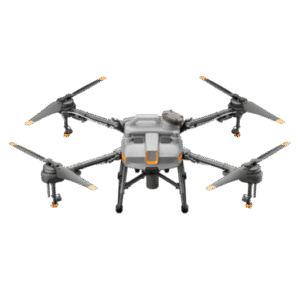
DJI Agras T40
Explore the available technical information for this aircraft, including camera capabilities, flight performance and manufacturer-specific specifications.
DJI Agras T40 Review: Large-Capacity Agricultural Spraying and Spreading
The DJI Agras T40 is an agricultural application aircraft designed for professional crop spraying and granular spreading. It is not a general-purpose camera drone. Its payload capacity, ground logistics, chemical handling, trained operators and local aviation and agricultural rules all matter as much as the aircraft itself.
Spraying and spreading systems
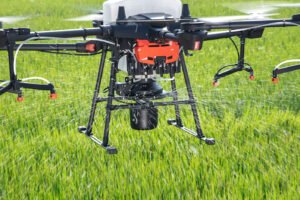
DJI lists a 40 L spraying tank with a full-load operating payload of 40 kg, alongside a spreading system with a 70 L tank and a listed internal load up to 50 kg. The dual atomised spraying system uses two sprinklers, with droplet size and effective swath depending on nozzle, altitude, speed, liquid and field conditions. The spreading system is designed for compatible dry particles; verify material size and flow settings in the manual.
Aircraft and sensing
The T40 is a coaxial octocopter with radar and binocular vision features to support terrain following and obstacle awareness. DJI lists a maximum wind resistance of 6 m/s and a configurable maximum flight radius of 2,000 m. The published hovering times vary substantially with load: the manufacturer lists 18 minutes without payload at the specified take-off weight, and shorter times with a full spray or spreading load. These are controlled test figures, not a substitute for field planning.
Operational planning
Professional use requires calibrated application rates, correct chemical labels, weather checks, buffer zones, drift management, battery rotation, charging capacity, cleaning and maintenance procedures. Do not use a generalised tank capacity as a recommendation for any particular crop or chemical.
Advantages and limitations
- Advantages: high-volume spraying, granular spreading capability, terrain-following and radar/vision assistance.
- Limitations: substantial operating and transport infrastructure, load-dependent endurance, and strict requirements for trained operators and legal authorisations.
- Before buying: confirm regional model version, tank and spreader configuration, batteries, charger/generator, spare parts, software and local support.
IGIDRONE verdict
Agras T40 is designed for professional agricultural operations that can make use of its large payload and application systems. Assess it as a complete farm-operations solution, including trained staff, charging, maintenance and regulatory compliance.
Manufacturer reference: DJI Agras T40 specifications.
Who should consider DJI Agras T40?
A grower or spraying service should compare the aircraft against the actual farm layout and treatment plan. Irregular plots, trees, power lines, slopes, small access roads and nearby people can change the safe operating pattern. Request a supervised demonstration using the intended application material and confirm the equipment configuration before committing. For DJI Agras T40, validate application settings using the intended crop, material, nozzle or spreader and field layout rather than a generic demonstration.
Limitations and trade-offs to understand
Before comparing headline capacity, verify whether the listed tank or payload refers to liquid spraying or granular spreading. These are different configurations and may have different take-off masses, flow systems and operating limits. Check regional availability of the correct spreading or spraying kit, spare parts and qualified service. For DJI Agras T40, keep an operating log of weather, payload, settings, field area and refill time so that productivity claims can be checked.
Alternatives worth comparing
Compare other agricultural aircraft in the same operating class, such as the DJI Agras T20P, T25P, T40 or T50 where relevant, and consider whether a multispectral mapping platform such as the DJI Mavic 3 Multispectral is a better fit for crop monitoring rather than application. These are different mission types; they are not interchangeable. For DJI Agras T40, confirm the exact agricultural kit and regional support route before buying; aircraft-only specifications do not describe a complete spraying operation.
Pre-purchase and ownership checklist
Ask the supplier for the exact nozzle/spreader configuration, supported materials, calibration procedure, battery cycle expectations, charging plan, service response time and operator training. Request written confirmation of local registration, pilot qualification, agricultural chemical approvals and insurance obligations. Record the test conditions behind any productivity claim. For DJI Agras T40, plan cleaning, battery storage and chemical-handling procedures as part of the ownership cost.
How to use this specification profile
This page is a research-based reference, not a claim that IGIDRONE has independently flight-tested the aircraft. Treat manufacturer maximums as test-condition figures and distinguish standard equipment from optional accessories or regional bundles. Before buying, compare the exact model code, firmware, battery, controller and payload configuration against the current official manual. If a field is marked unknown or is not documented by the manufacturer, do not infer a value from a similarly named variant. For DJI Agras T40, validate application settings using the intended crop, material, nozzle or spreader and field layout rather than a generic demonstration.
Primary manufacturer reference: Open the manufacturer specification or support page. Confirm the current regional documentation before purchase. For DJI Agras T40, keep an operating log of weather, payload, settings, field area and refill time so that productivity claims can be checked.
Editorial update: 8 November 2026. Model availability, prices, software support and regional operating rules can change. Confirm them with the manufacturer, authorised distributor and relevant aviation authority before purchase or flight. For DJI Agras T40, confirm the exact agricultural kit and regional support route before buying; aircraft-only specifications do not describe a complete spraying operation.
Field workflow and productivity planning
Consider whether the aircraft can be safely transported and stored between jobs. Protect batteries and application components from heat, moisture, dust and chemical residue. A planned cleaning and inspection routine helps avoid blocked nozzles, leaks, corrosion and avoidable downtime. For DJI Agras T40, validate application settings using the intended crop, material, nozzle or spreader and field layout rather than a generic demonstration.
Evidence to request from a supplier
Request a current operator manual, supported material list, maintenance schedule, parts catalogue and written regional service details. Ask for a field demonstration with the same tank, nozzle or spreading kit you intend to use. Productivity claims should identify crop, field shape, payload, flight height, speed, overlap, weather and refill assumptions. Do not use an unverified marketing estimate as the basis for chemical dosing or business revenue forecasts. For DJI Agras T40, keep an operating log of weather, payload, settings, field area and refill time so that productivity claims can be checked.
Editorial standard: buyer guidance is based on published manufacturer information and practical ownership considerations. IGIDRONE does not claim independent flight testing unless a page explicitly documents a real test. For DJI Agras T40, confirm the exact agricultural kit and regional support route before buying; aircraft-only specifications do not describe a complete spraying operation.
Drone Specifications
| Brand | DJI |
|---|---|
| Maximum Flight Time (minutes) | Hovering only: 18 min without payload (50 kg takeoff weight); 7 min full spraying payload (90 kg); 6 min full spreading payload (101 kg) |
| Maximum Transmission Range (km) | FCC: up to 7 km; SRRC: up to 5 km; MIC/KCC/CE: up to 4 km (O3 Pro, unobstructed; aircraft altitude approx. 2.5 m) |
| Weight (g) | 50 kg (with battery); 38 kg (without battery) |
| Battery Capacity (mAh) | DJI AGRAS T40 Intelligent Flight Battery: 30000 mAh |
| Wind Resistance (m/s) | 6 m/s |
| Obstacle Sensing | Active phased-array omnidirectional radar and binocular vision; horizontal obstacle sensing range 1.5–50 m |
| Positioning / GPS | RTK: GPS, GLONASS, BeiDou and Galileo; GNSS: GPS, GLONASS, Galileo and BeiDou |
| Maximum Speed (m/s) | Not published by manufacturer for this model |
Additional Notes
DJI AGRAS T40: 38 kg without battery; 50 kg with battery. Maximum takeoff weight 90 kg spraying / 101 kg spreading. DB1560 flight battery 30,000 mAh. Hovering endurance: 18 min without payload, 7 min with full spraying payload and 6 min with full spreading payload; these are controlled hover tests, not typical mission flight times. Maximum wind resistance 6 m/s. O3 Pro controller signal: FCC 7 km, SRRC 5 km, MIC/KCC/CE 4 km, unobstructed at approx. 2.5 m aircraft altitude.
Specification source: Official source
Last verified: 2026-11-08
Official Price (USD)
No public USD price is displayed. Contact the manufacturer for an official quotation.
No public USD price is published for DJI Agras T40. The official DJI United States product page invites purchase enquiries through Contact Us and directs buyers to authorized local DJI dealers for regional availability. Classified as quote-only; no dealer price is used. Checked 2026-11-23.
Contact the manufacturer / official source
Price checked: 2026-11-23
MODEL TECHNICAL RECORD
Detailed Technical Specifications
Manufacturer-specific technical information recorded for this model. Values not present in the source record are not estimated.
Aircraft Parameters
| Total weight | 38 kg (without battery) 50 kg (with battery) |
|---|---|
| Max Takeoff Weight[1] | Max takeoff weight for spraying: 90 kg (at sea level) Maximum takeoff weight for spreading: 101 kg (at sea level) |
| Max Diagonal Wheelbase | 2184 mm |
| Dimensions | 2800 mm × 3150 mm × 780 mm (arms & propellers unfolded) 1590 mm × 1930 mm × 780 mm (arms unfolded, propellers folded) 1125 mm × 750 mm × 850 mm (arms folded) |
| Hovering Accuracy Range (with strong GNSS signal) | RTK positioning enabled: ±10 cm horizontal, ±10 cm vertical RTK positioning disabled: ±60 cm horizontal and ±30 cm vertical (radar enabled: ±10 cm) |
| RTK/GNSS Operating Frequency | RTK: GPS L1/L2, GLONASS F1/F2, BeiDou B1/B2, Galileo E1/E5 GNSS: GPS L1, GLONASS F1, Galileo E1, BeiDou B1 |
| Hovering Time[2] | Hovering without payload: 18 min (@30000 mAh & takeoff weight 50 kg) Hovering and spraying with full payload: 7 min (@30000 mAh & takeoff weight 90 kg) Hovering and speading with full payload: 6 min (@30000 mAh & takeoff weight 101 kg) |
| Max flight radius can be set | 2000 m |
| Max Wind Resistance | 6 m/s |
Propulsion System - Motor
| Stator Size | 100×33 mm |
|---|---|
| Motor KV Value | 48 RPM/V |
| Motor Power | 4000 W/rotor |
Propulsion System - Propeller
| Diameter | 54 inch |
|---|---|
| Rotor Quantity | 8 |
Dual Atomized Spraying System - Operation Box
| Operation Box Capacity | Full load 40 L |
|---|---|
| Operating Payload | Full load 40 kg[1] |
Dual Atomized Spraying System - Sprinkler
| Sprinkler Model | LX8060SZ |
|---|---|
| Sprinkler Quantity | 2 |
| Droplet Size | 50-500 μm |
| Max Effective Spray Width[3] | 11 m (relative operating altitude 2.5 m, flight speed 7 m/s) |
Dual Atomized Spraying System - Water Pump
| Pump Model | Magnetic Drive Impeller Pump |
|---|---|
| Max Flow Rate | 6 L/min*2 |
DJI AGRAS T40 Spreading System
| Applicable Materials | Solid dry particles with a diameter of 0.5 to 5 mm[9] |
|---|---|
| Spread Tank Volume | 70 L |
| Spread Tank Internal Load | 50 kg[1] |
| Spread Width of Spreading System[4] | 7 m |
| Recommended Operating Temperature | 0°C to 40°C (32°F to 104°F) |
Active Phased Array Omnidirectional Radar
| Model Number | RD2484R |
|---|---|
| Terrain Follow | Max incline: 30° |
| Obstacle Avoidance[5] | Sensible distance (horizontal): 1.5-50 m FOV: 360° horizontal, ±45° vertical Operating conditions: Flying higher than 1.5 m over the obstacle at a speed not exceeding 7 m/s Safe distance: 2.5 m (distance between the propeller tip and obstacle when the aircraft is hovering after braking) Sensing direction: horizontal omnidirectional avoidance; Sensible distance (above): 1.5-30 m FOV: 45° Operating conditions: Available during takeoff, landing, and ascending when an obstacle is more than 1.5 m above the aircraft Safe distance: 2.5 m (distance between the top of the aircraft and the obstacle when the aircraft is hovering after braking) Sensing direction: Upward |
Active Phased Array Backward and Downward Radar
| Model Number | RD2484B |
|---|---|
| Altitude Detection[5] | Within the altitude detection range: 1-45 m Fixed altitude range: 1.5-30 m |
| Rear Obstacle Avoidance[5] | Sensible distance (rear): 1.5-30 m FOV: ±60° horizontal, ±25° vertical Operating conditions: Available during takeoff, landing, and ascending when an obstacle is more than 1.5 m behind the aircraft and the flight speed does not exceed 7 m/s Safe distance: 2.5 m (distance between the propeller tip and obstacle when the aircraft is hovering after braking) Sensing direction: backward |
Binocular Vision System
| Measurable Range | 0.4-25 m |
|---|---|
| Effective Sensing Speed | ≤7 m/s |
| FOV | Horizontal: 90°; Vertical: 106° |
| Work Environment Requirements | Normal lighting with clearly textured surfaces |
Intelligent Remote Controller
| O3 Pro Operating Frequency[6] | 2.4000 to 2.4835 GHz 5.725 to 5.850 GHz |
|---|---|
| O3 Pro Signal Effective Distance | SRRC: 5 km MIC/KCC/CE: 4 km FCC: 7 km (aircraft altitude at 2.5 m in an unobstructed environment with no interference) |
| Wi-Fi Protocol | WIFI 6 |
| Wi-Fi Operating Frequency[6] | 2.4000 to 2.4835 GHz 5.150 to 5.250 GHz 5.725 to 5.850 GHz |
| Bluetooth Protocol | Bluetooth 5.1 |
| Bluetooth Operating Frequency | 2.4000-2.4835 GHz |
| Location | GPS + Galileo + BeiDou |
| Display Screens | 7.02-inch touch LCD with 1920*1200 resolution and 1200cd/m brightness2 |
| Supported Aircraft | AGRAS T40, AGRAS T20P |
| Operating temperature | -20°C to 50°C (-4°F to 122°F) |
| Storage Temperature Range | -30°C to 45°C (within one month) -30°C to 35°C (between one month and three months) -30°C to 30°C (between three months and one year) |
| Charging Temperature | 5° to 40°C (41° to 104°F) |
| Internal Battery Life | 3.3 hours |
| External Battery Life | 2.7 hours |
| Charging Type | Use a USB-C charger with a maximum rated power and voltage of 65 W and 20 V. The DJI Portable Charger is recommended. |
| Charging Time | Two hours for both internal and internal plus external batteries (to use the official charging method when the aircraft is off) |
DJI AGRAS T40 Intelligent Flight Battery
| Model | BAX601-30000mAh-52.22V |
|---|---|
| Weight | Approx. 12 kg |
| Capacity | 30000 mAh |
| Voltage | 52.22 V |
D12000iE Multifunctional Inverter Generator
| Output Channel | 1.DC charging output 42-59.92V/9000W 2.Power supply for air-cooled heat sink 12 V/6 A 3.AC output 230V/1500W or 120V/750W [7]. |
|---|---|
| Battery Charging Time | To fully charge one battery (T40 battery) takes 9-12 mins |
| Fuel Tank Capacity | 30 L |
| Starting Method | Starting the Generator via the One-Button Start Switch |
| Max Power of Engine | 12000 W |
| Fuel Type | Unleaded gasoline with RON ≥91 (AKI ≥87) and alcohol content less than 10% (*Brazil: unleaded gasoline with RON ≥ 91 and alcohol content of 27%) |
| Reference Fuel Consumption [8] | 500 ml/kWh |
| Engine Oil Model | SJ 10W-40 |
Others
| Guaranteed software updates until | 2026/12/31 |
|---|


MANUFACTURER DATA
Detailed official specifications
Technical figures below are transcribed from the manufacturer documentation linked with this profile. Test figures are maximum or controlled-condition ratings where stated; actual performance varies by configuration and operating conditions. A field is omitted when the cited source does not publish a reliable value.
Manufacturer source last checked: 2026-11-08
Evidence type: Official DJI manufacturer specifications / support documentation / user manual
Aircraft Parameters
| Total weight | 38 kg (without battery); 50 kg (with battery) |
|---|---|
| Max Takeoff Weight[1] | Max takeoff weight for spraying: 90 kg (at sea level); Maximum takeoff weight for spreading: 101 kg (at sea level) |
| Max Diagonal Wheelbase | 2184 mm |
| Dimensions | 2800 mm × 3150 mm × 780 mm (arms & propellers unfolded); 1590 mm × 1930 mm × 780 mm (arms unfolded, propellers folded); 1125 mm × 750 mm × 850 mm (arms folded) |
| Hovering Accuracy Range (with strong GNSS signal) | RTK positioning enabled: ; ±10 cm horizontal, ±10 cm vertical; RTK positioning disabled: ; ±60 cm horizontal and ±30 cm vertical (radar enabled: ±10 cm) |
| RTK/GNSS Operating Frequency | RTK: GPS L1/L2, GLONASS F1/F2, BeiDou B1/B2, Galileo E1/E5; GNSS: GPS L1, GLONASS F1, Galileo E1, BeiDou B1 |
| Hovering Time[2] | Hovering without payload: 18 min (@30000 mAh & takeoff weight 50 kg); Hovering and spraying with full payload: 7 min (@30000 mAh & takeoff weight 90 kg); Hovering and speading with full payload: 6 min (@30000 mAh & takeoff weight 101 kg) |
| Max flight radius can be set | 2000 m |
| Max Wind Resistance | 6 m/s |
Propulsion System - Motor
| Stator Size | 100×33 mm |
|---|---|
| Motor KV Value | 48 RPM/V |
| Motor Power | 4000 W/rotor |
Propulsion System - Propeller
| Diameter | 54 inch |
|---|---|
| Rotor Quantity | 8 |
Dual Atomized Spraying System - Operation Box
| Operation Box Capacity | Full load 40 L |
|---|---|
| Operating Payload | Full load 40 kg[1] |
Dual Atomized Spraying System - Sprinkler
| Sprinkler Model | LX8060SZ |
|---|---|
| Sprinkler Quantity | 2 |
| Droplet Size | 50-500 μm |
| Max Effective Spray Width[3] | 11 m (relative operating altitude 2.5 m, flight speed 7 m/s) |
Dual Atomized Spraying System - Water Pump
| Pump Model | Magnetic Drive Impeller Pump |
|---|---|
| Max Flow Rate | 6 L/min*2 |
DJI AGRAS T40 Spreading System
| Applicable Materials | Solid dry particles with a diameter of 0.5 to 5 mm[9] |
|---|---|
| Spread Tank Volume | 70 L |
| Spread Tank Internal Load | 50 kg[1] |
| Spread Width of Spreading System[4] | 7 m |
| Recommended Operating Temperature | 0°C to 40°C (32°F to 104°F) |
Active Phased Array Omnidirectional Radar
| Model Number | RD2484R |
|---|---|
| Terrain Follow | Max incline: 30° |
| Obstacle Avoidance[5] | Sensible distance (horizontal): 1.5-50 m; FOV: 360° horizontal, ±45° vertical; Operating conditions: Flying higher than 1.5 m over the obstacle at a speed not exceeding 7 m/s; Safe distance: 2.5 m (distance between the propeller tip and obstacle when the aircraft is hovering after braking); Sensing direction: horizontal omnidirectional avoidance;; Sensible distance (above): 1.5-30 m ; FOV: 45°; Operating conditions: Available during takeoff, landing, and ascending when an obstacle is more than 1.5 m above the aircraft ; Safe distance: 2.5 m (distance between the top of the aircraft and the obstacle when the aircraft is hovering after braking); Sensing direction: Upward |
Active Phased Array Backward and Downward Radar
| Model Number | RD2484B |
|---|---|
| Altitude Detection[5] | Within the altitude detection range: 1-45 m; Fixed altitude range: 1.5-30 m |
| Rear Obstacle Avoidance[5] | Sensible distance (rear): 1.5-30 m; FOV: ±60° horizontal, ±25° vertical; Operating conditions: Available during takeoff, landing, and ascending when an obstacle is more than 1.5 m behind the aircraft and the flight speed does not exceed 7 m/s; Safe distance: 2.5 m (distance between the propeller tip and obstacle when the aircraft is hovering after braking); Sensing direction: backward |
Binocular Vision System
| Measurable Range | 0.4-25 m |
|---|---|
| Effective Sensing Speed | ≤7 m/s |
| FOV | Horizontal: 90°; Vertical: 106° |
| Work Environment Requirements | Normal lighting with clearly textured surfaces |
Intelligent Remote Controller
| O3 Pro Operating Frequency[6] | 2.4000 to 2.4835 GHz; 5.725 to 5.850 GHz |
|---|---|
| O3 Pro Signal Effective Distance | SRRC: 5 km ; MIC/KCC/CE: 4 km ; FCC: 7 km ; (aircraft altitude at 2.5 m in an unobstructed environment with no interference) |
| Wi-Fi Protocol | WIFI 6 |
| Wi-Fi Operating Frequency[6] | 2.4000 to 2.4835 GHz; 5.150 to 5.250 GHz; 5.725 to 5.850 GHz |
| Bluetooth Protocol | Bluetooth 5.1 |
| Bluetooth Operating Frequency | 2.4000-2.4835 GHz |
| Location | GPS + Galileo + BeiDou |
| Display Screens | 7.02-inch touch LCD with 1920*1200 resolution and 1200cd/m brightness2 |
| Supported Aircraft | AGRAS T40, AGRAS T20P |
| Operating temperature | -20°C to 50°C (-4°F to 122°F) |
| Storage Temperature Range | -30°C to 45°C (within one month); -30°C to 35°C (between one month and three months); -30°C to 30°C (between three months and one year) |
| Charging Temperature | 5° to 40°C (41° to 104°F) |
| Internal Battery Life | 3.3 hours |
| External Battery Life | 2.7 hours |
| Charging Type | Use a USB-C charger with a maximum rated power and voltage of 65 W and 20 V. The DJI Portable Charger is recommended. |
| Charging Time | Two hours for both internal and internal plus external batteries (to use the official charging method when the aircraft is off) |
DJI AGRAS T40 Intelligent Flight Battery
| Model | BAX601-30000mAh-52.22V |
|---|---|
| Weight | Approx. 12 kg |
| Capacity | 30000 mAh |
| Voltage | 52.22 V |
D12000iE Multifunctional Inverter Generator
| Output Channel | 1.DC charging output 42-59.92V/9000W; 2.Power supply for air-cooled heat sink 12 V/6 A; 3.AC output 230V/1500W or 120V/750W [7]. |
|---|---|
| Battery Charging Time | To fully charge one battery (T40 battery) takes 9-12 mins |
| Fuel Tank Capacity | 30 L |
| Starting Method | Starting the Generator via the One-Button Start Switch |
| Max Power of Engine | 12000 W |
| Fuel Type | Unleaded gasoline with RON ≥91 (AKI ≥87) and alcohol content less than 10%; (*Brazil: unleaded gasoline with RON ≥ 91 and alcohol content of 27%) |
| Reference Fuel Consumption [8] | 500 ml/kWh |
| Engine Oil Model | SJ 10W-40 |
Others
| Guaranteed software updates until | 2026/12/31 |
|---|
Source: manufacturer technical specifications and official support documentation. Regional versions, payloads, batteries, firmware and test conditions can change the stated figures. Check the linked source for the applicable configuration.
Related Dji drones
Explore other published models from the same manufacturer.