

DJI / DRONE PROFILE
DJI Agras T20
Explore the available technical information for this aircraft, including camera capabilities, flight performance and manufacturer-specific specifications.
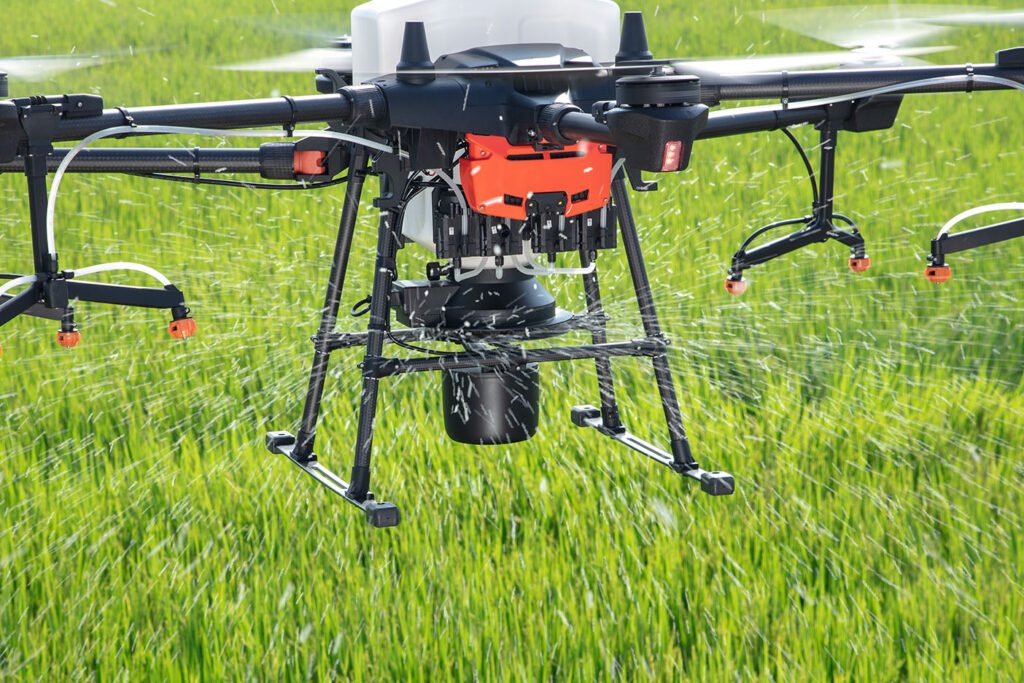
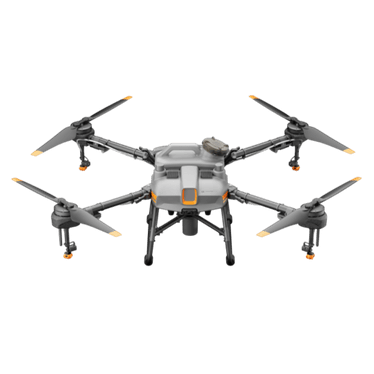
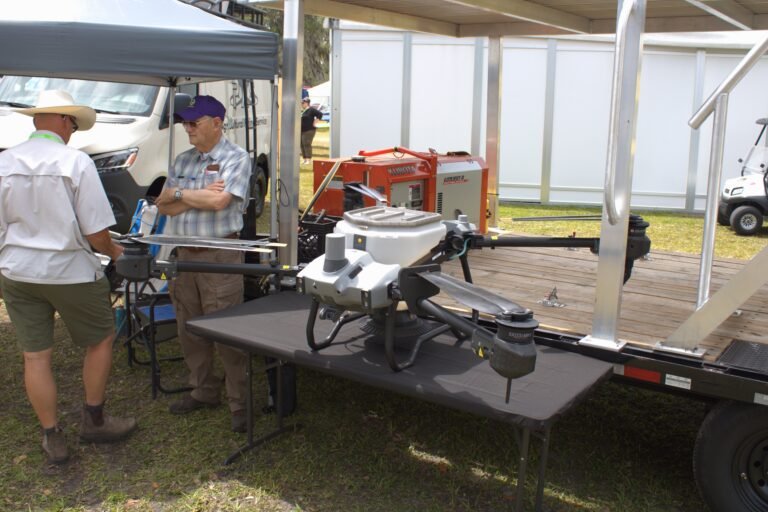
The DJI Agras T20 is an agricultural spraying drone developed for precision crop treatment and farm operations. Its four-rotor platform combines a liquid-spraying system with radar-assisted flight functions and a foldable structure intended to make transport and field setup easier. It is an agricultural work platform, not a camera drone for recreational aerial photography.
Spraying system and payload
DJI states that the Agras T20 can carry a maximum spraying payload of 20 kg. Its spraying system uses eight nozzles and high-volume pumps, with a maximum spray flow rate of up to 6 L/min. DJI also describes a nozzle layout designed to improve droplet uniformity and provide an effective spray width of up to 7 m under the stated operating setup. Actual coverage depends on crop height, flight speed, spray settings, wind, liquid characteristics and field conditions; the maximum width should not be treated as a guaranteed result for every crop.
Radar and field operation
The Agras T20 is equipped with an omnidirectional digital radar system. DJI describes the radar as detecting obstacles from horizontal directions and helping the aircraft navigate around obstacles and follow terrain. Radar assistance is not a substitute for a trained pilot, pre-flight inspection, field assessment or safe operating distances. Vegetation, wires, poles, terrain and other obstacles can present different detection challenges.
Weather protection and durability
DJI’s product announcement identifies an IP67 dust- and water-resistance rating for the aircraft. An ingress-protection rating applies under the manufacturer’s specified test conditions and does not mean the drone should be operated in any rainfall, submerged, or used with damaged seals. Follow the applicable manual, maintenance schedule and weather limits before each operation.
DJI Agras T20 specifications
| Specification | DJI Agras T20 |
|---|---|
| Aircraft type | Four-rotor agricultural spraying drone |
| Maximum spraying payload | 20 kg |
| Nozzle quantity | 8 |
| Maximum spray flow rate | Up to 6 L/min |
| Maximum effective spray width | Up to 7 m (scenario-dependent) |
| Obstacle sensing | Omnidirectional digital radar |
| Ingress protection | IP67 (manufacturer-stated rating) |
Agras T20 compared with newer models
The Agras T20 should not be confused with the later Agras T20P. DJI’s T20P documentation describes a different aircraft and spraying/spreading configuration, including a 20 L spray tank, a 20 kg spraying payload and a separate spreading system. The T20P’s radar, vision system, battery, dimensions and operating figures should not be copied into a review of the original T20. Buyers should confirm the exact model name and regional configuration on the aircraft label and with an authorised dealer.
The later Agras T30 and T25 families also have their own tank, payload and radar configurations. A larger payload rating does not automatically mean better suitability: field size, crop type, terrain, refill logistics, spray chemistry, service availability and local aviation and pesticide rules all matter.
Who should consider the Agras T20?
The Agras T20 may be relevant to agricultural contractors and farm operators who need an aerial spraying system and can support its batteries, charging equipment, maintenance and trained operation. Before purchasing, assess the total system cost, local spare-parts support, operator training, permitted chemicals, calibration requirements and the regulations that apply to agricultural drone spraying in the operating country.
Advantages and limitations
- Advantages: up to 20 kg spraying payload, eight-nozzle system, manufacturer-stated flow rate up to 6 L/min, up to 7 m effective spray width under specified conditions, radar-assisted obstacle awareness and IP67 rating.
- Limitations: coverage and spray quality vary with operating conditions; the payload figure is not a promise of a fixed hectares-per-hour result; specialist batteries, charging, maintenance and trained operators are required.
Official source and verification notes
This specification-based overview uses DJI’s official Agras T20 product announcement. DJI’s published claims are subject to the conditions described by the manufacturer. The T20 and T20P are treated as separate models in this article. This is an editorial review based on manufacturer documentation, not a claim of independent hands-on testing.
Related IGIDRONE reading
Explore other agricultural drone models: DJI Agras T30 review | DJI Agras T25 review.
Drone Specifications
| Brand | DJI |
|---|---|
| Maximum Flight Time (minutes) | Hovering: 15 min at 27.5 kg takeoff weight; 10 min at 42.6 kg takeoff weight (DJI test conditions) minutes |
| Weight (g) | 21.1 kg (excluding battery); standard takeoff weight 42.6 kg; maximum takeoff weight 47.5 kg g |
| Wind Resistance (m/s) | 8 m/s m/s |
| Obstacle Sensing | Omnidirectional digital radar obstacle detection and avoidance |
| Positioning / GPS | GNSS: GPS, GLONASS and Galileo; RTK: GPS, GLONASS, BeiDou and Galileo |
| Maximum Speed (m/s) | 10 m/s maximum flying speed; 7 m/s maximum operating speed m/s |
Specification source: Official source
Last verified: 2026-11-04
Official Price (USD)
No public USD price was verified on the manufacturer’s official store during this check.
For enterprise or discontinued models, contact the manufacturer for a current quotation. We do not substitute third-party seller prices.
Price checked: 2026-11-07
MODEL TECHNICAL RECORD
Detailed Technical Specifications
Manufacturer-specific technical information recorded for this model. Values not present in the source record are not estimated.
General
| and detailsInquire NowDevice InfoCheck your device information | and service historyInquire NowAfter-Sales Service PoliciesQuick review of official |
|---|---|
| DJI after-sales | service termsInquire NowAccessory PriceCheck prices and service |
| fees for common | accessoriesInquire Now |

MANUFACTURER DATA
Detailed official specifications
Technical figures below are transcribed from the manufacturer documentation linked with this profile. Test figures are maximum or controlled-condition ratings where stated; actual performance varies by configuration and operating conditions. A field is omitted when the cited source does not publish a reliable value.
| Flight parameters — Total weight excluding battery | 21.1 kg |
|---|---|
| Flight parameters — Standard takeoff weight | 42.6 kg |
| Flight parameters — Maximum takeoff weight | 47.5 kg at sea level |
| Flight parameters — Maximum thrust-to-weight ratio | 1.70 at 47.5 kg takeoff weight |
| Flight parameters — Hovering accuracy with strong GNSS | RTK enabled: ±10 cm horizontal and vertical; RTK disabled: ±0.6 m horizontal and ±0.3 m vertical (±0.1 m vertical with radar) |
| Flight parameters — RTK operating systems | GPS L1/L2, GLONASS F1/F2, BeiDou B1/B2, Galileo E1/E5 |
| Flight parameters — GNSS operating systems | GPS L1, GLONASS F1, Galileo E1 |
| Flight parameters — Maximum power consumption | 8300 W |
| Flight parameters — Hovering power consumption | 6200 W at 47.5 kg takeoff weight |
| Flight parameters — Hovering time | 15 min at 27.5 kg; 10 min at 42.6 kg (18,000 mAh battery) |
| Flight parameters — Maximum pitch angle | 15° |
| Flight parameters — Maximum operating speed | 7 m/s |
| Flight parameters — Maximum flying speed | 10 m/s with strong GNSS signal |
| Flight parameters — Maximum wind resistance | 8 m/s |
| Flight parameters — Maximum service ceiling | 2000 m above sea level |
| Flight parameters — Recommended operating temperature | 0°C to 40°C |
| Airframe — Maximum diagonal wheelbase | 1883 mm |
| Airframe — Dimensions unfolded | 2509 × 2213 × 732 mm (arms and propellers unfolded) |
| Airframe — Dimensions arms unfolded, propellers folded | 1795 × 1510 × 732 mm |
| Airframe — Dimensions folded | 1100 × 570 × 732 mm |
| Propulsion motor — Stator size | 100 × 15 mm |
| Propulsion motor — Weight | 666 g |
| Propulsion system — KV | 75 rpm/V |
| Propulsion system — Maximum thrust | 13.5 kg per rotor |
| Propulsion system — Maximum power | 2400 W per rotor |
| Propulsion system — Single propeller weight | 90 g |
| Propellers — Diameter × pitch | 33 × 9 in |
| ESC — Maximum continuous working current | 40 A |
| ESC — Maximum working voltage | 58.8 V (14S LiPo) |
| FPV camera — Field of view | 98° horizontal; 78° vertical |
| FPV camera — Resolution | 1280 × 960 at 30 fps |
| FPV spotlight — Maximum brightness | 12 lux at 5 m direct light |
| Spraying system — Tank volume | 15.1 L rated; 20 L full |
| Spraying system — Operating payload | 15.1 kg rated; 20 kg full |
| Spraying nozzle — Standard model | SX11001VS; optional SX110015VS and XR11002VS |
| Spraying nozzle — Quantity | 8 |
| Spraying nozzle — Maximum spray rate | 3.6 L/min (SX11001VS); 4.8 L/min (SX110015VS); 6 L/min (XR11002VS) |
| Spraying nozzle — Droplet size | 130–250 μm (SX11001VS); 170–265 μm (SX110015VS); 190–300 μm (XR11002VS) |
| Spraying nozzle — Spray width | 4–7 m with 8 nozzles at 1.5–3 m above crops |
| Flow meter — Measurement range | 0.25–20 L/min |
| Flow meter — Measurement error | Less than ±2% |
| Flow meter — Measurable liquid conductivity | Greater than 50 μS/cm |
| High precision radar — Model | RD2428R |
| High precision radar — Operating frequency | 24.00–24.25 GHz (CE/US); 24.05–24.25 GHz (Japan/Korea) |
| High precision radar — Power consumption | 18 W |
| High precision radar — EIRP | Less than 20 dBm |
| High precision radar — Terrain-follow range | Altitude detection 1–30 m; stabilisation range 1.5–15 m; hill mode slope up to 35° |
| High precision radar — Obstacle sensing | Altitude detection 1.5–30 m; 360° horizontal FOV; ±15° vertical FOV; safe distance 2.5 m |
| High precision radar — Ingress protection | IP67 |
| T20 intelligent flight battery — Model | AB3-18000mAh-51.8V |
| T20 intelligent flight battery — Capacity | 18,000 mAh |
| T20 intelligent flight battery — Voltage | 51.8 V |
| T20 intelligent flight battery — Approximate weight | 6.4 kg |
| T20 intelligent flight battery — Discharge rate | 9C |
| T20 intelligent flight battery — Ingress protection | IP54 |
| Remote controller — Model | RM500-AG |
| Remote controller — OcuSync 2.0 frequency | 2.4000–2.4835 GHz; 5.725–5.850 GHz |
| Remote controller — OcuSync 2.0 transmission distance | 3 km CE/SRRC/MIC/KCC; 5 km FCC/NCC (unobstructed) |
| Remote controller — Display | 5.5-inch, 1920 × 1090, 1000 cd/m², Android |
| Remote controller — RAM and storage | 4 GB RAM; 32 GB ROM plus microSD up to 128 GB |
| Remote controller — HDMI | HDMI 1.4 |
| Remote controller — Supported aircraft | Agras T20 |
| Remote controller — Operating temperature | -10°C to 40°C |
| Remote controller — Internal battery | 18650 Li-ion, 5000 mAh at 7.2 V |
| Remote controller — Operating time | Approx. 2 hours |
| Remote controller — Charging time | Approx. 2.5 hours with 12 V/2 A USB power adapter |
| Remote controller — Intelligent battery | WB37-4920mAh-7.6V; 4920 mAh, 7.6 V, 37.39 Wh, 2S LiPo |
| Remote controller charging hub — Model | WCH2 |
| Remote controller charging hub — Input voltage | 17.3–26.2 V |
| Remote controller charging hub — Output | 8.7 V, 6 A |
| Remote controller power adapter — Model | A14-057N1A |
| Remote controller power adapter — Input | 100–240 V, 50/60 Hz |
| Remote controller power adapter — Output voltage | 17.4 V |
| Remote controller power adapter — Rated power | 57 W |
Source: manufacturer technical specifications and official support documentation. Regional versions, payloads, batteries, firmware and test conditions can change the stated figures. Check the linked source for the applicable configuration.