DJI / DRONE PROFILE
DJI Agras T10
Explore the available technical information for this aircraft, including camera capabilities, flight performance and manufacturer-specific specifications.
DJI Agras T10 Review and Agricultural Buying Guide
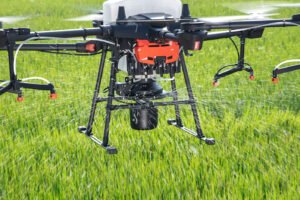
The DJI Agras T10 is a compact agricultural spraying drone designed for crop-protection work and professional application services. It is not a recreational camera drone. Operators need suitable training, chemical-handling procedures, field planning and all required local approvals.
Spraying system
DJI lists an 8 L spraying tank and a four-nozzle system. Maximum flow varies by nozzle: the standard nozzle is listed at 1.8 L/min, with optional configurations reaching higher flow. The effective spray width depends on nozzle, crop height, flight speed and operating conditions. Application rates must follow the chemical label and agronomic guidance; tank capacity alone does not determine a safe treatment plan.
Aircraft and positioning
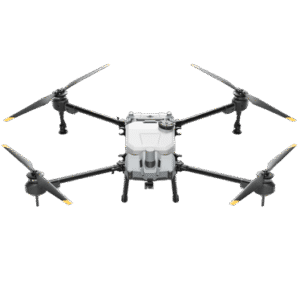
The aircraft weighs 13 kg without batteries and has a rated take-off weight of 24.8 kg near sea level. DJI lists RTK/GNSS positioning, spherical omnidirectional radar and an upward-looking radar module. Maximum endurable wind speed is 6 m/s. Published hovering time varies with take-off weight: DJI lists 17 minutes at the stated lighter test weight and 9 minutes at the rated maximum take-off weight.
Field operations
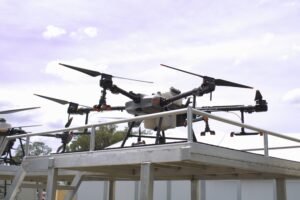
Plan battery rotation, charging, clean-water supply, tank rinsing, chemical mixing, weather and drift controls. The system’s FPV cameras and radar features can assist operation, but they do not replace a trained pilot’s responsibility to inspect the field and maintain safe separation from people, animals, buildings and waterways.
Advantages and limitations
- Advantages: compact agricultural application platform, RTK/GNSS support, radar-assisted awareness and selectable nozzle configurations.
- Limitations: smaller tank than larger Agras models, short load-dependent hovering time and specialist operating requirements.
- Before buying: verify regional model, tank and nozzle kit, battery/charger package, parts supply, training and local permissions.
IGIDRONE verdict
Agras T10 is worth considering for professional operators who need a smaller application platform and can work within its payload and endurance limits. Compare real field capacity, refill time and total cost with larger Agras aircraft before selecting a fleet.
Manufacturer reference: DJI Agras T10 specifications.
Agras T10 operational context
The Agras T10 is an agricultural application aircraft, so its key decision factors are the spraying or spreading configuration, payload, battery turnaround, charging equipment and suitability for the size and layout of the fields being treated. Do not compare a tank-volume figure directly with a dry-material spreader capacity; these are separate application systems. Effective coverage depends on crop conditions, flight height, speed, spray settings, weather and route overlap. A complete operating setup may involve more than the aircraft itself. Check which application kit, batteries, charger, controller and support services are included, and follow local agricultural chemical and aviation requirements.
Who should consider DJI Agras T10?
A grower or spraying service should compare the aircraft against the actual farm layout and treatment plan. Irregular plots, trees, power lines, slopes, small access roads and nearby people can change the safe operating pattern. Request a supervised demonstration using the intended application material and confirm the equipment configuration before committing. For DJI Agras T10, validate application settings using the intended crop, material, nozzle or spreader and field layout rather than a generic demonstration.
Limitations and trade-offs to understand
Before comparing headline capacity, verify whether the listed tank or payload refers to liquid spraying or granular spreading. These are different configurations and may have different take-off masses, flow systems and operating limits. Check regional availability of the correct spreading or spraying kit, spare parts and qualified service. For DJI Agras T10, keep an operating log of weather, payload, settings, field area and refill time so that productivity claims can be checked.
Alternatives worth comparing
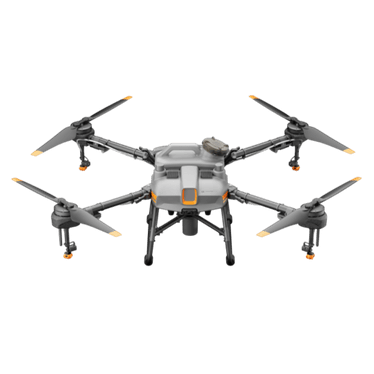
Compare other agricultural aircraft in the same operating class, such as the DJI Agras T20P, T25P, T40 or T50 where relevant, and consider whether a multispectral mapping platform such as the DJI Mavic 3 Multispectral is a better fit for crop monitoring rather than application. These are different mission types; they are not interchangeable. For DJI Agras T10, confirm the exact agricultural kit and regional support route before buying; aircraft-only specifications do not describe a complete spraying operation.
Pre-purchase and ownership checklist
Ask the supplier for the exact nozzle/spreader configuration, supported materials, calibration procedure, battery cycle expectations, charging plan, service response time and operator training. Request written confirmation of local registration, pilot qualification, agricultural chemical approvals and insurance obligations. Record the test conditions behind any productivity claim. For DJI Agras T10, plan cleaning, battery storage and chemical-handling procedures as part of the ownership cost.
How to use this specification profile
This page is a research-based reference, not a claim that IGIDRONE has independently flight-tested the aircraft. Treat manufacturer maximums as test-condition figures and distinguish standard equipment from optional accessories or regional bundles. Before buying, compare the exact model code, firmware, battery, controller and payload configuration against the current official manual. If a field is marked unknown or is not documented by the manufacturer, do not infer a value from a similarly named variant. For DJI Agras T10, validate application settings using the intended crop, material, nozzle or spreader and field layout rather than a generic demonstration.
Primary manufacturer reference: Open the manufacturer specification or support page. Confirm the current regional documentation before purchase. For DJI Agras T10, keep an operating log of weather, payload, settings, field area and refill time so that productivity claims can be checked.
Editorial update: 8 November 2026. Model availability, prices, software support and regional operating rules can change. Confirm them with the manufacturer, authorised distributor and relevant aviation authority before purchase or flight. For DJI Agras T10, confirm the exact agricultural kit and regional support route before buying; aircraft-only specifications do not describe a complete spraying operation.
Field workflow and productivity planning
Consider whether the aircraft can be safely transported and stored between jobs. Protect batteries and application components from heat, moisture, dust and chemical residue. A planned cleaning and inspection routine helps avoid blocked nozzles, leaks, corrosion and avoidable downtime. For DJI Agras T10, validate application settings using the intended crop, material, nozzle or spreader and field layout rather than a generic demonstration.
Evidence to request from a supplier
Request a current operator manual, supported material list, maintenance schedule, parts catalogue and written regional service details. Ask for a field demonstration with the same tank, nozzle or spreading kit you intend to use. Productivity claims should identify crop, field shape, payload, flight height, speed, overlap, weather and refill assumptions. Do not use an unverified marketing estimate as the basis for chemical dosing or business revenue forecasts. For DJI Agras T10, keep an operating log of weather, payload, settings, field area and refill time so that productivity claims can be checked.
Editorial standard: buyer guidance is based on published manufacturer information and practical ownership considerations. IGIDRONE does not claim independent flight testing unless a page explicitly documents a real test. For DJI Agras T10, confirm the exact agricultural kit and regional support route before buying; aircraft-only specifications do not describe a complete spraying operation.
Drone Specifications
| Brand | DJI |
|---|---|
| Camera | Forward/rear FPV cameras: 1280 × 720, 15–30 fps; not a dedicated aerial-photography payload camera |
| Maximum Video Resolution | FPV live view: 1280 × 720 at 15–30 fps |
| Maximum Flight Time (minutes) | Hovering: 17 min at 16 kg takeoff weight; 9 min at 24.8 kg takeoff weight (DJI specifications test conditions) |
| Maximum Transmission Range (km) | FCC: up to 7 km; SRRC: up to 5 km; MIC/KCC/CE: up to 4 km (OcuSync 2.0, unobstructed; aircraft altitude approx. 2.5 m) |
| Weight (g) | 13 kg (without batteries); rated takeoff weight 24.8 kg near sea level |
| Battery Capacity (mAh) | 9,500 mAh (T10 Intelligent Flight Battery) |
| Wind Resistance (m/s) | 6 m/s |
| Obstacle Sensing | Spherical omnidirectional radar for horizontal obstacle avoidance, plus upward-looking radar |
| Positioning / GPS | GNSS: GPS, GLONASS and Galileo; RTK: GPS L1/L2, GLONASS F1/F2, BeiDou B1/B2 and Galileo E1/E5 |
| Maximum Speed (m/s) | 10 m/s maximum level flight speed; 7 m/s maximum operating flight speed |
Additional Notes
DJI AGRAS T10: 13 kg without batteries; rated takeoff weight 24.8 kg. Hovering time 17 min at 16 kg takeoff weight and 9 min at 24.8 kg, with 9,500 mAh battery. Maximum level speed 10 m/s; maximum operating speed 7 m/s; wind resistance 6 m/s. OcuSync 2.0 signal distance: FCC 7 km, SRRC 5 km, MIC/KCC/CE 4 km in unobstructed conditions at approx. 2.5 m aircraft altitude. These are controller transmission figures, not mission radius.
Specification source: Official source
Last verified: 2026-11-08
Official Price (USD)
No public USD price is displayed. Contact the manufacturer for an official quotation.
No public USD price is published for DJI Agras T10. The official DJI United States product page invites purchase enquiries through Contact Us and directs buyers to authorized local DJI dealers for regional availability. Classified as quote-only; no dealer price is used. Checked 2026-11-23.
Contact the manufacturer / official source
Price checked: 2026-11-23
MODEL TECHNICAL RECORD
Detailed Technical Specifications
Manufacturer-specific technical information recorded for this model. Values not present in the source record are not estimated.
Features
| Hourly operation efficiency | 15 acres |
|---|---|
| High-precision radar | √ Spherical Omnidirectional Radar System |
| Remote control planning precision | √ (RTK/GNSS) |
| Removing air from pipes | √ One button Air Discharge |
| 3D operation planning of the AI engine | √ |
| High-precision flowmeter | √ (Dual-channel electromagnetic flowmeter with an error of ±2%) |
| Level gauge | Single-point level gauge |
| Maximum spray flow | 1.8 L/min (with standard XR11001VS nozzle) 2.4 L/min (with optional XR110015VS nozzle) |
| Pesticide tank installation method | Quick plugging pesticide tank |
| Battery installation method | Quick plug-and-play battery |
| One remote control for multiple drones | √ (one remote control for three drones) |
| D-RTK technology | √ |
| Up-looking radar module | √ |
| Flight dotting function | √ |
| Smart cruising/return function | √ |
| Intelligent supply-point prediction | x |
| Coordinated turn function | √ |
| Forward-looking FPV | √ |
| Backward-looking FPV | √ |
| Branch targeting technology | x |
Drone parameters
| Total weight (without batteries) | 13 kg |
|---|---|
| Rated take-off weight | 24.8 kg (near sea level) |
| Hovering precision (with good GNSS signal) | With D-RTK enabled: ±10 cm (horizontal) and ±10 cm (vertical) With D-RTK disabled: ±0.6m (horizontal) and ±0.3m (vertical) (with the radar function enabled: ±0.1 m) |
| RTK/GNSS frequency bands | RTK: GPS L1/L2, GLONASS F1/F2, BeiDou B1/B2, and Galileo E1/E5 GNSS: GPS L1, GLONASS F1, and Galileo E1 |
| Maximum power consumption | 3,700 W |
| Hovering power consumption | 3,200 W |
| Hovering time | 17 min (@9,500 mAh & takeoff weight of 16 kg) 9 min (@9,500 mAh & takeoff weight of 24.8 kg) |
| Maximum pitch angle | 15° |
| Maximum operating flight speed | 7 m/s |
| Maximum level flight speed | 10 m/s (with good GNSS signals) |
| Maximum endurable wind speed | 6 m/s |
| Max Take-off Altitude | 4,500m *Reduce the pesticide amount by 12% with each increase of 1,000 meters of altitude. |
| Recommended operating ambient humidity | < 93% |
| Recommended operating ambient temperature | 0℃ to 45℃ |
Rack parameters
| Maximum rotor distance | 1,480 mm |
|---|---|
| Dimensions | 1,958 mm × 1,833 mm × 553 mm (with arms and blades extended) 1,232 mm × 1,112 mm × 553 mm (with arms extended and blades folded) 600 mm × 665 mm × 580 mm (with arms folded) |
Power system - Motor
| Stator size | 100×10 mm |
|---|---|
| KV value | 84 rpm/V |
| Maximum pulling force | 11.2 kg/rotor |
| Maximum power | 2,500 W/rotor |
| Weight | 527 g |
Power system - Propellers
| Diameter × pitch | 33×9 inch |
|---|---|
| Weight (a single blade) | 92 g |
Power system - ESC
| Maximum operating current (continuous) | 32 A |
|---|---|
| Maximum operating voltage | 60.9 V (14S LiPo) |
FPV camera
| FOV | Horizontal: 129°, vertical:82° |
|---|---|
| Resolution | 1,280×720 15-30 fps |
FPV spotlight
| Maximum light intensity | 13.2 lux @ 5-meter direct light |
|---|
Spraying system - Operation tank
| Operation tank volume | 8 L at full load |
|---|---|
| Operating load | 8 kg at full load |
Spraying system - Nozzles
| Sprayer model | XR11001VS (standard) XR110015VS (optional) XR11002VS (optional) |
|---|---|
| Number of sprayers | 4 |
| Maximum spray flow | XR11001VS: 1.8 L/min XR110015VS: 2.4 L/min XR11002VS:3 L/min |
| Diameter of atomized particle | XR11001VS : 130 - 250 μm XR110015VS : 170 - 265 μm XR11002VS: 190 - 300 μm (depending on the actual operating environment, spraying flow and other factors) |
| Maximum effective spray width | 3 - 5.5m (with 4 sprayers and a distance of 1.5 - 3 meters to crops) |
Spraying system - Water pump
| Water pump model | Diaphragm pump |
|---|---|
| Operating voltage | 15 V |
| Maximum flow | 1.5 L/min ×1 |
Spraying system - Flowmeter
| Flow measurement range | 0.25 - 20 L/min |
|---|---|
| Flow measurement error | < ±2% |
| Measurable liquid | Conductivity > 50 μS/cm. Typical liquid: Tap water, aqueous organic or inorganic pesticides, and the like |
Omnidirectional obstacle avoidance radar
| Model | RD2424R |
|---|---|
| Operating frequency | SRRC/NCC/FCC: 24.05 to 24.25 GHz MIC/KCC/CE: 24.05 to 24.25 GHz |
| Operating power consumption | 12 W |
| Equivalent isotropic radiated power (EIRP) | SRRC: < 13 dBm; NCC/MIC/KCC/CE/ FCC:< 20 dBm |
| Height hold and terrain following | Height measurement range: 1 - 30m Height hold range: 1.5 - 15m Maximum slope in mountain mode:35° |
| Obstacle avoidance system | Perceivable distance: 1.5 - 30m FOV: 360° (horizontal), ±15° (vertical) Conditions of use: The relative flight height of the drone is above 1.5m and the speed below 7 m/s Safe distance: 2.5m (the distance between the tip of the blade and the obstacle after the drone is braked and hovering stably) Obstacle avoidance direction: Horizontally omnidirectional obstacle avoidance |
| Protection class | IP67 |
Up-looking radar
| Model | RD2414U |
|---|---|
| Operating frequency | SRRC/NCC/FCC: 24.05 to 24.25 GHz MIC/KCC/CE:24.05 to 24.25 GHz |
| Overhead obstacle avoidance | Perceivable distance: 1.5 - 10m FOV: 80° Conditions of use: The drone flies for a relative distance over 1.5 m in the mode of take-off, landing and route climb mode Safe distance: 2m (the distance between the obstacle and the highest point on the top of the drone) Obstacle avoidance direction: Above the drone |
| Protection class | IP67 |
| Equivalent isotropic radiated power (EIRP) | SRRC:< 13 dBm;NCC/MIC/KCC/CE/ FCC:< 20 dBm |
| Operating power consumption | 4 W |
Battery
| Model | BAX501-9500mAh-51.8V |
|---|---|
| Weight | About 3.8 kg |
| Discharge rate | 11.5C |
| Protection class | IP54 + board-level embedment protection |
| Capacity | 9,500 mAh |
| Voltage | 51.8 V |
Remote control
| Model | RM500-ENT |
|---|---|
| Operating frequency of OcuSync 2.0 | 2.4000 to 2.4835 GHz 5.725 to 5.850 GHz |
| Effective signal distance of OcuSync 2.0 (without interference and blockage) | SRRC: 5 km; MIC/KCC/CE: 4 km; FCC: 7 km (measured at the operating height of 2.5m) |
| EIRP of OcuSync 2.0 | 2.4 GHz SRRC/CE/MIC/KCC: 18.5 dBm; FCC: 29.5 dBm; 5.8 GHz SRRC: 28.5 dBm; FCC: 20.5 dBm CE:12.5 dBm |
| Wi-Fi Protocols | Wi-Fi Direct, Wireless Display, and 802.11a/g/n/ac. 2 × 2 MIMO Wi-Fi is supported |
| Wi-Fi operating frequency | 2.4000 to 2.4835 GHz 5.150 to 5.250 GHz 5.725 ~ 5.850 GHz |
| Wi-Fi EIRP | 2.4 GHz SRRC/CE: 18.5 dBm; FCC/MIC/KCC: 20.5 dBm; 5.2 GHz SRRC/FCC/CE/MIC: 14 dBm; KCC: 10 dBm; 5.8 GHz SRRC/FCC: 18 dBm; CE/KCC: 12 dBm; |
| Bluetooth protocol | Bluetooth 4.2 |
| Bluetooth operating frequency | 2.4000 to 2.4835 GHz |
| Bluetooth EIRP | SRRC/MIC/FCC/CE/KCC:6.5 dBm |
| Positioning | GPS + GLONASS |
| Display | 5.5-inch screen with a resolution of 1,920×1,080 and brightness of 1,000 cd/m², and Android OS |
| Operating memory (RAM) | 4GB LPDDR4 |
| Storage space (ROM) | 32 GB + scalable storage space, and a microSD card with the capacity up to 128 GB and transfer speed of UHS-I Speed Grade 3 is supported |
| HDMI | HDMI 1.4 |
| Supported drones | T30 and T10 crop protection drones |
| Operating power consumption | 18 W |
| Operating ambient temperature | -10℃ to 40℃ |
| Storage ambient temperature | -30℃ to 60℃ (within 1 month) -30℃ to 45℃ (1 to 3 months) -30℃ to 35℃ (3 to 6 months) -30℃ to 25℃ (more than 6 months) (with the capacity of built-in batteries at 40 to 60%) |
| Charging ambient temperature | 5℃ to 40℃ |
Built-in battery of remote control
| Built-in battery | 18650 lithium ion battery (5,000 mAh at 7.2V) |
|---|---|
| Battery life | 2 hours |
| Charging method | Standard 12V/2A USB quick charger |
| Charging time | 2.5 hours (with the standard 12V/2A USB quick charger and the remote control powered off) |
| Power supply current/voltage of remote control USB-A port | 5 V / 1.5 A |
External smart battery of remote control
| Model | WB37-4,920mAh-7.6V |
|---|---|
| Battery type | 2S LiPo |
| Capacity | 4,920 mAh |
| Voltage | 7.6 V |
| Capacity (2) | 37.39 Wh |
| Charging ambient temperature | 5℃ to 40℃ |
| Battery life | 2 hours |
External smart battery charging manager of remote control
| Model | WCH2 |
|---|---|
| Input voltage | 17.3 - 26.2 V |
| Output voltage and current | 8.7V and 6A |
| Operating ambient temperature | 5℃ to 40℃ |
Power adapter of external smart battery charging manager
| Model | A14-057N1A |
|---|---|
| Input voltage | 100 to 240V and 50/60 Hz |
| Output voltage | 17.4 V |
| Rated power | 57 W |
T-Series Spreading System 3.0 (8kg)
| Weight of distribution system | 3.1kg |
|---|---|
| Maximum opening area | 44.6 cm² |
| Applicable materials | Dry solid particles with a diameter of 0.5 to 5 mm |
| Volume of distribution tank | 12L |
| Maximum internal load of distribution tank | 10kg |
| Protection class | IP67 |
| Input voltage | Power: 60V Control:15V |
| Maximum power | 60V@250W 15V@50W |
| Recommended operating ambient temperature | 0℃ to 40℃ |
| Dimensions | 405×245×375mm |
| Maximum rotation speed | 1,300 RPM |
T10 smart charging manager
| Dimensions | 300×280×230 mm |
|---|---|
| Total weight | 8.1 kg |
| Input voltage | 100-264 Vac |
| Output voltage | 40-60 V |
| Rated power | 3,600 W |
| Charging current | 50 A |
| Charging time | 7 to 10 min |
| Charging voltage precision | +/-0.1 V |
| Charging current precision | +/-1 A |
| Number of output channels | 2 |
| Protection functions | Over-temperature, over-voltage, under-voltage, short-circuit, and fan stall protection |
| Charging ambient temperature | -20℃ to 45℃ |
| Charging safety | AC wire protection, power wire protection, and charge connector protection |


MANUFACTURER DATA
Detailed official specifications
Technical figures below are transcribed from the manufacturer documentation linked with this profile. Test figures are maximum or controlled-condition ratings where stated; actual performance varies by configuration and operating conditions. A field is omitted when the cited source does not publish a reliable value.
Manufacturer source last checked: 2026-11-08
Evidence type: Official DJI manufacturer specifications / support documentation
Features
| Hourly operation efficiency | 15 acres |
|---|---|
| High-precision radar | √ Spherical Omnidirectional Radar System |
| Remote control planning precision | √ (RTK/GNSS) |
| Removing air from pipes | √ One button Air Discharge |
| 3D operation planning of the AI engine | √ |
| High-precision flowmeter | √ (Dual-channel electromagnetic flowmeter with an error of ±2%) |
| Level gauge | Single-point level gauge |
| Maximum spray flow | 1.8 L/min (with standard XR11001VS nozzle) 2.4 L/min (with optional XR110015VS nozzle) |
| Pesticide tank installation method | Quick plugging pesticide tank |
| Battery installation method | Quick plug-and-play battery |
| One remote control for multiple drones | √ (one remote control for three drones) |
| D-RTK technology | √ |
| Up-looking radar module | √ |
| Flight dotting function | √ |
| Smart cruising/return function | √ |
| Intelligent supply-point prediction | x |
| Coordinated turn function | √ |
| Forward-looking FPV | √ |
| Backward-looking FPV | √ |
| Branch targeting technology | x |
Drone parameters
| Total weight (without batteries) | 13 kg |
|---|---|
| Rated take-off weight | 24.8 kg (near sea level) |
| Hovering precision (with good GNSS signal) | With D-RTK enabled: ; ±10 cm (horizontal) and ±10 cm (vertical); With D-RTK disabled: ; ±0.6m (horizontal) and ±0.3m (vertical) (with the radar function enabled: ±0.1 m) |
| RTK/GNSS frequency bands | RTK: GPS L1/L2, GLONASS F1/F2, BeiDou B1/B2, and Galileo E1/E5; GNSS: GPS L1, GLONASS F1, and Galileo E1 |
| Maximum power consumption | 3,700 W |
| Hovering power consumption | 3,200 W |
| Hovering time | 17 min (@9,500 mAh & takeoff weight of 16 kg); 9 min (@9,500 mAh & takeoff weight of 24.8 kg) |
| Maximum pitch angle | 15° |
| Maximum operating flight speed | 7 m/s |
| Maximum level flight speed | 10 m/s (with good GNSS signals) |
| Maximum endurable wind speed | 6 m/s |
| Max Take-off Altitude | 4,500m; *Reduce the pesticide amount by 12% with each increase of 1,000 meters of altitude. |
| Recommended operating ambient humidity | < 93% |
| Recommended operating ambient temperature | 0℃ to 45℃ |
Rack parameters
| Maximum rotor distance | 1,480 mm |
|---|---|
| Dimensions | 1,958 mm × 1,833 mm × 553 mm (with arms and blades extended); 1,232 mm × 1,112 mm × 553 mm (with arms extended and blades folded); 600 mm × 665 mm × 580 mm (with arms folded) |
Power system - Motor
| Stator size | 100×10 mm |
|---|---|
| KV value | 84 rpm/V |
| Maximum pulling force | 11.2 kg/rotor |
| Maximum power | 2,500 W/rotor |
| Weight | 527 g |
Power system - Propellers
| Diameter × pitch | 33×9 inch |
|---|---|
| Weight (a single blade) | 92 g |
Power system - ESC
| Maximum operating current (continuous) | 32 A |
|---|---|
| Maximum operating voltage | 60.9 V (14S LiPo) |
FPV camera
| FOV | Horizontal: 129°, vertical:82° |
|---|---|
| Resolution | 1,280×720 15-30 fps |
FPV spotlight
| Maximum light intensity | 13.2 lux @ 5-meter direct light |
|---|
Spraying system - Operation tank
| Operation tank volume | 8 L at full load |
|---|---|
| Operating load | 8 kg at full load |
Spraying system - Nozzles
| Sprayer model | XR11001VS (standard); XR110015VS (optional); XR11002VS (optional) |
|---|---|
| Number of sprayers | 4 |
| Maximum spray flow | XR11001VS: 1.8 L/min; XR110015VS: 2.4 L/min; XR11002VS:3 L/min |
| Diameter of atomized particle | XR11001VS : 130 - 250 μm; XR110015VS : 170 - 265 μm; XR11002VS: 190 - 300 μm; (depending on the actual operating environment, spraying flow and other factors) |
| Maximum effective spray width | 3 - 5.5m (with 4 sprayers and a distance of 1.5 - 3 meters to crops) |
Spraying system - Water pump
| Water pump model | Diaphragm pump |
|---|---|
| Operating voltage | 15 V |
| Maximum flow | 1.5 L/min ×1 |
Spraying system - Flowmeter
| Flow measurement range | 0.25 - 20 L/min |
|---|---|
| Flow measurement error | < ±2% |
| Measurable liquid | Conductivity > 50 μS/cm. Typical liquid: Tap water, aqueous organic or inorganic pesticides, and the like |
Omnidirectional obstacle avoidance radar
| Model | RD2424R |
|---|---|
| Operating frequency | SRRC/NCC/FCC: 24.05 to 24.25 GHz; MIC/KCC/CE: 24.05 to 24.25 GHz |
| Operating power consumption | 12 W |
| Equivalent isotropic radiated power (EIRP) | SRRC: < 13 dBm; NCC/MIC/KCC/CE/; FCC:< 20 dBm |
| Height hold and terrain following | Height measurement range: 1 - 30m; Height hold range: 1.5 - 15m; Maximum slope in mountain mode:35° |
| Obstacle avoidance system | Perceivable distance: 1.5 - 30m; FOV: 360° (horizontal), ±15° (vertical); Conditions of use: The relative flight height of the drone is above 1.5m and the speed below 7 m/s; Safe distance: 2.5m (the distance between the tip of the blade and the obstacle after the drone is braked and hovering stably); Obstacle avoidance direction: Horizontally omnidirectional obstacle avoidance |
| Protection class | IP67 |
Up-looking radar
| Model | RD2414U |
|---|---|
| Operating frequency | SRRC/NCC/FCC: 24.05 to 24.25 GHz; MIC/KCC/CE:24.05 to 24.25 GHz |
| Overhead obstacle avoidance | Perceivable distance: 1.5 - 10m; FOV: 80°; Conditions of use: The drone flies for a relative distance over 1.5 m in the mode of take-off, landing and route climb mode; Safe distance: 2m (the distance between the obstacle and the highest point on the top of the drone); Obstacle avoidance direction: Above the drone |
| Protection class | IP67 |
| Equivalent isotropic radiated power (EIRP) | SRRC:< 13 dBm;NCC/MIC/KCC/CE/; FCC:< 20 dBm |
| Operating power consumption | 4 W |
Battery
| Model | BAX501-9500mAh-51.8V |
|---|---|
| Weight | About 3.8 kg |
| Discharge rate | 11.5C |
| Protection class | IP54 + board-level embedment protection |
| Capacity | 9,500 mAh |
| Voltage | 51.8 V |
Remote control
| Model | RM500-ENT |
|---|---|
| Operating frequency of OcuSync 2.0 | 2.4000 to 2.4835 GHz; 5.725 to 5.850 GHz |
| Effective signal distance of OcuSync 2.0 (without interference and blockage) | SRRC: 5 km; MIC/KCC/CE: 4 km; FCC: 7 km (measured at the operating height of 2.5m) |
| EIRP of OcuSync 2.0 | 2.4 GHz; SRRC/CE/MIC/KCC: 18.5 dBm; ; FCC: 29.5 dBm; ; 5.8 GHz; SRRC: 28.5 dBm; ; FCC: 20.5 dBm; CE:12.5 dBm |
| Wi-Fi Protocols | Wi-Fi Direct, Wireless Display, and 802.11a/g/n/ac. 2 × 2 MIMO Wi-Fi is supported |
| Wi-Fi operating frequency | 2.4000 to 2.4835 GHz; 5.150 to 5.250 GHz; 5.725 ~ 5.850 GHz |
| Wi-Fi EIRP | 2.4 GHz; SRRC/CE: 18.5 dBm; FCC/MIC/KCC: 20.5 dBm; ; 5.2 GHz; SRRC/FCC/CE/MIC: 14 dBm; KCC: 10 dBm; ; 5.8 GHz; SRRC/FCC: 18 dBm; CE/KCC: 12 dBm; |
| Bluetooth protocol | Bluetooth 4.2 |
| Bluetooth operating frequency | 2.4000 to 2.4835 GHz |
| Bluetooth EIRP | SRRC/MIC/FCC/CE/KCC:6.5 dBm |
| Positioning | GPS + GLONASS |
| Display | 5.5-inch screen with a resolution of 1,920×1,080 and brightness of 1,000 cd/m², and Android OS |
| Operating memory (RAM) | 4GB LPDDR4 |
| Storage space (ROM) | 32 GB + scalable storage space, and a microSD card with the capacity up to 128 GB and transfer speed of UHS-I Speed Grade 3 is supported |
| HDMI | HDMI 1.4 |
| Supported drones | T30 and T10 crop protection drones |
| Operating power consumption | 18 W |
| Operating ambient temperature | -10℃ to 40℃ |
| Storage ambient temperature | -30℃ to 60℃ (within 1 month); -30℃ to 45℃ (1 to 3 months); -30℃ to 35℃ (3 to 6 months); -30℃ to 25℃ (more than 6 months); (with the capacity of built-in batteries at 40 to 60%) |
| Charging ambient temperature | 5℃ to 40℃ |
Built-in battery of remote control
| Built-in battery | 18650 lithium ion battery (5,000 mAh at 7.2V) |
|---|---|
| Battery life | 2 hours |
| Charging method | Standard 12V/2A USB quick charger |
| Charging time | 2.5 hours (with the standard 12V/2A USB quick charger and the remote control powered off) |
| Power supply current/voltage of remote control USB-A port | 5 V / 1.5 A |
External smart battery of remote control
| Model | WB37-4,920mAh-7.6V |
|---|---|
| Battery type | 2S LiPo |
| Capacity | 37.39 Wh |
| Voltage | 7.6 V |
| Charging ambient temperature | 5℃ to 40℃ |
| Battery life | 2 hours |
External smart battery charging manager of remote control
| Model | WCH2 |
|---|---|
| Input voltage | 17.3 - 26.2 V |
| Output voltage and current | 8.7V and 6A |
| Operating ambient temperature | 5℃ to 40℃ |
Power adapter of external smart battery charging manager
| Model | A14-057N1A |
|---|---|
| Input voltage | 100 to 240V and 50/60 Hz |
| Output voltage | 17.4 V |
| Rated power | 57 W |
T-Series Spreading System 3.0 (8kg)
| Weight of distribution system | 3.1kg |
|---|---|
| Maximum opening area | 44.6 cm² |
| Applicable materials | Dry solid particles with a diameter of 0.5 to 5 mm |
| Volume of distribution tank | 12L |
| Maximum internal load of distribution tank | 10kg |
| Protection class | IP67 |
| Input voltage | Power: 60V; Control:15V |
| Maximum power | 60V@250W; 15V@50W |
| Recommended operating ambient temperature | 0℃ to 40℃ |
| Dimensions | 405×245×375mm |
| Maximum rotation speed | 1,300 RPM |
T10 smart charging manager
| Dimensions | 300×280×230 mm |
|---|---|
| Total weight | 8.1 kg |
| Input voltage | 100-264 Vac |
| Output voltage | 40-60 V |
| Rated power | 3,600 W |
| Charging current | 50 A |
| Charging time | 7 to 10 min |
| Charging voltage precision | +/-0.1 V |
| Charging current precision | +/-1 A |
| Number of output channels | 2 |
| Protection functions | Over-temperature, over-voltage, under-voltage, short-circuit, and fan stall protection |
| Charging ambient temperature | -20℃ to 45℃ |
| Charging safety | AC wire protection, power wire protection, and charge connector protection |
Source: manufacturer technical specifications and official support documentation. Regional versions, payloads, batteries, firmware and test conditions can change the stated figures. Check the linked source for the applicable configuration.
Related Dji drones
Explore other published models from the same manufacturer.