PARROT / DRONE PROFILE
Parrot ANAFI UKR
Explore the available technical information for this aircraft, including camera capabilities, flight performance and manufacturer-specific specifications.
The Parrot ANAFI UKR is a professional micro-UAV platform designed for defence, public-safety and government operations. Its key capabilities include EO/IR imaging, multiple radio options and optical navigation for GNSS-denied environments. It is not a consumer camera drone; buyers should confirm the exact aircraft, battery, radio and ground-station configuration with Parrot or an authorised integrator.
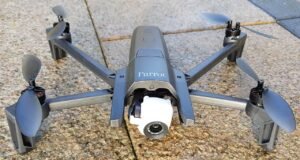
Image credit: U.S. Marine Corps photo by Lance Cpl. Isaac Llanez Delgado, via Wikimedia Commons. Public domain U.S. federal-government work.
Flight performance
Parrot lists up to 38 minutes with the Standard Smart Battery at 6 m/s airspeed and up to 70 minutes with the optional XLR Smart Battery at 6.5 m/s. Maximum flight-distance figures are 23 km and 40 km respectively under the stated test conditions. These are not guaranteed mission radii; payload, wind, reserve policy and mission profile affect usable endurance.
Camera and sensing
The EO imaging chain uses two 1/2.4-inch sensors, with up to 21 MP wide and 16 MP rectilinear photos and up to 35× digital zoom. The thermal chain uses a FLIR Boson 640 × 512 sensor, with a stated temperature range of -40°C to +250°C and sensitivity below 60 mK. Navigation includes GPS, GLONASS, Galileo and BeiDou, alongside optical navigation for GNSS-denied operation.
Communications and security
Parrot lists Wi-Fi, MARS radio, LoRa and 5G options. Published maximum ranges depend on the selected radio and configuration; 5G requires network coverage. The manufacturer also describes encrypted storage and signed firmware. Verify radio approvals, export restrictions and cybersecurity requirements for the intended deployment.
Buying and procurement notes
- Standard and XLR batteries have different mass, capacity and endurance.
- Transmission range is radio- and configuration-dependent.
- Maximum takeoff mass is 1,450 g.
- IP53 is the published aircraft protection rating.
- Confirm training, service support, software, ground station and local flight approvals before procurement.
Official sources: Parrot ANAFI UKR technical specifications and Parrot ANAFI UKR white paper.
Identify the exact ANAFI UKR configuration
Parrot documents several variants: ANAFI UKR, ANAFI UKR GOV, ANAFI UKR XLR and ANAFI UKR Mission. Batteries, radio options and endurance figures are not interchangeable. For the standard ANAFI UKR, Parrot lists a 1,024 g mass, 38-minute maximum flight time at 6 m/s airspeed and 23.1 km maximum flight distance at 10 m/s. GOV/XLR configurations can use a larger XLR battery and have different published figures. Request the precise variant and bill of materials before comparing quotations.
Imaging and navigation
The standard UKR specification describes visible imaging and a 640 x 512 thermal sensor, with a stabilised imaging assembly. Parrot documents GNSS-denied capability using onboard sensing and visual odometry. This is conditional: the manual warns that low light or a ground surface without sufficient texture can cause drift, and obstacle avoidance may not perform optimally indoors. GNSS-denied flight is a specialist mode requiring training and a site-specific risk assessment, not a guarantee of reliable flight in every enclosed or obstructed environment.
Connectivity, data and procurement
Radio bands and available links depend on configuration. Confirm the controller, MARS/LoRa/cellular options, regional frequency permissions, SIM requirements, encryption, storage and software versions in writing. Parrot’s current guide says updates are mandatory before flight and flight logs may be needed for effective technical support. For government or public-safety procurement, assess cybersecurity, repair support, battery supply, training, maintenance, software lifecycle and evidence handling. A manufacturer’s mission positioning does not itself authorise BVLOS or restricted operations.
Primary source: Parrot ANAFI UKR User Guide, version 8.3.4.0. Match every specification to the supplied variant.
Who should consider Parrot ANAFI UKR?
Professional buyers should check the whole platform: aircraft, controller, payload, firmware, software, RTK or network correction service, batteries, charging, data storage, training and repair support. Ask the supplier to demonstrate the exact aircraft and payload combination that will be deployed. Written compatibility confirmation is preferable to a broad statement that a payload is supported. For Parrot ANAFI UKR, request written confirmation for the exact aircraft, payload, mount, firmware and software combination.
Limitations and trade-offs to understand
Obstacle sensing, transmission range and maximum flight time are measured under defined conditions. Thin wires, reflective surfaces, low contrast, darkness, radio interference, wind and payload mass can change performance. Enterprise automation or docking features do not remove the need for legal operating authority, a responsible operator, site security and an emergency response plan. For Parrot ANAFI UKR, validate representative mission data against the organisation’s accuracy and reporting requirements before fleet purchase.
Alternatives worth comparing
Compare the model with the DJI Matrice 4E for mapping-oriented work, Matrice 4T or 5T for thermal missions, Matrice 4D/4TD for dock-based workflows, and the Matrice 350 RTK or Matrice 400 for larger enterprise payload needs. These platforms have different payload and operating ecosystems; verify the exact model variant and compatibility. For Parrot ANAFI UKR, include service turnaround, spare batteries, training and data governance in the procurement comparison.
Pre-purchase and ownership checklist
Ask for a payload compatibility matrix, current user manual, firmware support statement, service-level commitment, battery replacement cost, cybersecurity documentation and a representative sample data set. Include operator training, insurance, maintenance, spare parts and software in the total-cost calculation. For Parrot ANAFI UKR, test the failsafe and communications-loss procedure at the intended operating site.
How to use this specification profile
This page is a research-based reference, not a claim that IGIDRONE has independently flight-tested the aircraft. Treat manufacturer maximums as test-condition figures and distinguish standard equipment from optional accessories or regional bundles. Before buying, compare the exact model code, firmware, battery, controller and payload configuration against the current official manual. If a field is marked unknown or is not documented by the manufacturer, do not infer a value from a similarly named variant. For Parrot ANAFI UKR, request written confirmation for the exact aircraft, payload, mount, firmware and software combination.
Primary manufacturer reference: Open the manufacturer specification or support page. Confirm the current regional documentation before purchase. For Parrot ANAFI UKR, validate representative mission data against the organisation’s accuracy and reporting requirements before fleet purchase.
Editorial update: 8 November 2026. Model availability, prices, software support and regional operating rules can change. Confirm them with the manufacturer, authorised distributor and relevant aviation authority before purchase or flight. For Parrot ANAFI UKR, include service turnaround, spare batteries, training and data governance in the procurement comparison.
Drone Specifications
| Brand | Parrot |
|---|---|
| Camera | Dual EO sensors, 1/2.4-inch; wide 21 MP and rectilinear up to 16 MP |
| Maximum Video Resolution | EO 4K/FHD; IR UHD 2160p at 8.6 fps per white paper |
| Maximum Flight Time (minutes) | Up to 38 min Standard battery at 6 m/s; up to 70 min XLR battery at 6.5 m/s minutes |
| Weight (g) | <1,033 g with Standard Smart Battery; <1,365 g with XLR Smart Battery g |
| Battery Capacity (mAh) | Standard 6,800 mAh; XLR 20,200 mAh mAh |
| Wind Resistance (m/s) | 15 m/s during flight and take-off/landing m/s |
| Obstacle Sensing | Front and bottom stereo cameras; vertical range sensor; optical navigation |
| Positioning / GPS | GPS, GLONASS, Galileo and BeiDou; optical navigation for GNSS-denied flight |
| Maximum Speed (m/s) | 17 m/s horizontal airspeed m/s |
Additional Notes
Professional/government micro-UAV. Transmission range is radio- and configuration-dependent. Verify procurement configuration and local approvals.
Specification source: Official source
Last verified: 2026-11-08
Official Price (USD)
No public USD price was verified on the manufacturer’s official store during this check.
For enterprise or discontinued models, contact the manufacturer for a current quotation. We do not substitute third-party seller prices.
MODEL TECHNICAL RECORD
Detailed Technical Specifications
Manufacturer-specific technical information recorded for this model. Values not present in the source record are not estimated.
Aircraft
| Folded dimensions | 245 × 160 × 116 mm |
|---|---|
| Unfolded dimensions | 350 × 665 × 116 mm |
| Mass with Standard Smart Battery | Less than 1,033 g (current Parrot page) |
| Mass with XLR Smart Battery | Less than 1,365 g (current Parrot page) |
| Maximum takeoff mass | 1,450 g |
| Maximum flight time | 38 min Standard at 6 m/s; 70 min XLR at 6.5 m/s |
| Maximum flight distance | 23 km Standard at 10 m/s; 40 km XLR at 14 m/s |
| Maximum horizontal airspeed | 17 m/s |
| Maximum groundspeed | 29.6 m/s Standard; 28.6 m/s XLR |
| Maximum ascent/descent speed | 8 m/s |
| Maximum wind resistance | 15 m/s |
| Service ceiling | 5,000 m above mean sea level |
| Operating temperature | -36°C to +50°C |
| Protection | IP53 |
Navigation and sensors
| Satellite navigation | GPS, GLONASS, Galileo and BeiDou |
|---|---|
| GNSS-denied flight | Optical navigation |
| Vision sensors | Front and bottom stereo cameras; vertical range sensor |
| IMU | 4 × 6-axis IMUs |
EO camera
| Sensors | Two 1/2.4-inch sensors |
|---|---|
| Digital zoom | Up to 35× |
| Photo resolution | Wide 21 MP; rectilinear up to 16 MP |
| Video | 4K and FHD; H.264/H.265 |
| Photo formats | JPEG and DNG RAW |
Thermal camera
| Sensor | FLIR Boson |
|---|---|
| Resolution | 640 × 512 |
| Temperature range | -40°C to +250°C |
| Thermal sensitivity | Below 60 mK |
| Wavelength | 8–14 μm |
| Video | UHD 2160p at 8.6 fps per white paper |
Communications
| Wi-Fi | Up to 8 km on current technical page; configuration-dependent |
|---|---|
| MARS radio | Up to 55 km on current technical page; special configuration may apply |
| LoRa | Up to 55 km on current technical page |
| 5G | Requires available 5G coverage |
Battery
| Standard Smart Battery | 6,800 mAh; 11.55 V; 354 g |
|---|---|
| XLR Smart Battery | 20,200 mAh; 10.20 V; 686 g |
Storage and security
| Internal memory | 512 GB listed in manufacturer white paper |
|---|---|
| Security | AES-XTS microSD encryption; digitally signed firmware; FIPS 140-2 compliance stated by manufacturer |
Ground station
| SkyController UKR mass | 1,764 g |
|---|---|
| Battery capacity | 10,000 mAh |
| Autonomy | 4 h 30 min |
| Protection | IP53 |
Aircraft & Flight
| Maximum takeoff altitude | 5,000 m above mean sea level |
|---|---|
| Maximum ascent speed | 8 m/s |
| Maximum descent speed | 8 m/s |
| Maximum flight distance | 23 km Standard battery; 40 km XLR battery under manufacturer test conditions |
| Maximum takeoff weight | 1,450 g |
Operating Conditions & Dimensions
| Operating temperature | -36°C to +50°C |
|---|---|
| Internal storage | 512 GB listed in Parrot white paper |
MANUFACTURER DATA
Detailed official specifications
Technical figures below are transcribed from the manufacturer documentation linked with this profile. Test figures are maximum or controlled-condition ratings where stated; actual performance varies by configuration and operating conditions. A field is omitted when the cited source does not publish a reliable value.
Manufacturer source last checked: 2026-11-08
Evidence type: Official Parrot manufacturer technical specifications and white paper
Source: manufacturer technical specifications and official support documentation. Regional versions, payloads, batteries, firmware and test conditions can change the stated figures. Check the linked source for the applicable configuration.
Related Parrot drones
Explore other published models from the same manufacturer.